Medway briefly opens its doors
Inside Medway’s usually closed buildings, plus a £9.25m tunnel bid, a viral rat and 237 years of baking

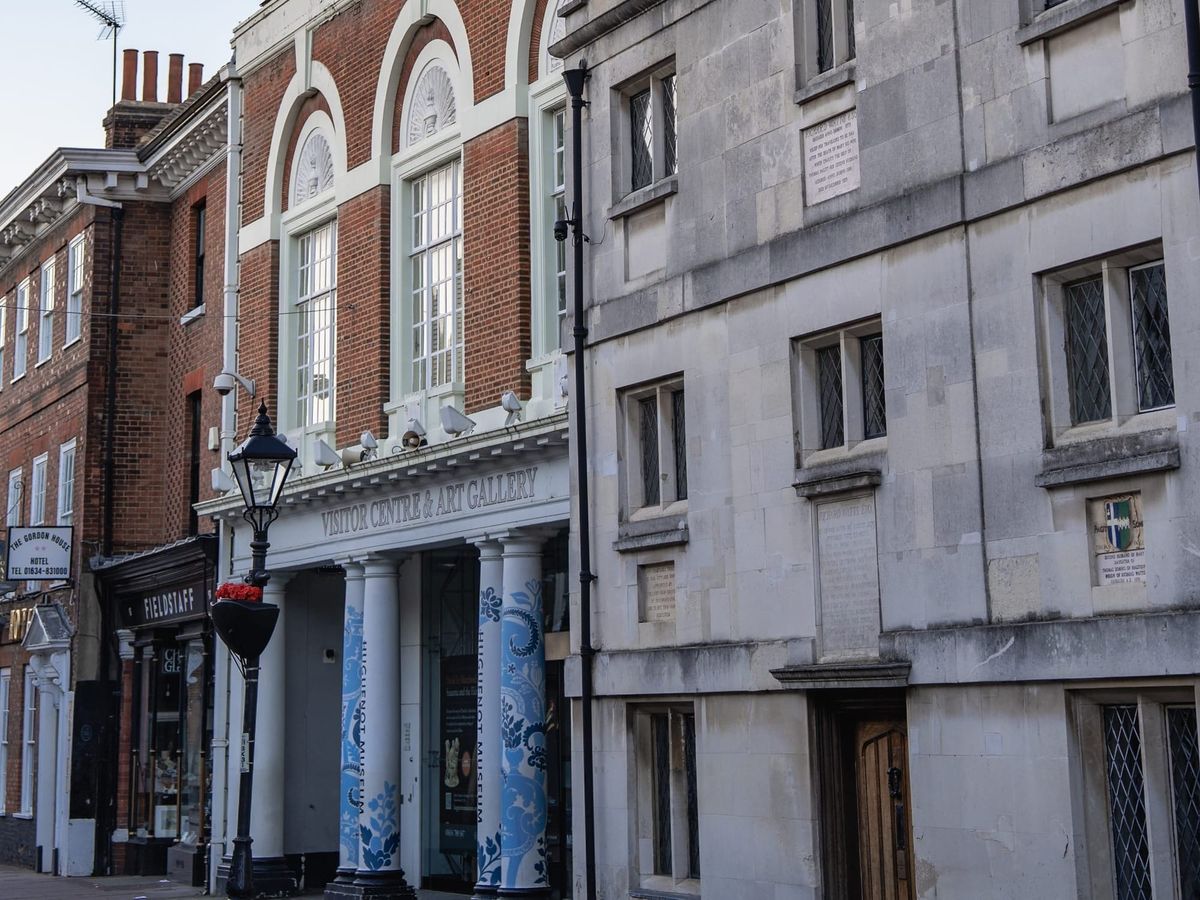
For all Medway talks about its heritage, much of the interesting stuff is normally difficult or impossible to access. Heritage Open Days changes that for ten days, with more than 40 free events opening everything from the Six Poor Travellers’ House and Dickens’ precarious chalet to Chatham Masonic Hall, a medieval bridge chapel and the National Maritime Museum’s hidden ship model store. Elsewhere, Medway bids £9.25m for its tunnel, a very large rat causes trouble for KFC, Condimaniac has plans for the floors above its Rochester shop, and we catch up on what happened while we were supposedly taking a week off.
Medway briefly opens its doors
Medway is extremely proud of its heritage, as long as nobody asks how much of it they can actually go inside.
Some of the area’s most interesting buildings are closed, privately occupied, accessible only by appointment or simply easy to overlook. Others are open in theory, but remain sufficiently mysterious that most residents would hesitate before trying to visit.
For ten days from Friday 11 September, this changes slightly. Heritage Open Days will bring more than 40 free events to Medway, including several opportunities to enter buildings generally kept closed to the public.
Cllr Nina Gurung, Medway Council’s portfolio holder for heritage, called it “a brilliant chance to peek behind the curtain and discover stories that are not immediately visible.”
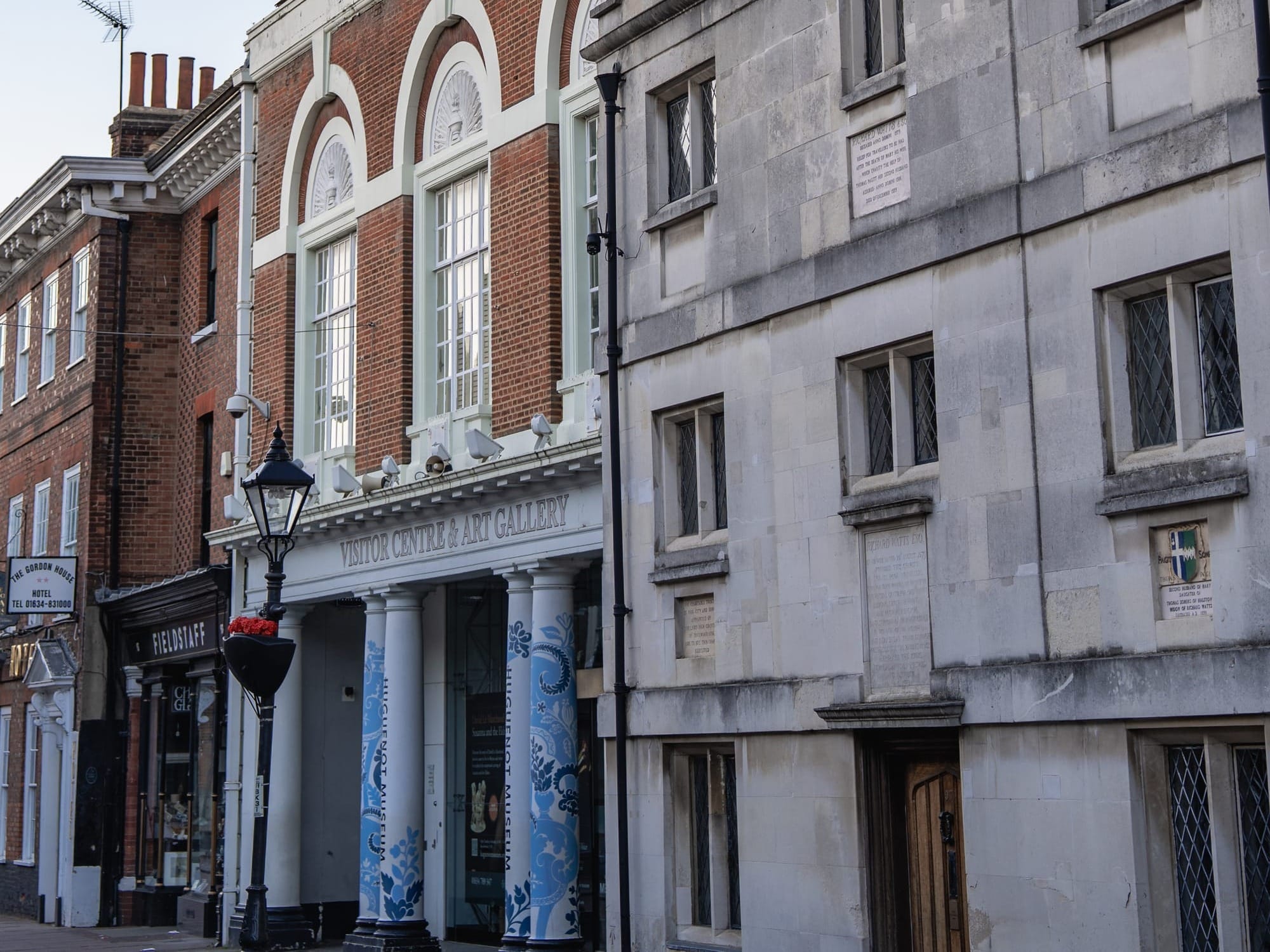
Perhaps the most compelling example is the Six Poor Travellers’ House on Rochester High Street. It has been closed for several years but will reopen for four hours on Saturday 12 September.
The house was established following the death of Rochester benefactor Richard Watts in 1579. For centuries it provided free overnight accommodation to poor travellers passing through the city, remaining an almshouse until shortly after the Second World War.
The building contains a museum room and three of the original travellers’ rooms, while its courtyard garden is hidden behind one of the busiest parts of Rochester High Street. Richard Watts Charities intends to reopen it permanently as a museum in 2027. Until then, residents have a four hour window to see inside before the door closes again.
A short walk away, the small chapel beside Rochester Bridge has had an even more varied existence.
The medieval Bridge Chapel was commissioned in 1393 as a stopping place for travellers along Watling Street. It was restored in 1937 and is now cared for by the Rochester Bridge Trust. The adjoining Victorian Bridge Chamber contains historic furniture and pieces from the trust’s art collection, along with views across the river towards the castle.
This year, the Bridge Chamber will display a work by Tracey Emin, created while she was studying at Maidstone College of Art. It is the first time the work has been shown since the trust acquired it. Next door, the chapel itself has previously served as a pub, house and fruit and sweet shop. Heritage does not always follow an obvious path.
Rochester’s connection with Charles Dickens, by contrast, has rarely been allowed to remain hidden. The council has spent many years ensuring nobody passes through the town without encountering his name, face or fictional characters.
His Swiss chalet in Eastgate Gardens is harder to explore. Dickens used it as a study during the final years of his life and worked there on The Mystery of Edwin Drood, which remained unfinished when he died.
Most of the time, visitors must look through the windows. During Heritage Open Days, they can enter the ground floor, although the building is not currently structurally sound. The external staircase and balcony are supported by props, leaving the upper floor inaccessible. Downstairs, space is restricted by a large wooden and steel brace preventing the Grade I listed chalet from leaning any further.
This is presumably not what Dickens had in mind when he received it as a gift, but it does make peering inside considerably more interesting.
The festival is not confined to Rochester’s approved selection of Dickens, medieval charity and attractive old stone.
Chatham Masonic Hall on Manor Road is taking part for the first time, allowing the public to enter on Saturday 12 September. Rob Flood, the local coordinator for Heritage Open Days, said in a Medway Council press release that the Masons have promised that “no question will go unanswered.”
This is a confident commitment from an organisation not generally associated with explaining everything it does. We suspect somebody will eventually discover its limits.
The Medway Towns Gurdwara Sabha in Lankester Parker Road behind Rochester Airport is joining the programme for the first time. Medway’s first Sikh place of worship was established in a hired Catholic church during the early 1960s. The community later spent more than 40 years in Cossack Street before moving into its current building in 2011.
The Gurdwara will welcome visitors on Friday 11 September. Shoes must be removed and heads covered, with coverings supplied at the entrance. Free vegetarian food and drink will be served.
Its inclusion expands Medway’s definition of heritage beyond buildings that are very old, made of timber or connected to Charles Dickens. The communities which arrived and established themselves here during the last century are also part of the area’s history.
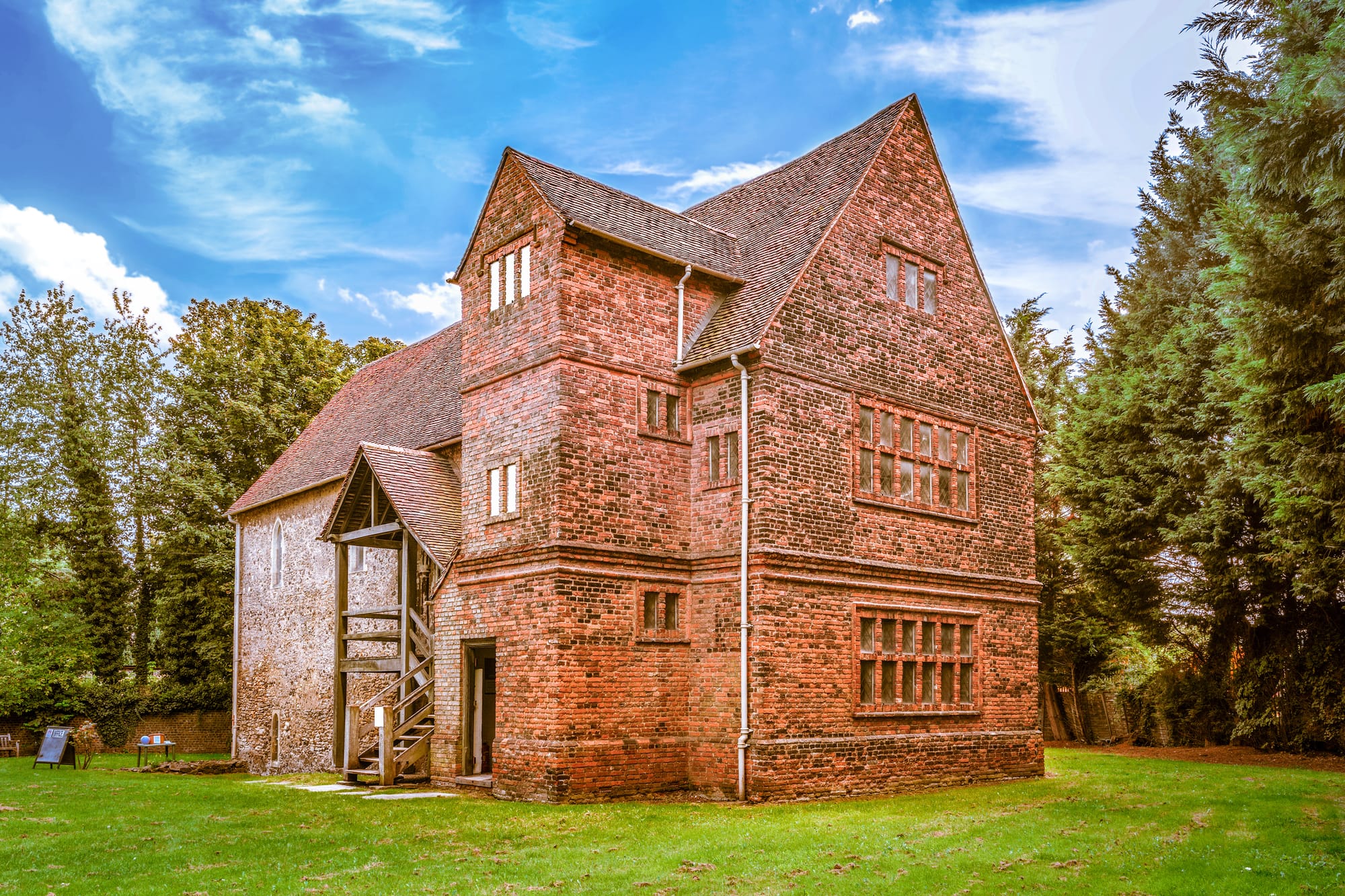
Across the river, Temple Manor will briefly reopen while its management transfers from Medway Council to English Heritage. Built by the Knights Templar in the 13th century, it now sits somewhat incongruously beside an industrial estate in Strood. It retains traces of medieval wall paintings, despite everything built around it during the intervening 800 years.
Frindsbury contains another unlikely survivor. Manor Farm Barn was built by monks from Rochester around 1403 and is one of the country’s longest surviving medieval wooden structures. It will open on both Saturdays of the festival.
Medway’s concealed history is not confined to buildings. The National Maritime Museum is opening its usually inaccessible ship model store inside No.1 Smithery at the Historic Dockyard, while visitors can board the Thames sailing barge Cambria at Chatham Intra.
Hard-hat tours of the Brook Theatre restoration have already proved so popular that they quickly sold out. Apparently, closing a public building for several years is an excellent way to make everybody want to get inside it.
The full programme runs until Sunday 20 September. Every event is free, although opening dates, booking arrangements and accessibility vary. The complete Medway programme contains the practical details.
Medway has no shortage of history. The problem is that much of it is normally locked, propped up, privately occupied or hidden behind a building doing something else. For at least ten days, some of us will be able to get in and have a look around.
Catch Up
We took a week off from the usual news cycle, but apparently failed to stop publishing. So if you missed anything while we were supposed to be quieter, there is quite a lot to catch up on.
Chris de Coulon Berthoud went digging through the lost bookshops of Medway and found rather more than dusty shelves. One unassuming address in Luton was, at different points, home to a British Union of Fascists bookshop, a Communist Party headquarters and a print shop that helped produce a local fanzine. Medway’s book trade, it turns out, contained multitudes.
Elsewhere, our August Culture Review ranged across murder mysteries in Brompton, Art on the Delta at Rochester Cathedral, books, theatre, food and more. It remains our monthly attempt to prove that considerably more is going on around Medway than you might assume from looking at Facebook.
We also met artist Jonathan Ash, whose path has somehow taken in colour-blindness, carpentry, Scooby Doo, Medway’s music scene, and teaching in Poland. He talks about the breakdown that pushed him towards art, why he sees colour-blindness and autism as “superpowers”, and the unlikely series of events that made him Head of IT and a karaoke regular in Warsaw.
Then there was Roy Smith, who has spent 25 years working with young people in Medway and has strong views on the idea that political maturity suddenly arrives at 18. We spoke to him about Medway’s unusually resilient youth service, votes at 16, extremism, experimental music and why good youth work should be about considerably more than trying to fix problems.
This week brought us back rather more firmly to the news. Rodney Chambers, Medway Council’s longest-serving leader, died after almost half a century in local government. Rather than simply repeat the tributes, we looked at the 15 years he dominated the authority, the huge regeneration ambitions of that era, what actually happened, and what Medway is still waiting for. His record is debatable, but his significance really is not.
And finally, Local Authority turned five. What began as a slightly improvised newsletter sent to 154 people is now a newsroom reaching thousands, producing print editions, and holding events. We looked back at the past year, why we still think Medway needs this kind of journalism, and what we need to make the next five years possible.
In brief
📄 Independent councillor Chris Spalding has once again found himself in breach of the councillor code of conduct.
🚇 Medway Council has submitted a £9.25m bid to the government to modernise the Medway Tunnel.
🏗️ 16 modular homes will be built on a flytipping hotspot on the edge of the Great Lines.
🐀 KFC at Horsted Retail Park had to carry out a deep clean after a massive rat went viral on TikTok.
🏆 Nominations are now open for the 2027 Pride in Medway awards if you can think of any deserving community champions.
Council matters
Meetings next week:
- Thursday: Kent and Medway Police and Crime Panel will question Police and Crime Commissioner Matthew Scott.
New planning applications:
- Replacement of deck to lower pier platforms under Rochester Bridge.
- Extension of medical centre in Halling.
- Condimaniac in Rochester High Street have applied to convert the floors above their shop into an events space, offices, and podcasting facilities.
- Conversion of Grade II listed barn in Cooling into two homes.
- Construction of three new homes on Wigmore Road in, er, Wigmore.
- HMOs on Byron Road in Gillingham and James Street in Rochester.
Property of the week
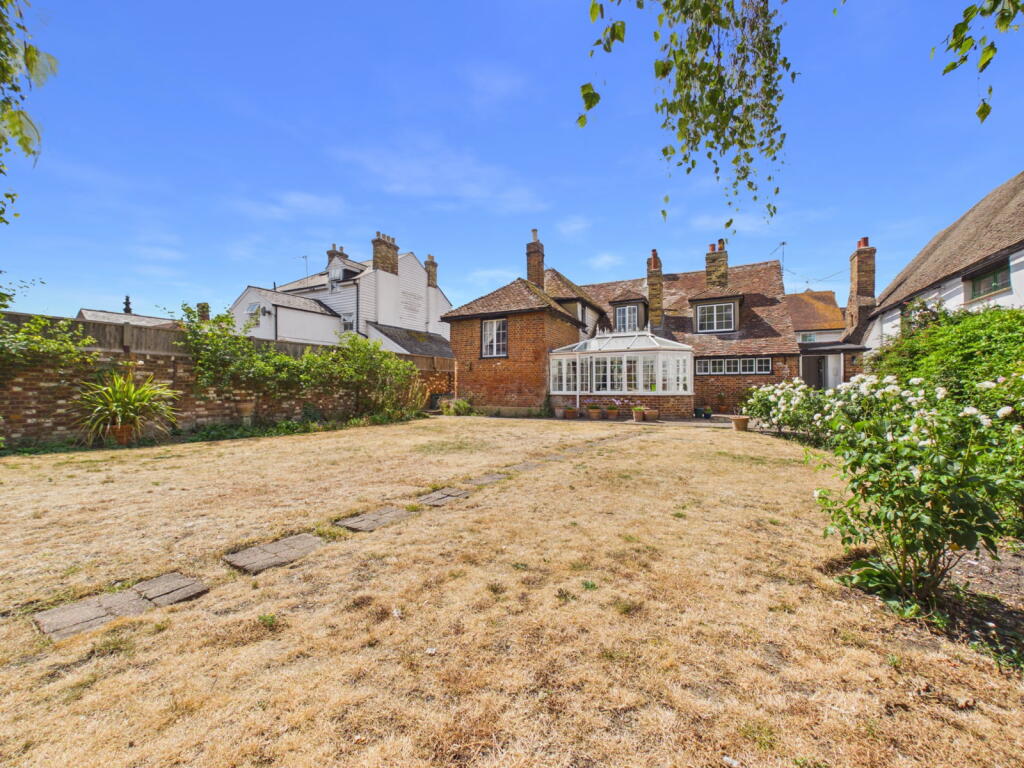
The Old Bakery in Cliffe is a Grade II-listed five-bedroom house on the market for £650,000, and unusually for somewhere called The Old Bakery, there is fairly compelling evidence that it was actually a bakery. Believed to date from 1789, its original bread oven survives in the kitchen with the year still marked on it, alongside exposed beams, old fireplaces and enough other period features to make the name feel earned. The house itself is enormous, with two reception rooms, a conservatory, three bathrooms, a little bar and a detached double garage with an office above, while the garden stretches back towards gated parking at the rear. There is even an Aga next to the old bread oven, meaning the kitchen has apparently spent the past 237 years refusing to move on.

Events this week
🌾 Sat 5 Sep - Medway’s Marshes // Drop in to learn about Medway’s low-lying wetlands and why they matter. Medway Archives Centre, Strood. Free.
🔦 Sun 6 Sep - Fort Borstal Tunnel Tours // Explore the 19th century tunnels in a guided tour. Nucleus Winery, Rochester. Tickets £27.
Footnotes
Follow us elsewhere: Facebook, Instagram, BlueSky, and now WhatsApp for new story alerts.