The man who ran Medway
Remembering the council’s longest-serving leader, plus Chatham’s almost world champion and a new kind of supermarket for the Pentagon


Rodney Chambers helped shape Medway Council through its formative years. We look back at his 15 years as leader, alongside a Chatham boxer’s near miss at a world title and the Pentagon’s new community supermarket.
The man who ran Medway
For much of its history, Rodney Chambers was simply the man who ran Medway.

Chambers died last week after spending nearly half a century in local government. He served on Kent County Council in the 1970s, Gillingham Borough Council from 1987 and Medway Council from the moment it came into existence.
Most significantly, he led Medway Council for 15 years, from 2000 to 2015. No one else has come close.
The council’s announcement naturally focuses on the tributes. Conservative group leader George Perfect praised Chambers’ commitment, vision and determination. Labour council leader Vince Maple recalled that the pair could disagree agreeably, while working together against proposals for an airport in the Thames Estuary and, earlier, the loss of the Royal Navy from Chatham.
All of that is true, but 15 years in charge of a council deserves something more than a procession of kind words.
Chambers became leader while Medway Council was still trying to establish what it was. The unitary authority had been created only a few years earlier from the former boroughs of Rochester upon Medway and Gillingham. It had a new name, uncertain identity and five towns that did not necessarily regard themselves as parts of one coherent place.
Much of the political culture which developed around the new authority did so under Chambers. The Conservatives became firmly established as Medway’s dominant party, while the council embarked on an ambitious attempt to reshape the area through regeneration.
The plans were enormous. A regeneration framework published during his leadership envisaged billions of pounds of investment, thousands of new homes and a succession of transformed waterfronts. Rochester Riverside, Chatham town centre, Strood Riverside, Temple Waterfront and Gillingham waterfront were all presented as parts of a new Medway emerging from its industrial past.
Some of that happened. Medway Park was redeveloped, Gillingham station was improved, and substantial public money was spent preparing Rochester Riverside for construction. Chatham acquired its new road system and bus station, whatever anyone may think of either.
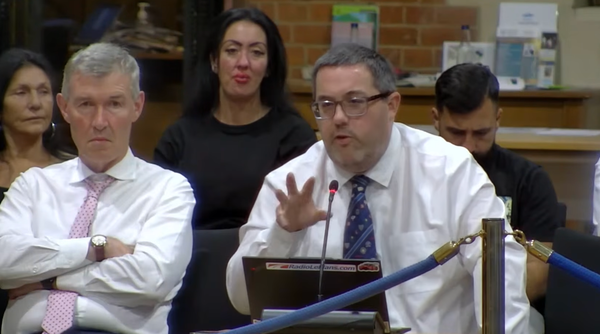
Other parts moved considerably more slowly. The gap between Medway’s glossy regeneration documents and what appeared on the ground became a recurring feature of local politics. At a scrutiny meeting in 2012, Chambers was challenged over projects said to be running late or over budget. He replied that officers had assured councillors they remained on time and within budget.
More than a decade later, several of the sites at the centre of those early plans are still being developed, reconsidered or discussed. Regeneration in Medway has always required a fairly elastic understanding of time.
Chambers nevertheless remained closely associated with it. When he stepped down as leader in 2015, he did not leave the cabinet. He instead became the portfolio holder responsible for economic regeneration, remaining in the role until he and his wife Diane retired from the council in 2023.
The council’s tribute does not mention another side of his life.
For years, Chambers owned and ran Card Galleries at Twydall Green.
It is an oddly important detail. While directing billion-pound regeneration strategies and arguing over the future of Medway, its most powerful politician could also be found running a greeting card shop in Twydall.
That did not automatically make his decisions correct, or insulate his administration from criticism. But it made him unusually rooted in the everyday life of the place he governed. Long before social media made every councillor permanently contactable and before council leaders began speaking in the polished language of regional partnerships, residents could encounter Chambers in an ordinary local shop.
A short Guardian biography from 2009 described him as running his own retail business, serving as a magistrate and sitting on the court of the Rochester Bridge Trust. That combination of shopkeeper, councillor and local establishment figure now feels drawn from another political era.
He received an OBE for services to local government in 2011. He also led repeated attempts to secure city status for Medway and became one of the most prominent opponents of plans to build an airport on the Hoo Peninsula. These campaigns were not always successful, but they reflected the central idea running through much of his public life: that Medway should be regarded as something larger and more important than a collection of overlooked towns.
Whether his administration ever succeeded in creating that shared identity is more difficult to answer. Medway still argues with itself about what it is, while many of the regeneration projects intended to transform it remain unfinished.
His record can therefore be debated, as the record of any leader who holds power for 15 years should be.
His significance cannot. Rodney Chambers did not merely serve on Medway Council. For most of its formative years, he was Medway Council.
Chatham’s almost world champion
Local Authority knows almost nothing about boxing. Until this weekend, this hadn't presented much of a problem.
But when a 21-year-old raised in Chatham steps into the ring with a chance to become heavyweight champion of the world, it seems churlish not to pay attention.
Moses Itauma faced Filip Hrgović at the O2 on Saturday night for the vacant IBF heavyweight title. Victory would have made Itauma one of the youngest heavyweight world champions in history.
For much of the contest, that looked entirely possible. Itauma knocked Hrgović down in the second round and built a substantial lead. Hrgović would later acknowledge that he had lost the first eight rounds.
Things then went badly wrong. Itauma tired, Hrgović began landing more regularly, and the referee stopped the fight during the ninth round. Itauma was given oxygen before leaving the ring on a stretcher and was taken to hospital as a precaution.
The result ended an unbeaten record stretching back through Itauma’s amateur career. He had won his first 14 professional contests, most without requiring anything like Saturday’s sustained effort.
Precisely what went wrong is best left to people who understand boxing. Hrgović attributed it to Itauma’s inexperience and failure to pace himself across a 12-round fight. He nonetheless described the young boxer as the most talented in the division and predicted that he would eventually become world champion.
Itauma’s journey to Saturday’s fight began some distance from the lights of the O2. Born in Slovakia to a Slovakian mother and Nigerian father, he joined his family in Chatham as a young child. He started boxing at St Mary’s Amateur Boxing Club in Luton aged nine and developed into one of the most highly regarded young fighters in the country.
The rise was not straightforward. Speaking to the Guardian earlier this year, Itauma described living with his brother in a house on Luton Road when he was 15, with only £7 per week available for food. His coach began helping him after noticing his dramatic weight loss.
Less than six years later, he was fighting for a world title. His first defeat does not erase the considerable distance travelled between those two points.
Itauma’s connection with Chatham is no longer confined to the boxing club where it began. He is also one of the founders of Club Eight³, a new private members’ gym replacing TruGym at Chatham Maritime.
TruGym closed on 4 July after its operator was acquired. Existing memberships were cancelled, and the building is undergoing a complete refurbishment before reopening under its considerably more elaborate new identity.
Anyone expecting much the same gym with a new sign may need to adjust their expectations.
Club Eight³ describes itself as an 'elevated fitness and recovery destination', bringing together advanced training, lifestyle medicine, premium hospitality and a private community. The marketing language is closer to a luxury hotel crossed with a private clinic than anything previously found above Dockside.
Planned facilities include a sauna, ice baths, red-light therapy, blood testing, IV drips, cryotherapy and a hyperbaric oxygen chamber. There will also be a café suitable for coworking, a quiet room and equipment supplied by brands including Nike Strength and Bang & Olufsen.
The club says every partnership has been selected to help members pursue better health. How a very expensive speaker contributes to longevity is not explained.
Membership starts at £79 per month for the basic tier. Paying £134 adds access to the cryotherapy and hyperbaric oxygen chambers, while £199 brings a monthly appointment with an IV therapy specialist and a 'tailored vitamin injection protocol.'
The website asks prospective customers, 'How much is your health and your future self worth?' This is perhaps a more effective sales pitch when the answer is not £2,388 per year.
Local Authority is no better qualified to assess the claimed benefits of IV drips and red-light beds than it is to explain heavyweight boxing tactics. It is, at the very least, quite a transformation for a building previously occupied by a conventional budget gym.
It also brings Itauma’s story back to where it began. Whatever happens after the first defeat of his career, the boxer developed in a small Chatham club has returned as the face of one of Medway’s most ambitious, and certainly most extravagantly described, new fitness businesses.
Between Sainsbury’s and a food bank
At the other end of Chatham’s rapidly expanding wellness market, £1 will soon buy a bag of fruit and vegetables.
A new community supermarket is due to open on the first floor of the Pentagon in October, offering groceries and household essentials at reduced prices. Unlike most food banks and community pantries, customers will not require a referral, membership or evidence that they are struggling.
If you live in Medway, you can shop there.
Social Enterprise Kent will operate the store, which already runs similar shops in Ashford and Ramsgate. Those branches sell seasonal groceries at reduced prices alongside food that would otherwise go to waste.
The Chatham shop will occupy a unit next to the James Williams Healthy Living Centre, which opened earlier this year. Medway Council says residents will be able to buy cheaper food while accessing help with budgeting, benefits, household bills, employment, digital skills and energy costs.
In other words, it is intended to be more than a cheaper place to purchase vegetables. The council’s original specification called for a supermarket that would provide food and essential items below average market prices, while also offering support intended to address some of the reasons people end up requiring emergency help.
The council awarded Social Enterprise Kent a £260,000 contract to establish and operate the shop. The initial agreement runs until March 2028, with an option to extend it for another year.
Funding comes from the government’s new Crisis and Resilience Fund, which has provided Medway with £4.59m this year. The scheme replaces the Household Support Fund and Discretionary Housing Payments, bringing several different forms of emergency and preventative support together.
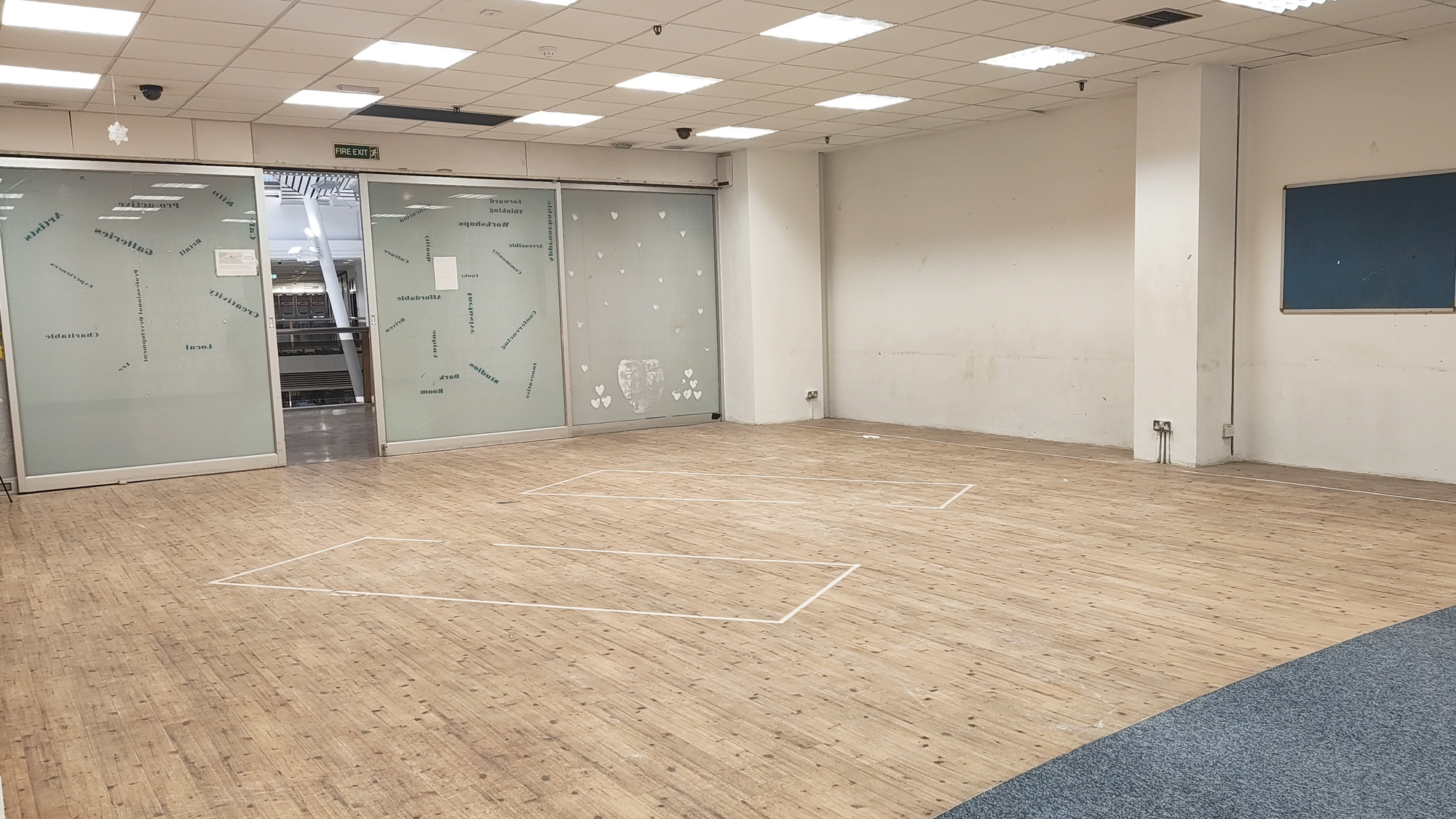
When councillors approved their plans for the money in March, they were told that the community supermarket would open 'within three months.' October is closer to seven months later, but the project has at least progressed beyond the entirely theoretical stage. The council has even published a photograph of the future shop, although at present it remains a largely empty room.
The decision to allow anybody to shop there is significant. Food banks usually require a referral, while many community pantries restrict access to members or people receiving particular benefits. These checks can help target limited supplies, but they also require people to demonstrate that their circumstances are sufficiently desperate.
Social Enterprise Kent’s existing shops operate differently. Anyone can enter, buy what they need and pay at the till without explaining themselves. Customers who are relatively comfortable can still reduce food waste and generate income for the project, while those under greater pressure are not visibly separated from everybody else.
The model does not remove every complication. Stock will partly depend on what supermarkets, suppliers and food redistribution organisations have available. The manager of the Ramsgate shop has previously said that reductions in supermarket surplus also affect what the social supermarket can obtain.
It is therefore unlikely to offer the complete or predictable range of a conventional supermarket. Nor will a £1 vegetable bag do much to resolve the wider causes of food insecurity.
It does, however, provide something between an ordinary shop and emergency food aid, without requiring customers to prove their poverty before being allowed through the door.
The Pentagon has spent much of the past decade losing traditional retailers. Its first floor now contains the James Williams Healthy Living Centre and Ascend, a publicly funded workspace for start-up businesses. The community supermarket will add another use that looks rather different from the shopping centre of old.
A GP surgery, coworking space and publicly funded discount supermarket may not have been the future imagined when Medway Council bought the Pentagon for £35m in 2019. But in a town where more residents need help affording basic groceries, an inexpensive shop with no questions asked may prove more useful than another empty unit.
Footnotes
Follow us elsewhere: Facebook, Instagram, BlueSky, and now WhatsApp for new story alerts.