“I decided I'm going to be a painter and that's it”
What Steven asked artist Simon Mills

With Medway Open Studios around the corner, Steven met Simon Mills and Bronach Rae at their home studios to discuss their art, why they open their home to strangers and how autobiographical their work is. This is part two of a two-part interview. The first part, focused on Bronach, was published last week.
What is your official occupation?
Artist and have been for the past nearly 60 years.
I've done other things. I was a photographer at Sotheby's for a few years, and I painted scenery for the theatre. I don't do any of those things now. I paint.
There's a huge difference in my world between beauty and prettiness
What does that entail?
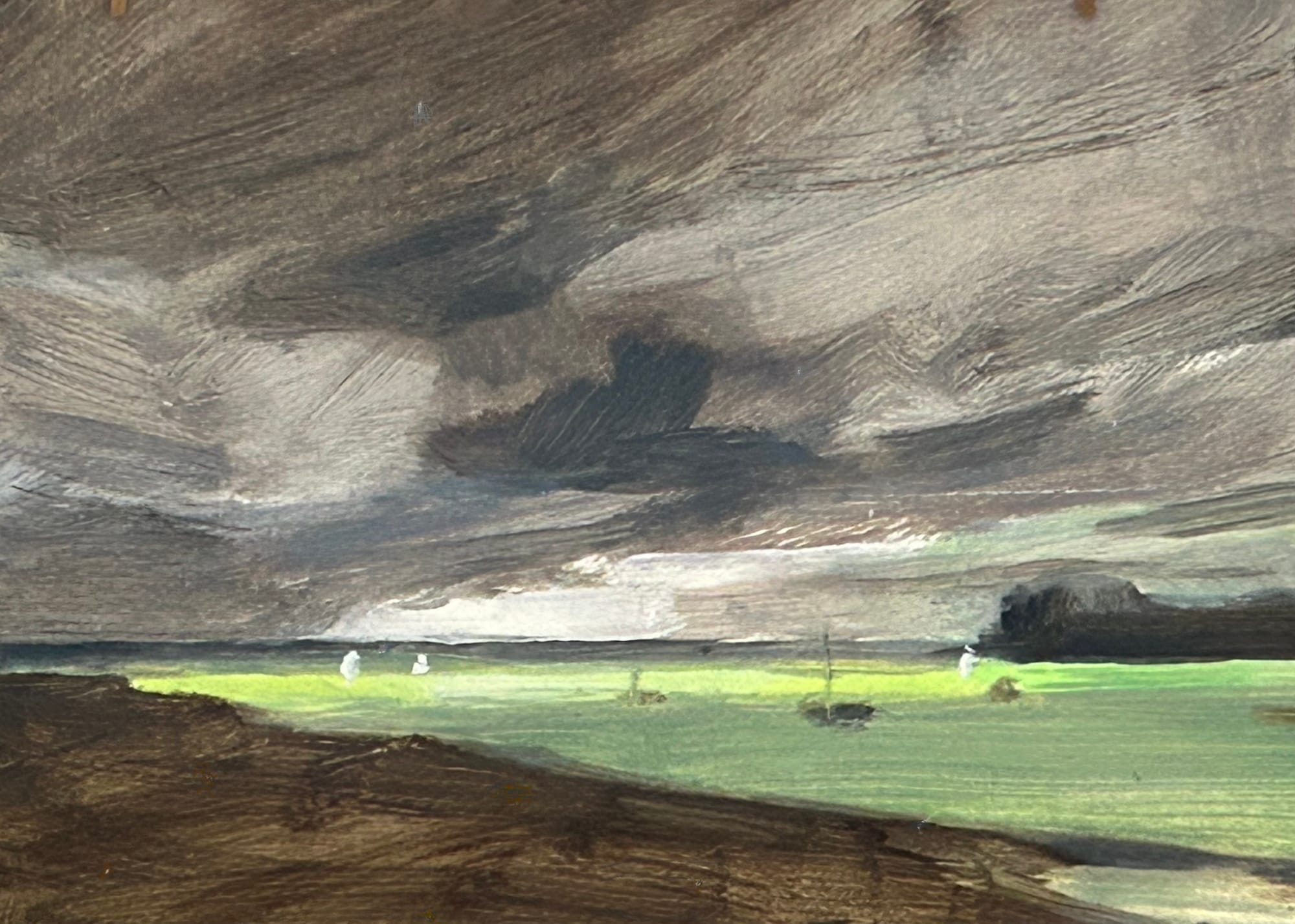
Mostly, it entails paint on canvas. I've used oil paint most of my life, but I've shifted over to acrylic, partly because when I first moved here with Brónach it quickly became clear that she was allergic to the fumes of white spirit itself. Now my studio is at the bottom of the garden, I can use whatever I like, but I got stuck in the acrylic thing, which is fine. I can make acrylic paint look like oil paint. They're mostly landscapes, but I've painted everything in my life. I paint townscapes. Quite a big series of Chatham Intra, mostly at night-time, streetlights reflected in wet pavements and things like that. I'm more interested in that part of town than Rochester High Street, because there's a bit of an edge to it.
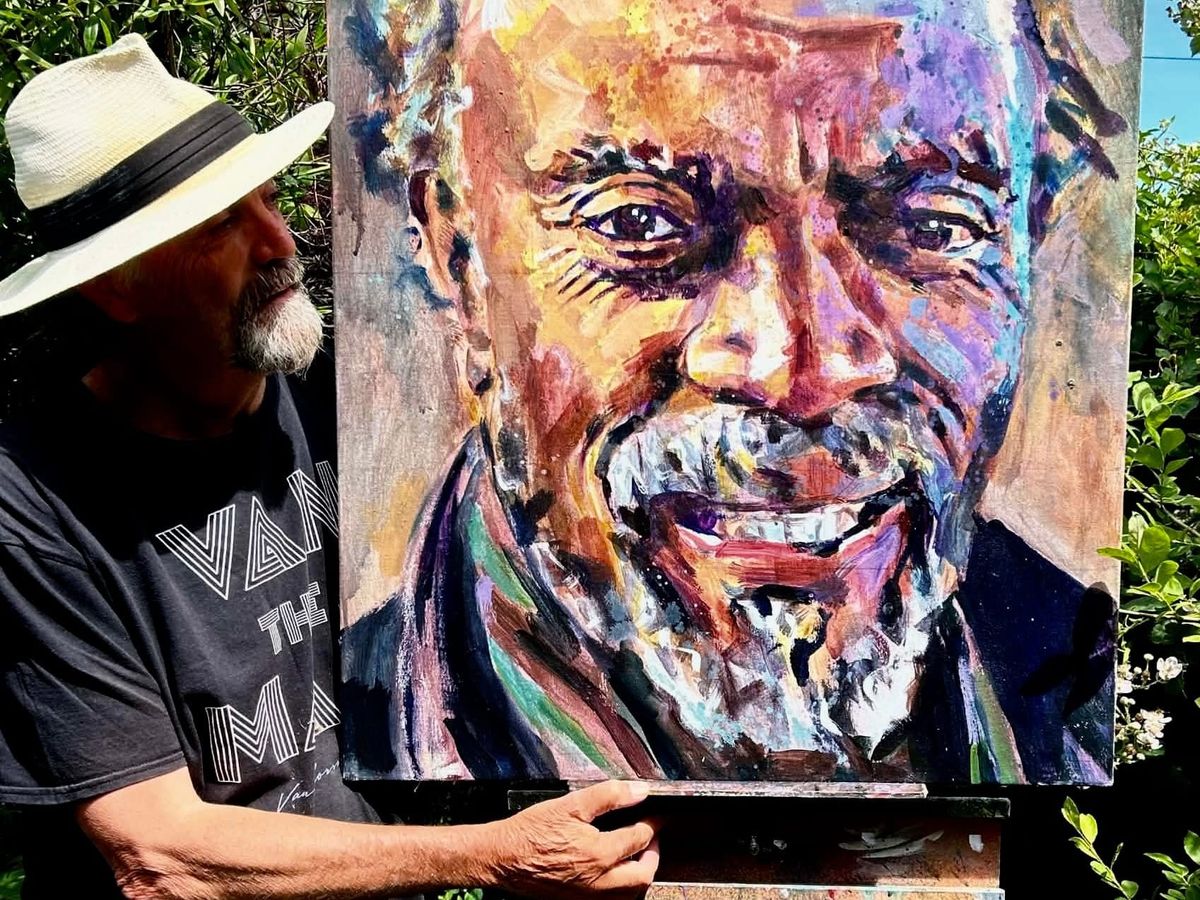
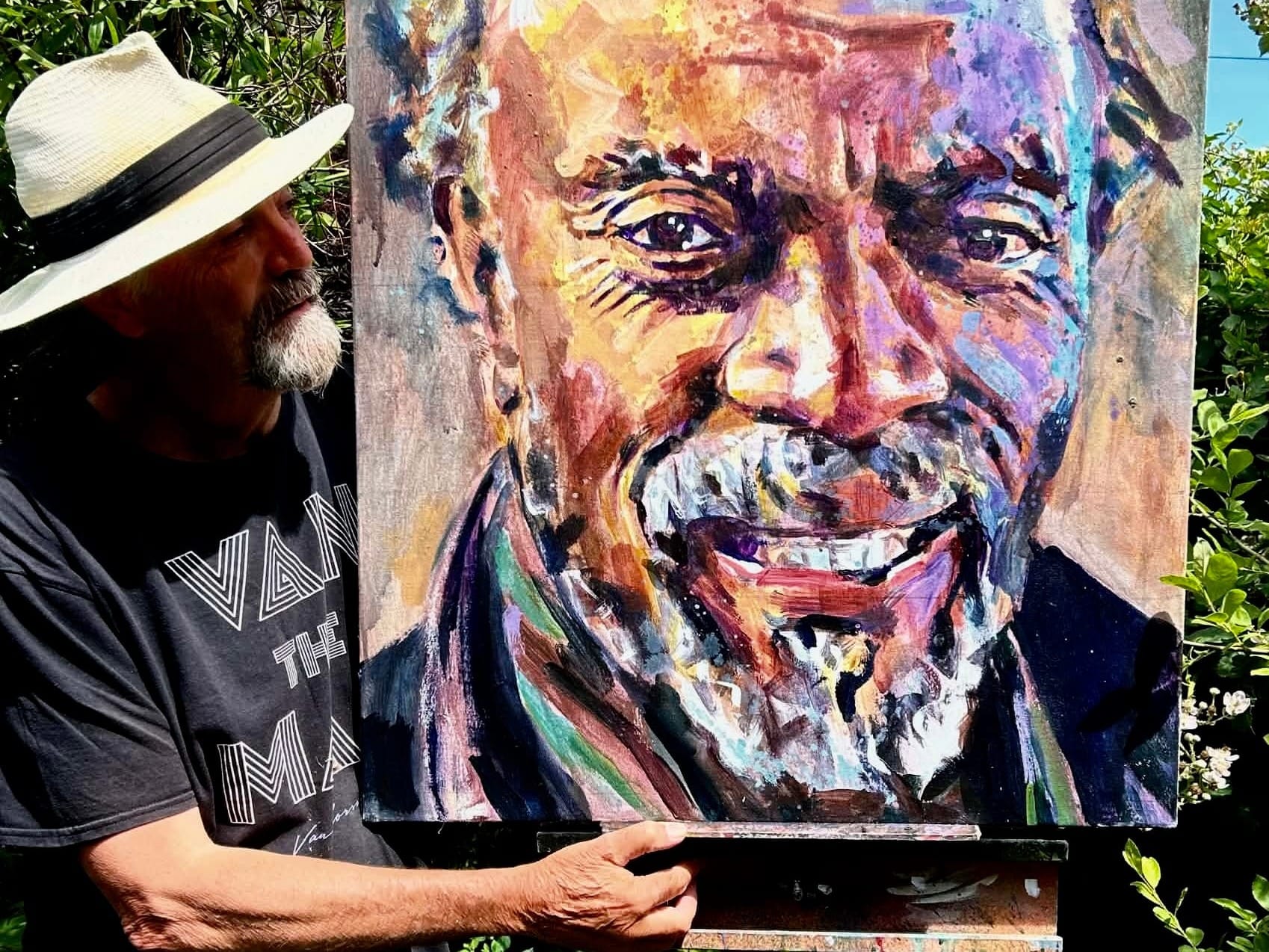
I'm in the middle of working through a series of heads. This started over a year ago. We were in Kythera, a little island off the Peloponnese in Greece, sitting in a village square and kept noticing these interesting Greek guys going around. Grey hair, ponytails, dark glasses on their heads, driving motorbikes, no crash helmets of course. I said to Brónach, “What amazing faces.” I said, “I'd really like to do a series of heads of, for want of a better word, older people.” I hate the words old or elderly applied to people, but I quite like the word elder. People of our generation, I see as elders.
There's a huge difference in my world between beauty and prettiness. Prettiness is skin deep. Real beauty goes much deeper. When you've got the wrinkles, they show that they're laughter lines. Somebody who hasn't got them has not done a lot of laughing. If you've been doing a lot of laughing, you've had a good life, whatever you've been up to. These heads are intended to be shown in September.
One other project that I'm working on at the moment is from the end of last year. We were in Naples, and these paintings are just over two-foot-wide, but six-foot-long. They're on rolls of hessian with the edges very rough, and they'll hang on the walls, and it's these strips of bright blue sky in amongst all this grimy darkness and then splashes of light coming down. I’m really excited about it.
What, for you, is it about landscapes?
Oh God. That's a very difficult question.
I think I'm fascinated by the relationship that human beings have with what we call nature. I don't know that's the right term, because we refer to nature as something being separate from us. Of course, we are part of nature. If I'm out in the landscape and I see a light effect and it lifts my spirit, I think, yeah, I want to paint that. But there's part of me that feels separate from it.
I think my relationship with landscape is to do with that. That sounds a bit pretentious, but I think that I'm trying to explore my relationship with the landscape I live in.
How autobiographical is your art?
People say, “Why aren't there any people in your landscapes?” I always say, “Well, there are, it's me, I'm there, I'm there in all of these.” It's my response to the place.
It's interesting you use the word, because, of course, I have written the first half of my autobiography. The second half's due out.