“People are always searching for something”
What Steven asked the Philip Hesketh, Dean of Rochester

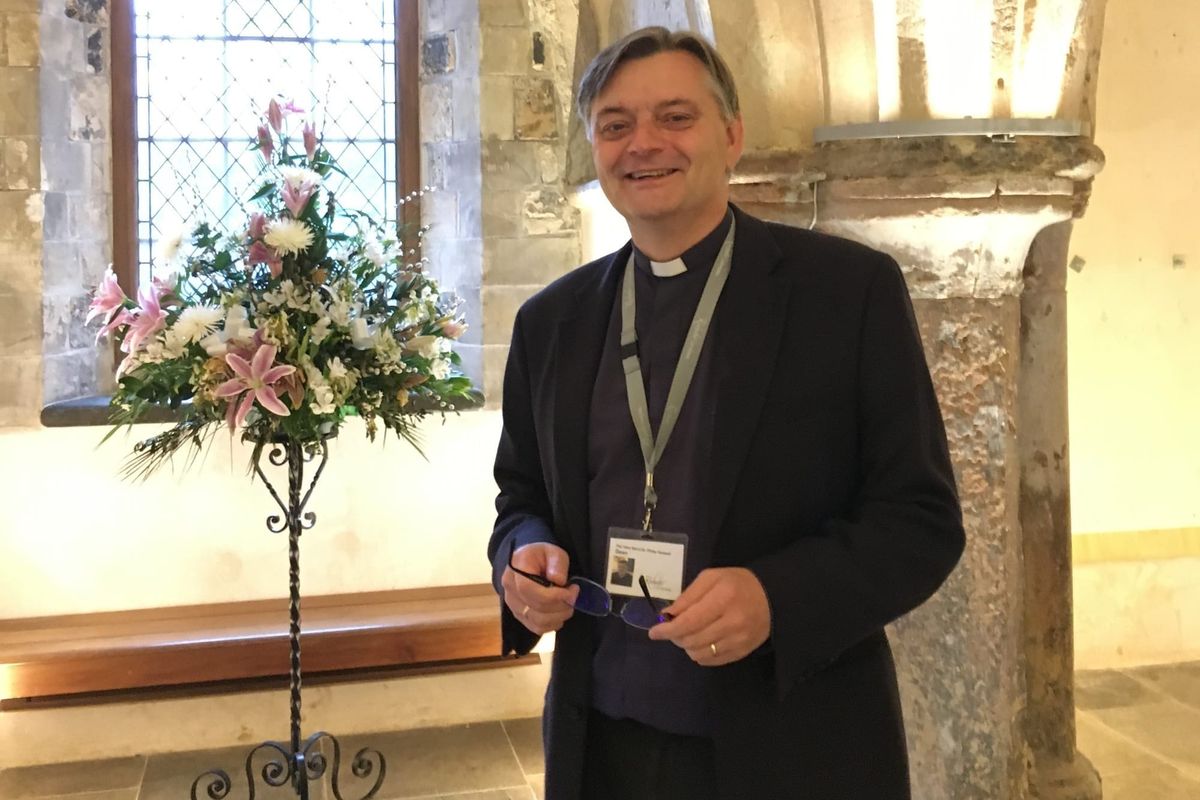
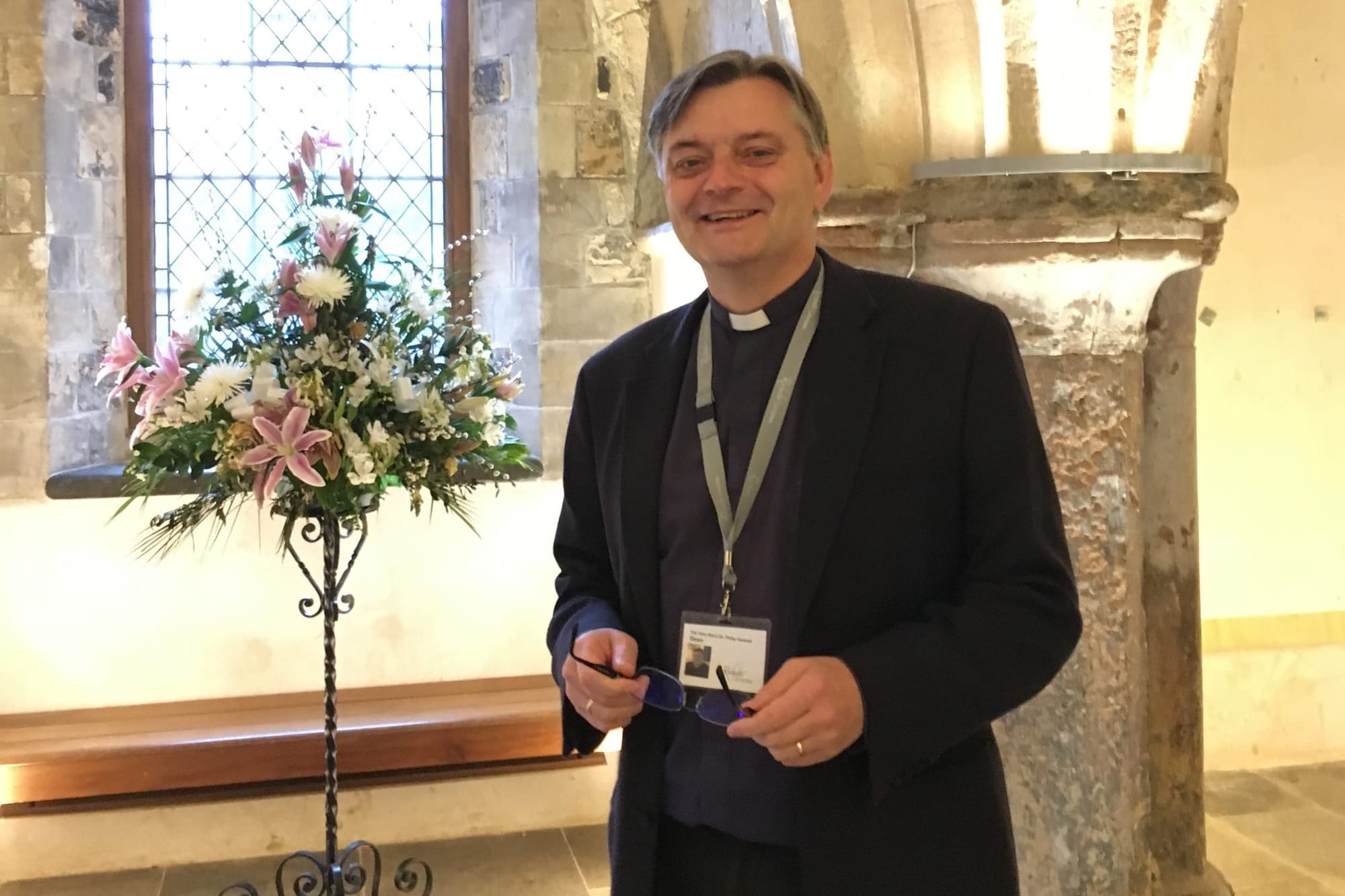
Steven met Philip Hesketh, the Dean of Rochester, at the Rochester Cathedral offices in Garth House. They discussed the cost of keeping the cathedral running, the difference between Anglicans and Methodists, selecting the next Archbishop of Canterbury, and lots more...
What is your official title?
I'm the Dean of Rochester, which is a strange thing really, because people will say you're the Dean of the Cathedral. I am the Dean of the Cathedral, that's absolutely right. They say, you're the Dean of Rochester Cathedral. But actually, historically, there's no such thing as the Dean of Rochester Cathedral. You're the Dean of the town or the city. I'm the Dean of Rochester, which I'm pleased and proud to be.
Is that your official occupation?
Effectively, at some point in my life journey, I decided to become ordained in the Church of England, although I took a route through the Methodist Church. Candidated for the ministry, was accepted, trained as a priest, and I have been a priest in Kent even though I was living in London at that time. My roots are back in Lancashire and the Isle of Man. I then did my years as a priest in southeast England, in the Canterbury Diocese and then the Rochester Diocese. Eventually, I was encouraged to apply for a job here at the cathedral, which I did as one of the canons. That's one of the support team priests.
I did that in 2005, came here, and then was acting Dean when the Dean moved on. I was encouraged quite strongly by a large number of people in Kent, which was kind and generous of them, to apply for the job, which I did. Then, in 2016, I became the Dean here. I carry all the responsibilities that any priest would or priestly ministry, but effectively I'm running a very historic and large organisation with big responsibilities, most of which I never trained at all to do, and either have to learn or, in my case, I brought in expertise and commitment.
To clarify, are priests part of the Catholic Church and vicars part of the Church of England?
It's interchangeable. People within the Church of England would still call themselves priests, and they're still regarded as priests. Some might call them vicars, because they're a vicar of a parish. Reformation, there was a separation between the Church of Rome and the Church in England, mostly through Henry VIII, who didn't see why somebody in Rome should tell him what he could do with his own church here. That was the initial separation. That's more or less existed, although the Church of England has changed its shape and what it does considerably in 500 years.
And again, just to clarify that separation, with what people might have in their mind as they understand being a priest, because you are married?
Yes, at the Reformation, it was decided that there was no good reason why priests couldn't be married because Jesus' original followers were Jewish, and they all had families, they were all married. In fact, most Jewish rabbis, teachers, were married. At the Reformation across the country, they said, there's no reason why priests can't be married, or ministers can't be married. Some of the first priests, way back at the beginning of the church were also married. It was something that came within 1,000 years of the history of the church.
You mentioned being Methodist. Within the Church of England, sometimes you get Methodist or Anglican members. What do those names mean?
Anglican is basically the Church of England, or the church that expresses its life or finds its life in the church building. Because, of course, when Britain became a big empire and was sending people out all over the world and to explore the world, they took the Church of England with them. They took the Christian faith with them. They established churches all over the world. They collectively are called Anglicans now. Those who find their origin in the Church of England, which is what happened when Britain had a huge empire.
And Methodist?
Methodist is a movement that happened in the 17th and 18th century in England. Within the Anglican Church was a movement of revival. John Wesley and Charles Wesley were both Anglican priests, but they had this revival movement, and there was a great conversion at that time. They formed what was called the Methodist movement, which was seen as a derogatory term actually at that time. But eventually, both the Church of England and the Methodist Church parted ways. The Church is always disagreeing amongst and within itself about what to believe, how to believe, who to accept. They drifted apart, and you ended up with the Methodist Church, which was separate. The Church of England and the Methodist Church was part of a really big brawl, particularly in this country, of non-conformists. They were not members of the Church, but they were practising Christians. They were Baptists or Methodists. And those numbers have dwindled over the last 20, 30 years. They're not as strong, the Methodists and Baptist Churches, as they were. Of course, the whole of the Church has struggled with attenders since the Second World War.
There is data showing that young people are coming back…
There are. I think there's always been a searching. People are always searching for something and looking for meaning. I think there's been a failure in the church historically sometimes to be able to respond to that. There's a big tradition in the church over 2,000 years of people in prayer, meditating, or finding stillness and quietness. But then it lost its nerve a little bit, and it didn't really talk about that part of its tradition. I think that's why a lot of people then found a great attraction in other religions which had meditative aspects like Buddhism or aspects of Hinduism, and that great movement in the 60s with the Beatles and everything else to go to the ashrams and to find yourself. I think it's also there in mindfulness. There is a great resurgence, and people wanting this sense of stillness and calmness. It's there within the Christian church. It's always been there, but we've not always been very good at telling people about that and helping them to access it. There are signs of certainly young people, whether it's something coming out of covid, I don't know, or younger people who are searching and have come to the churches as well as other places, probably to try and find some sense of meaning, and hopefully the churches will respond in a helpful way.
Going to a Church of England primary school, we received the Good News Bible. There are many different versions of the Bible. Do you have a preferred version?
No, but there are different versions for different times and different ages because it helps you access the stories. I think some people would say the best in terms of poetry and language was the original King James version. But that language is quite archaic now. And actually some of the meanings have changed from what we would do. Although it's lovely to hear that sometimes, I think you need a translation of the scriptures that make sense. There are many, many different ones. The Good News Bible, when they were translating that, they worked on the basis that the language that they were trying to find to translate the Greek and the Hebrew into English should be no more complicated than somebody would be able to access if they were doing O-level. That was the basis. They were saying, we should use words which anyone would have in their vocabulary at that level and not choose words which might be a bit more accurate to the Greek, but actually are not very helpful because you don't know what that word means. It makes sense that that's the version they would give out in schools as well. There are Cockney versions, rhyme versions. There are all kinds of translations of the Bible that people have made. It does raise the question of how accurate it is from the Greek, but I think you need to find one that's helpful.
What version do you use?
Oh, I use a number of different versions, but the one we use in the Church of England has an official standard one that's used in liturgy, or it's supposed to be, but you may go to an Anglican church where they use it completely different. But it's supposed to be the New Revised Standard Version. Which is basically an updated version of what you probably remember from school as the RSV, the Revised Standard Version, and now this is the sort of updated to that. But yeah, translation is a fascinating subject, because you're not actually reading the original text. You're reading a translation of the original text. In order to do that, you've got to make an interpretation of what you think it's saying.
You get that interesting split between the intent of the Old Testament and the intent of the New Testament.
Sometimes Jesus himself actually said, you're taking the letter of the law, but what about the spirit of the law? What does the spirit of the law say rather than just the letter of the law? And of course, Christians have found themselves disagreeing about that very subject for 2,000 years.
And will continue to.
Well, one anticipates that, or one expects that it is part of human nature. I think for me, what we need to learn is to live with difference, because someone has a different point of view, we need to learn, how do we learn to live with that? Rather than try and change them because we think that they're wrong and we're right. I don't think we will ever get to the point where everyone's going to agree with Philip Hesketh. No one's going to agree on everything. How do we live, how do we learn to live in peace with difference? Where are the commonalities rather than the differences? We can see the effects of not living with difference all over the world.
The paywall is coming. Unfortunately, you'll soon reach the paywall for this interview. To read the whole thing and support our work, please consider becoming a paid supporter. Right now, you can get 25% off a full year's subscription to Local Authority, which gives you access to every story, interview, and feature we publish, as well as help us deliver the kind of local journalism Medway needs in the year ahead.
What is the difference between being a Reverend and a Very Reverend?
Well, some would say, and I would probably agree, that at one part of its life over 2,000 years, it began to model itself on the state. When Christianity became the official religion of the Roman Empire, it began to reflect itself in the structure. It became quite hierarchical. It had different jobs and persons regarded as important, and they'll have different titles that went along with that. It's a historic thing. If you are the Very Reverend, that indicates that you are a Dean. If you are the Right Reverend, then that indicates that you're a Bishop. They're historic titles that got added to indicate the job that you do. But at heart, you're all still ordained as priests. Although some of us try and live without hierarchy, we accept that we're in positions of senior leadership, but actually don't think that was the kind of model that Jesus demonstrated.
What is the hierarchy within the world of the Church of England in Medway?
Within Medway, in terms of the Church of England, there's a Bishop who is the senior priest over a wide area, which would include Medway. Within that area, there'll be a cathedral, and my responsibility reflects that cathedral. Although we relate to the diocese because we're seen as the mother church of the diocese, but we have an independent structure, an independent governance scene, and my job is to oversee the cathedral.
There is a bishop, and then the next, there might be an assistant bishop. We do have an assistant bishop, and then the most senior priest in the diocese is the Dean.
And then above the Bishop of Rochester?
Above the bishops, in terms of oversight, in terms of responsibility, is an Archbishop. But an Archbishop can't tell a bishop what to do in his diocese. It's a figurehead. It's the same with the Pope, seen to be the first among equals.
It's the same idea in the Anglican Church that all bishops are equal, but an Archbishop has oversight over what happens in the church, but can't necessarily tell people what to do.
Are you effectively three promotions from the Archbishop of Canterbury?
Ah, well, if you wanted to be, that's the first thing, and the answer is I wouldn't want to be. You can be appointed a bishop, sure, if you've been a Dean, because that's a senior position, but you can be appointed a bishop from being an archdeacon or a vicar, really. That's not impossible if you’ve got the right skills and abilities. And the Archbishop, in the same way, is chosen from a number of bishops. But the last one, it could have been somebody from outside the Church of England. It could have been from one of the other Anglican churches in the Commonwealth. But they've chosen the first woman Archbishop.
Which, in some quarters, has been seen as controversial.
It's difficult, and even within the Church of England, one of the difficulties was that people couldn't agree with women being ordained as priests and then women ordained as bishops and now, we've got a woman who's the first Archbishop. There's always been a difference of people. They didn't feel that women should be ordained, and they believed it was a male prerogative. There are those of us who think that's just discrimination, by any other name. There's no reason why a woman can't do the job just as well as a man, if not better.
You are also the chair of the Cathedral Archives, Libraries & Collections Association [CALCA]?
Deans have national responsibilities. We pick up various national jobs. There's 43 deans, and some sit on General Synod, some are the representatives for safeguarding, some buildings and CALCA, it’s the cathedrals, archives and libraries. Basically, I chair that. Those organisations, particularly cathedrals that have archives, historical libraries and books.
The library is more than a wide selection of Bibles?
Oh gosh, yes. Some cathedrals have very important libraries. At Canterbury, in particular, Winchester, Durham, they have full-time librarians because they have a lot of historic documents. Rochester, we're only a tiny cathedral, we don't have a full-time library. We can't afford it, but we do have a number of historic books. Some very ancient and valuable, and some modern. We can't afford to buy books anymore, but we do have very important texts, including a book that's called the Textus Roffensis, which over the last five, ten years we've raised the importance of. It is probably the most important book in Britain. It's more important than Magna Carta. It's a hundred years older than Magna Carta. Magna Carta is based on it. Textus Roffensis means the book of Rochester. The first part of the book is written in Anglo-Saxon. It's the oldest copy of English law. In about 1120, there was a monk here in this cathedral writing out Anglo-Saxon laws from the 6th and 7th century, King Ethelbert, King Cnut, and they were writing all these laws down. They were doing it for a purpose and a reason, but they were writing it. This is the only copy. Some of the laws in there survive in that book, which we brought back, and it's in the cathedral to view for free.
What do you mean by brought it back?
Well, at some point, it was taken away and put in a secure vault, because we couldn't look after it. The cathedral didn't have the facilities to look after it in terms of its environmental care.
15 years ago, we did a project here at the cathedral, which had a lot of Heritage Lottery funded money, and it was to create an appropriate and permanent exhibition space so that we could bring the Textus Roffensis back to Rochester and have it on permanent display free of charge to people of Medway and beyond.
With the wider library, is that something someone could, if they were studying, make an appointment to visit?
They could do if they had good reasons to, and they said, look, this document from the 13th century, this is the only place I can really get this. Yes, they could write to me and apply, and we could make provision for that to happen. But the only time is based on volunteers. We need volunteers. We can only survive as a cathedral on volunteers. We have 350 volunteers. Without them, we couldn't open like we do. We need to train up some new library volunteers. Once they're trained up, they can talk about the books. When they're on site, we can open the library again, and people can come in and see the books and learn about them and the manuscripts and stuff. But covid took a lot of the library volunteers away suddenly. We've not really been able to get back to full strength.
If somebody wanted to volunteer for the library, who do they get in touch with?
With me. I’m not difficult to get in touch with. I'll put that person in touch with our volunteers manager, and we can interview them, see how suitable they are and then train them up. We'll see what we can do.
I read that the cathedral costs £5,000 a day.
It's about £5,000 a day to keep it open. That's just an estimate.
What is the bulk of that cost?
Well, what we're looking at is the running costs of the building. There's heating, there's staff, there's the lighting, there's the conservation of the fabric, because we don't get any grants from government. It's down to us. Each cathedral has its own challenges. We have done really well. We're one of the few cathedrals that don't have a deficit budget. Quite a large number of cathedrals have a deficit budget. We've been able to do that while remaining open for free, and it's very important to me that we do remain open, free of charge. But then we need to look at other ways of generating income. One way is to encourage people to give donations. Even if people give a pound, it's amazing really. We could have about 350,000 visitors this year. If everybody gave a pound, my goodness me, it would be much better for us, because it costs millions of pounds to keep that building open. Once that isn't possible, then you're looking at closing the doors, and I don't know what you do. I mean, you can't buy anything with a pound, but the average donation is about 47p.
If everyone gave a pound and we had 300,000 visitors, that would make one heck of a difference to what we're trying to do, which is to keep this historic building open and doing the same thing that it was built to do. I mean, the same person who built the cathedral built the castle. His name was Bishop Gundulf. But if you look that way, the castle is a museum which you pay for. It's dead. But you come to the cathedral, it's still doing everything that it was supposed to do when it was built. Worship and prayer still happen here, and lots of other things happen here. It happens in a different way, but we're still open, and we're not a museum.
Is the reason you don’t have a deficit is that the Church of England is wealthy and has lots of land?
No, it's not. Some cathedrals, that's true, historically had lots of property. The Church of England historically has had lots of property. If you're talking about Rochester, we've not had what they call a historic endowment. We don't have a lot of historic wealth at all. What we do have is some shops, close to the cathedral and some residential accommodation and that provides about 40% of our income. But those buildings are also historic buildings, they take a lot of maintenance. The rest of it we have to find from either donations or from applying for grants. One of the things we've done as a cathedral is to open up the nave for commercial events. We have a shop which is doing better, and we have a cafe which is very popular. That all helps contribute to it. But if we're looking to do a major repair. Probably my last bit of major repair in my time I need to do is to stop part of the wall falling down. That'll be three and a half million.
I've been engaged in that process for over ten years, and we're getting to the stage now where we'll be able to apply for a Heritage Lottery funded grant. We'll still have to find a hundred thousand from somewhere to match fund it. You then have to find extra money, you have to have the money just to keep the cathedral open and running and staff and all it takes to keep it open, but then if you're trying to do something which is a capital project, because it's falling down or it needs to be done, you then have to raise on top of that.
There are laws about historic buildings. You have to go through a process of getting permission, and sometimes that can be helpful, and sometimes they can be really difficult. We are just trying to get a lift or something like that in a cathedral. Challenging because the historic fabric trumps everything, and if you're going to damage the fabric, you're not having a lift. We fell afoul of that some time ago. We have got one lift, and we have a small lift that takes you to the crypt, but it's not ideal. Of course, the difficulty is we know that the one inside the cathedral is breaking down quite a lot, because wheelchairs are much bigger than they used to be. They're big and motorised, and the lifts are not powerful enough. We have to look at probably trying to replace that and how we would get something substantial that would be able to take motorised wheelchairs. Otherwise, it's just constantly breaking down. We'll have to fundraise for that.
One of the unfortunate parts of the conversation I had with other faith leaders is issues with security and vandalism. Is that an issue with the Cathedral?
Yeah, we're subject to break-ins like anywhere else and often people are breaking in because they think we've got some great treasures. Coming for the lead, they don't need to break in for that, they just need to get on the roof, and we've lost it. There are security issues, because in the world we live in, we're a major historical religious site, and that can often be targeted. We're very aware of terrorist activity or demonstrations. We had two demonstrations recently that ended outside the front of the cathedral. We had to be aware of that. How do we keep our staff safe? How do we keep our visitors safe? We also have issues around people with mental health problems because often there's nowhere else to go. They come to the cathedral because we're open and it's war. We're not social services, we're not trained necessarily to deal with those things, but we do our best as best we can. But we need to make sure that our staff and volunteers are protected and kept safe. We have to have CCTV, and we have to have alarms and all kinds of things. Those things are very expensive.
Let's do some background. Where were you born?
I was born in Southport in Lancashire. I come from a long line of, my mother's side, Liverpudlians, of Scousers. My father's side, from the Isle of Man. At some point, we moved to the Isle of Man, and I grew up there when we left Liverpool. Then from Liverpool I came to university at London and really never went back. I've been on the mainland ever since.
Was it the cathedral that brought you to Medway?
Oh no, not really, because I did my training in a parish in a place called Bearsted, which is near Maidstone, which was fantastic. I had a really lovely training parish and a training incumbent priest. Then I applied to be the vicar of my parish myself. I came to Chatham, was the vicar of St Stephen's, Chatham, which was great. I was there for many years, and then the job, the cathedral came up, and people said, if you thought about it, you might apply. So, I did. I didn't have far to come from St Stephen's, but as some of the members of my congregation said, it's all downhill from here to the cathedral. That's what brought me to Medway.
What jobs did your parents do when you were growing up?
My mother worked for many years in the school canteen. I was the one that not only had school meals for lunch, it came home in the evenings as well. My father was a builder.
Did you enjoy school?
Not particularly. It was pretty tough going. Later on, when I got a bit older, actually probably when I got to sixth form, which is almost the end of things, I think it was beginning to catch on what school was about, and I was beginning to think, I'm quite interested in more things than I thought, and actually learning. But it wasn't a great experience.
To be honest, part of that was I left home when I was 15. I had a disruptive childhood, but through some friends I lived with, I was able to continue my education at school until I left to go to university.
What did you specialise in at sixth form?
I was more interested in the humanities. I dumped, as quick as I could, all the sciences. I did History, Religious Studies, and English Literature.
What did you study at university?
I don't think there are many places that do it now. I studied Divinity. It wasn't just about learning about the Christian faith and other religions, but it had languages and psychology of religion, and as a course, it was far broader, and I enjoyed that very much, but it wasn't with an intention of getting ordained.
Have you ever been a member of a political party?
No, I haven't actually.
Is there any guidance that would prohibit that?
No, at all. There are paid-up members for all kinds of political persuasion. I think my leanings, particularly in my early days in the 80s, was effectively towards the Labour Party, and I think that's because actually the Labour Party was so ineffective during those Tory years. The most effective opposition to Mrs Thatcher was the Church of England, and it got a lot of stick for it, particularly from the Thatcher government. The Church of England created a very important document, which had a lot to do with me coming into the church, which was called Faith in the City, which was a report which the Church of England did about the state of inner cities in Britain, which was regarded by cabinet members as a Marxist document right when it was published, which was nonsense.
What is an unpopular opinion you have amongst other clergy?
Oh gosh. I guess I suppose the Church of England is in a place where there are strongly held views about LGBT+ community. I am of the view and the ministry I have tried to conduct here at the cathedral is one which is inclusive for everybody. My views on the LGBT community and the importance of supporting and encouraging people in same-sex relationships, if that's the loving relationship they're in, I would say that that is a God-given thing you should do. Actually, the most important thing is to encourage people in faithful relationships, whether they're in same-sexual relationships or in heterosexual relationships. Now, obviously, there would be lots of people that would disagree with me on that for a number of reasons. We do have people who identify with the LGBT community in the life of the cathedral. It's very important. I think the cathedral is a place for people of all faiths and of none, and for everybody really, whatever gender and sexual orientation, because God does not show partiality, which is a verse from scripture.
What do you do to unwind and relax?
I listen to music quite a bit. I find these days that gardening puts me in touch with something else, some other dimension of the created order. I can easily get lost in weeding. I mean, not heavy weeding. I tend not to take the phone into the garden with me, and I can't hear the doorbell, you find that you're not consciously aware of time, just what you're doing. That's very soul-restoring.
Who has been the best Prime Minister of your lifetime?
Oh gosh, in my lifetime? That's quite difficult. In a strange way, I was born in '64. I think Harold Wilson's government did do a lot of good, but there was a big change really shortly after that. Then I grew up, in those years. I'm a Thatcher child. Growing up knowing nothing else, and all the antagonism that was around that. I've come to appreciate what she was, and the changes were very important. It's how it was done. I've come now with a historical perspective to appreciate some of her premiership in a way I didn't do before, because the thing about it was it did polarise the nation in a really extraordinary way. I think the Blair government, in its early days, did good stuff. I think, probably those early Blair days. I would say when you consider what came after Blair, and I don't mean Gordon Brown, is just appalling.
Where do you like to go for dinner in Medway?
Well, I do go quite a bit to the High Street. There are quite a few places I wouldn't want to single out, but I do enjoy eating in the High Street. I do enjoy the Shozna around the corner, which is lovely. I like going for lunch in Ye Arrow. It's across the road from the cathedral, so it's close. In the day, there's hardly anyone there. I find that other places and the other pubs that I go to, anonymity is not possible. Which is fine, it's lovely, but sometimes you just want to have a quiet drink with a friend and catch up.
What can people expect from the cathedral this Christmas?
The church calendar starts in Advent, which is four Sundays before Christmas. That's when carol services will start, because people don't wait till Christmas. It's the run up. We'll have two, three carol services every single day from the beginning of December. We do two concerts, which are not services. Those are usually carol concerts. Those are packed out. Usually, the tickets for those go very quickly. At Christmas, the services are full, which is such a joy. Christmas Eve, we love doing the Nativity for the children's Nativity. All these things are on the website. They're always very popular, and they're just a joy.
Footnotes
This interview has been lightly edited for length and clarity.
If you are a faith leader or work for a faith-based organisation and were born, lived or worked in Medway, and want to organise an interview, email Steven.