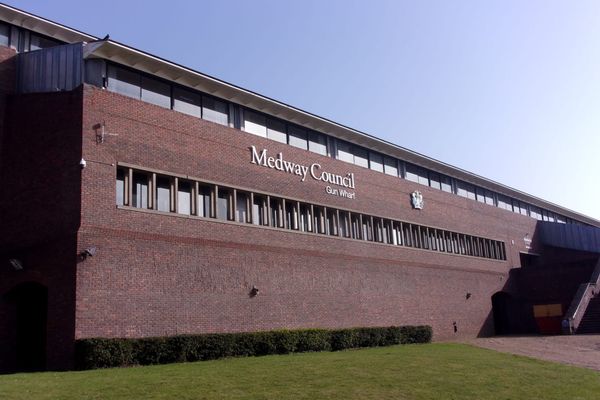
Next transport plan starts with a collective scream
Transport frustration in numbers and quotes, plus the week ahead, free buses, property, events, and lots more


Medway Council’s first consultation on its next Local Transport Plan has produced a familiar list of complaints about congestion, roadworks, potholes and unreliable buses, along with a broader sense that getting around without a car often feels unrealistic. We look at what respondents told the council and what it means for the plan that will shape transport policy after the current one expires, alongside the council diary for the week, news in brief, events, and lots more.
Next transport plan starts with a collective scream
A consultation on the Medway’s next transport plan found familiar complaints about traffic, buses, roadworks, potholes and the difficulty of getting around without a car.
Medway Council asked people what was wrong with transport in the area, which is a dangerous thing to do if you have ever met anyone waiting for a bus in Medway.
The answer, broadly, was traffic. And buses. And roadworks. And potholes. And the cost of getting anywhere. And the fact that almost every alternative to driving is either too unreliable, too slow, too patchy, too unpleasant, or too difficult to trust.

The findings come from the first stage of consultation on Medway’s next Local Transport Plan, the document that will set the council’s long-term approach to transport after the current plan expires at the end of this year.
The new plan is meant to establish the council’s overall strategy for roads, buses, walking, cycling, safety, maintenance, future investment and the wider transport network. Before producing a draft, the council asked residents, workers, students, businesses, transport operators, parish councils and other groups what they thought of the current system.
The report is not a huge survey of the whole population. It received 251 valid public responses, alongside a series of stakeholder workshops. But as a snapshot of Medway transport frustration, it is impressively comprehensive.
It reads less like a consultation report and more like someone minuted a queue on the A2.
Some of the headline numbers are striking enough on their own. More than half of the survey respondents disagreed that transport in Medway is as good as it is in other areas. Half disagreed that it is easy to travel around Medway. Nearly eight in ten agreed that travelling during peak periods is difficult.
The issue raised most often in written responses was traffic congestion, followed by roadworks, road closures and poor road conditions. Unreliable buses came next.
One respondent complained of “poor communication between councils regarding road works,” saying it recently took them two hours to get from Lordswood to Medway Crematorium because Medway Council and KCC works had clashed on diversion routes.
Another wrote, “constant temporary road closures and very poor quality road surfaces.”
A third offered perhaps the most concise diagnosis of the entire transport system. “Because the bus system is so terrible and expensive, the roads are clogged with unnecessary car journeys.”
That is the central problem running through the report.
Medway wants, and in policy terms needs, more people to use public transport, walking and cycling. But the consultation shows the scale of the gap between that ambition and the experience of people trying to get around the area now.
Car ownership among respondents was high, with 80% saying their household had at least one car. Car use was also high, with 74% driving alone at least once a month. But the report does not read like a great love letter to the car. It reads more like a place where many people feel trapped into driving because the alternatives are not good enough.
Buses are the clearest example.
Just 15% of respondents agreed that travelling by bus in Medway is easy, while 51% disagreed. More than half disagreed that public transport is affordable. Only 19% agreed that they trust public transport providers in Medway.
When asked what stopped them from travelling by bus more often, the most common answer was unreliable journey times, selected by 65% of respondents. Buses not running frequently enough was selected by 62%. Slow journey times, routes not going where people need to go, and cost all followed close behind.
The written responses are more direct.
People complained about buses being late, cancelled at short notice, or simply not turning up. Others raised poor evening services, inaccessible buses, inaccurate timetables, anti-social behaviour and the need to change in Chatham even when Chatham is not where they are trying to go.
One respondent wrote, “The bus doesn’t go directly where you want to. You always have to interchange at Chatham, which wastes time.”
Another said, “I didn’t need to drive before moving to Medway.”
The workshops held as part of the consultation added more detail. Participants described buses arriving late or being cancelled, causing people to miss medical appointments and work. Parish council representatives raised the problem of children in outlying villages waiting at bus stops in winter when buses do not arrive.
Young people were particularly blunt about safety and comfort. One said that standing alone at a bus stop, especially as a woman, could feel intimidating, especially in the dark. Another had a very clear improvement plan for Chatham bus station. “I want a new bus station, loads of flowers, comfortable chairs so people can actually wait for the bus, and security guards.”
This is where the report becomes more than a list of transport grumbles.
The council can talk about modal shift, active travel and sustainable transport. Those are all reasonable things for a local transport plan to address. But the consultation suggests many people are still stuck at a more basic stage of can the bus turn up, can I afford it, will it get me where I need to go, and will I feel safe while using it?
Walking comes out better than buses, but not without problems. Nearly half of respondents said they felt vulnerable walking on some routes, while 44% cited poor quality pavements and footpaths. A similar proportion said needing to carry bulky or heavy items was a barrier.
Cycling is even more difficult. Just 15% of respondents said they cycle at least once a month. Among those asked about barriers, the most common issues were feeling vulnerable, not owning a bike, and traffic volume or speed.
The most revealing number may be about children. Four in five respondents disagreed that they would be happy for their children to cycle to school. Only 9% agreed.
That is a fairly brutal verdict on how safe Medway’s streets feel to families. If parents will not let children cycle to school, the problem is unlikely to be solved by another bright poster about active travel.
Even where people want to walk or cycle more, they are asking for basic infrastructure, like better pavements, better lighting, safer crossings, more secure cycle parking, quieter cycle routes and fewer vehicles parked on pavements.
Then there are the roads.
The biggest priority selected by survey respondents was better maintenance of the road network, chosen by 47%. The total cost of travelling came next, followed by reducing congestion, increasing the areas accessible by public transport, and reducing journey times.
This is not quite the usual cars versus everyone else argument. The report suggests something messier, a place where drivers, bus users, pedestrians and cyclists are all describing different parts of the same broken system.
Poor bus reliability pushes people into cars. More cars create more congestion. Congestion makes buses slower and less reliable. Roadworks make everything worse. Poor walking and cycling routes mean short journeys still end up being driven. New developments add pressure before transport infrastructure catches up. Everyone then sits in the same traffic, blaming everyone else for being there.
Some respondents did offer more ambitious ideas. Trams were mentioned. So were park and ride schemes, more bus lanes, cheaper public transport, unified ticketing, better links between buses and trains, and even a ferry across the river.
There were also calls for more practical fixes, such as real-time information at bus stops, bus routes to more destinations, more frequent services, better roadworks coordination, improved station parking, more public toilets, less pavement parking, and safer routes to schools.
The report’s own conclusion is polite. It says residents have identified interconnected priorities around public transport reliability, affordability and coverage, traffic congestion, road infrastructure, sustainable travel, inclusivity, integration, the environment and safety.
Which is one way of putting it.
Another is that Medway has produced a formal document confirming that many people find getting around Medway difficult, expensive, unreliable, unsafe, or some combination of all four.
That does not mean the next Local Transport Plan can fix everything. Some of this sits with bus operators, rail companies, funding settlements and national policy. Some of it is just Medway being Medway, with towns, villages, hills, a peninsula and bottlenecks bundled together and told to behave like one tidy urban area.
But the consultation does give the council a useful starting point. It shows that the problem is not just persuading people to make different travel choices. It is making those choices feel realistic.
Medway’s problem is not that nobody knows what is wrong. The consultation shows people know exactly what is wrong, because they sit in it, wait for it, pay for it, or walk around it every day.
Council matters
Meetings next week:
- Tuesday: Cabinet meets to discuss the Article 4 Direction against HMOs, and procurement for the Innovation Park Medway project and residential care for older people.
- Wednesday: Planning Committee will decide on three HMO applications, where it looks set to approve two and refuse one.
New planning applications:
- Application for a block of three flats on a tiny strip of land on New Road in Chatham alongside the former Buzz Bingo site.
- Just the two HMO applications this week, for Castle Road in Chatham and Priestfield Road in Gillingham.
In brief
🚌 It's a free bus weekend, which means between Saturday and Monday, you can get on any bus in Medway for free. All operators are taking part, and all journeys are free, even if you travel outside of Medway. If you want to come back though, you'll have to pay.
🏢 Planning permission has been granted to convert a 63 bedroom student housing block in Gillingham into a giant HMO.
🚒 Cafe Nucleus' flagship Rochester High Street venue is closed until further notice following a fire in the historic building.
🏚️ The Manor Farm Beefeater in Rainham is set to close, as owner Whitbread closes the remaining pubs under the brand.
🚫 Smiles Lounge, an Afro-Caribbean restaurant on Chatham High Street, has perhaps unsurprisingly had its optimistic request to open until 3am nearly every day of the week rejected.
⚽ Gillingham Football Club have already told their players who will be kept for next season and who will be released, which seems like quite the morale boost ahead of the final match of the season.
🏆 Three young boys have been named the overall Pride in Medway winners for 2026, after they raised thousands cycling 44 miles for charity in memory of their friend.
🧑🎨 A lovely piece on the murals of Luton.
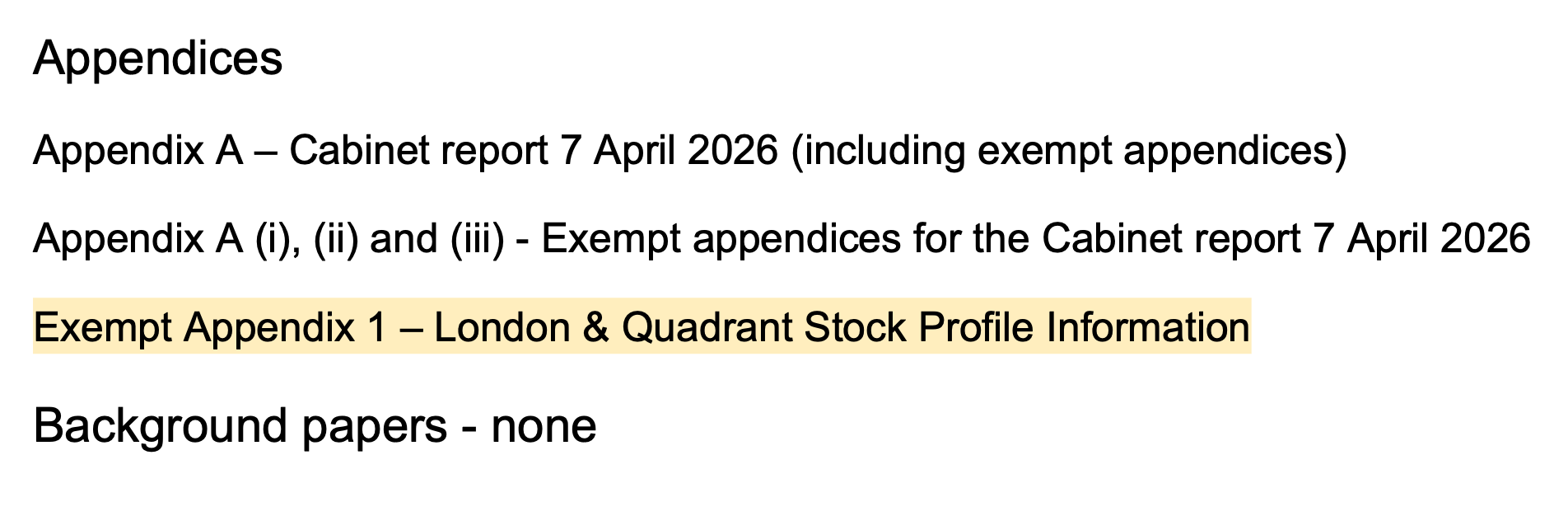
😶 Shout out to the poor soul at Medway Council who inadvertently revealed that the housing provider the authority is in a £46m negotiation with is indeed L&Q. While Local Authority has previously named the provider involved as L&Q, Medway Council has thus far insisted confidentiality agreements require it to keep the name secret. So it is perhaps not ideal that this line appeared at the end of a report on the acquisition published by the council today...
Property of the week
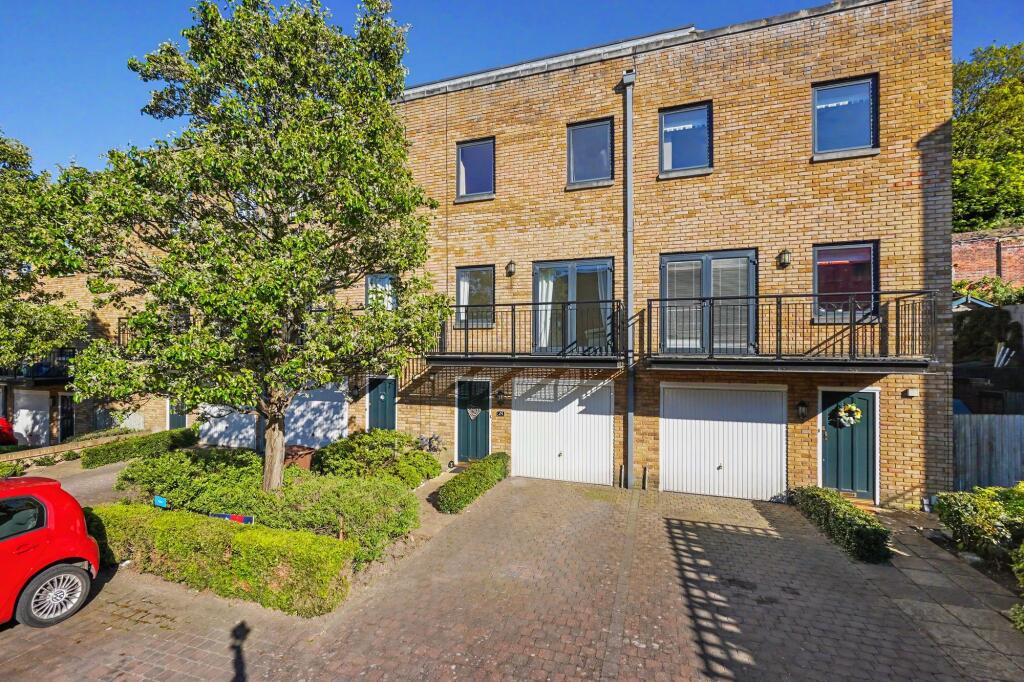
This four-bedroom townhouse in Chatham’s Historic Dockyard is on the market with no onward chain and comes with the Dockyard’s usual pitch of quiet, security and the feeling you live somewhere people pay to visit. It’s arranged over three floors, with a ground-floor bedroom that doubles as a home office, an open-plan kitchen and dining room opening onto a terrace, and a first-floor living room with its own balcony, which is a lot of separate spaces for a modern townhouse and means you can occasionally avoid the people you live with. Upstairs, the principal bedroom has an en-suite, there’s a family bathroom, and you get the practical luxuries of a utility room, downstairs loo and an integral garage that will almost certainly become storage.

Events this week
🗣️ Wed 6 May - Medway Matters Live // Latest Q&A session with council leader Vince Maple and chief executive Richard Hicks. Corn Exchange, Rochester. Free.
📽️ Fri 8 May - I Swear // Screening of film based on the true story of John Davidson, a man living with Tourette's Syndrome. St Margaret's Church, Rainham. Free.
Footnotes
Follow us on social media! We’re on Facebook, BlueSky, and Instagram for now.