Medway prepares for life after Medway Council
Gun Wharf is being prepared for a new North Kent authority, even if nobody yet knows who will run it or what exactly North Kent is supposed to be
Medway Council will disappear in 2028, but its systems, headquarters and political influence may prove harder to abolish. We examine how Chatham is positioning itself at the centre of the new North Kent authority, and the uncertain contest to control it...
Medway prepares for life after Medway Council
North Kent does not yet have a permanent name, an elected leader or much in the way of a shared civic identity. It may, however, already have a council chamber.
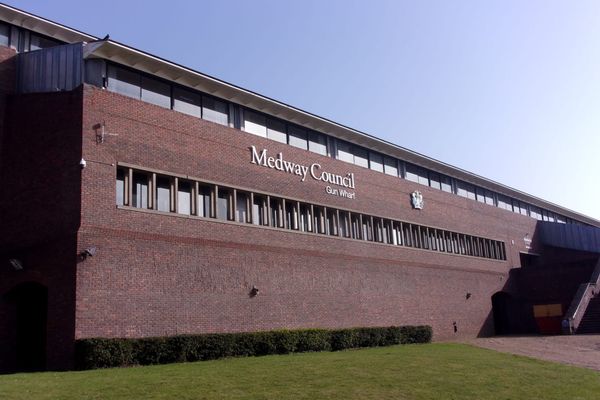
Medway Council is spending more than £22 million repairing and refurbishing Gun Wharf in Chatham. The work began with the discovery of troublesome concrete in the roof, but has since developed into a comprehensive overhaul of the building, including new offices, public spaces and a council chamber capable of accommodating 100 members.
The official paperwork says the chamber will help make Gun Wharf suitable as a council headquarters up to and beyond local government reorganisation. The proposed North Kent authority is currently expected to have 81 councillors, leaving room for 19 more than it needs. Subtle, it is not.
The headquarters decision has not formally been made. Neither has the permanent name of the authority. But Medway is already making a fairly substantial claim about where it believes the centre of gravity should be.
This is the curious position Medway now finds itself in. Its preferred model for reorganising Kent was rejected by the government and Medway Council will cease to exist in April 2028. Yet it could emerge from the process as the political, administrative and civic centre of an authority considerably larger than the one it currently runs.
The government announced on 16 July that Medway will be combined with Dartford and Gravesham as part of a wider replacement of Kent’s existing councils with four new unitary authorities. Elections to shadow councils are expected on 6 May next year, with the new councils assuming responsibility for services on 1 April 2028.
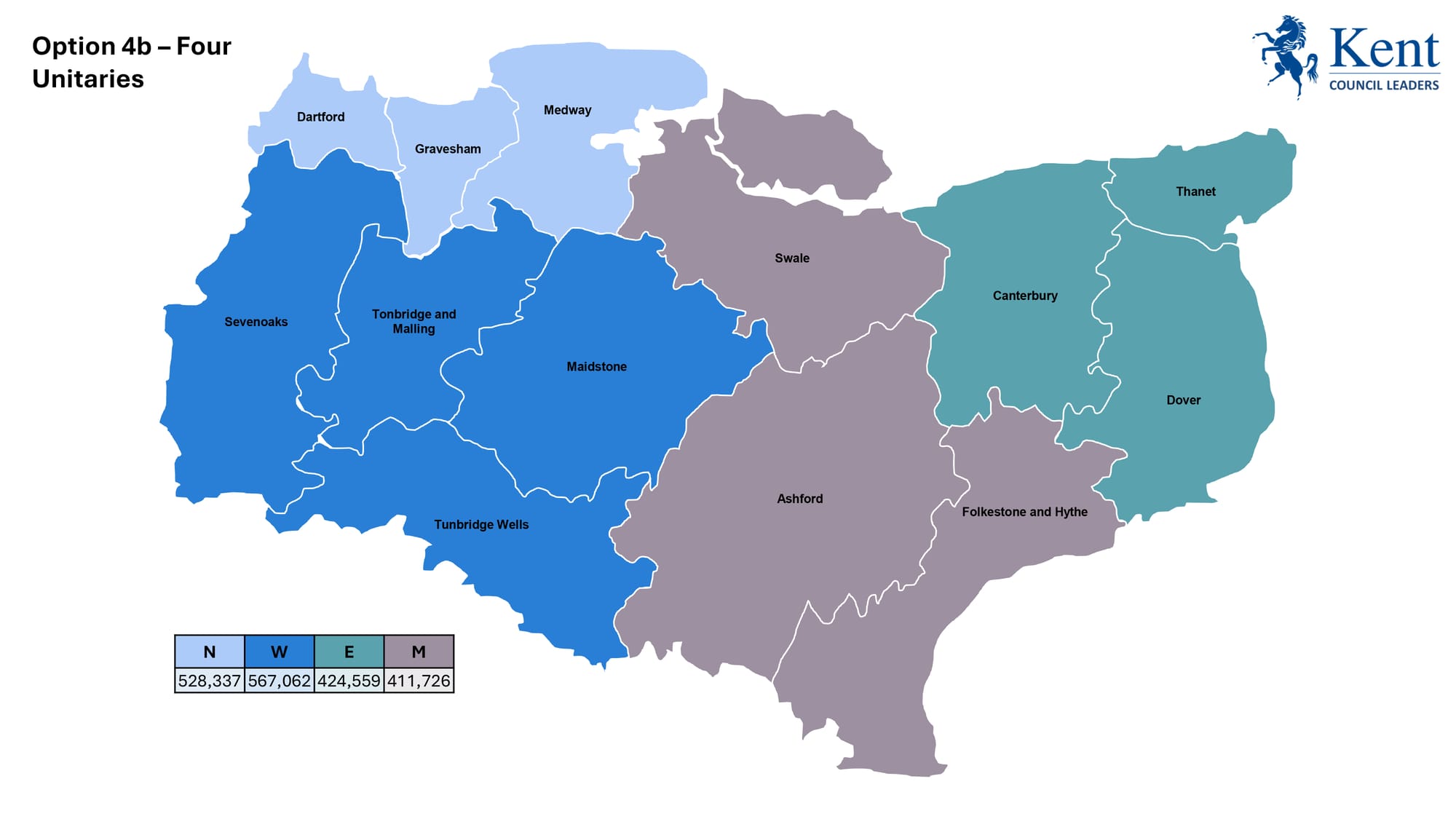
North Kent is the geographic label used in the business case rather than a guaranteed permanent name. This is probably just as well, because naming the place may be one of the easier arguments still to come.
The proposed electoral arrangements would create an 81 councillor authority. Medway’s 24 wards would each return two councillors, producing 48 members from this side of the boundary. Dartford and Gravesham would share the remaining 33.
A majority would require 41 seats. Councillors elected from Medway would therefore constitute a majority of the entire authority if they ever chose to act together. That possibility does require Medway politicians to agree with one another, which is where the tidy arithmetic begins to encounter local politics.
Even so, this is no merger of equals on the numbers. Nearly 60% of the councillors would come from Medway. It has the largest population of the three areas, an existing unitary administration and, if events proceed as Medway plainly hopes, the headquarters as well.
The strange thing is that none of the councils being combined actually chose this precise arrangement.
The successful proposal, known as Option 4B, was submitted by Dover, Swale and Thanet councils. None will be part of the new North Kent authority they helped design.
Medway backed a different four-unitary model, which would have kept most of Medway with most of Swale and included portions of Dartford and Gravesham. Dartford and Gravesham supported a five-authority arrangement that would have placed Strood, the Hoo Peninsula, Cuxton, and Halling with them while leaving the rest of Medway in a separate Mid Kent council. Kent County Council wanted one enormous authority for almost the entire county, presumably on the basis that if local government reorganisation was going to be unpopular, it might as well be spectacular.
Ministers instead selected the option proposed by three councils outside the future North authority. Medway, Dartford and Gravesham are now required to implement a structure none of them submitted.
The government’s consultation does not suggest the winning arrangement inspired an outbreak of popular enthusiasm either.
There were 3,038 responses. Across the scored questions, the three-unitary proposal attracted 48% positive responses and 40% negative ones. Under that model, North Kent would have included Swale alongside Dartford, Gravesham and Medway.
The selected four-unitary proposal received 32% positive responses and 50% negative ones. It still performed better than some of the alternatives, but this was not exactly a tidal wave of public affection.
These figures require some care. The consultation was self-selecting, respondents could assess more than one proposal, and it was not a referendum. Nevertheless, it offers little evidence that residents were clamouring for the particular North Kent they are now getting.
More awkwardly, the identity assessment prepared as part of the reorganisation process concluded that the three-unitary model would be the most reflective of local identity. That model kept Swale and Medway together and placed the wider Thames Estuary area within one northern authority.
The assessment found important connections between Medway and Swale. Swale’s most common destination for residents working outside the borough was Medway, while emergency hospital admissions also showed a strong relationship between the two areas. Sittingbourne and Sheppey already sit within the same health partnership as Medway.
The four-unitary models broke that connection. The assessment warned that some combinations could hinder the construction of local identity and concluded that four authorities would be less representative of how people travel for work, education and healthcare.
Having spent years linking Medway and Swale through planning, health and economic language, local government has now turned Medway around and pointed it west.
North Kent has been decided. Who gets to control it is another matter.
Register for a free Local Authority account to continue reading our analysis of how Medway could shape the new council, which party is best placed to run it, and why Gun Wharf may already be the headquarters of an authority that does not yet exist.