What Medway’s licensing decisions say about its priorities
Plus Medway and Dartford jockey for position, and Kent and Medway finally manage to work together

A new bar and restaurant in Strood has been granted a licence after a hearing the applicant did not attend, offering a revealing contrast with Medway’s much tougher approach to supermarket licences in Rochester and Chatham. We also look at how Medway and Dartford are already fighting over territory and influence before local government reorganisation has even been decided, and at Kent and Medway finally managing to relaunch a joint tourism and investment service after months of drift.
What Medway’s licensing decisions say about its priorities
A new bar and restaurant has been granted a licence for Strood High Street, even though nobody representing the applicant turned up to the council hearing to make the decision.
That was notable in itself. It was also revealing.
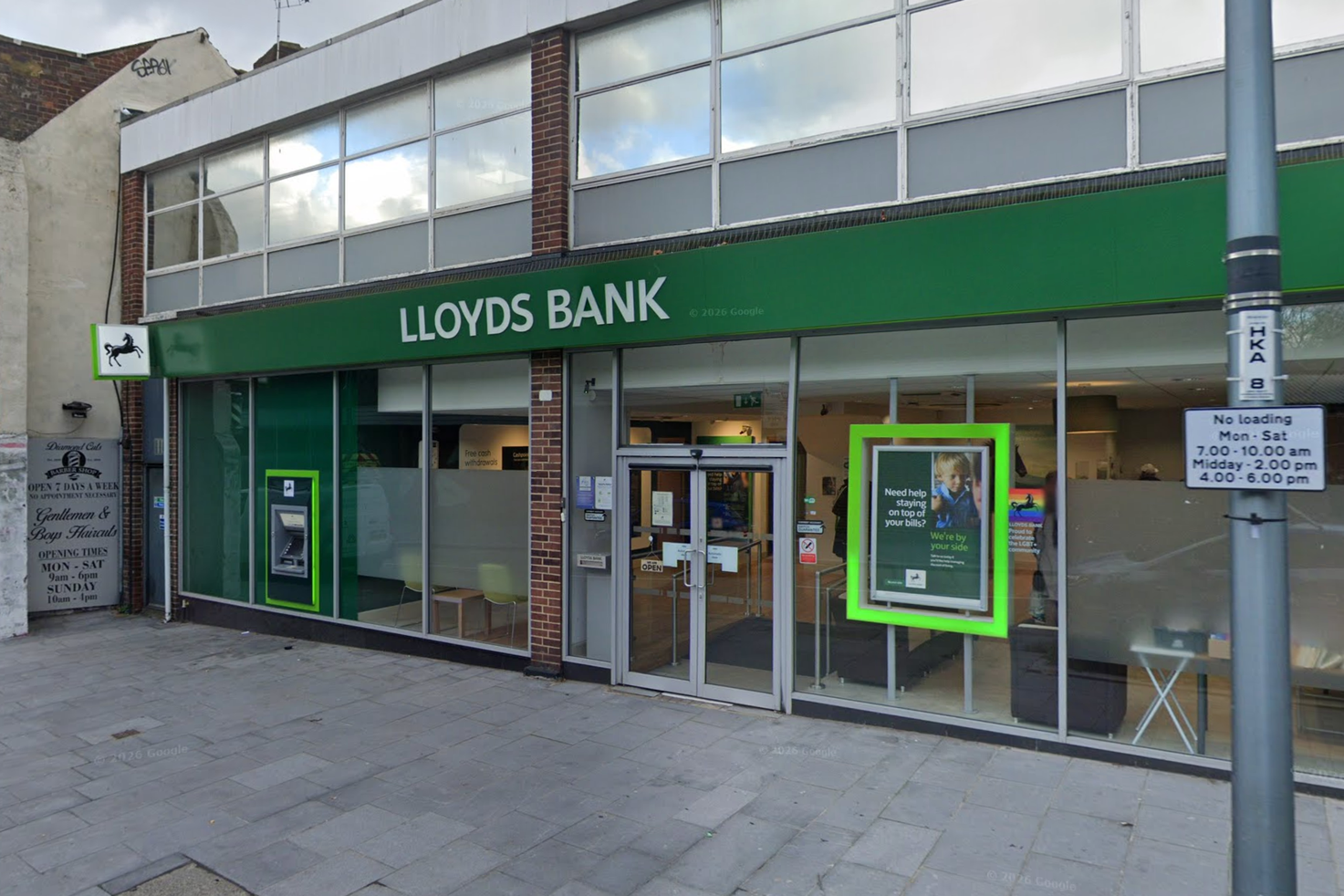
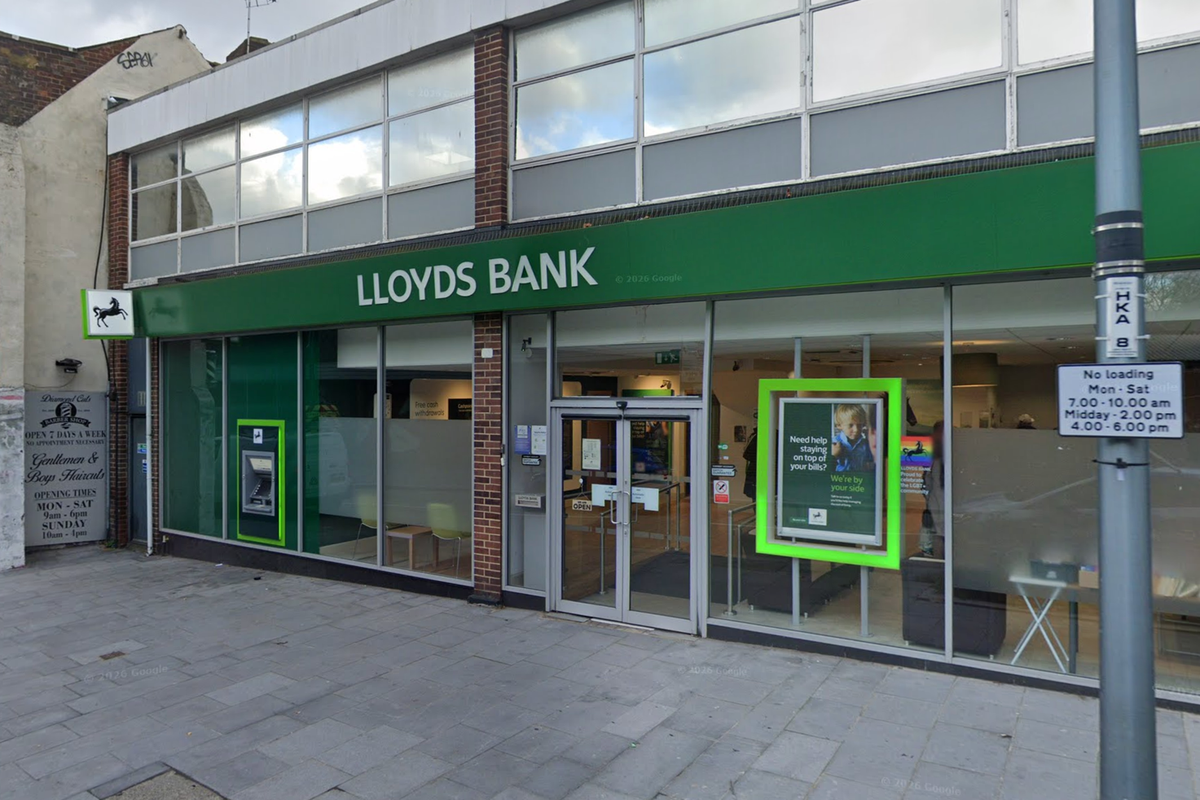
The venue in question is La Kod Lounge, set for the former Lloyds Bank building. On paper, it is not a bad addition at all. Medway’s own policy says Strood town centre has “little leisure provision” while also saying members are supportive of applications that would positively benefit the area. A new bar and restaurant in Strood is a perfectly normal thing to want in a town centre.
The original application was not exactly modest. It sought alcohol sales, recorded music and late-night refreshment until 4am on Fridays and Saturdays, along with various seasonal and special-date extensions. By the time the hearing came around this morning, that had been negotiated down to 11pm Monday to Thursday, midnight on Sundays and 1am on Fridays and Saturdays, with the extensions dropped.
Along the way, the applicant agreed to a fairly chunky set of conditions. Trading Standards got Challenge 25, signage, staff training and refusal logs. Kent Police got CCTV, incident logs, door supervisors on Fridays and Saturdays, bag checks, a dispersal policy, no re-entry after 1am apart from smokers, and restrictions on the outside smoking area. The final operating schedule also included noise control measures, sound checks, closed doors and windows, and a safeguarding policy.
So far, so normal. Licensing systems are supposed to do this sort of thing. An overcooked application gets trimmed back, conditions are added, and everyone ends up somewhere more workable.
What makes today interesting is what happened next. Chris Webb of the City of Rochester Society still turned up to object, having already raised concerns in writing about crime, disorder and nuisance linked to the original 4am proposal. The applicant, meanwhile, did not turn up at all. The panel expressed its disappointment and granted the licence anyway.
That is not an argument against La Kod. Strood should have more going on, not less. The interesting bit is what this says about Medway’s willingness to find a workable middle ground, because that willingness has been much harder to spot when the application is for a supermarket.
Take Tesco in Rochester.
That application was for a Tesco Express at Pullman House on Corporation Street, next to Rochester station. It was not seeking late-night entertainment or 1am drinking. The application before the panel was simply for off-sales alcohol from 10am to 9pm Sunday to Thursday and 10am to 8pm on Fridays and Saturdays.
 Ed Jennings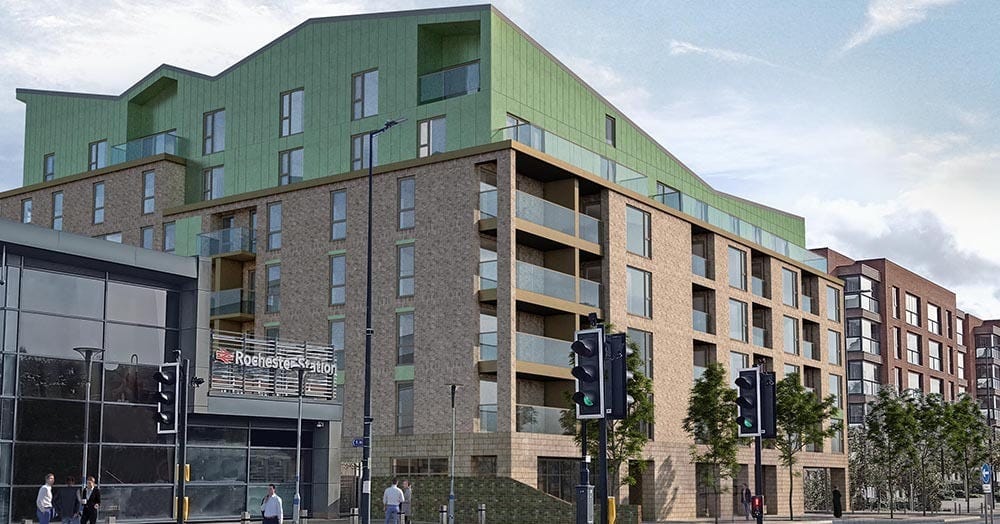
Tesco turned up in force. There was a solicitor, a licensing consultant, an operations manager and Tesco’s head of licensing. They answered questions, went through their procedures, and argued that alcohol made up only a small part of the offer, with policies on CCTV, staff training, age checks, and restrictions on stronger products.
The panel refused the licence anyway. Its reasoning was straightforward. Because the store sat inside Rochester’s cumulative impact policy area, Tesco had to show exceptional circumstances and demonstrate that granting the licence would not add to the cumulative impact. Being well-run, being part of a large chain, selling alcohol as a small part of the business, and operating similar stores elsewhere were all explicitly treated as not exceptional.
Budgens at Chatham Waterfront initially fared no better. Again, the applicant turned up. Again, there were assurances about management, restrictions on stronger products, and that this was a supermarket in a regeneration scheme rather than an off-licence. Again, the panel was unconvinced and refused the application, deciding it was not exceptional enough to justify a new licence in a cumulative impact area, although they did finally approve a revised plan a few months later.
There is an obvious policy distinction here. Tesco and Budgens were cumulative impact area cases, which are held to a higher standard. La Kod was in Strood’s stress area. They are not the same thing, and Medway would be right to say so. The council’s own papers make clear that applicants in the Strood stress area are expected to carry out a risk assessment and consider mitigation, rather than overcome the near-presumption against new licences that applies in cumulative impact areas.
But that does not really settle the bigger point.
Medway says it wants regeneration. It says it wants active town centres. It has backed mixed-use developments in places like Corporation Street and Chatham Waterfront, where ordinary ground-floor retail would seem an obvious fit. Yet when the licensed activity in question is a supermarket selling alcohol as part of everyday shopping, the practical stance has recently been much harsher. Applicants turn up, take the questions, offer conditions, cut back their case, and still find there is no real way through.
Today’s decision shows the council is perfectly capable of pragmatism when it wants to be. It can take an ambitious application, shave back the hours, add conditions and still say yes. It just does not seem to offer the same flexibility when the proposal is for a grocery store.
That leaves Medway in a slightly odd place. A late-night venue in Strood can find a route through, even with the applicant absent on the day. A Tesco next to Rochester station, with much more modest hours and a much more obviously useful day-to-day offer, turns up in force and is refused. A Budgens in a council-backed regeneration scheme gets the same answer until it doesn't.
Each of those decisions can be explained individually. Together, they suggest a council far more comfortable accommodating one kind of licensed activity than another.
For an authority that talks a lot about regeneration and active centres, that is a peculiar way to shape a town.
Medway and Dartford are already fighting before the wedding
Medway and Dartford are not even in the same council yet, and they are already butting heads over what that future council might look like.
Local government reorganisation, the grandly named process currently underway in Kent and Medway, means the existing tangle of county, district, and our sole unitary council is due to be replaced by a smaller number of much larger authorities. The government consultation on the five options closed at the end of March, and ministers are expected to choose a model this summer. Medway’s own preferred option, 4D, would redraw some existing boundaries and create four new unitaries. This proposal is backed by Canterbury and Ashford.
Whatever ministers eventually pick, one thing looks hard to avoid. In most plausible outcomes, Medway and Dartford end up in the same new authority in one form or another. That is what makes the mood around all this more interesting. Two neighbouring areas are already squabbling over whose patch matters, where the centre of gravity should sit, and who gets to define north Kent before the merger has even happened.
The bad blood has been there for a while. When Medway initially pushed for 4D, Dartford's objection was not simply that it preferred a different arrangement. The bigger complaint was that Medway seemed rather too relaxed about carving up somebody else’s district. Dartford instead backed Option 5A, a spite map that very deliberately broke up Medway, arguing that it offered the right balance between being big enough to run services efficiently and local enough to understand communities. Its public case for that model stressed “protecting identity,” safeguarding Dartford’s “unique heritage and character,” and keeping things “fair and sustainable” without losing the local connection.
That official language was translated into something much blunter in the local political fight. Dartford Conservatives ran a 'Don’t let them divide Dartford' campaign against Medway’s plan, warning that communities including Wilmington, Darenth, Hawley and Bean could be split between successor councils. That was campaign material rather than neutral analysis, but it told you a lot about how Medway’s proposal was being received. What might look, from one angle, like boundary reform was, from another, a neighbour trying to redraw your patch for their own convenience.
Dartford and Gravesham’s answer was their own five-unitary model, which would have put Dartford, Gravesham, Swanley and the parts of Medway west of the River Medway into one authority, leaving the rest of Medway elsewhere. Nobody sensible would pretend that was ever the obvious endpoint. But the point was not really whether 5A would win. The point was that Medway had tried to shape the future map to suit itself, and Dartford and Gravesham came back with a version that did exactly the same in reverse. By then, this had already stopped being a dry exercise in tidy structures and become a row about territory, identity and who gets to be in charge.
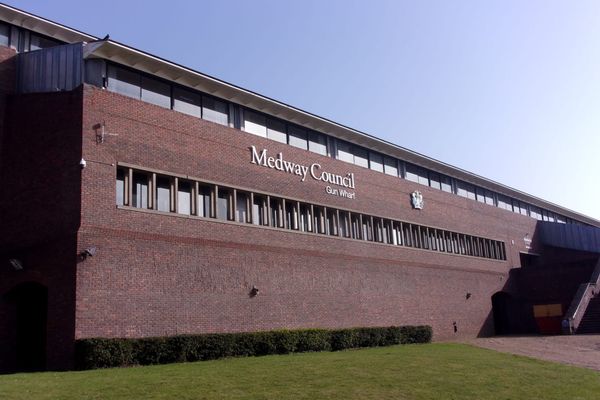
Which brings us to Gun Wharf. When Medway set out plans last month to spend more than £22m refurbishing its headquarters, the formal case was easy enough to follow. The building has RAAC and other longstanding issues and needs major work. But the scheme also includes a flexible chamber with room for up to 100 councillors, plus space for the press and public. That is not just a council fixing a difficult building. It is also a council making sure it has a headquarters that looks ready-made for a much larger authority if that is where reorganisation lands.
From Medway’s perspective, that is practical planning. If north Kent is going to be reorganised, someone will need somewhere to run it from. From Dartford’s point of view, it looks rather different. Cllr Michael Brown, the Reform leader at Dartford Borough Council, has accused Medway of trying to lock in “a new home for the council 20 miles away from Dartford” before the shape of the future authority has even been settled. Brown is putting that in the most excitable terms possible, but the underlying complaint is easy enough to grasp. If you already think Medway has spent the past year trying to arrange north Kent around itself, then a £22m rebuild of the building it hopes might house the successor authority does not look neutral. It looks like Medway is getting its claim in early.
We still do not know what model ministers will pick. But if Medway and Dartford do end up sharing a council, as looks entirely possible across a wide range of scenarios, they will not be starting from a position of warm mutual trust. They are already arguing about map lines, local identity, jobs, power and where the new centre should sit. The merger has not happened yet, but the territorial politics very clearly have.
Medway and KCC finally manage to work together
Medway Council and Kent County Council have launched a new Grow in Kent service to handle tourism and inward investment, but the real story is that this is the thing they were supposed to be doing all along.
When Visit Kent and Locate in Kent collapsed last autumn, the two councils moved quickly to sketch out a rescue plan under the Brand Kent banner. The idea was to take the work in-house, preserve the expertise and stop the county from completely losing the organisations that had spent years trying to sell Kent and Medway to tourists, investors and businesses. It all sounded sensible enough. Then it turned into another row between County Hall and Gun Wharf.
Ed Jennings
At the time, what was meant to look like a joint recovery effort instead became a neat example of how awkward the Kent-Medway relationship had become. The politics around local government reorganisation were already poisoning the atmosphere, and even something as apparently straightforward as rescuing the county’s tourism and investment machinery managed to descend into irritation and finger-pointing.
Now, several months on, the replacement has finally arrived anyway.
Under the new setup, the tourism side will continue under the familiar Visit Kent name, while inward investment work will sit under a new Invest Kent brand. Kent County Council and Medway Council say the new team includes former employees of the collapsed organisations and that it has taken on Visit Kent’s assets, including its websites, branding and social media accounts. So this is less a shiny new invention than a tidied-up version of what was already happening.
The official language is about continuity, partnership, and ensuring Kent remains an attractive place to live, visit, and invest. KCC says tourism and inward investment together are worth more than £4.1bn, while Medway’s regeneration portfolio holder Harinder Mahil said he was pleased the work would continue and that the new partnership would help both residents and businesses. “The county has a lot to offer visitors, with Medway alone welcoming nearly five million visitors each year to enjoy our vast historical and cultural sites and attractions, as well as our leisure scene,” he said.
The press release also leans on BAE Systems’ £220m investment in Rochester as an example of the kind of long-term business presence Kent and Medway want to attract and retain.
All of which is fair enough, as far as it goes. But this is not some great new economic development breakthrough. It is the formal launch of a smaller replacement for two bodies that went under last year, wrapped in a new name and accompanied by the old promises about Kent’s potential.
Footnotes
Follow us on social media! We’re on Facebook, Instagram, and BlueSky, but not that other one.