Upnor Castle was open six days a week. Now it opens once a month
The cost of thinning out public access, plus school exclusion data, and a new Kent-branded party

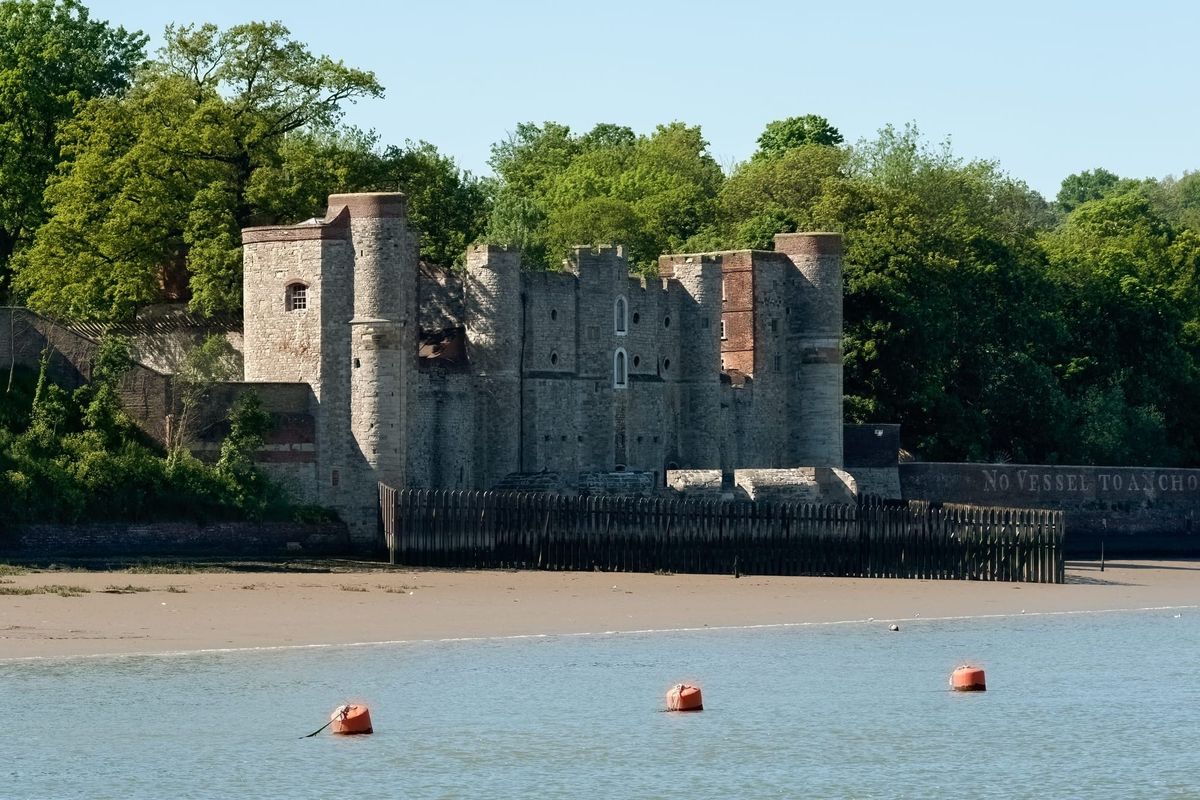
Upnor Castle has gone from regular seasonal opening to two guided tours on the last Sunday of each month, following Medway Council’s decision to hand the site back to English Heritage. We also look at new figures linking hundreds of Medway school suspensions and exclusions to racist, homophobic, transphobic and disablist abuse, and at a new Kent-branded political party bringing old hard-right politics to Chatham.
Upnor Castle was open six days a week. Now it opens once a month
For decades, Upnor Castle was simply there.
You could visit on a Wednesday afternoon, take the children during the school holidays, wander around the gun platforms and look out over the river. One of Medway’s strangest and most important historic sites functioned as a place people could actually use in person, rather than just a line in a heritage strategy.
Now, if you want to get inside, you need to plan rather more carefully.
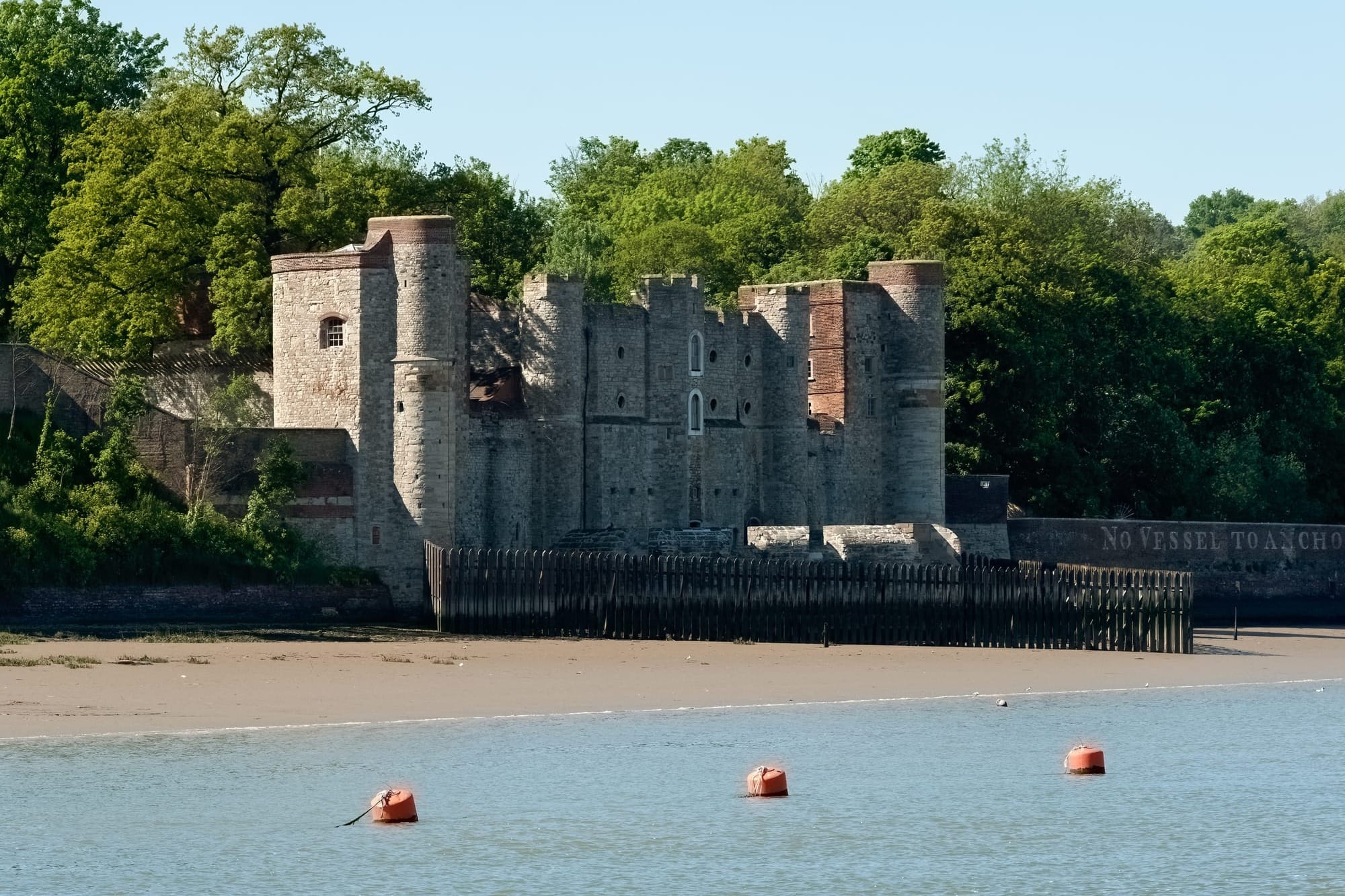
Following Medway Council’s decision to hand Upnor Castle back to English Heritage, the site has gone from regular seasonal opening to guided tours on the last Sunday of each month. There are two tours, at 1pm and 3pm. That is, technically, still public access. It is also a very different thing from being open all day, Tuesday to Sunday.
The change follows a decision by Medway Council’s Cabinet in January to end the Local Management Agreement under which the authority had managed Upnor Castle, Rochester Castle, and Temple Manor on behalf of English Heritage. Rochester Castle will remain with the council. Temple Manor and Upnor Castle are being handed back.
The reason given was money. The report said the move would 'reduce running costs' and that ending the arrangement for Upnor Castle would create 'revenue and capital savings' for the council. What it did not do was publish the figure. The financial details were placed in an exempt appendix, meaning the public can see the consequence of the decision but not the savings that justified it.
The saving is unlikely to be transformative. Upnor Castle was not some sprawling municipal empire. The report said two permanent members of staff were connected to its operation, with TUPE arrangements expected as responsibility moved to English Heritage. Visitor numbers had fallen from 19,000 in 2023/24 to 13,000 in 2024/25, making it a modest attraction by volume but hardly an irrelevant one.
The council’s own report anticipated concerns about access. It said English Heritage had confirmed it intended to continue operating Upnor Castle for public visits on a seasonal basis, April to October, 'consistent with current arrangements.' That is not what has happened in any meaningful public sense.
A castle that was open as a regular visitor attraction is now available on a handful of guided tour slots each month. The site has not closed, but it has just become far more difficult to visit.
There are good reasons why English Heritage might prefer that model. A guided-tour-only site is easier to staff, easier to manage, and cheaper to run. It may make sense on a spreadsheet. It may even make sense from the perspective of protecting a Scheduled Ancient Monument with limited facilities and awkward access.
But it also changes what Upnor Castle is.
This is not Rochester Castle, looming over a high street and visible to everyone who passes. Upnor Castle sits in a village, down by the river, slightly tucked away from the rest of Medway’s heritage circuit. Its oddness is part of the appeal. It is a riverside fort built to protect the dockyard, best remembered for failing to stop the Dutch from sailing up the Medway in 1667. It is one of those places that tells a very Medway story of naval power, strategic importance, national embarrassment, and a nice view at the end.
For that story to work, people need to be able to get in.
Medway Council’s report was full of the usual language about heritage being accessible, engaging, and meaningful for all. It talked about safeguarding historic landmarks for future generations and bringing their stories to life for communities. Then, a few pages later, it recommended handing back Upnor Castle to reduce costs.
Both things can be true, up to a point. Councils are under immense financial pressure. Heritage buildings are expensive, awkward, and rarely behave as they should. Medway has to make choices about what it can afford to run directly.
But choices are still choices. If the council is going to retreat from one of Medway’s key heritage sites, the public should at least be told what was saved. Was this a painful but necessary cut? Or was Medway’s access to Upnor Castle traded away for a relatively small sum in the context of a council budget?
At the moment, we do not know. We only know what has been lost.
English Heritage may yet improve the visitor offer. The council report said it had suggested refurbishing the shop, introducing a food and drink offer, replacing the interpretation, installing new signage, and adding CCTV. Some of that may happen. It may make the castle smarter, more branded, and more professionally packaged.
But a better sign outside a locked gate is still a locked gate.
There is a wider pattern here. Across local government, cultural provision is rarely abolished in dramatic fashion. It is thinned out. A building stays standing, but opens less. A service remains, but only by appointment. A public asset technically survives, but becomes harder to use unless you already know exactly when and how to access it.
Upnor Castle has not vanished from Medway. It is still there, on the river, behind its walls, waiting for the last Sunday of the month.
For Medway Council, that may count as a saving.
For everyone else, it looks a lot like losing access to part of the towns’ history.
Local Authority is now on WhatsApp
We’ve launched a WhatsApp channel for Local Authority, where we’ll share new stories and the occasional major Medway development directly to your phone.
Council chaos, planning rows, disappearing pubs, strange licensing hearings, and the rest of life around the towns can now be available in yet another app you already check too much.
Racist abuse linked to hundreds of Medway school exclusions
Hundreds of Medway school suspensions and exclusions have been linked to racist, homophobic, transphobic and disablist abuse since the pandemic, new figures show.
Department for Education data analysed by the BBC Shared Data Unit shows that between the 2020-21 and 2024-25 school years, Medway schools recorded 388 suspensions or exclusions where abuse linked to race, sexuality, gender identity or disability was cited as a reason.
Most were linked to racist abuse. Across the period, Medway schools recorded 309 mentions of racist abuse among the reasons for a suspension or exclusion. A further 68 were linked to abuse over sexuality or gender identity, while 11 were linked to abuse over disability.

The figures do not count individual children. They do not necessarily count individual incidents either. Schools can record up to three reasons for each suspension or exclusion, and the same pupil may be suspended more than once.
But they do offer one of the few available glimpses into how often prejudicial abuse is being formally recorded in Medway’s schools.
The wider picture of exclusions is striking too. Over the same period, Medway schools recorded 23,575 suspensions and 275 permanent exclusions.
The rest of Kent recorded 285 permanent exclusions.
Medway, with a fraction of Kent’s school population, recorded almost as many.
The prejudice-linked cases were overwhelmingly concentrated in secondary schools. Of the 388 mentions, 320 were recorded in secondary schools, 43 in primary schools, and 25 in special schools.
The vast majority were suspensions rather than permanent exclusions. Of the 388 mentions linked to race, sexuality, gender identity or disability, 387 were attached to suspensions. One was linked to a permanent exclusion.
Nationally, the data shows a rise in exclusions linked to abuse over race, sexuality, gender identity and disability. Across England, state-run primary, secondary and special schools recorded nearly 70,000 mentions of this kind of abuse among reasons for suspensions and exclusions between September 2020 and March 2025.
Between Spring term 2021-22 and Spring term 2024-25, the number of exclusions and suspensions where these reasons were logged rose by 68%. The increase was mostly driven by racist abuse.
The Department for Education described the national figures as “shocking” and said racism and discrimination had “absolutely no place” in schools.
There are several possible readings of the numbers. They may show schools taking discriminatory abuse seriously enough to act. They may also show classrooms, corridors, and playgrounds that reflect a harsher public mood outside the school gates.
Anti-bullying charities, education specialists and unions pointed to social media, public rhetoric, cuts to preventative work, and the lack of a consistent national system for recording bullying as factors behind the rise.
Martha Boateng, director of the Anti-Bullying Alliance, said the figures showed identity-based bullying was affecting large numbers of children.
She said, “Exclusions are not a measure of how much bullying is happening, but they are a measure of how schools respond once behaviour starts to escalate, and it shows us that it’s clear identity-based bullying and issues are affecting large numbers of children.”
“When bullying targets someone’s identity, it really gets to the core of who they are.”
Laura Mackay, a former headteacher and chief executive of LGBT+ charity Just Like Us, described the exclusions data as “the tip of the iceberg.”
She said: “That’s just where it’s become so serious that it’s led to an exclusion.”
That is the problem with using exclusion data to understand bullying. It only captures the point at which something has gone far enough for a pupil to be formally sent home or removed. Everything below that line is much harder to see.
England does not have a full national picture of bullying in schools. There is no legal duty on schools to record pupil-to-pupil bullying consistently.
A spokesperson for the Equality and Human Rights Commission said bullying on the basis of a protected characteristic should be treated very seriously, and that schools were required to ensure they did not discriminate in how they dealt with it.
The commission has previously called for better data on bullying in schools, broken down by protected characteristics.
Medway Council said decisions on suspensions and exclusions are made by schools independently, under their own behaviour policies.
Cllr Tracy Coombs, Medway Council’s portfolio holder for education, said, “Decisions made to impose suspensions and exclusions are made independently by schools, which follow their own policies on behaviour.”
“In Medway, we remain committed to supporting children to help them achieve their full potential, and we always follow procedures to place children with another school or alternative provision, in line with our statutory responsibility.”
“Suspensions and permanent exclusions are reducing significantly in Medway due to the inclusive work being undertaken by schools.”
The council said most schools in Medway had engaged with trauma-informed training, while funded outreach and coaching support were in place to help schools manage challenging behaviour and support children with special educational needs and disabilities.
It said secondary schools had also revised the local Fair Access Process, allowing greater use of respite, intervention placements in alternative provision, and trial placements in other schools before exclusion is used.
So Medway’s answer is that exclusion decisions sit with schools, that the council’s role is to ensure children are placed elsewhere when they need to be, and that local efforts to reduce exclusions are already making a difference.
The data still leaves a harder question.
Over five school years, racist, homophobic, transphobic and disablist abuse was formally cited hundreds of times in Medway school exclusion records. That is not the whole picture. It is just the part serious enough, and recorded clearly enough, to make it into the paperwork.
No news is bad news. Local Authority is proud to be taking part in Indie News Week, highlighting the importance of independent local journalism across the country.
As part of that, we'll be holding an open newsroom event on Friday 19 June, between 10am and 5pm, at Sun Pier House in Chatham. Come along, meet the Local Authority team, talk to us about the stories we're covering, and the stories we're not!
No booking is required, but if you could let us know you plan to pop along by emailing steven(AT)localauthority(DOT)news, it'll help us get a better sense of numbers.
A new Kent party with some very old politics
A new hard-right political party founded by former Reform parliamentary candidate Daniel Dabin is holding its first public meeting in Chatham next week.
GB Freedom says it will launch at St Mary’s Island Community Centre on Wednesday 3 June, with a two-hour meeting setting out its programme on water, housing, energy, policing, and cost of living.
The party presents itself as 'Kent’s own party' and says it is 'locally rooted' and 'member-led.' It says it is focused on Kent and Medway rather than Westminster.
Then you read its actual programme.
GB Freedom is calling for a ten-year 'complete moratorium on immigration,' a ban on 'woke and DEI practices,' 'secure borders,' and the 'preservation of British traditions.' Its Medway section says the party would oppose 'any further immigration into Medway' and promises to 'Make Medway Safe Again.'
Not exactly a neighbourhood forum arguing about bin collections.
Dabin stood for Reform in Rochester and Strood at the 2024 General Election, finishing third behind Labour’s Lauren Edwards and Kelly Tolhurst, the Conservative MP at the time. He is now listed as the founder of GB Freedom, which is registered with the Electoral Commission.
The party’s pitch is that Kent needs its own political voice, particularly on issues such as housing targets, water infrastructure, local government reorganisation, and policing.
But despite the Kent-first branding, much of GB Freedom’s rhetoric sits firmly in the language of national populist politics.
Its first public meeting will, at least, test how much appetite there is for that in Medway. A room of 50 people is not a movement. But it is enough to mark the arrival of another small fragment in the ever-splintering politics of the British right.
Footnotes
Follow us elsewhere: Facebook, Instagram, BlueSky, and now WhatsApp for new story alerts.