Why restoring the Brook Theatre became a £21.5m detective story
Five miles of scaffolding and 126 years of problems stand between Chatham and its theatre

A tour inside the Brook Theatre reveals why a planned £6.8m refurbishment became a £21.5m restoration, what three years of work have uncovered behind the walls, and why the project team now describes the building as a "detective story."
Why restoring the Brook Theatre became a £21.5m detective story
When the Brook Theatre closed in April 2023, the plan was for audiences to return two years later.
The seats should already be occupied. The dance studios should be busy. Shows should be taking place in a building that has served Chatham, first as a town hall and later as a theatre, since 1900.
Instead, the Brook is not expected to reopen until spring 2028. What began as a refurbishment has grown into a £21.5m restoration. By the time the doors open again, a planned two-year interruption will have become a five-year closure.
The original funding package was £6.8m, made up of £6.5m from the government's Levelling Up Fund and £300,000 from the Future High Streets Fund. In July 2023, Medway Council approved a further £14.7m capital allocation as surveys exposed structural problems beyond the scope of those original improvements. Local Authority was invited inside the Grade II-listed building to see how the project had grown and what three years of work had uncovered.
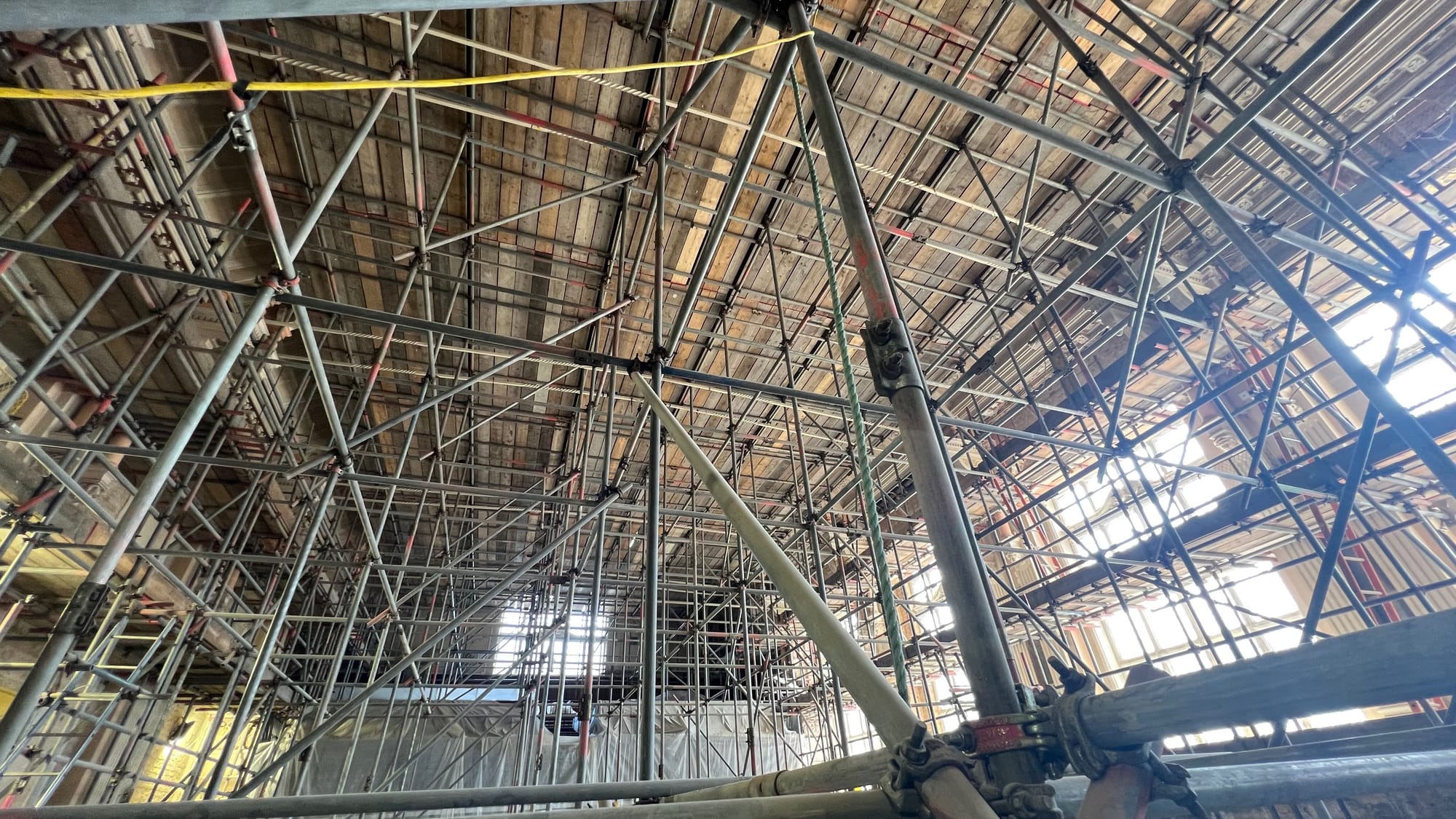
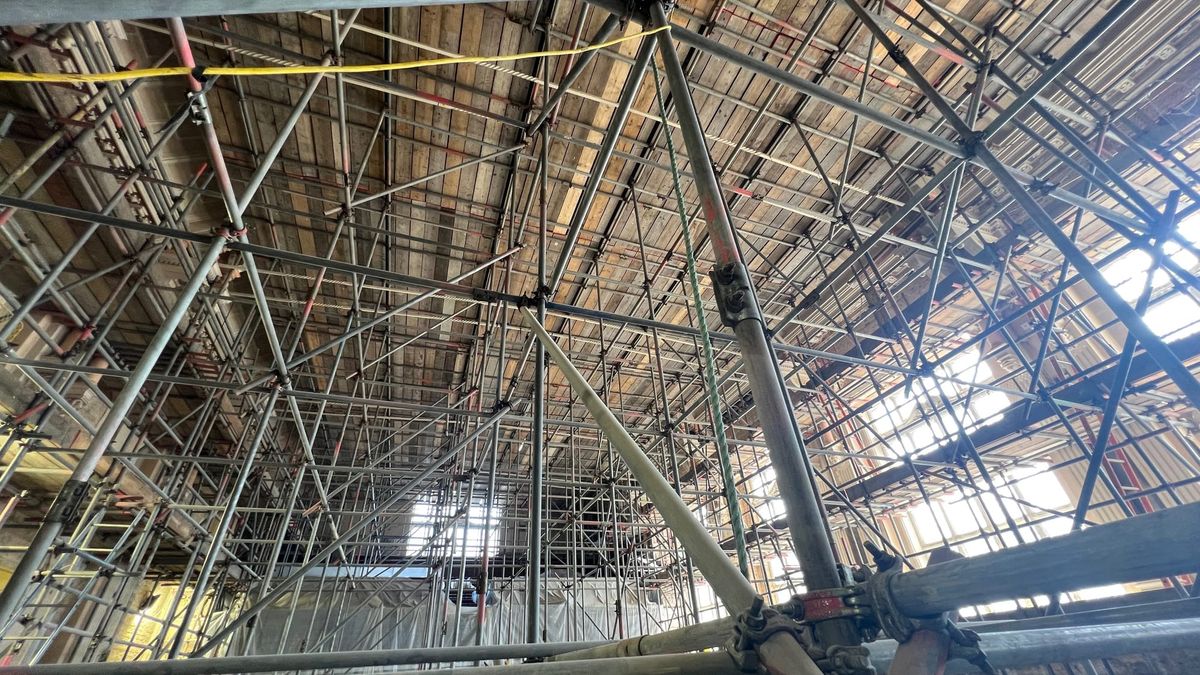
The explanation is more physical than any revised programme or committee report. The auditorium is filled with five miles of scaffolding. Walls and floors have been opened. Historic features sit beside temporary supports and modern engineering. The Brook has been carefully unpicked.
Colin Graham, senior project manager at Sinden, the construction firm leading the works, describes the process of understanding the Brook as a "detective story." That phrase makes sense before the tour has gone very far. Every generation appears to have left something behind, whether a decorative feature, a practical alteration or a problem for somebody else to solve decades later.
There was no single defect. There were 126 years of things accumulating. Water, worn-out infrastructure, alterations whose consequences only became clear when later layers were removed, and structural issues that could not be ignored once they were exposed.
A major structural problem found around Christmas was a decisive moment in the move to the 2028 timetable. The most serious problem was traced to the building's conversion from town hall to theatre. A wall had been removed to create the stage, placing the building under severe strain and pulling it apart. The discovery helped the team make sense of why the Brook had been behaving as it was.
Graham believes that stage may finally be ending.
"We think we've stopped finding problems," he says.
It is a cautious milestone in a building that has repeatedly resisted certainty. It does not recover the three years added to the original reopening date, but it suggests the team may finally be moving from finding the job to finishing it.
Some of the most damaging problems were caused not by dramatic failure but by water and the materials used in previous attempts to look after the building. Downstairs, non-porous paint prevented historic walls from breathing. Moisture became trapped, and the damp grew worse, out of sight, over years.
The drainage system is being replaced in its entirety. New heating and ventilation will be installed across the building. Structural repairs, upgraded fire protection and new services have to be threaded through a civic building designed before any of them were imagined. There have also been protracted efforts to persuade Southern Water and UK Power Networks to move infrastructure standing in the project's way.
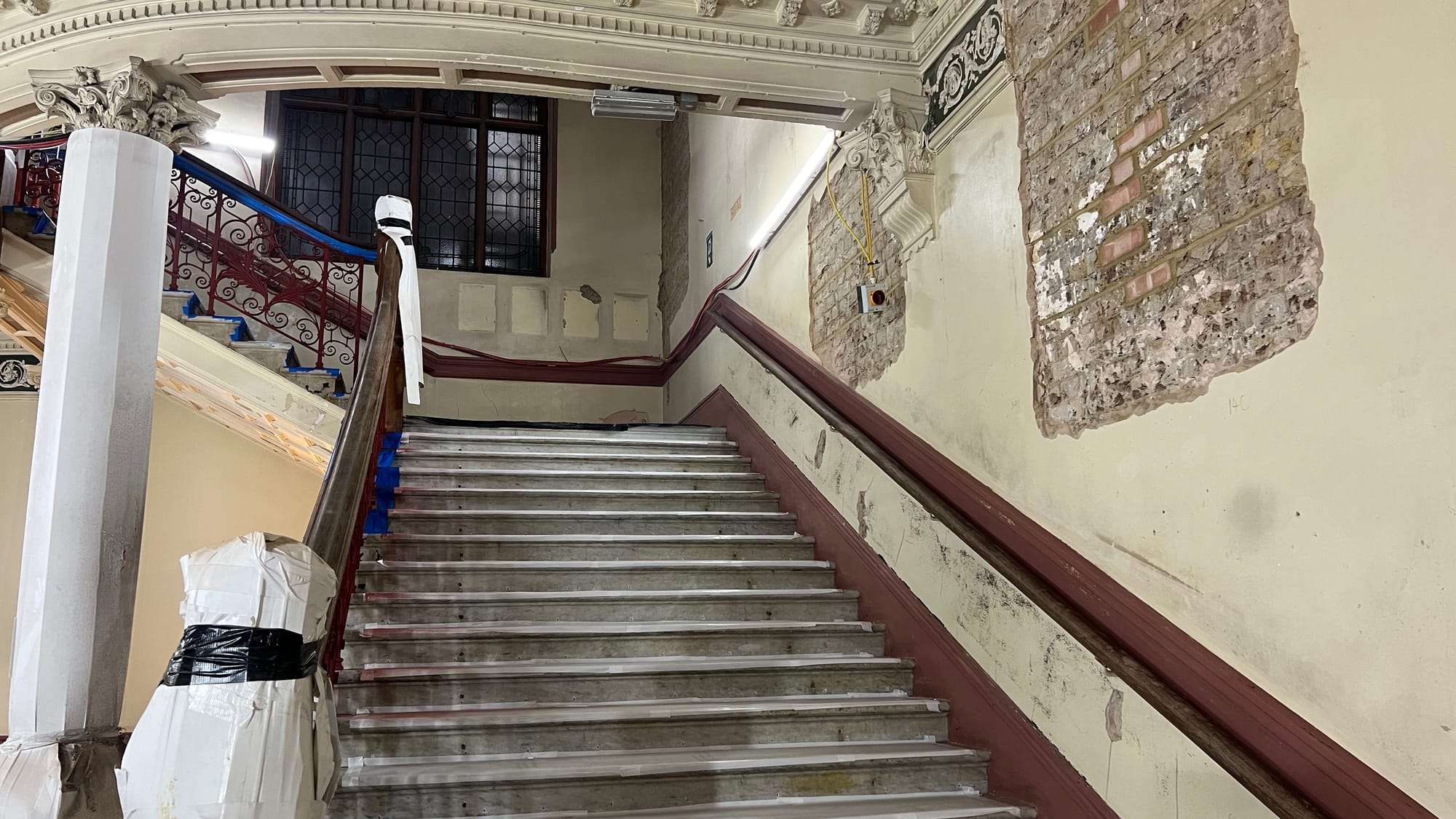
These are not the parts of a theatre restoration that make an attractive announcement. They are where much of the money and time go. The project team estimates the public will never see between 70% and 80% of the work once the Brook is finished. It will be beneath floors, above ceilings and behind restored surfaces.
The Brook was well used before it closed, and the original expectation was not that Medway would lose it for half a decade. The building deteriorated sharply in the two years before restoration began, but the scale of what lay behind its walls was only understood once the work was under way.
The Brook’s reopening has slipped by three years and its cost has more than tripled. Register for free to continue inside the theatre and see what contractors have uncovered, where the money is going and what Medway is expected to get back in 2028.