“We don’t have to impose ourselves on people”
What Steven asked Marie-Claire Delbrouque, CEO of the MHS Homes Group

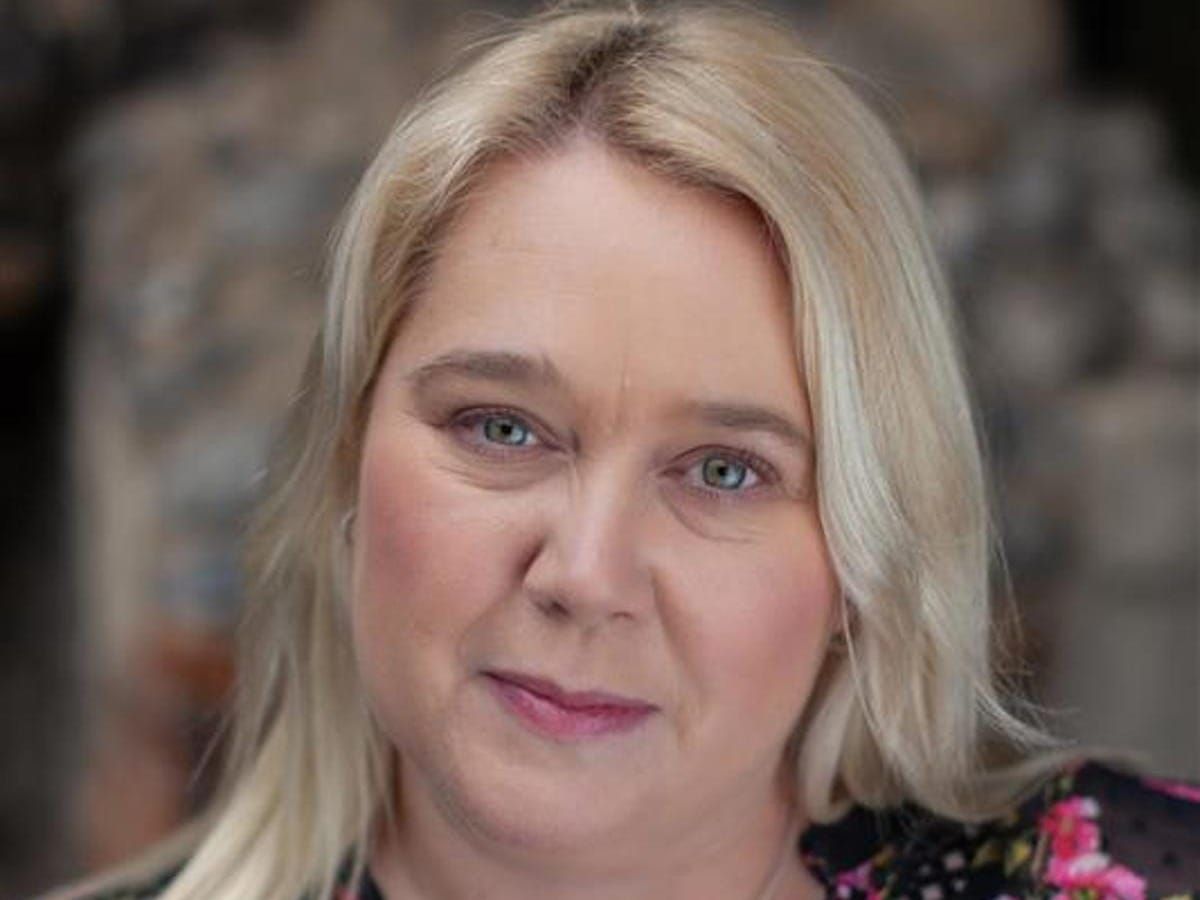
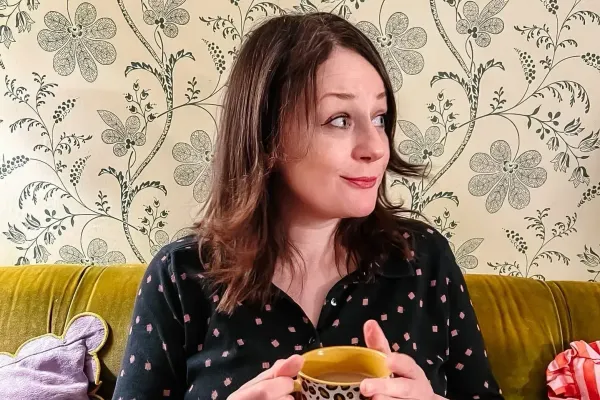
Marie-Claire Delbroque is the CEO of MHS Homes Group, the largest independent landlord in Kent. Steven sat down with her and talked about what brought her to Medway, how MHS is different to all other housing providers, and what the future might hold for the organisation.
What is your official occupation?
CEO of MHS.
What does that role entail?
It's my job to lead MHS as a group. We've got 10,000 homes. We've got our group. Our parent company, MHS, is a charity. Underneath that, we've got a registered housing provider subsidiary, Heart of Medway. I oversee the leadership team of both of those organisations. I work alongside the board to set our strategy, to make sure that we're delivering for our customers. I help set where the investment goes, how we spend our money. I look after the team, I create the future, I make sure we did a good job today and everything else that's thrown into the mix.
Do you have any additional roles, paid or unpaid?
I was a board member for the NHS but stepped down last month because it was difficult to try and give my time to both. The intersection between health and housing is important. I did that for a couple of years but stepped away.
I'm a board member for the Medway Place Board. We are Medway Champions. We are part of a whole host of different kinds of civic groups that mean that we are collectively contributing to what life in Medway looks like for the people that live in our communities.
Living in a brilliant home, a safe home, a warm home means you're far more likely to be in good health
What is that intersection between health and housing?
Well, if you live in poor housing, unsafe housing, or you might not have a home, or it might be damp, mouldy or in disrepair, then it will have huge consequences on your physical health.
Home has an important part to play in our mental health. That feeling of safety and security, psychological safety, the place we go to stay safe, to keep our family safe, to help them thrive. When your home is not a place that you love or that you look forward to going to, we can expect that there will be health outcomes there.
Conversely, living in a brilliant home, a safe home, a warm home means you're far more likely to be in good health. You're far more likely to be able to study well, to secure a job, to stay in that job, to be in a good relationship. I prefer to focus on what happens when we give people a great home from a health perspective.
What effort does MHS put into ensuring that there is positive housing and health connection?
Lots, I think. MHS is an interesting structure. I think it makes us only interesting to us, but I think it is interesting to other people because at MHS level we're not regulated by the Regulator of Social Housing. Things like Awaab’s Law, the legislation passed to make sure that people aren't living in social housing that has long-standing damp and mould concerns. Technically, at MHS, we wouldn't have to comply with Awaab’s Law because we're not a registered social housing provider, but we opt in because we know it's an important indicator of how well somebody is living in that home.
This year we will invest just over £25 million in replacing roofs, upgrading doors, windows, upgrading kitchens, bathrooms. That's probably our biggest investment ever in the history of MHS in terms of providing upgrades that matter to customers. We would do 27,000 repairs to our homes every year. I would see that as 27,000 opportunities for us to spend time with customers in their home, making sure that they are living in a safe home for them and their family.
On top of that, we have crisis support funds, tenancy sustainment teams, people that will go out and do that extra above and beyond type stuff to make sure that people are claiming the benefits they're entitled to, so that they can afford to pay their rent, keep their heating on.
How big is MHS's housing stock?
We've got just over 10,000 homes. About eight-and-a-bit thousand of those would be in and around Medway. The others would be only just outside of the Medway area. Somebody told me that one in every 12 homes in Medway would be an MHS home. That gives you an idea of context of our size and scale.
Why aren't you a registered social housing provider?
That's a huge question. That just dates back to where we began. In 1990, we were set up. There was no such thing as Medway Council in 1990. It would have been Rochester-upon-Medway, and they took the decision to create a slightly different model to other local authorities at the time when people were transferring what we called council houses into housing providers.
We have never registered since because we think it affords us some opportunity to do things slightly differently for our customers and also because we made a commitment back in 1990 and it's written black and white in our constitution. It was a promise we made to our customers. Some of those customers still live in our homes, and I think it's important that we, as a landlord, are true to our word. That's the promise we made, and we've stuck to it.
We have got Heart of Medway, which is a registered housing provider, and that gives us flexibility. It means we can choose which hat we need to wear based on the outcome we're trying to deliver for our customers.
The best example would be back when bedroom tax was introduced. MHS being non-registered meant that MHS customers were not compelled to pay bedroom tax, and colleagues, way before me, stood up against that and managed to get that money back for our residents, which I think was hugely important for them.
What is your involvement with Heart of Medway?
Heart of Medway doesn't employ any staff. It essentially accesses staff and services from MHS, and MHS provide those services to Heart of Medway. There's only two people that play a direct role in Heart of Medway from MHS, which is me and our company secretary.
One of the things that I absolutely love, genuinely love about Medway, is there's such a sense of partnership and collaboration
How does MHS improve housing for Medway as a whole?
One of the things that I absolutely love, genuinely love about Medway, is there's such a sense of partnership and collaboration. When I got here, I thought that would look like it's looked like other places I've worked. Then I got here and realised it's different here and people mean it. I can't quite get to the bottom of how it's been created. Everybody that I ask tells me it's just who we are, it's just what we do. But it's not replicated everywhere.
We will always have a charity of the year. This year it's Demelza, and that's about how we make a positive contribution to the charities and communities that we work in.
We have a program called Days for Kent, where we encourage staff to give up some of their time to volunteer locally for issues or matters that are important to our customers or people living in Medway. We sponsor various things. We have a presence at Medway Pride.
From a staff perspective, we employ 360 people. About 65% of our staff live in Medway. When we talk about community, we always say we don't just serve the community. We are the community.
What for you are the biggest challenges coming up in the year ahead? The biggest challenge for us, and we're not alone here at all, and that's why we're seeing quite a lot of consolidation in the sector, is we have a finite pot of money. Our income comes from customers' rent money, and there's a set amount of that. That has to go as far as being able to invest, upgrade, and repair our existing homes.
There are still thousands of people on the housing waiting list here in Medway, and it's our absolute fundamental responsibility to be housing as many people as we can. That constant balance between investing enough in our existing homes so people are in safe, affordable homes, but also trying to make sure we can develop is harder each year.
The last couple of years we've seen a lot of changes in legislation of social housing, all coming from a really good place intended to make sure that we are raising the bar for the people that live in our homes but there is a cost to it.
Making sure we've got enough staff that we can oversee that safely whilst also trying to make sure that there's enough set aside to develop new homes, and that's a really tough one for us.
What is your target for how many new houses to be building?
We don't have a target. What we have is a business plan that sets aside as much as we can. We have had to lower our development program intentionally over the next three years because the level of investment needed in our existing homes is higher than it has been in the past, and that has to be our primary responsibility.
Why is that?
It's a number of things. Because our homes came over from stock transfer in 1990, it means lots of things like roofs, for example, will be due to be replaced at a similar time. Cost of labour, cost of materials has gone up, cost of using subcontractors to help the specialist works has gone up, cost of living is higher, so our wage bill is higher.
Where we happen to be in the life cycle of components means we've got more to repair or replace over the next few years. They're important because if we don't get something like roofs, windows, doors right, they turn into leaks, damp and mould, and we end up paying much more in a responsive repairs budget to just keep going back repairing something.
Part of it's a data issue. We have good data, but it's not perfect. It makes assumptions on when somebody's boiler, windows or kitchen is due for replacement. The only way we know that is by getting out there, working with customers and seeing it for ourselves. We've invested a million pounds this year in trying to get into every single one of our homes to make sure that we are clear on what's needed.
We hope in terms of development we'll be able to increase development numbers from 2030 onwards.
With local government reorganisation and Medway Council coming to an end, will you become NKHS?
Well, if we follow the model of Heart of Medway, we'd be Heart of North Kent, which might make our acronym HoNK. I don't think we had a huge appetite for that. All of that is up for discussion at the moment. The thing that matters far more than the name for us is that what we have got around us is partners that we can work with. Whatever the outcome is from the local government reorganisation, we will work with whoever our partners are to do the very best we can.
But yes, there's some naming stuff there to be unpicked.