Medway’s university dream becomes a skills strategy
The future of higher education at Chatham Maritime, plus the Hoo Peninsula fire station latest
For more than 20 years, Medway has had a university campus, thousands of students, and ambitions that stretched well beyond simply training the local workforce. A new strategy for Universities at Medway offers a chance to look at what became of that original vision, and what role higher education now plays in Medway’s future.
Medway’s university dream becomes a skills strategy
There are around 8,000 university students in Medway, which is the sort of fact that feels as though it should be more obvious than it is. On any weekday, thousands of students are heading to lectures, seminars and laboratories on the Chatham campus. They are studying engineering, pharmacy, nursing, business, and science. Some are carrying out research with an international reputation. Others will eventually become the nurses, pharmacists, and engineers working across Kent.
Yet somehow, twenty years after the first students arrived, Medway still doesn't really feel like a university town.
This week, the organisations behind Universities at Medway unveiled Vision 2035, a new strategy setting out how higher education should help shape north Kent over the next decade. Like most strategy documents, it contains healthy doses of collaboration, innovation, partnerships and growth. It also contains a perfectly reasonable ambition to make higher education a driving force for the local economy. But reading it also prompts a different question. What actually happened to the university Medway thought it was building?
Back in the late 1990s, Medway was one of the largest urban areas in England without a university. Chatham Dockyard had closed little more than a decade earlier, the surrounding area was being redeveloped, and the Thames Gateway programme promised a new economic future for north Kent. A university was part of that story, but the ambition was never just to train the workforce local employers needed. It was to give Medway the sort of institution that could change how a place thought about itself.
The idea was genuinely unusual. Rather than creating a brand new University of Medway, four existing institutions would work together on a shared campus. The University of Kent, the University of Greenwich, Canterbury Christ Church University and MidKent College would each bring different specialisms while sharing facilities and creating something larger than any one institution could achieve alone. It was called the 'multiversity,' which is exactly the sort of awful word regeneration people used to enjoy saying in the early 2000s, but it was a serious civic idea.
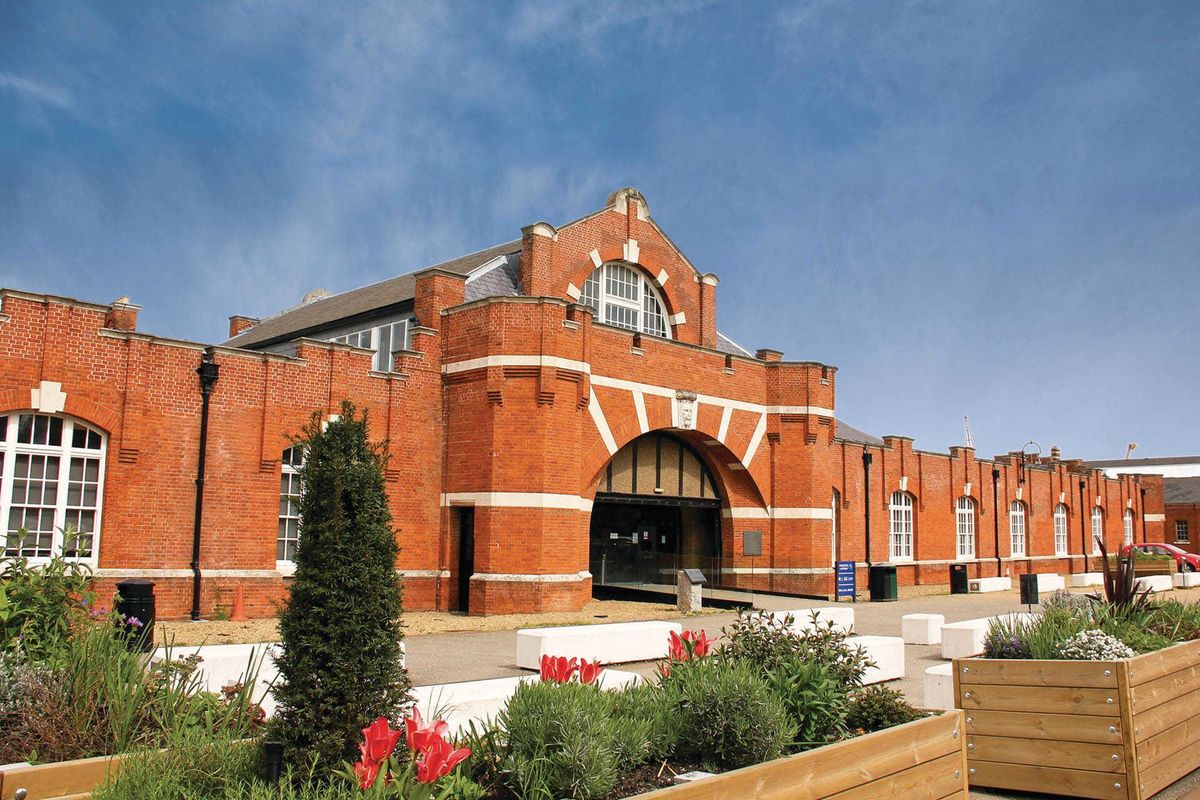
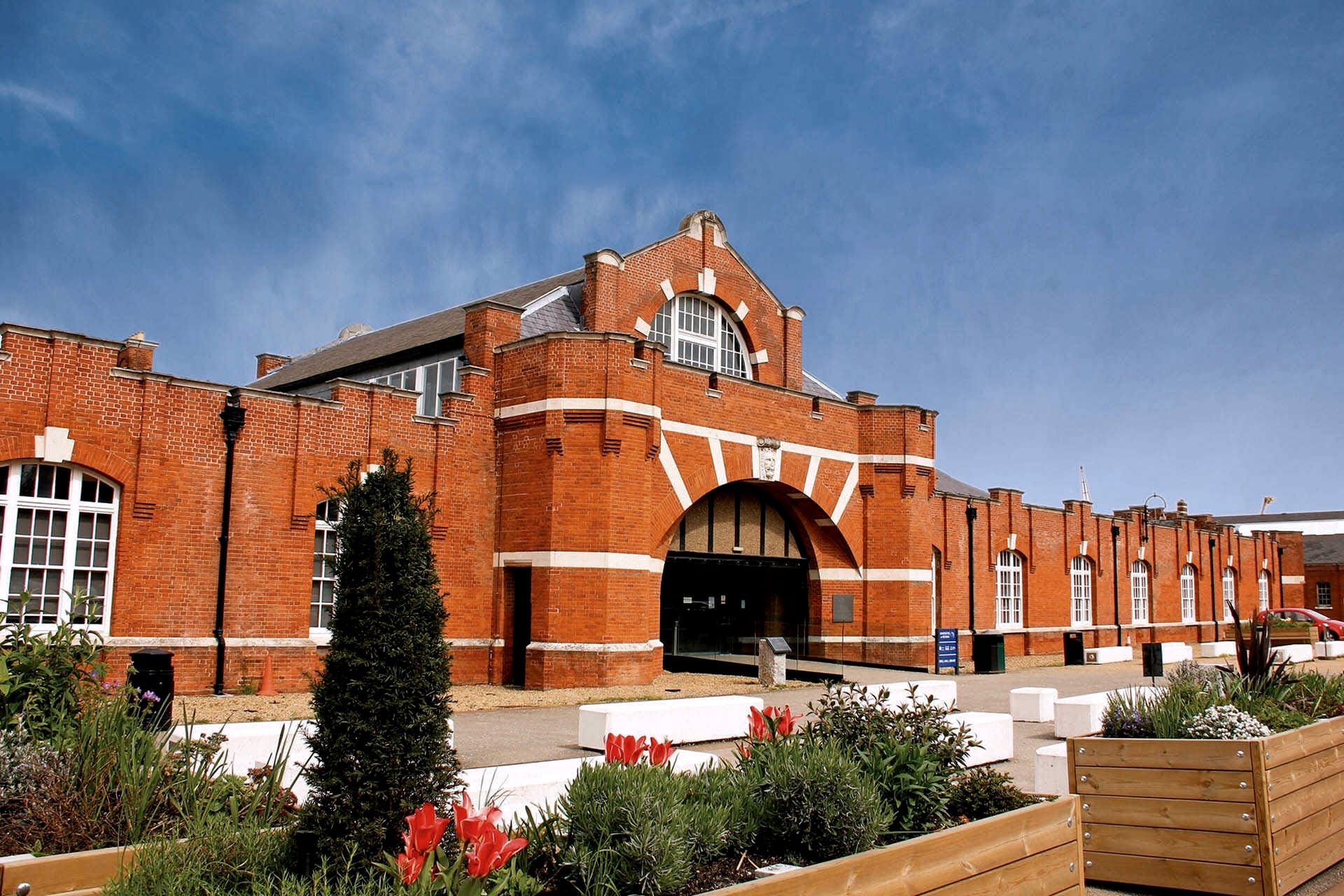
For a while, it felt exactly that. The campus grew around engineering, pharmacy, business, journalism, music, fine art and health. The Drill Hall Library became one of the largest shared academic libraries in Europe. The Medway School of Pharmacy was the first new pharmacy school to open in Britain for two decades. The Natural Resources Institute gave the campus genuine international research credentials. There were television and radio studios, industry-standard newsrooms, music rehearsal spaces and fine art studios. Journalists, musicians, artists and business students mixed with engineers, pharmacists and scientists. It was not Canterbury, but it was never meant to be. The point was to create something distinctly Medway.
Looking back, it is easy to forget quite how broad the offer once was. People often remember Universities at Medway as somewhere engineers and nurses study, which is true but incomplete. The original promise was wider than that. It was about bringing higher education into a place that had long lacked it, raising aspirations, attracting investment, and giving local young people more reasons to stay. It was also about culture, identity and confidence, even if those things are harder to fit into a strategy document.
Then, almost without anyone really noticing, the campus started to change. There was no dramatic announcement that Universities at Medway was heading in a different direction. Instead, the changes arrived one at a time. The School of Music and Fine Art closed. Journalism disappeared. Other humanities courses quietly went with it. Outside the shared campus itself, the University for the Creative Arts left Rochester altogether, removing another significant part of Medway’s higher education and creative landscape.
Kent later announced a broader reshaping of its academic portfolio, with subjects including anthropology, art history, health and social care, music and audio technology, and philosophy and religious studies being phased out. Some of those losses were part of wider decisions made by the university rather than decisions specific to Medway, but in Medway they added to the same feeling that the broad campus had become narrower. The University of Kent’s footprint also appeared to shrink, with the transfer of the Gillingham Building to Greenwich seeming symbolic of an institution gradually concentrating its activity elsewhere, even if the subsequent merger between Kent and Greenwich ultimately made the point - apologies - academic.
Spend enough time around the campus during those years, and you could feel it happening. There were still students. Laboratories were still busy, and pharmacy and engineering continued to thrive. But the place somehow felt narrower than it once had. That is not necessarily a criticism. Universities across the country have spent the past decade making difficult choices as financial pressures, changing student demand and government policy forced institutions to decide what they could realistically sustain. Medway was never going to be insulated from that.
Nor is this simply a story about decline. In some respects, the campus has become more confident about what it is. Health has expanded, engineering remains one of its defining strengths, and the Natural Resources Institute continues to conduct world-leading research. MidKent College has established the Medway School of Arts following UCA’s departure, while the University of Kent is preparing to open the Docking Station as a new creative and digital hub. Vision 2035 estimates the campus now supports around 8,000 students and 600 staff, with an annual economic impact of around £100 million.
That shift is reflected throughout Vision 2035. Read the document and one thing becomes immediately obvious: The language has changed. Today’s priorities are advanced engineering, life sciences, public services, workforce shortages, industrial strategy, employer partnerships and economic growth. None of those things are wrong. In fact, Medway Council leader Vince Maple makes exactly that case when he says the authority remains proud of the higher education provision offered locally and its role in providing opportunities for residents, “as well as a skilled workforce.”
He is probably right. North Kent has a real skills problem. The Vision document says that by 2035, about 57% of jobs in Kent and Medway are expected to require qualifications at degree level or above, while only around 40% of north Kent’s workforce is currently qualified to that level. If Medway wants better jobs, stronger public services and an economy that does more than build flats and hope for the best, it needs higher-level skills.
But it is also strikingly different from the ambition that first brought universities to Chatham Maritime. Back then, the university was not simply part of an economic strategy. It was part of a civic one. The idea was not only that Medway needed more graduates, but that Medway deserved the sort of institution that changes how a place sees itself. That original promise remains important because one of the founding aims was to broaden access to higher education. Vision 2035 suggests there is still some way to go, with fewer than 30% of Medway’s 16-18 study leavers entering higher education in 2022/23, compared with around 36% across the wider south east.
Professor Jane Harrington, Vice-Chancellor of the University of Greenwich, perhaps comes closest to capturing that original spirit when she says she believes “it is the civic duty of a university to give back to the community it thrives in, making the lives of those who live on its doorstep better.” That is a bigger ambition than supplying skilled workers. It is about creating a place that feels different because a university is part of it.
And that remains the curious thing about Universities at Medway. Walking around Chatham Maritime, the campus feels substantial, busy and successful. Walk up Dock Road to Chatham town centre, and it is surprisingly easy to forget it is there at all. Perhaps that is because there was never a University of Medway. Students identify with Kent, Greenwich or Canterbury Christ Church rather than the place itself. Perhaps it is because the campus has always sat slightly apart from the surrounding towns. Perhaps it is because many students commute in and out, meaning the campus can be full during the day without Medway feeling especially student-shaped in the evening. Or perhaps the original dream was simply harder to realise than anyone imagined.
The next decade may make the answer clearer. The merger between Kent and Greenwich should, in theory, put Medway in a more central position between London and Canterbury. It could simplify a campus that has often been hard to explain. It could bring new investment, clearer leadership and a stronger sense of what Universities at Medway is supposed to be. Or, less excitingly, it could simply mean another round of governance charts, refreshed logos, and new ways of saying 'partnership.'
Vision 2035 also proposes a new Strategic Board for Higher Education in Medway, facilitated by Medway Council and meeting at least twice a year. This may prove useful. It may even produce tangible work. But Medway has rarely suffered from a shortage of boards, strategies or people sitting around tables agreeing that collaboration is important. The more difficult task will be making the campus matter beyond the campus.
That is made more complicated by the fact that Medway itself may not exist in its current form for much longer. Local government reorganisation is expected to replace Medway Council and Kent’s district councils with larger unitary authorities, while a new strategic authority is also expected to take on wider economic responsibilities. The civic map around Universities at Medway is about to change, just as the universities themselves are changing. In that context, higher education could become more important to Medway’s identity, not less.
What is clear is that the campus being mapped out in Vision 2035 is no longer trying to become the broad university quarter imagined in the early years after the dockyard closed. It is becoming something else, a specialist partnership built around the skills, research and industries north Kent needs most. That may prove to be the right decision.
But it is also a reminder that places change in ways nobody quite expects. The university Medway ended up with is not the one it first imagined. And that says as much about the last twenty years of Medway as it does about the universities themselves.
Also...
🚒 The fight over fire cover on the Hoo Peninsula has now reached the 'motions at full council' stage, which is usually what happens when a decision is both important and not entirely in Medway Council’s hands. The latest twist is that Cllr Chris Spalding, the independent councillor for All Saints, says Grain Fire Station has been removed from the closure list, leaving Cliffe as the immediate focus of concern. Under the original proposals, both Grain and Cliffe faced closure, with Hoo retained as a strategic on-call station as part of wider changes to Kent and Medway Fire and Rescue Authority’s estate. Spalding says he submitted 20 pages of representations about Grain and now wants to work with the fire service and Fire Authority to keep it open, while turning his attention to Cliffe. Meanwhile, two motions have been submitted ahead of next week’s Medway Council meeting: one from Spalding opposing any reduction in fire cover affecting Medway, and another from the Independent Group seeking to make it the council's formal position that Cliffe, Hoo, and Grain should all be protected. Both still need to survive the usual procedural obstacle course before councillors actually get to debate them.
Footnotes
Follow us elsewhere: Facebook, Instagram, BlueSky, and now WhatsApp for new story alerts.