Medway’s new rules face their first proper test
A thinner council agenda for Thursday, Rainham traveller site saga reaches end, and a very Medway bus moment

Medway’s new full council rules face their first real test this week, with Thursday’s agenda offering an early look at what a leaner chamber now means in practice for motions, scrutiny and political space. We also report on the Court of Appeal ruling in Medway’s favour over the long-running Rainham traveller site dispute, and on a bus destination display in Rochester that could have done with a little more education.
Medway’s new rules face their first proper test
Thursday’s full Medway Council meeting will be the first proper chance to see what Medway’s newly slimmed-down version of democracy actually looks like in practice.
The answer, at least from the agenda papers, is not exactly thrilling.
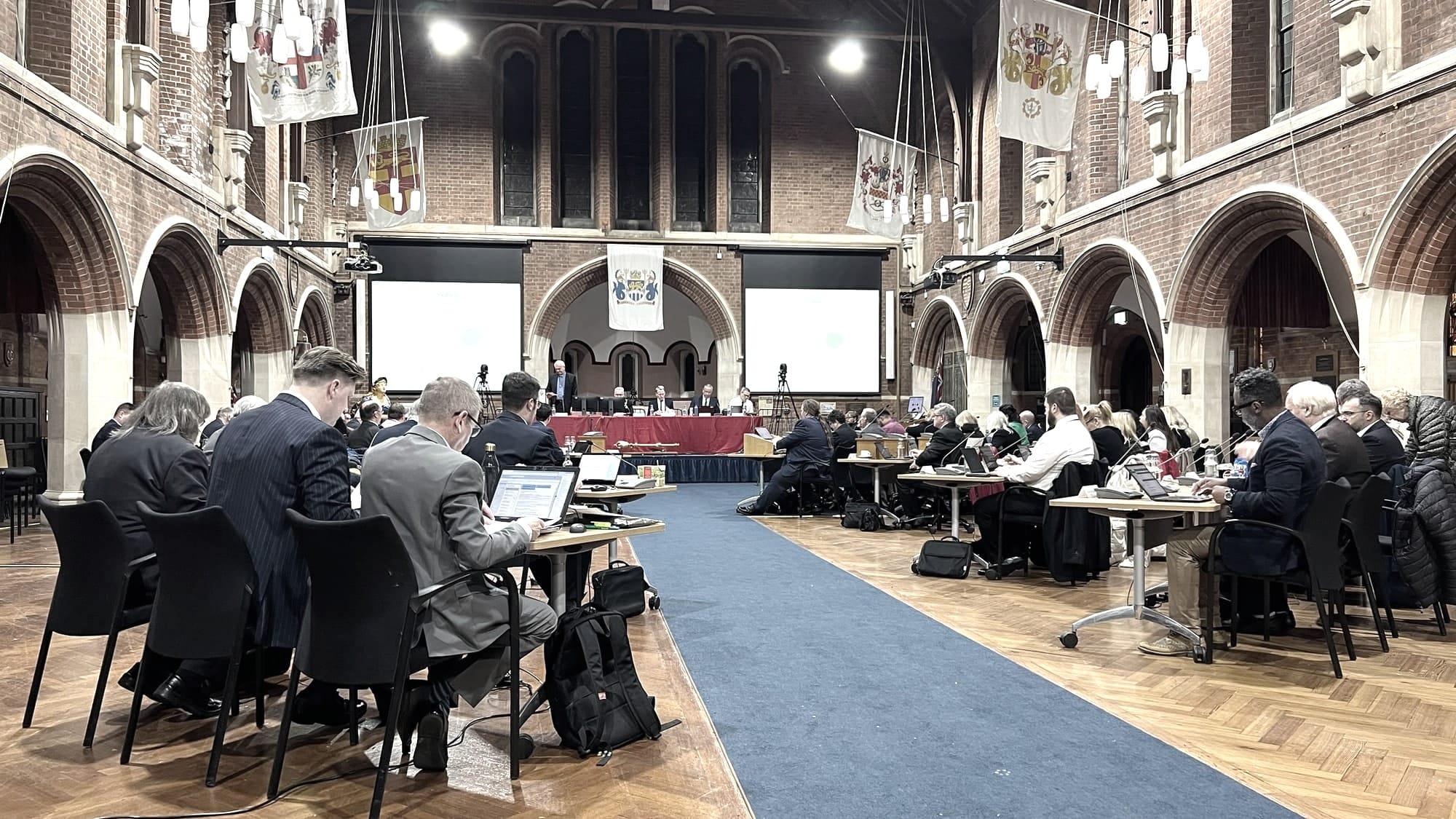
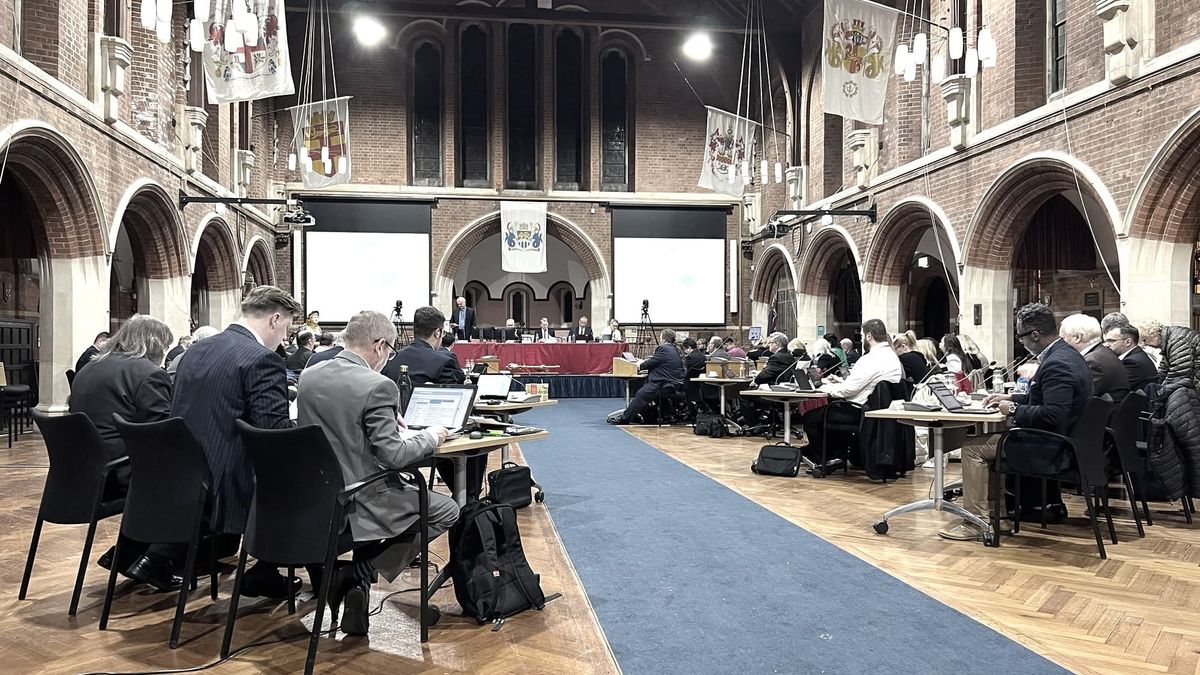
This is the first full council since Labour and the Conservatives pushed through rule changes that stripped smaller groups of their guaranteed right to bring motions to the chamber. Under the new setup, there can be no more than three motions on an agenda, with the number allocated annually based on the size of each group. For this meeting, the allocation was two slots for Labour and one for the Conservatives.
What has that produced?
One from Conservative leader of the opposition George Perfect on pressures in the local health system, and one from council leader Vince Maple on civility in public life and the legacy of Jo Cox.
So the first live demonstration of the tighter new regime is a chamber where the smaller groups have disappeared from the motions section entirely, Labour has been given two of the three available slots, and one of them has not even been used.
Efficient stuff.
Back in November, the Labour administration insisted the changes were about cutting marathon meetings down to size. Too many motions, too much grandstanding, too many late finishes. But what Thursday’s agenda shows is the trade-off in much plainer form than the theory. A chamber with less room for challenge also turns out to be a chamber with less in it.
There is something almost elegant about the anticlimax. After the rows over democratic space, after all the talk of streamlining, after all the insistence that the old setup could not continue, the first outing for the new one arrives looking thinner, flatter and quieter. The administration got the tidy order paper it wanted. It also looks a bit anaemic.
That does not mean the meeting will be dull. Full council has a habit of finding ways around that. It just means the livelier parts may come from places other than the motions themselves.
One obvious candidate is the review of Medway’s petitions scheme. On paper, this is the sort of item most normal people would run a mile from. In practice, it could be one of the more revealing rows of the night.
The reason is simple enough. While councillors have been busy narrowing who gets to force a debate in the chamber, they are now also being asked to consider how the public can apply pressure from outside it.
Officers were asked to bring forward proposals to widen access to the petitions scheme, including accepting petitions from third-party websites and making the whole setup more accessible.
Which would all sound perfectly harmless were it not for the fact that this topic has already managed to send at least one councillor into a minor ideological meltdown. Reform councillor Robbie Lammas recently erupted over the issue at an overview and scrutiny meeting, taking aim at Change.org in particular and portraying online petitions as little more than a delivery mechanism for left-wing talking points.
There is a broader point here, and it is not really about Change.org. It is about who gets to organise public pressure, whose voices are treated as legitimate, and how much discomfort the political class is willing to tolerate when residents use tools that cannot be neatly stage-managed. Medway has just made it harder for smaller groups to force issues into formal debate at full council. Now it is considering changes that could make it easier for the public to do something adjacent from outside the chamber. As political messages go, it is not exactly tidy.
Alongside that political theatre sits the biggest formal decision on the agenda, which we recently covered.
Full council is being asked to approve a £45.95m addition to the capital programme to enable Medway’s Housing Revenue Account to acquire a portfolio of 791 properties from an unnamed registered provider, subject to due diligence. Cabinet has already approved it, so Thursday is the borrowing sign-off stage.
The council says the deal would secure a large number of social housing units in one go and improve the HRA's long-term sustainability. The report says the portfolio includes 791 properties and related assets, and argues the acquisition is a rare opportunity to bring a large volume of affordable housing under council control at a lower cost per unit than buying on the open market or building new homes.
The absurdity remains the same as when the deal first surfaced. The provider still is not named anywhere in the public papers. Medway continues to behave as if this were some sort of great state secret, despite the fact that the seller's identity is hardly a mystery to anyone paying attention. So while councillors are being asked to approve nearly £46m of borrowing, everyone else is still expected to accept a kind of pantomime confidentiality in which everyone politely avoids saying that it's L&Q out loud.
There is also the usual full council furniture around it, some of it more interesting than it first appears.
Members’ Questions, as ever, are where some of the sharper edges show through. Independent councillor Chris Spalding is pressing Maple on the timetable for local government reorganisation and whether the process is becoming too rushed to run properly. Cllr Michael Pearce is asking whether any new or materially amended Local Plan documents that were not part of the Regulation 19 consultation will now be put back out for public consultation before examination hearings continue. Cllr Ron Sands is pushing on healthcare provision for the Hoo Peninsula as housing growth continues. Cllr Elizabeth Turpin has submitted what may be the evening’s most entertaining question, asking the leader whether, following comments that elected members should keep well out of potholes, there are any other areas his own councillors should also avoid.
Then there are the more procedural items. Polling place changes are proposed in Watling, Rochester West and Borstal and Fort Pitt ahead of the 2027 elections. The council is also being asked to appoint a second Independent Person for conduct matters and senior officer dismissal panels. And the annual committees and appointments report is back again, complete with recommendations on committee structures, outside bodies and next year’s schedule of meetings. None of that will set pulses racing.
Put together, Thursday’s meeting looks less like a blockbuster council session than a useful stress test.
November's fight was over whether Medway should narrow the space for smaller groups and awkward debate. That argument has already been won by the administration. Thursday is where people get to see the result.
So far, it looks like fewer motions, less room for smaller groups, and one of the dominant group’s newly acquired slots left empty anyway.
Perhaps there will be fewer late finishes. Perhaps officers will get home earlier. Perhaps everyone will congratulate themselves on a more disciplined chamber.
But if the point of full council is not just to process business but to show residents where disagreement lives, who gets heard and how power is exercised in public, Thursday’s agenda feels revealing in a different way.
Medway said it wanted a leaner democracy.
Now it gets to show us one.
An awkward typo
Thanks to reader Joseph Chadwick for sending in this fine example of public transport undermining itself. A bus on Maidstone Road in Rochester was spotted this week displaying this as the destination, which is a brave typo to beam across the front of a vehicle heading for some of Medway's most prestigious schools...

Medway wins final court fight over Rainham site it cleared twice
The long-running battle over a Rainham traveller site Medway Council once moved in to clear has now ended with a Court of Appeal ruling in the council’s favour. After years of enforcement notices, planning bids, and legal arguments, the council has won what appears to be the final court fight.
The case concerned land at Sharps Green, Lower Rainham Road, a site that has been rattling around Medway’s planning system for the best part of a decade. The council first served an enforcement notice in 2017 over the unauthorised residential use of the land, caravans and mobile homes on the site, and associated works, including hardstanding. When that did not resolve the matter, Medway took direct action to clear the land around October 2018. After further breaches and another round of planning manoeuvres, the council cleared the site again in February 2022.
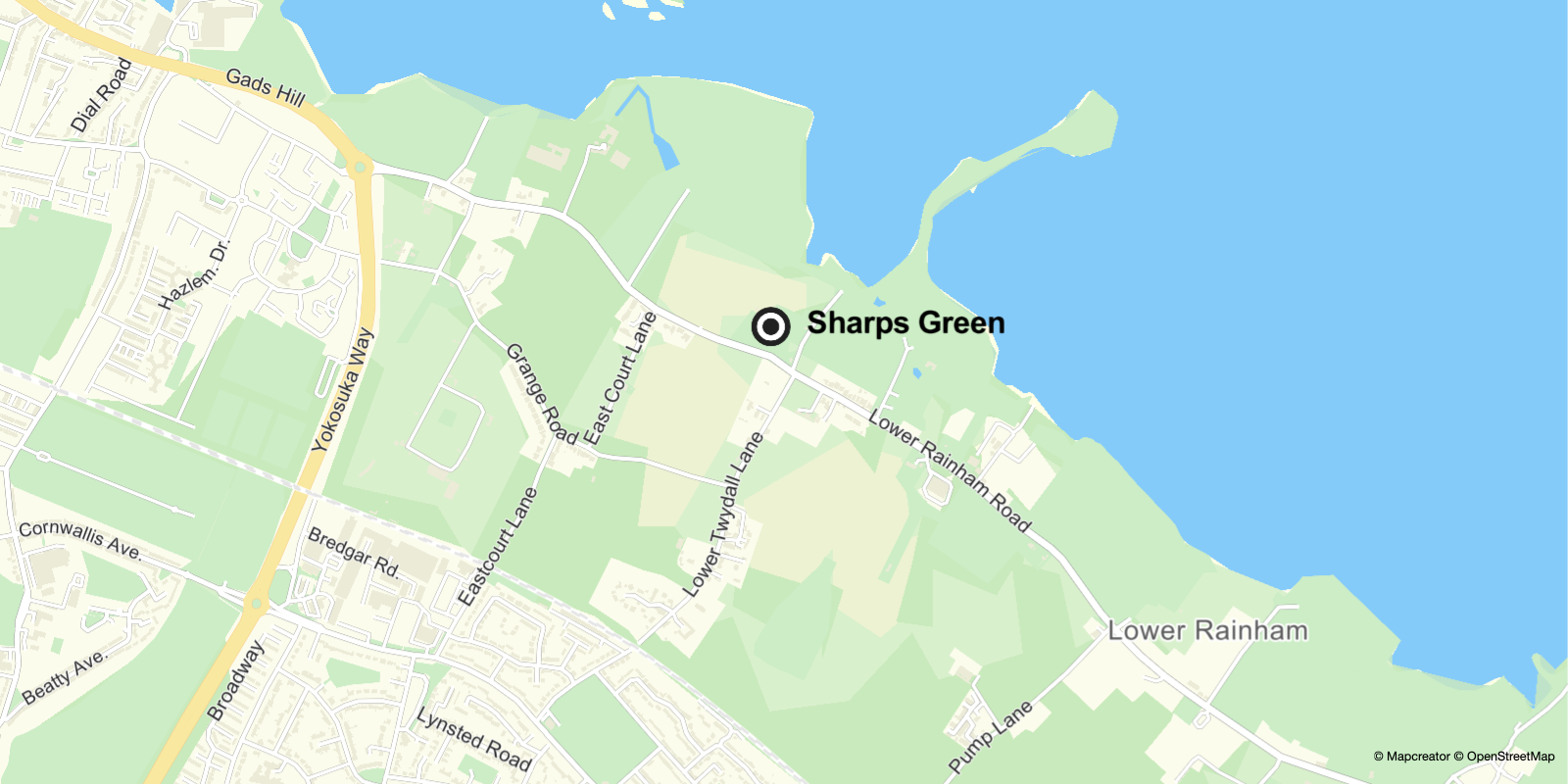
This latest legal round was about the site owner’s challenge to Medway’s November 2023 decision not to determine a fresh planning application for residential use of the land, including caravans, mobile homes, day rooms and a stable building. The High Court backed the council last year. The Court of Appeal has now done the same.
For anyone not in the habit of spending their evenings with planning legislation, the important point is fairly simple. Medway argued it should not have to keep reopening the same fight over a site it had already spent years trying to enforce against, including physically clearing it not once but twice. The Court of Appeal agreed.
The judges found clear overlap between the old enforcement notice and the newer application. The original notice covered residential use of the land, the stationing of caravans and mobile homes, and hardstanding. The later application wanted permission for much the same sort of thing, and that appeared to be enough for the court to throw it out.
The site owner argued that the council was stretching the law too far, particularly because the site had already been cleared and the later application was being put forward as a fresh proposal rather than an attempt to legalise what was already there. The Court of Appeal was not convinced. Clearing the site, the judges said, did not wipe the planning history clean or mean the council had to trudge back to square one and do the whole thing all over again.
That is the bit Medway will care about. This was not the court telling the council it had to consider the application and then refuse it in the normal way. It was the court saying the council was entitled not to entertain it at all. In planning terms, that is not just winning the argument. It is putting the argument in a box, sealing it shut and shoving it on a shelf marked 'we have done this routine enough times already.'
There is still one awkward backdrop to the whole thing. The judgment notes that Medway has an acknowledged shortfall in Gypsy and Traveller pitches, an issue that has come up more recently during Medway's Local Plan process. The council’s own assessment accepted that the shortage remained. It still argued this site was not suitable, and the courts accepted that position.
That does not make the underlying shortage go away. Medway can hardly claim there is no need for more sites while its own evidence says otherwise. But it has now won a ruling confirming that this particular site next to Riverside Country Park was not one it had to keep revisiting forever.
The site owner also argued that Medway had failed to take proper account of relevant matters, including site need, the absence of objections from statutory consultees and an error in the officer report about flood risk. The court accepted there had been a mistake over the flood zone, but said it did not change the outcome because the council had several other reasons for judging the site unsuitable.
The position now is fairly clear. A site that drew major local attention when Medway sent in contractors to clear it has now been through the High Court and the Court of Appeal, and the council has won both times. After all the years of notices, clearances and failed attempts to reopen the question, this looks like the end of the road.
Footnotes
Follow us on social media! We’re on Facebook, Instagram, and BlueSky, but not that other one.