Can the Hoo Peninsula safely lose two fire stations?
The case for moving fire cover around Kent meets the geography of the Hoo Peninsula

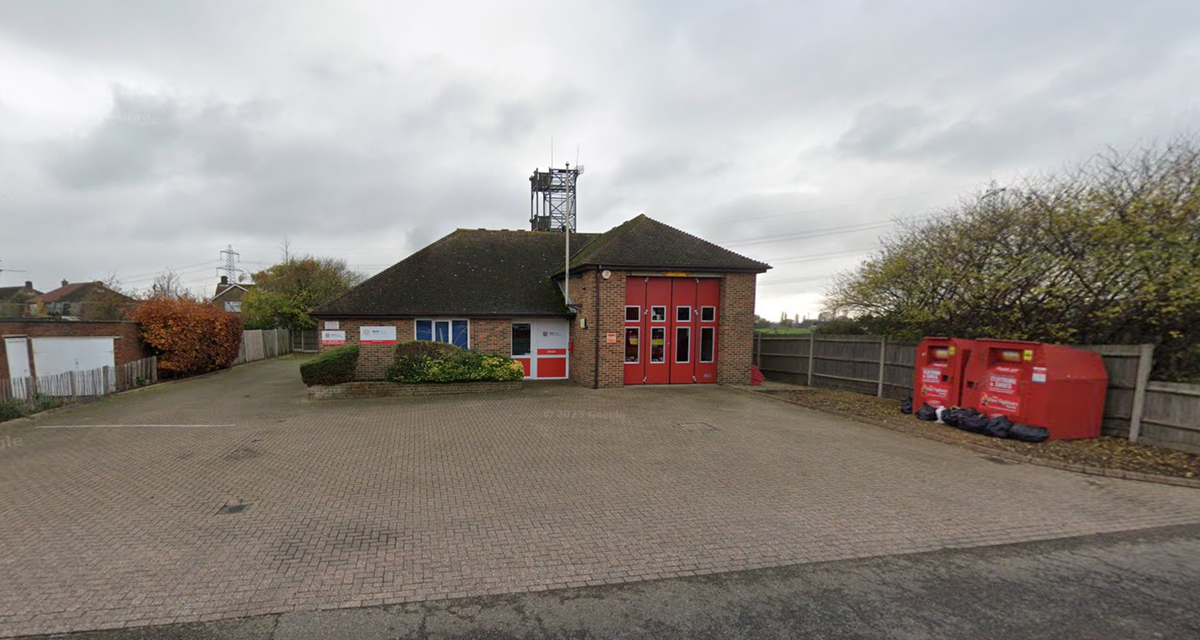
Kent Fire and Rescue Service is preparing to consult on plans to close fire stations at Grain and Cliffe, leaving Hoo as the only remaining station on the peninsula. The service says the proposals are about matching resources to changing risk and demand, while firefighters and local councillors warn that longer journeys could put residents at risk...
Can the Hoo Peninsula safely lose two fire stations?
Kent Fire and Rescue Service says two fire stations on the Hoo Peninsula can close without making residents less safe.
Over the next few months, it will have to convince people of that.
Grain and Cliffe are among five on-call stations across Kent earmarked for closure as part of a wider reorganisation of fire cover. The service says the plans are based on changing patterns of risk and demand rather than a straightforward attempt to cut costs. Firefighters warn longer journeys could put lives at risk.
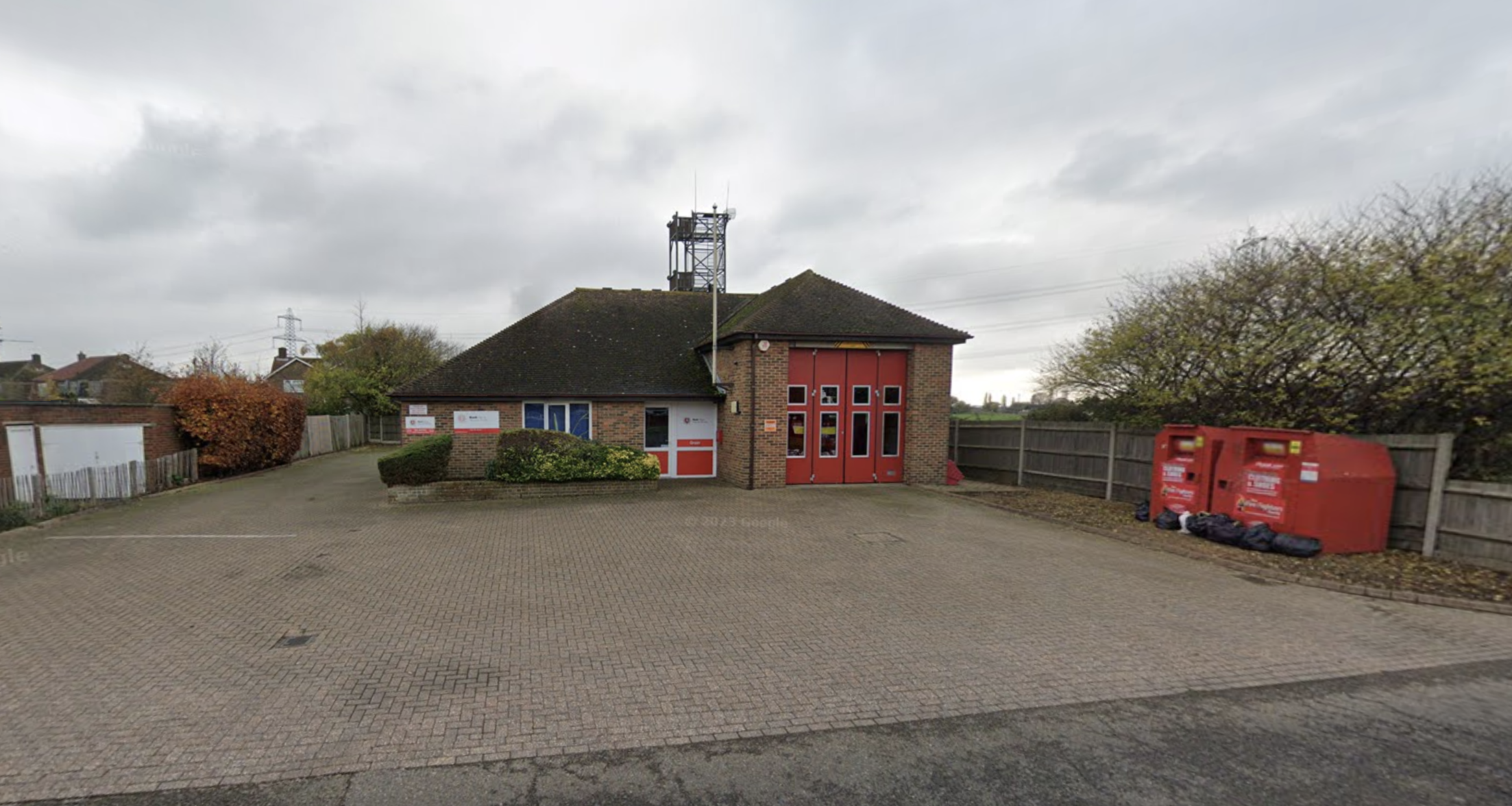
If the closures go ahead, Hoo would become the only remaining fire station on the peninsula. If that appliance was already attending another incident, it could take another fire engine more than 20 minutes to make the journey from Strood.
The proposal is part of a wider reshaping of fire cover across Kent. KFRS wants to close five standalone on-call stations, remove attached on-call sections from four wholetime stations, and move resources to areas where it says demand is greatest.
For Medway, the debate centres on a simple question. Can two stations disappear from the Hoo Peninsula without reducing emergency cover?
The answer depends partly on how you think about fire stations.
For KFRS, fire cover is not supposed to be understood station by station. It is a county-wide network. Appliances move around, crews respond across station boundaries, and resources are deployed according to risk, demand and availability rather than the emotional comfort of seeing a fire station nearby.
For residents, the calculation is more basic. If there is a serious incident on the peninsula, how quickly can help get there?
That is the question KFRS now has to answer as it prepares to launch a 12 week public consultation on the proposals.
The plans emerged this week after details were accidentally shared with staff before being reported by the BBC. KFRS subsequently confirmed that, subject to approval by the Kent and Medway Fire and Rescue Authority, it intends to consult on closing five standalone on-call stations at Grain, Cliffe, Wye, Chilham, and Westerham.
The service also wants to remove attached on-call sections from wholetime stations in Herne Bay, Deal, Tunbridge Wells and Faversham. Those stations would remain open, but would lose the additional on-call sections that currently provide a second appliance.
At the same time, resources would be moved elsewhere in the county. Under the proposals, Dartford and Northfleet would each retain two fire engines during the day but reduce to one at night. KFRS says that change would allow it to create additional daytime fire engines at Strood, Ashford and Folkestone.
For Medway, the proposal cuts in two directions. The Hoo Peninsula could lose two of its three fire stations. Strood could gain an additional daytime appliance.
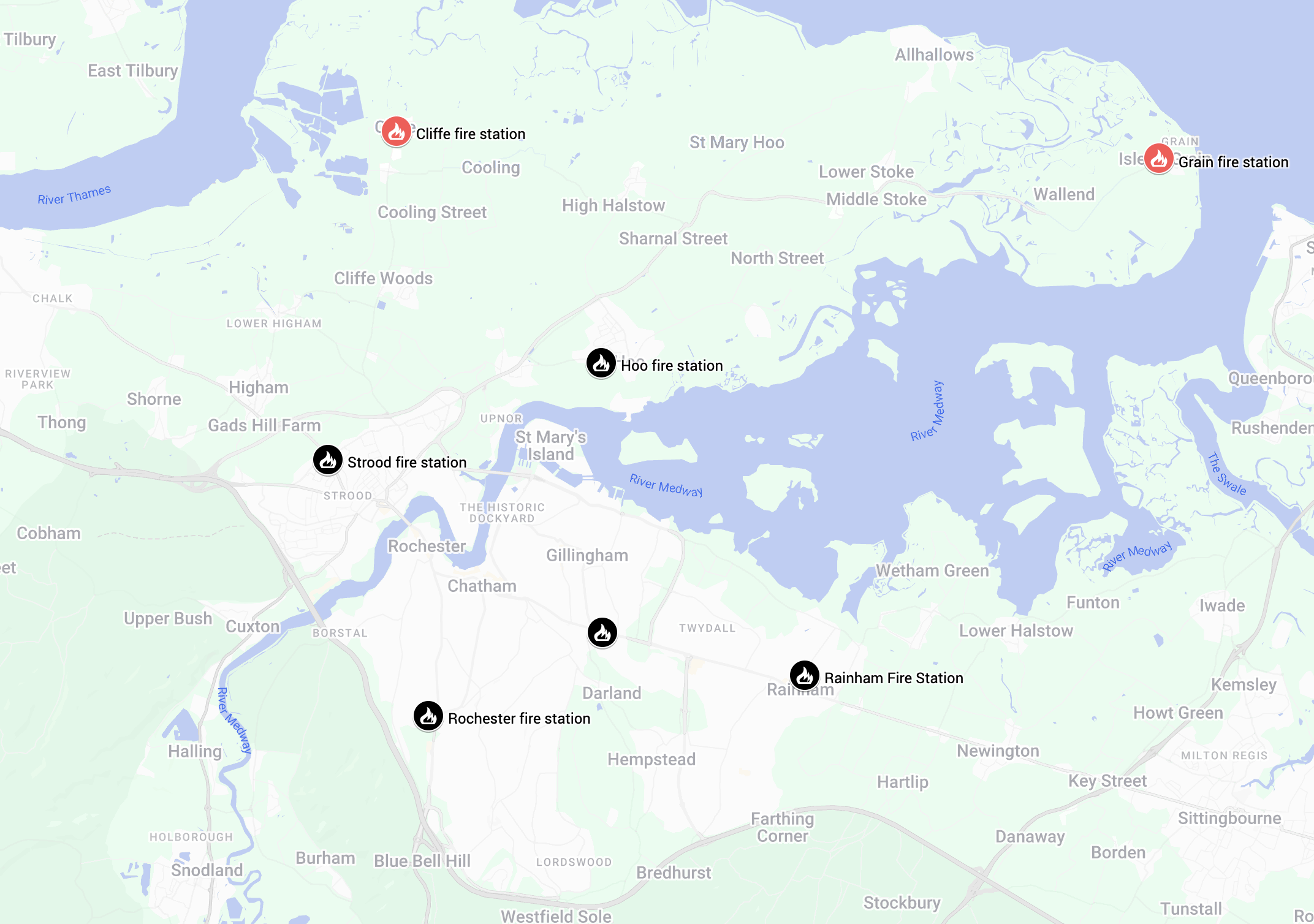
That is why this is not a simple story about local cuts. It is a story about redistribution and whether it works in a place like the Hoo Peninsula.
Ann Millington, the chief executive of KFRS, has repeatedly rejected the idea that the proposed closures are mainly about money. Speaking to BBC Radio Kent, she said the risks facing the service today are very different from those around which the existing network was designed.
“The nature of the risk has changed so much in the last 20 years,” she said. “What we’re facing now is not what was set up in the original on-call system.”
She also said some stations now attend very few incidents.
“We’ve got some stations with less than seven shouts a year,” she said. “That means that their experience isn’t equating to our ability to keep them safe.”
The point is slightly counterintuitive. Most people think of a quiet fire station as a good thing. It means there are not many fires. KFRS is making a different argument. It says that very low activity can create its own problems, because firefighters need sufficient operational experience to maintain their skills and confidence.
The consultation documents have not yet been published, so the detailed evidence behind the selection of Grain and Cliffe is not yet available to the public. One obvious question is whether either station is among those with fewer than seven callouts a year, or whether that figure refers to other parts of the county.
It also means the debate cannot be settled by broad claims about whether fire risk is rising or falling. The wider picture is more complicated than a simple decline in demand. Government statistics show Kent Fire and Rescue Service attended 18,326 incidents in 2025, up 7.6% on the previous year. Total fires rose by 22.7%, while primary fires were up 8.5%, and outdoor primary fires increased by 67.4%.
The argument being made by KFRS is not that there is less work for firefighters. It is that the nature and location of that work has changed.
Traditional building fires have fallen over the longer term, but fire services now respond to a wider range of incidents, from road crashes and flooding to welfare concerns and calls to assist other agencies. Outdoor fires and wildfires are becoming more prominent, particularly during hot, dry summers.
KFRS says its proposal is based on local risk intelligence and data analysis. Critics will want to see exactly how that analysis treats the Hoo Peninsula.
The published estate costs suggest the building savings alone are not especially large. KFRS property data lists annual operating costs of £15,908 for Cliffe and £13,370 for Grain, meaning the two stations together cost just under £30,000 a year to run as buildings. That does not include staffing, appliances, equipment or wider operational costs, but it does indicate that the argument is unlikely to rest on utility bills and maintenance alone.
That fits with Millington’s public line. KFRS is not arguing that Grain and Cliffe are unaffordable buildings. It argues that the fire engines, crews, and money tied up at low-demand stations could be used more effectively elsewhere.
The difficulty is that 'elsewhere' is doing a lot of work.
From a countywide perspective, moving resources toward areas of higher demand may be logical. From the Hoo Peninsula, the same decision looks rather different. Grain and Cliffe are not suburbs tucked into a dense urban network of nearby stations. They sit at either end of a peninsula with limited road connections, spread out settlements, and a mix of rural and industrial risks.
If both stations close, Hoo becomes the only remaining fire station on the peninsula. The station has one appliance. KFRS says neighbouring stations would continue to provide cover when needed, but if the Hoo appliance was already committed, the next nearest station to a village like Grain would be Strood, around 22 minutes away by road.
That is not the same as saying every incident in Grain would take 22 minutes to reach. Response times depend on where appliances are at the time, whether crews are available, what type of incident has been reported and how KFRS mobilises its resources. But it is the kind of practical scenario residents will understandably test the proposal against.
There is also the question of what counts as risk.
The peninsula is home to nationally significant infrastructure, including the Grain LNG terminal. No one is suggesting that a local on-call station is solely responsible for protecting a site of that scale. Major industrial facilities are covered by separate emergency planning arrangements involving specialist resources, multiple agencies and pre-planned responses.
Even so, the presence of Grain LNG makes the phrase 'lower risk' harder to absorb locally. KFRS may have a clear operational answer. It may be that the risks associated with major industrial sites are assessed separately from the day-to-day demand that determines local station provision. It may be that the required response would never rely primarily on Grain or Cliffe in the first place.
Those are precisely the explanations the consultation will need to provide.
The Fire Brigades Union has already made clear it opposes the proposals. Tim Green, the union’s South East chair, told the BBC that increased travel distances “directly reduce the chance of survival in certain types of fire and makes it harder for us to contain incidents quickly.”
He said the union had opposed the proposals from the beginning, describing them as “not good news for Kent” and warning of “the possibility that lives can be put at risk.”
Deputy Leader of the Independent Group, Cllr Michael Pearce, who represents Hoo and High Halstow, has written to KFRS chief executive Ann Millington, urging her to abandon any plans to close fire stations on the peninsula.
In the letter, Pearce argues that Hoo, Cliffe and Grain should not be viewed as isolated stations serving “neat patches on a map”, but as “one safety net for the whole peninsula.”
He says the issue is “not just how often a station is called out, but what happens when it is needed,” pointing to the peninsula’s long distances, limited main routes, rural lanes, heavy vehicle movements, congestion points and spread out communities.
Pearce has invited Millington to spend a day touring the peninsula before the consultation closes, saying she should see the roads, villages, flood risk areas, industrial sites and riverside communities before any final decision is made.
That is campaign language, but it captures the political challenge facing KFRS. Fire stations are not just operational assets. They are visible promises. Even people who never expect to need one often care deeply about how close the nearest one is.
That does not mean the current network must stay exactly as it is. Public services change. Risks change, and some buildings and staffing models no longer make sense. On-call firefighting relies on people being able to live or work close enough to a station, drop everything when paged, and get a fire engine moving quickly. In some places, that model is becoming harder to sustain.
KFRS is entitled to ask whether its resources are in the right places.
But closing two of the three stations on the Hoo Peninsula is the kind of proposal that forces a public service to show its working.
If Grain and Cliffe are too quiet to justify keeping them open, KFRS will need to publish the callout data. If the case is that Hoo, Strood and other neighbouring stations can cover the peninsula safely, it will need to show what that means for attendance times, appliance availability and simultaneous incidents. If the case is that industrial risks around Grain are already covered by other arrangements, it will need to explain those arrangements clearly enough for residents to understand.
Without that detail, the proposal risks being heard locally in much simpler terms, with two fire stations closing, Hoo left with one engine, and the next help potentially a long way away.

Join us for our Open Newsroom
Next week is Indie News Week, a national campaign run by the Public Interest News Foundation highlighting the role independent journalism plays in communities across the country. As part of it, we’re opening up Local Authority for the day on Friday 19 June.
Drop in to meet the team, find out how Local Authority works, tell us about stories we’ve missed, or share issues affecting your area. We’ll be hosting a panel discussion at 11am on the future of independent local news and the challenges facing the sector. We’re also particularly keen to hear from people in Medway’s villages and rural communities who may be interested in helping us strengthen our coverage of those areas.
📅 Friday 19 June - drop in anytime between 10am to 5pm
📍 Sun Pier House, Chatham
🎟️ Free to attend, but please register so we have a sense of numbers
Footnotes
Follow us elsewhere: Facebook, Instagram, BlueSky, and now WhatsApp for new story alerts.