Another 450 homes for Hoo, and the same old infrastructure arguments
Why another major housing development has been approved despite local opposition, and what it tells us about the Hoo Peninsula's future

Another 450 homes have been approved on the Hoo Peninsula, taking the total across two neighbouring developments to 690. The council opposed the latest scheme, but the planning inspector disagreed. We examine what the decision means for housing, infrastructure and Medway's increasingly familiar planning arguments.
Another 450 homes for Hoo, and the same old infrastructure arguments
Another 450 homes have been approved between Hoo and Chattenden, and the arguments over the future of the peninsula are going pretty much as well as they have for the past decade.
Taylor Wimpey’s successful appeal follows July’s approval of a neighbouring scheme for up to 240 homes, taking the total across the two sites to 690. Medway Council opposed the latest proposal, but the inspector concluded that the need for homes outweighed the harm it would cause.
None of this should come as a great surprise. Back in 2023, when the proposed Hoo railway was abandoned, we pointed out that losing the transport improvements wouldn't stop the houses from coming. Medway still needed homes, and years of failing to agree an up-to-date Local Plan had left it poorly placed to shape how they were delivered. Three years on, the housing is moving forward. The railway is once again an aspiration.
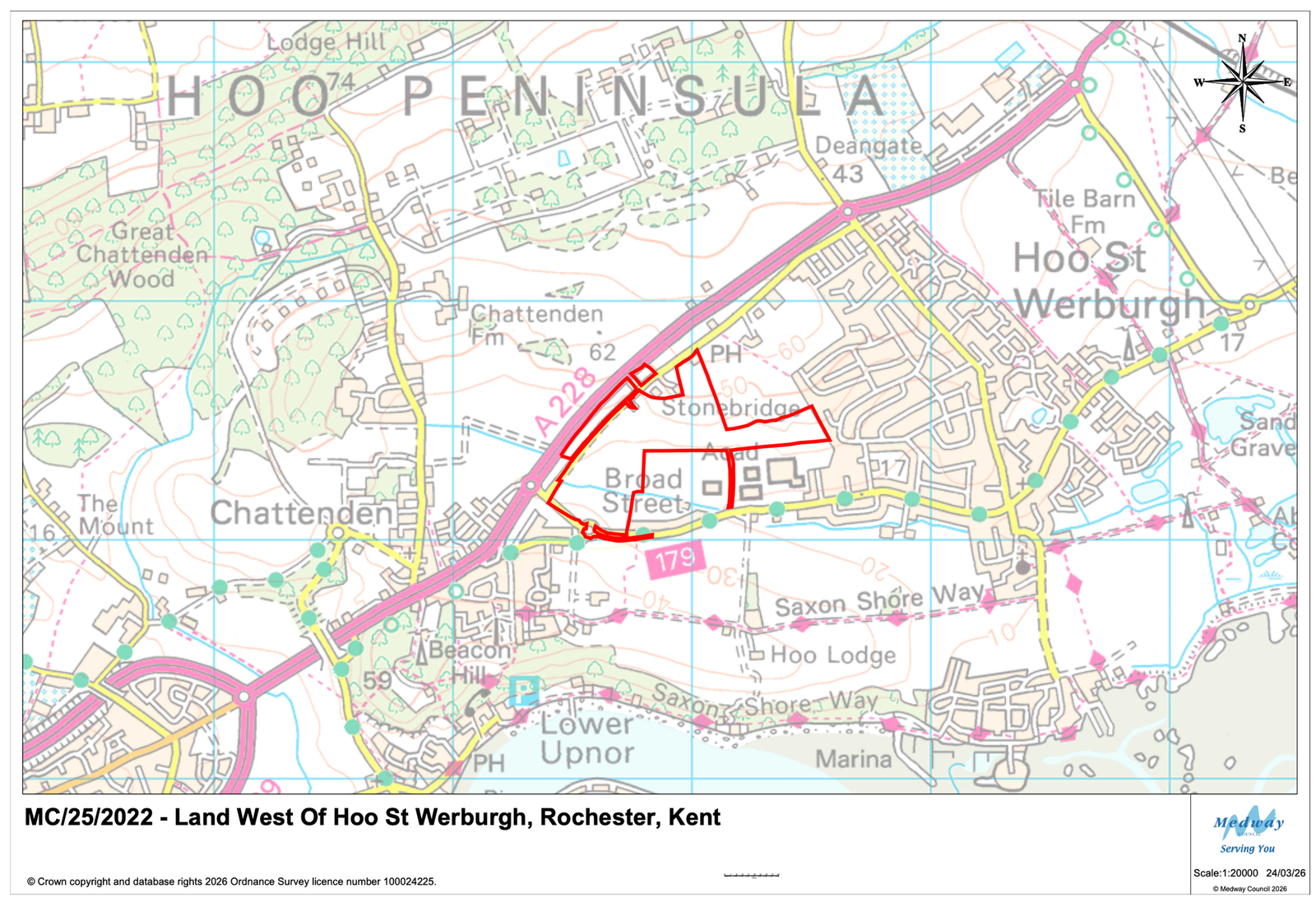
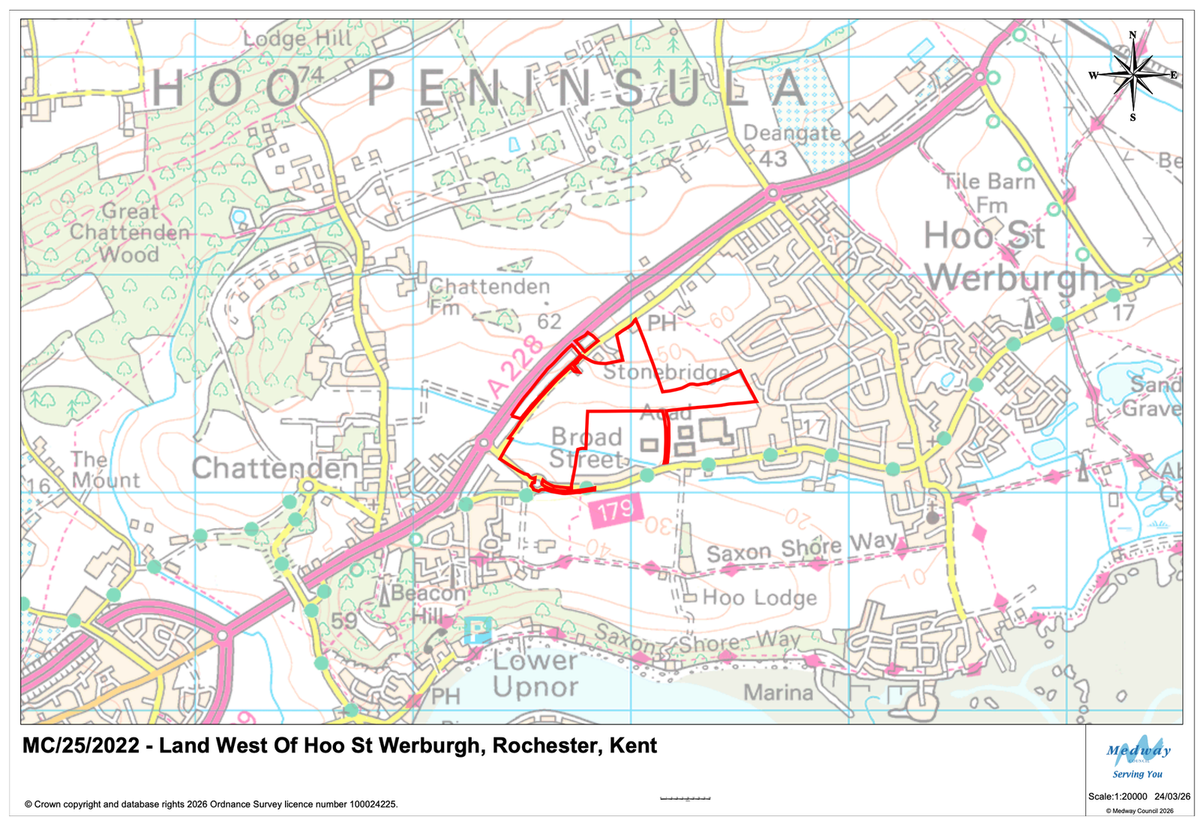
The latest decision covers around 31 hectares of farmland between Main Road and Ratcliffe Highway, west of Hoo. Taylor Wimpey can build up to 450 homes, alongside up to 500 square metres each of commercial and community space, open space and recreation provision. At this stage, it is only outline permission, which means the detailed appearance and layout will come later.
We covered this application and the neighbouring Gladman scheme earlier this year. Both developers had already appealed because the council had not determined their applications, leaving councillors to set out what they would have decided if the decision were still theirs. Medway supported Gladman’s scheme but opposed Taylor Wimpey’s.
To be fair to the council, it disputed the suggestion that officers had simply taken too long. At the April planning meeting, chief planning officer Dave Harris said Taylor Wimpey had submitted further information in January, then appealed without allowing time to consider it. Whatever the merits of that argument, the decision ended up with the Planning Inspectorate.
Medway’s position was more nuanced than wanting to keep all the fields. Its own emerging Local Plan allocates this location for up to 450 homes. The council accepted development here but argued that Taylor Wimpey’s proposal spread too far towards Chattenden, leaving too little separation between the settlements.
Inspector Phillip Ware agreed there would be a “transformational change” to the landscape and moderate permanent harm. But he did not accept that the two places would meaningfully merge. A substantial gap would remain, including roads and landscaped bunding, and relatively few views would suggest Hoo and Chattenden had become one settlement.
The council suggested a smaller development footprint could reduce the harm. Unfortunately, its alternative concept was rather less developed than the argument required. Ware found it generalised, apparently lacking the same mix of uses, and without council endorsement. Turning up to defend the council’s preferred approach with a diagram the council had not endorsed was never going to be especially helpful.
He also gave significant weight to the emerging Local Plan and judged Taylor Wimpey’s proposal broadly consistent with its approach to keeping the settlements distinct. A previous 475-home scheme on broadly the same land was dismissed in 2016, but the proposal, policy and housing position had changed. The earlier refusal did not protect the site indefinitely.
The rules also changed while everyone waited for a decision. The government published a revised National Planning Policy Framework in August, after the inquiry had finished. This sets the national policies used to judge applications, and the inspector invited all parties to comment before reaching his decision. The new framework explicitly supported housing outside existing settlements where there was an evidenced need, subject to infrastructure and other requirements. Medway’s housing shortage made that particularly relevant here.
The housing shortage is the part of this argument that tends to get lost underneath the very understandable complaints about traffic. All three main parties to the inquiry, including The Independent Group, whose case was led by Hoo councillor Michael Pearce, accepted that Medway had a substantial shortage of both market and affordable homes. The agreed housing land supply was between 2.3 and 2.7 years, well below the five years required.
That does not mean every field should become an estate, or that every developer’s proposal is wonderful. It does mean that refusing homes has consequences for people who need somewhere to live, as well as for the council trying to defend its decisions. Existing residents can see development happening around them while Medway as a whole still fails to deliver enough. Both things can be true at the same time.
There is rather less to celebrate about how many of these homes will be affordable. The emerging Local Plan seeks 25% or 30%, but Taylor Wimpey is providing 10%. If all 450 homes are built, that means 45 affordable homes. The developer’s viability evidence supporting that lower proportion went unchallenged.
Ware still gave those homes substantial weight, disagreeing with the council’s more modest assessment of their benefit. So the shortage of affordable housing helped the case for approval, while the development will provide considerably less of it than the draft policy seeks.
Pearce calls those new national rules a “developer’s charter” and accuses the council of lacking determination in defending the countryside in a letter published on social media. He also questions the point of neighbourhood plans if their protections can be overridden. Hoo and Chattenden adopted one in a 2024 referendum, when 93% of participants backed the plan on a 21% turnout.
Residents were entitled to expect that document to count for something. Ultimately, it did. The inspector considered it and found it conflicted with the landscape policy. But his decision also records that all parties, including The Independent Group, agreed it carried reduced weight because of the housing land shortage. In the neighbouring Gladman appeal, the relevant policy received full weight and the scheme was still approved. A neighbourhood plan can influence development, but it cannot promise that nothing will change.
Pearce initially opposed Taylor Wimpey on transport and ecology grounds too, before withdrawing those parts of his inquiry case. He says his group lacked expert support and faced potentially substantial costs. The inspector accepted the developer’s technically unchallenged evidence, finding no unacceptable highway impact and no adverse effect on the integrity of designated ecological sites.
It cannot simply be assumed that because Four Elms is regularly unpleasant, every new development will make the road network unacceptably worse. But it is equally hard to look at the peninsula’s wider transport story and conclude that things have gone well.
The proposed rail connection was part of the £170m Housing Infrastructure Fund programme, which the government withdrew in July 2023. That money was intended to support substantial growth through transport and environmental improvements. The old administration failed to deliver the programme, the funding disappeared, and the peninsula was left facing continued development without the investment that was supposed to help it cope.
The emerging Local Plan now concentrates growth around Hoo, with less development in the more remote villages. It identifies junction improvements and keeps land available for a possible railway. Sensible enough, but after years of this, residents might reasonably prefer some infrastructure they can actually use.
This permission comes with 44 conditions and a legal agreement covering affordable housing, highway works, open space, ecological mitigation and arrangements for the commercial and community buildings. The plan requires a safeguarded bus route, space for future stops, and a bus-only connection to the neighbouring site. There is plenty of planning for where a bus could go, although that is still some distance from an operator agreeing to send one.
Medway retains control over the detailed layout, appearance, scale and landscaping. There is work to do here, and opportunities to make the development better. But the principle of building homes on this land has now been settled. After years spent arguing over the peninsula’s future, another large piece of it has been decided. The least residents should get now is the facilities and connections delivered with the homes, rather than another estate followed by another argument about why the infrastructure is still missing.
Footnotes
Follow us elsewhere: Facebook, Instagram, BlueSky, and now WhatsApp for new story alerts.