The March Culture Review
Hip hop theatre, hidden histories, Rochester ribs, new Billy Childish, and more


Once a month, we bring together reviews of Medway’s cultural highlights in a single round-up, produced specifically for our paid supporters. This month, our team of intrepid cultural reviewers present music, theatre, and food from across our towns...
The Wigmore Lectures: The History of the Royal Variety Performance
Wigmore Library, Rainham, 18 Mar
The Wigmore Lectures are a Medway institution, unfailingly bringing local history and heritage to life in an engaging and accessible fashion. Scheduled by Medway Libraries between October and March, this season’s eclectic topics have included Gillingham-based inventor Louis Brennan, responsible for the world’s first stairlift; Kent-born clipper ship captain, William Harrison, and his maritime adventures; and the bloody reality of Matthias Hawkeslade, Captain of Horse in the King’s army during the English Civil War, with speaker Philip Barham delivering his talk in full authentic battle gear.
I was lucky enough to attend the last lecture in this run, introduced by the Mayor of Medway, Cllr Trevor Clarke, who quite rightly reminded the audience of the importance of supporting libraries, especially during this National Year of Reading, where “It’s time for the nation to go all in.”
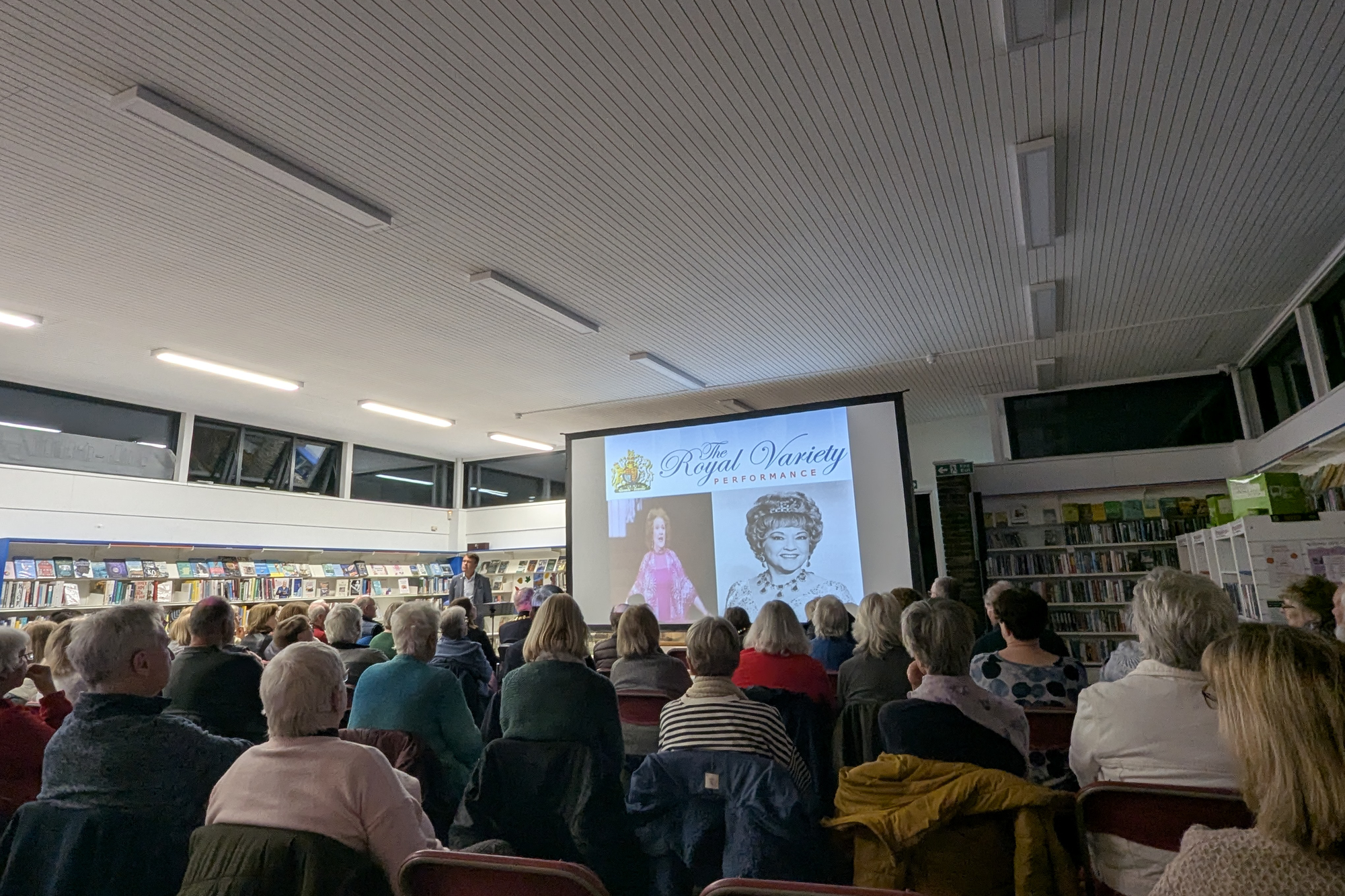
Our knowledgeable speaker, Dean Caston, provided a fascinating glimpse behind the curtain of The Royal Variety Performance, a favourite fixture in the entertainment industry’s calendar. Stretching back to 1912, when music hall was at the height of its popularity, the show was initially staged at the Palace Theatre in support of the Entertainment Artistes’ Benevolent Fund (now the Royal Variety Charity). Attended by King George V and Queen Mary, the evening had strict instructions to finish no later than 11pm so the police escort was not paid overtime on the way back to the palace.
We learned that performers were not supposed to acknowledge the royal box. Nonetheless, protocol has been pushed aside as the years progressed, from Maurice Chevalier charming the Queen Mother, to the Crazy Gang joking that the royal car was illegally parked, right up to Catherine Tate ‘Is one bovvered?’ in 2005. But it was common practice to provide acts with helpful reminders for the post-show line-up, such as pronouncing ‘Ma’am’ so that it rhymed with jam.
Although many of us have grown up watching it on television (first broadcast in 1960), hearing the behind‑the‑scenes stories brought the show’s pizzazz to life, as well as shining a light on the less than glamorous reality. Backstage facilities were notoriously cramped, accounting for rather cosy conditions with up to 50 different acts scheduled. Only a handful of performers have refused to share – Dame Shirley Bassey, Bette Midler and Pavarotti – with J-Lo allegedly insisting on an all-white dressing room when appearing in 2001.
There were some lovely blasts from the past in terms of household names, such as Jimmy Tarbuck, a teenage Julie Andrews, Bruce Forsyth, Cilla Black and Bob Monkhouse, to name a few. Some popular stars, however, were purposely excluded – iconic music hall star Marie Lloyd was deemed too risqué for the royals, so perfectly reasonably, she staged a sell-out rival show at a nearby theatre
The Wigmore audience did not need to be asked twice to participate during the musical clips, with shoulders swaying, toes tapping and heads bobbing along to well-known songs, and Sweet Caroline remaining a particular crowd pleaser.
After such an enjoyably nostalgic walk down memory lane, it came as no surprise to learn that the Royal Variety Performance, still attracting over 152 million TV viewers worldwide, remains the longest-running entertainment show in the world. - Anne-Marie Jordan
Pied Piper - A Hip Hop Musical
Glassbox Theatre, Gillingham, 6 Mar
This touring family show opened with a new experience for me and my apprentice co-reviewer: a brief beatboxing workshop for the entire audience. We were instructed in how to make the kick drum, snare and hi-hat sounds that would be used to punctuate a later scene with, it’s fair to say, mixed results. A minimal, industrial feel was created on stage with a set composed of scaffolding and a skyline of boxes, as the main action was set in a pie factory in the town of Hamelin.
On the eve of the mayoral election, the Mayor of Hamelin and pie factory owner is exploiting the labour of his young workers, who have responded by forming Rebel Clef - a beatboxing and vocal outfit who use their voices to inspire resistance to and hope within this oppressive regime, despite a city-wide ban on singing and music. But the Mayor’s main problem is a rat infestation, signified by the glowing red eyes appearing amongst the scaffolding, some imaginative glove puppet work and once, to the delight of younger attendees, by a remote-controlled creature erratically traversing the stage. Impressive vocal dexterity, soaring harmonies and a bewildering array of sounds come from the young ensemble, who seem to have boundless energy in this second show of the day.
The audience is encouraged to contribute to the songs, the call of “What do rats eat?” perhaps inevitably garnering the response “A Gregg’s vegan sausage roll!” The show really livens up with the arrival on stage of the community chorus - a group of Year 9 students from Rainham Mark Grammar School, ranging from those with no previous performance experience to frequent stars of drama productions and bonus guests from the teaching staff. These students have had only three workshops and a dress rehearsal to learn the beatboxing skills and perfect the dance moves. Their commitment and gusto are impressive and literally demonstrate the main theme of the play, that art and music lift young people up, and communities flourish when freedom of expression is undiminished. A few chants of “Kids Up! Rats Down!” later, we have a Beatbox Battle, which is declared a draw, although my co-reviewer was thoroughly on the side of Team Crotchet.
The duration of 75 minutes was just right for the target audience, and my young apprentice added a smiley face, five stars and the single word 'AMAZING' to my notes for this review, before rushing off to pose for a selfie with the Pie King. She loved every minute. My own beatboxing skills remain a work in progress. - Elsie Mehaffey (11) and Moira Mehaffey (not 11)
Smoqe
Rochester High Street
Located at the Star Hill end of Rochester High Street, this American-inspired (but in a good way) venue requires advance booking. Firstly, so you are sure it is open, given its limited opening hours, and secondly, so they have the 48 hours required to prepare the ribs.
Long-time readers of this column may remember my mission to find excellent ribs in Medway, and the tragic failure to date. I arrived at Smoqe hoping that the 48 hours had ensured that the prime-cut ribs, smothered in a home-made bourbon BBQ sauce, would answer this challenge. They arrive served with Cajun fries and home-made coleslaw.
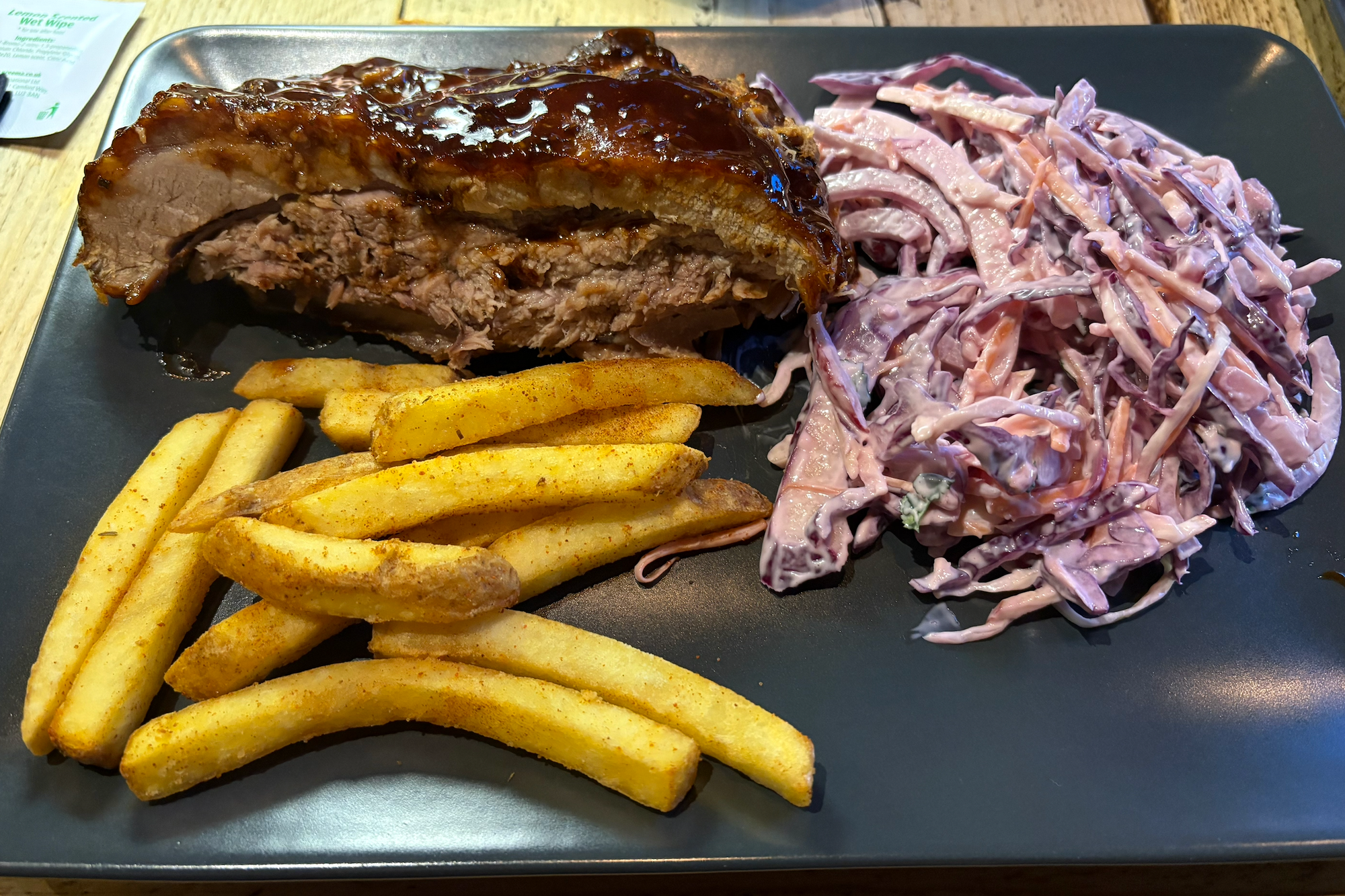
The fries were so good that it soon became apparent that the portion was on the small side. The coleslaw was also well made. The seasoning was tasty enough to make me wonder how good they could make corn on the cob. But it’s not on the menu, so we may never know.
The ribs answered two questions. Question 1: Is there anywhere in Medway that cooks high-quality ribs well and serves them in a delicious sauce? The answer is yes. Question 2: Can you get served two much prime-cut rib? Don’t be ridiculous. When it tastes this good, you eat until you pass out.
Friendly service in a stylish venue, serving home-made food of a high quality. Ribs and sides for two, plus drinks, came to just under £100. - Steven Keevil
Wild Billy Childish and CTMF: House on Fire and Keep Mojave Weird
And so, with the inevitability of a 169 bus from Chatham to Luton and beyond, come more Billy Childish releases. This time it’s in the form of Wild Billy Childish and CTMF, which comprises the prolific artist together with Julie Hamper (bass and occasional vocals) and Wolf Howard (drums).
As with many a Childish production, the songs featured on both EP and LP are at once familiar and new. Contrasting with the delivery on his William Loveday Intention records and elements of the latest outing from Thee Headcoats, the influence of Bob Dylan has been set aside in favour of the rawness of The Sonics, who have been a prominent point of reference of B. Childish Esq. since the days (at least) of the Musicians of the British Empire.
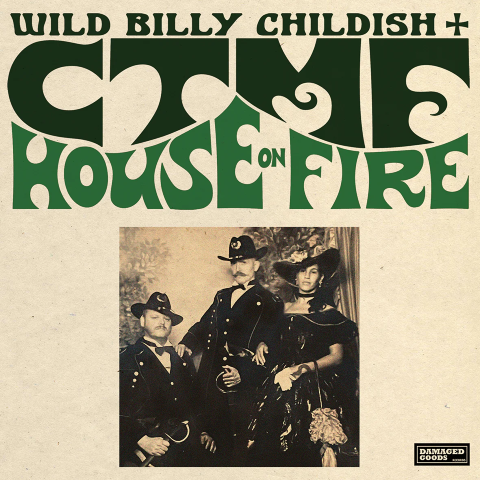
Highlights from the album include the opener, 'The Magpie’s Flown,' with its gloriously searing guitar hook, which ticks both 'Childish does autobiography' and 'Childish references Chatham boxes. There’s a nod to his birthplace of All Saints’ Hospital and the Dockyard where he worked briefly – both, notably, now closed and serving as a metaphor for general decay and decline.
Ever a fan of a historically themed song (think ‘The Fighting Temeraire’ from the album of the same name from his 2022 collaboration with The Singing Loins), Childish offers us 'Trafalgar,' a gnarly account of the famous sea battle.
There’s a frantic desperation to ‘Bridge Burner’ while ‘A Surprise to You (No Surprise to Me)’ with its bluesy swagger sees the frontman in characteristic snarly form, with additional swirling organ sounds.
Julie Hamper takes the limelight on a decent chunk of the record, most notably on the album’s title track, which recalls something of Nancy Sinatra’s ‘These Boots are Made for Walking,’ both in melody and the quiet menace of the lyrics (“love becomes a poisoned thing”).
If you’re less inclined to invest your time and money in a full fourteen songs from WBC&CTMF, you may wish to consider their four-track EP. Keep Mojave Weird revels in the same distortion-heavy garage rock with heavily Americanophile lyrics. The title song (which also appears on the long player) struts around a suitably arid sonic landscape with a nigh-on maniacal determination.
Meanwhile, ‘Wile E Coyote’ is a bang on homage to Bo Diddley’s ‘Road Runner’. Using the most basic of blues motifs, it takes guitar and vocal distortion to the extreme with a heavy fuzziness making for a spectacularly dirty sound. It’s followed by ‘Memphis Tennessee,’ a song that bounces along with something of the rhythm of Bow Wow Wow’s ‘I Want Candy,’ despite the gloomy theme of a man missing his daughter because of a disagreement with her mother.
The EP closes with ‘Thalypo Fuel Station,’ a grizzled sounding bass driven instrumental that staggers around with no little malevolence. It’s the sound of blistering heat on a scorched desert road somewhere in the middle of nowhere. It is, of course, brilliant.
House on Fire and Keep Mojave Weird are both released on Damaged Goods Records on 27 March. - Stephen Morris
The Lion Queen
Oasthouse Theatre, Rainham, 19 March
I am sure I am not the first – and won’t be the last – to smugly arrive at the Oast Community Centre with plenty of time to spare before the evening’s performance…only to discover that I should actually be at The Oasthouse Theatre, a gorgeous gem of a venue “built with love and care for the arts more than 60 years ago.” Its intimacy provides the perfect setting for the series of dramatic monologues that build towards the tragic demise of teenager lion tamer, Ellen Blight, when her uncle’s travelling menagerie came to Chatham.
Written and directed by Pauline Holmes, The Lion Queen started as a 2022 commission from Wordsmithery, with this finished version, following “four years of research and endless hours of writing and rewrites,” absolutely worth the wait.
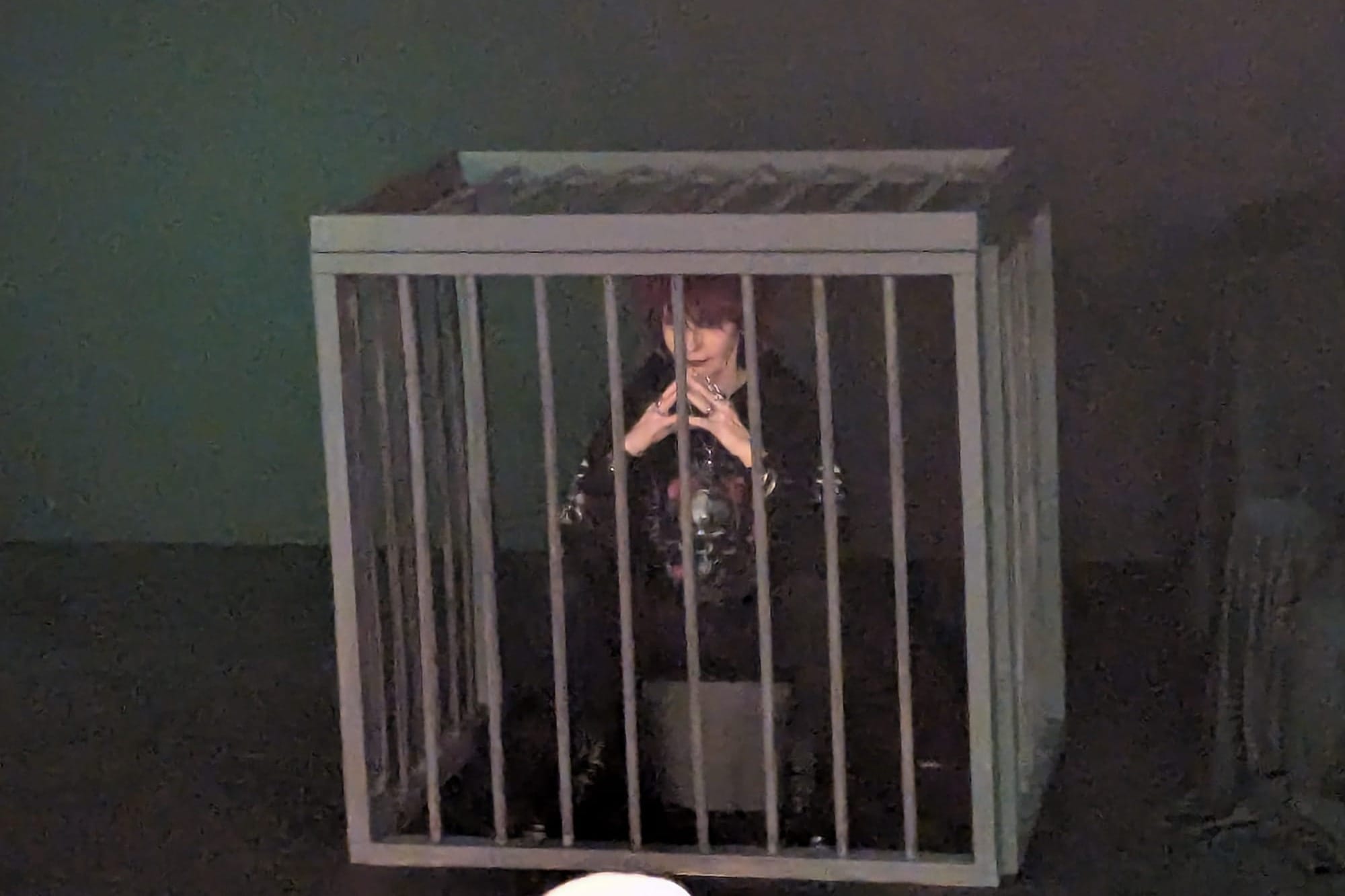
Ellen was the niece of George Wombwell, proprietor of Wombwell’s Travelling Menagerie. As this was Victorian England, making money was the priority; health and safety or animal welfare systems were non-existent. However, female lion tamers – Lion Queens – were the ‘must-have’ attractions for any travelling show keen to pull in the crowds.
Told through poetic monologues, we are introduced to nine characters who knew Ellen or witnessed her death, including her mother, the army medic who tried to save her and even the tiger responsible for cutting her promising career short. All the anecdotes in the play are true, though some timelines are blurred for dramatic purposes.
Throughout, Holmes manages to delicately weave glimmers of humour and moments of levity, while exposing eternal themes of loss, greed and blame. However, there is no denying the tragedy behind this true tale of tamers and travelling shows, with Ellen’s cousin William (played by Richie Bassett) also meeting his maker courtesy of an elephant’s tusk just six months earlier.
For me, Bassett was a standout in a strong cast. The confusion and pathos of his injured character poignantly highlighted the lack of care or concern for those caught in a dangerous profession.
With a stripped back set – just a chair placed centre stage – and sparse lighting and sound effects for atmosphere, this stark staging serves to heighten the emotion, drawing the audience into the unfolding drama.
It seems fitting that the tiger (played by Holmes), a captive animal forced to perform tricks, takes centre stage for the last speech of the evening. Holmes channels the capricious nature of a creature caged against its will, exploiting a moment of inattention from the inexperienced Ellen. She had briefly turned her back on the animal and then found, to her cost, that her exit was blocked.
This compelling production serves up Ellen’s story with sensitivity, leaving its mark after the final monologue and a reminder of how theatre can shine a spotlight on and give heart to hidden histories. - Anne-Marie Jordan
The Lion Queen is running until 28 March.