The long goodbye of the Royal Function Rooms
Plans have been submitted to turn the Rochester venue into housing

A planning application proposes converting Rochester’s Royal Function Rooms into eight homes, keeping the stage and theatre volume as part of a private residence while ending the site’s last remaining public cultural use. We look at what is proposed, what is being lost, and what this says about how venues disappear in Medway, alongside news in brief, planning news in brief, the week's events, and more.
The long goodbye of the Royal Function Rooms
For more than three years, the former Royal Function Rooms in Rochester has sat empty.
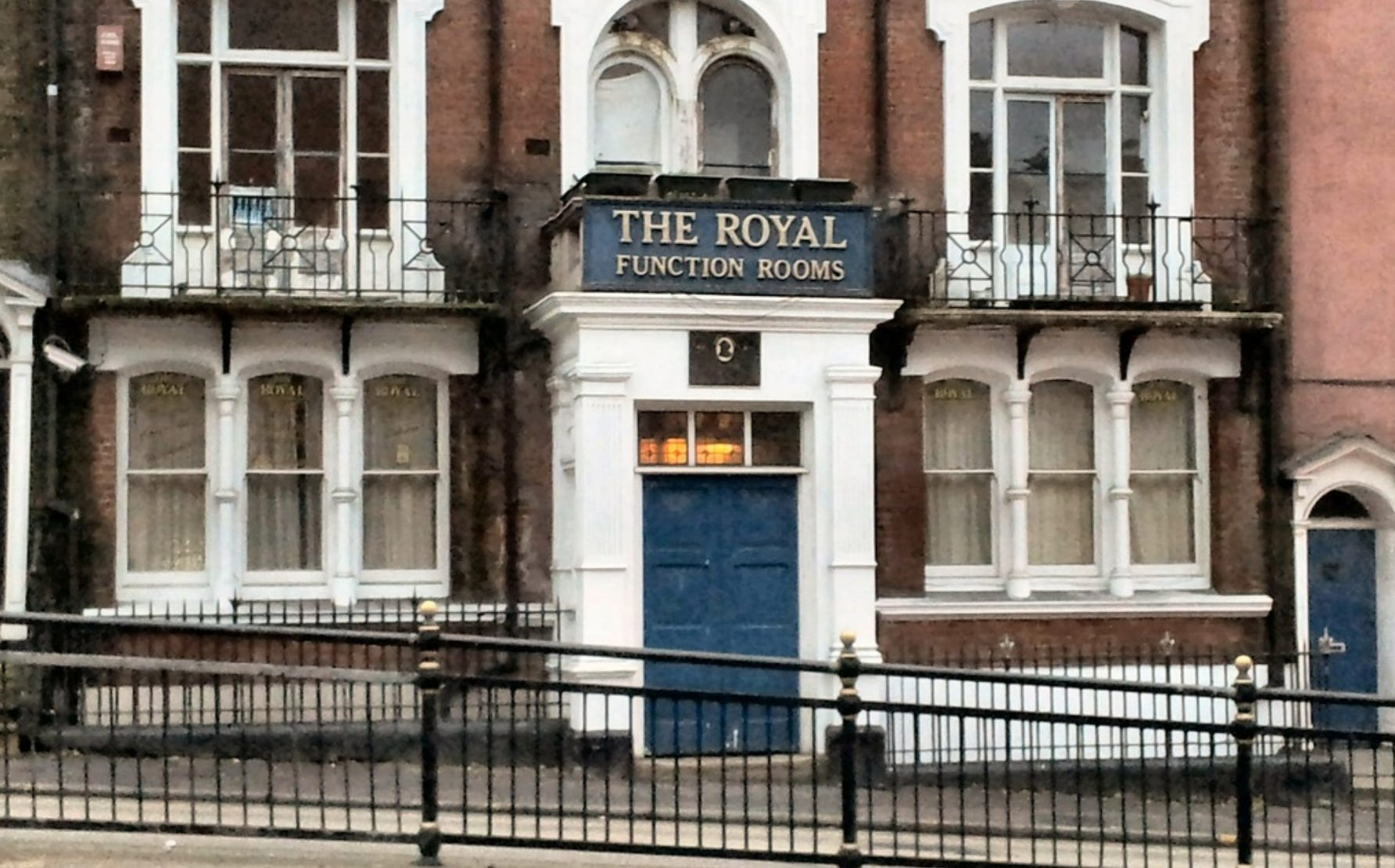
The doors that once led into one of Medway’s few proper live music venues now lead to a planning application. The building is vacant. The old operators are gone. The recording studio underneath has moved elsewhere. The public life of the place has already been stripped out.
But there is still a stage inside.
Under new plans submitted to Medway Council, it would not be smashed out or quietly forgotten. The proscenium arch would remain. The theatre volume would be retained. The old performance space would be 'celebrated,' in the strange language of planning documents, as part of a large private home.
Which is one way to save a stage. Put it in someone’s living room.
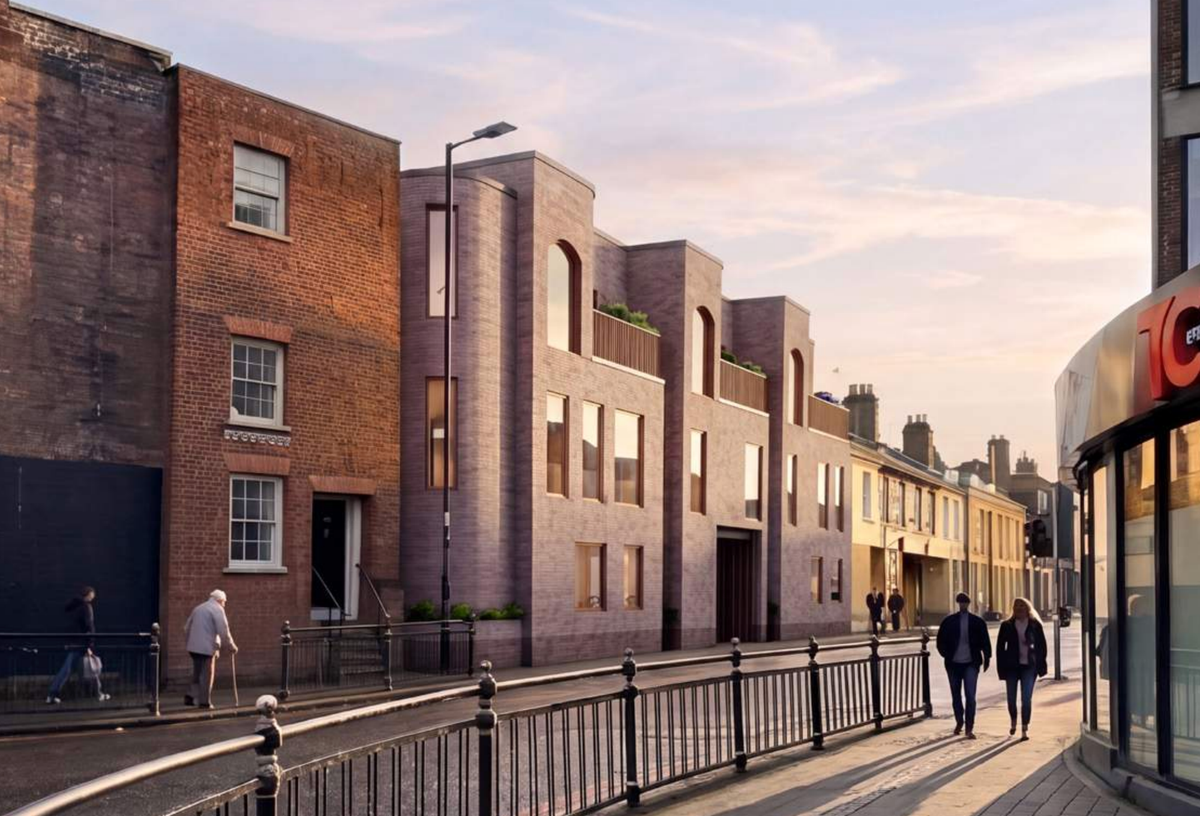
A planning application has been submitted to convert the former Royal Function Rooms site on Star Hill into housing. The proposals would see the Grade II listed building converted into five homes, with three new townhouses built at the rear facing Victoria Street. The 20th century extension would be demolished, the main historic frontage would be retained, and the old theatre hall would become a large residential unit.
The application, submitted on behalf of site owner Paul Stone, seeks permission for a change of use from two existing homes and a theatre into eight homes in total. According to the application form, the scheme would result in the loss of 785 sqm of theatre space.
On paper, the scheme is careful. The planning documents are full of repair, restoration, heritage, sympathetic alterations, and all the usual phrases that make old buildings sound like elderly relatives being moved into more suitable accommodation.
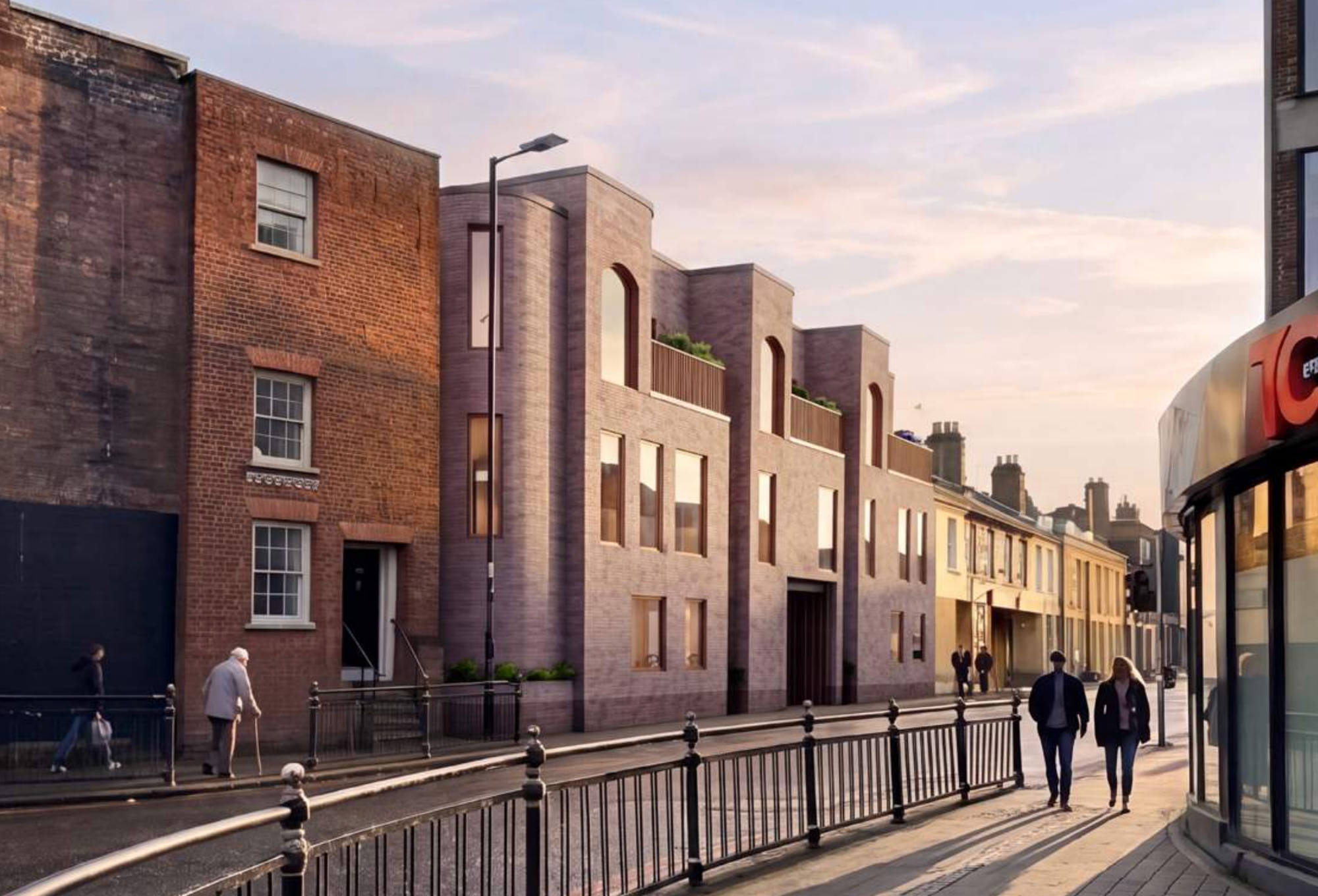
The applicants argue the development would secure the long-term future of the listed building, bring a vacant site back into use, retain important historic features, and repair a gap in the Victoria Street frontage. The heritage report concludes that the proposals would cause no harm to the listed building or the Star Hill Conservation Area.
All of which sounds reasonable. Medway needs housing. Old buildings need viable uses. Empty venues do not magically pay for their own upkeep.
But the Royal Function Rooms was not some long-dead cultural relic waiting patiently for a developer to discover it. It was a working venue until the end of 2022, when the operators of the Royal Function Rooms and the associated Billabong Club were told to leave. Ranscombe Studios, the recording studio underneath the main venue, also had to relocate.
The building then sat empty. Not since 2019, as the planning statement claims, but since the venue was cleared out at the end of 2022. The statement says the site has remained empty since an earlier 2019 pre-application submission and is being used by the applicant for storage. That is difficult to square with reality. The Royal Function Rooms and Billabong Club were still hosting events until the end of 2022. The building did not sit empty because the venue's use had already withered away. It became empty after a functioning venue and recording studio was removed from it.
The planning statement also says that alternative leisure uses, such as cinemas, swimming pools, and indoor and outdoor sports, are not feasible because of the size of the site and the significance of the theatre space and stage.
No one is seriously arguing that the Royal Function Rooms should be converted into a swimming pool. But listing implausible alternative leisure uses rather sidesteps the more obvious point that this building already had a use. It was a venue that hosted gigs, club nights, weddings, events, and the kinds of local gatherings that do not look especially significant until the places that hold them vanish.
This is the neat trick. A cultural venue is emptied, and the vacancy is allowed to harden into fact. Then the fact of that vacancy is presented back to the planning system as evidence that the cultural use has run its course.
The Royal Function Rooms was not perfect. Anyone who has spent time in Medway’s music scene will have their own strong and possibly tedious views about the room, the Billabong, the stairs, the sound, the bar, or the precise emotional texture of standing outside on Star Hill after a gig, wondering why all of Medway seems designed around making it hard to get home.
But it did something very few local venues could do. It offered a mid-sized room in a town centre, bigger than a pub back room, smaller than a theatre, and useful for exactly the sort of events that a place of Medway’s size should be able to support.
When Local Authority reported on the closure in 2022, the concern was not only that another music venue was closing. It was that Medway was losing one of the few rooms capable of doing a job the remaining scene could not easily absorb.
When it closed, Medway lost two live music spaces in one go. The larger Royal Function Rooms went alongside the smaller Billabong Club. That venue gap remains.
The application documents do at least understand the building’s history. In fact, they lean heavily into it.
The heritage assessment traces the site back to the Theatre Royal, Rochester, established on Star Hill in 1791 by Sarah Baker, a significant provincial theatre manager who ran a circuit of theatres across Kent. The theatre was part of Rochester’s cultural life for decades, and Charles Dickens is recorded as having attended performances there.
The original theatre building was demolished in 1884 and replaced by the Rochester Conservative Club. The new club included a hall used for meetings and social gatherings, with a permanent stage added in 1894.
That detail is important because one of the more romantic claims around the building has long been that it contains one of the oldest surviving stages in England. The heritage report suggests the current stage was not part of the 1791 theatre, but was added during the 1894 works. That does not make it unimportant. A 130-year-old stage is still a 130-year-old stage, which is more than can be said for most things Medway has managed to retain.
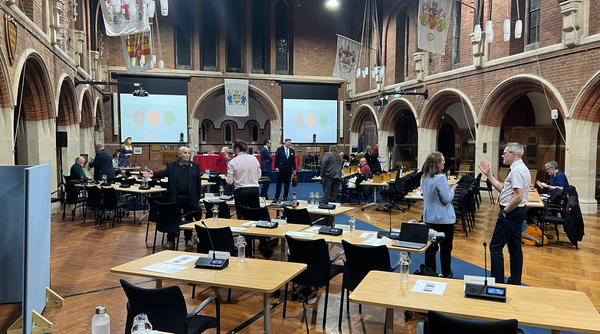
By the early 20th century, the building’s Victoria Hall was being described as a substantial venue, with space for around 500 people, a stage, and dressing rooms in the basement. It hosted concerts, lectures, political meetings, dances, and public gatherings.
This is the tension running through the whole application. The documents explain, at length, why the building matters as a place of performance and public gathering. Then the proposal removes the performance and public gathering.
Under the plans, the Royal Function Building would be converted into a single townhouse. The front part of the theatre building would become another townhouse. The main theatre hall would become a large apartment with mezzanine bedrooms, designed to preserve the hall's volume and stage. A studio would be created on the lower ground floor level, and three new townhouses would be built on Victoria Street.
The applicants say the scheme has changed in response to previous council feedback. Earlier proposals would have divided the theatre hall more heavily. The current version keeps much of the hall volume intact, retains the stage, and presents the proscenium, hammer beams and theatre space as features to be celebrated within the new home.
That may be better than demolition. It probably is. Nobody sensible wants a listed building left to decay because the perfect use cannot be found. Housing is needed. Reusing old buildings is better than letting them rot. The architectural approach may well be thoughtful.
But care is not the same as public value.
A preserved stage inside a private home is still a lost stage. A proscenium arch over someone’s kitchen-diner is not a venue. A theatre volume retained as an impressive apartment is no longer a theatre volume in any civic sense. It becomes heritage as interior design. Culture, but behind a front door.
Medway is not exactly drowning in cultural infrastructure. Since the Royal Function Rooms closed, the live music scene has continued in the stubborn way it always does here. Poco Loco in Chatham continues to do heroic work. The Oast Community Centre in Rainham hosts gigs through promoters like Careful Now and The Platform 3 Club. The Nags Head, Three Sheets to the Wind, Analogue Music and others pick up bits of the slack when they can.
But that is the point. It is all bits of slack.
For an urban area of more than 290,000 people, Medway has no proper mid-sized grassroots music venue. It has pubs, community halls, record shops, back rooms, upstairs rooms, downstairs rooms, and people doing ridiculous amounts with very little. It does not have enough places where bands can grow, promoters can take risks, and audiences can gather without the whole thing depending on one or two exhausted people keeping the lights on.
The Royal Function Rooms somewhat filled that middle space. Its loss was not just sentimental. It removed capacity from an already thin local scene.
The planning documents try to soften this by pointing to other local venues, including Medway Little Theatre and other halls available for hire. Again, that is not nothing. But it is not the same thing. A theatre is not a grassroots gig venue. A hall for hire is not a cultural ecosystem. A room where someone can technically plug in a PA is not the same as a venue with regular use, audience familiarity, operators, equipment, reputation, and the accumulated weirdness that makes a local scene work.
This is where the planning system struggles. It can count homes. It can measure parking spaces. It can assess heritage fabric, window openings, bin stores, cycle spaces and whether a new brick façade has paid adequate tribute to an older brick façade nearby.
What it finds much harder to measure is the loss of a place.
Within the narrow world of planning, it may not need to. The building is vacant. The use is said to be unviable. Heritage features are retained, and homes are delivered.
But the wider story is less tidy.
If approved, the site’s long history of performance, gathering and public use will be acknowledged, polished, and folded neatly into private residential space.
Medway needs homes. It also needs places to be more than a collection of homes.
The question for planners is whether this application is a pragmatic rescue of a listed building that no longer has a viable public use, or whether it rewards a familiar pattern of emptying the building, waiting long enough, then presenting the loss as inevitable.
Either way, the outcome is the same.
Rochester keeps the facade, the stage, and the heritage language, but it loses the venue.
We're thrilled to be nominated for multiple awards again at this year's Kent Press & Broadcast Awards.
My story on a Rochester school offering a Nigel Farage football shirt as an essay contest prize, the various lines they gave, and the eventual backtracking following my reporting is up for Story of the Year. It was a good story, starting as ever with a tip from a reader, and it eventually ended up being picked up by the Daily Mail, Politico, the Telegraph, and others.
Beyond that, I'm delighted that Local Authority is a finalist for Kent News Website of the Year for the fourth year in a row.
I'm especially pleased to see recognition for Francesca Dorsa and Chris de Coulon Berthoud, who both help Local Authority and the Kent Current happen behind the scenes. So it's perhaps apt that they are both up for the Making It Happen award.
This year also represents the highest number of nominations Authority Media has received in a single year. Not bad for a tiny organisation run on a shoestring.
Thanks, as ever, to every single person who has read, subscribed, shared, commented, sent us tips or feedback, or come along to an event. It's no exaggeration to say that we couldn't do this without you all.
Council matters
Meetings next week:
- Tuesday: Licensing Hearing Panel will decide on an updated license for Walderslade Working Men's Club and Institute and an optimistic off-licence application on New Road in Chatham.
- Thursday: Licensing and Safety Committee will discuss pavement licensing.
New planning applications:
- Retrospective application for office conversion to educational facility at Chatham Maritime.
- Application for a new outbuilding at the Millennium Centre in Rainham.
- HMO application for Amherst Road in Rochester.
In brief
🏫 The Mirror has discovered Medway's School Streets programme.
🏪 Co-op on Medway City Estate is set to close for two weeks in June for a refurbishment.
🐔 Pepe's Piri Piri is set to open its first chicken branch in Medway, next door to the Morley's chicken shop in Strood.
🐦 Sadly we missed this one at the time, but a Rochester teacher has placed sixth in the European Seagull Screeching Championship.
Property of the week
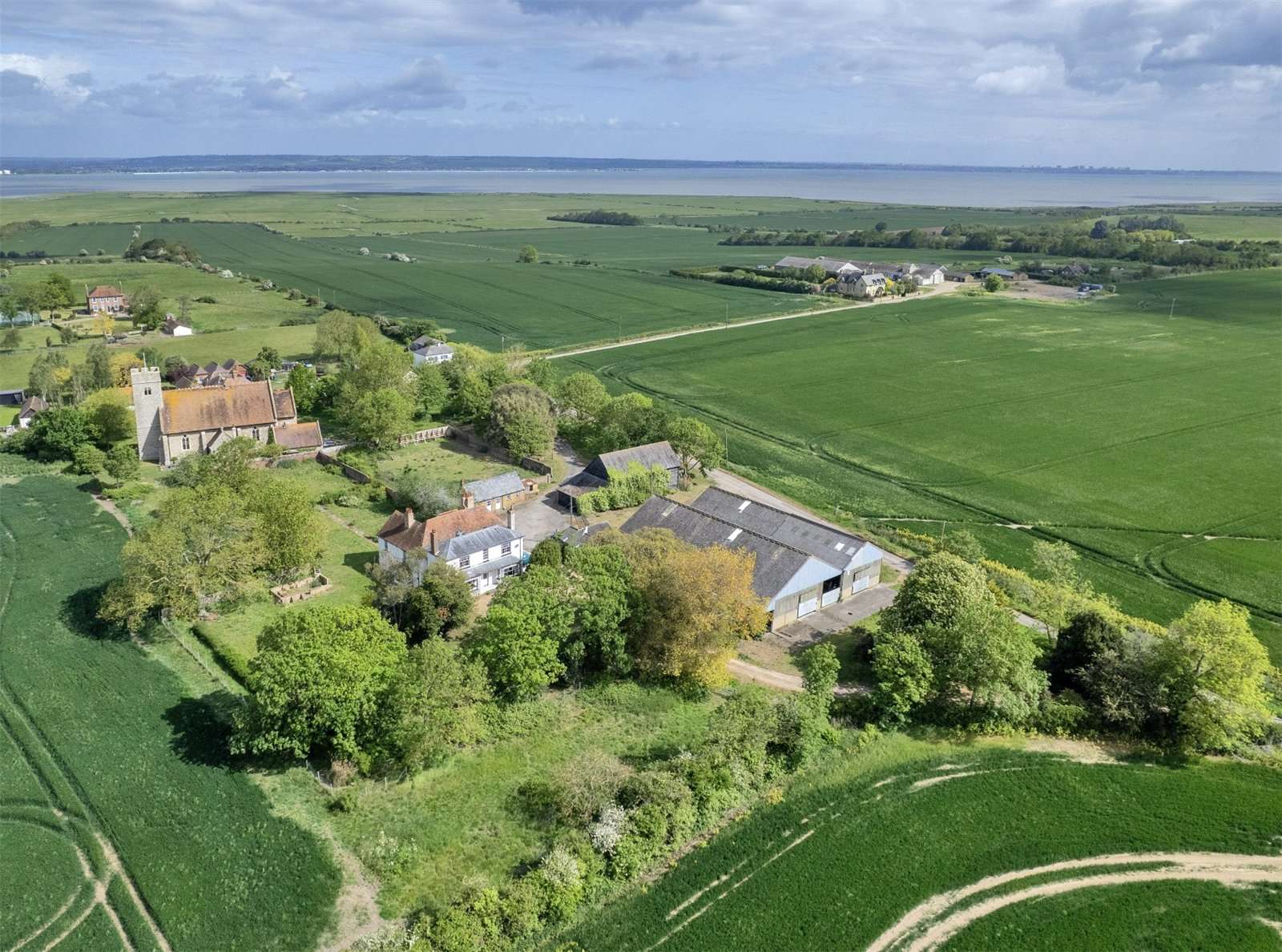
St Mary’s Hall Farmhouse is a Grade II listed Hoo Peninsula farmhouse that comes with the full rural fantasy kit and the implied threat that you will end up owning a ride-on mower. Six bedrooms, four reception rooms, an AGA, a cellar, and a serious range of outbuildings, including a substantial barn, which means you will certainly develop opinions on planning permission. It sits on the original manorial site of St Mary Hoo, and the listing takes a perfectly reasonable amount of pride in having once housed an agricultural innovator who pioneered steam ploughing and marsh drainage, meaning even the backstory is on-brand for the peninsula. It’s the kind of place where the house is only half the purchase. The other half is the land, the buildings you will swear you are going to convert, and the quiet realisation that the Medway Towns feel a very long way away.

Events this week
🍲 23 - 25 May - Chatham Maritime Food and Drink Festival // Annual event with stalls and dragon boat racing. Chatham Dockside. Free.
🎻 Sun 24 May - Nigel Kennedy - Virtuoso // Distinctive and influential violinist, returns to the UK with his first national tour in over 15 years. Central Theatre, Chatham. Tickets from £45.
🦇 Mon 25 May - The Little Bat Alternative Spring Bazaar // Alternative art and gift market. Masonic Hall, Rochester. Entry £1.
🎤 Fri 29 May - Bugeye + 10 + Angered Kenneth // Disco punk rock night. Poco Loco, Chatham. Tickets £5.
🎷 Fri 29 May - Curtis Stigers // Legendary jazz singer returns to Medway. St Margaret's Church, Rainham. Tickets from £49.
Footnotes
Follow us on social media! We’re on Facebook, BlueSky, and Instagram for now.