

Can Medway make you happy?
Results from our first Local Democracy Café event

Our Local Democracy Café is a four-week process to turn conversations into action. For our first event, we asked whether Medway could make you happy. In week one, Steven introduced the discussion's theme and explained how to book a seat at the table. In the second week, he looked into the concept of happiness, and what role, if any, the state should have in yours. During week three, a live event brings residents together to discuss the issue, with a final roundup presented the following week.
Below is the coming together of all those parts, from the introduction of the concept to the outcomes of the event.
Week one: Can Medway make you happy?
Over the past few years, we’ve hosted plenty of live events at Local Authority Towers, from two Medway Council leadership debates to last year’s General Election hustings for all three local constituencies. Hundreds of residents turned up to quiz the candidates, and we even managed Medway’s only Police and Crime Commissioner hustings. Along the way, we’ve also held our own Medway Question Time events, welcoming guests from across our towns to tackle the big issues facing local life.
Those events have always shared one thing: the questions came from you. But if we’re being honest, the ability for audiences to respond, challenge, and shape the conversation in the room has had rather mixed results.
The Local Democracy Café is our latest experiment in doing democracy differently. An open, interactive forum designed not just for discussion but for action. Each café will bring together local leaders, experts and residents to talk honestly about Medway’s future and to find practical ways to make it better.
We’re starting with three trial cafés, each built around a single theme. The format might evolve as we go, but the spirit will stay the same: Local people talking openly about what matters to Medway and how we can turn ideas into tangible outcomes.
Our first Local Democracy Café takes place at 7.30pm on Thursday 23 October at MidKent College, and we’re starting with a deceptively simple question: Can Medway make you happy?
The event begins with a 45-minute panel discussion, followed by a second session where the conversation turns to the audience. You’ll be able to respond to what’s been said in real time, as we explore what happiness means in Medway today.
At the end, we’ll gather the thoughts, ideas and priorities raised during the event and share them publicly, with the aim of turning discussion into tangible local action.
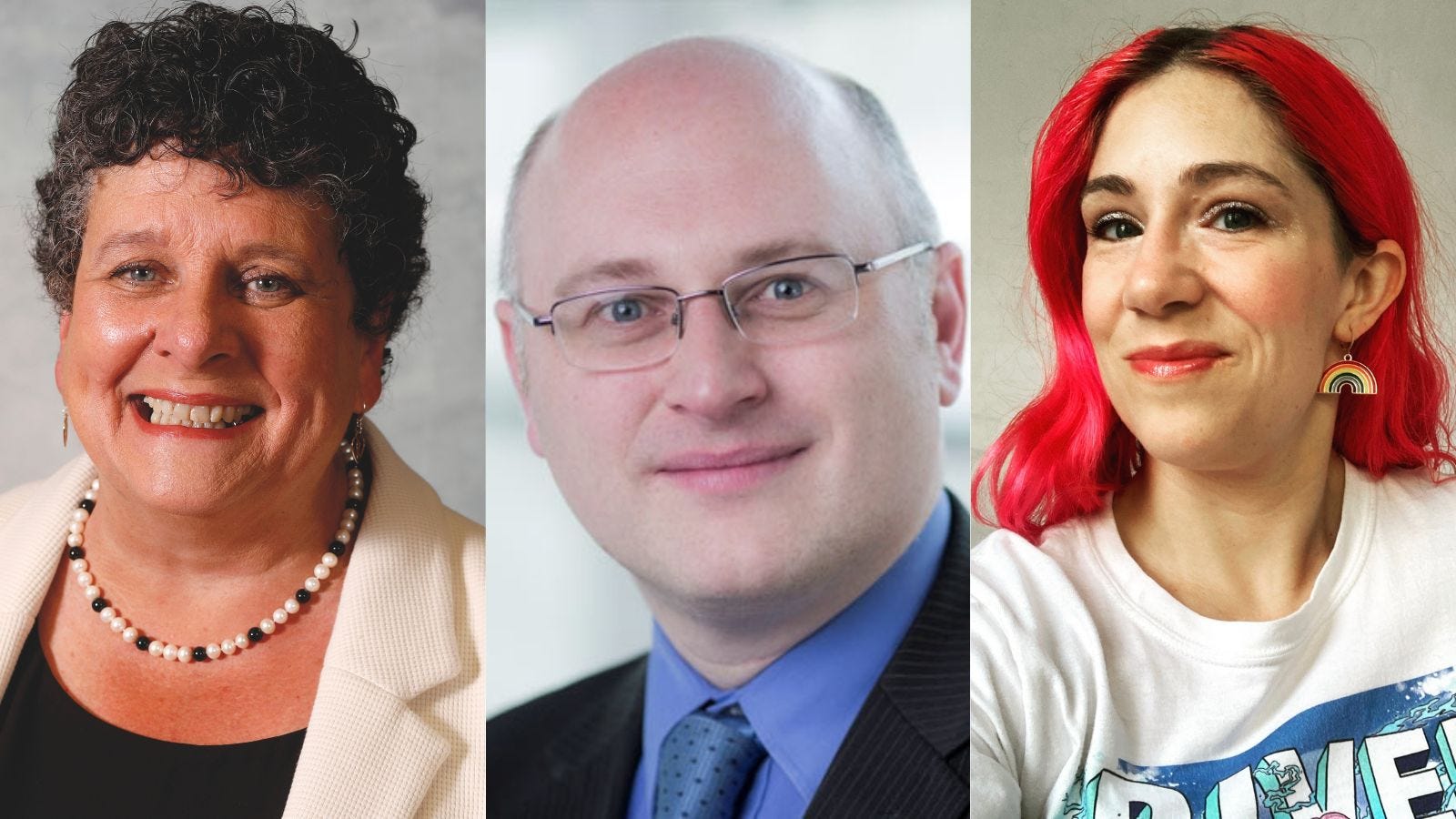
Our panel for the first café includes:
Cllr Teresa Murray, Deputy Leader of Medway Council, who says she’s “pleased to be coming to talk about what makes people happy, because that is important to me.” For Teresa, happiness comes from “walking in the park, hearing about new jobs and investment, and seeing events like the recent dance festival bringing people together.”
David Stokes, CEO of The Halpern Charitable Foundation, who points out that “around the world, the happiest countries aren’t necessarily the richest, they’re the ones with the strongest communities.” He hopes the café will deepen understanding of the ties that hold Medway’s communities together.
Natasha Boardman-Steer, creative practitioner in health and wellbeing, who reminds us that “there are so many factors that can affect somebody’s happiness: health, mobility, housing, past trauma, food and finances.” For her, it’s about having the resources, educational, spiritual or economic, to handle what life throws at you, and recognising how “your perception of where you live can impact who you socialise with and whether you access the care you need.”
So, can Medway make you happy? And if it doesn’t, what would it take?
What makes Medway happy?
Before the local elections in 2023, I wrote about the suggestion that the council create a new Cabinet position: Portfolio Holder for Medway’s Happiness. We also looked into Gross National Happiness. You can read all about it here.
As I wrote at the time:
“Communities could foster happiness; Jeremy Bentham talked about the greatest good for the greatest number. Happiness can seem too subjective and vague to serve as a milestone, yet asking people whether they are happy, or satisfied with their lives offers important information about communities.”
What is happiness? Aristotle believed that happiness and success result from cultivating virtue at the mean between deficiency and excess - the golden mean. Not having too little or too much, or doing too little or too much, or being too little or too much.
In his book ‘Happy,’ Derren Brown said happiness is a chimaera: it is imaginary and deceiving in many of its forms. For it to be solid, our happiness would not rely on fortuity or what we happen to have. It would be fundamentally about who we are. When fundamentally looking at who we are, our attention can understandably be drawn to Maslow’s hierarchy of needs.
Maslow was an American psychologist who became famous for his self-actualisation focus on psychology, which he described as “to become everything that one is capable of becoming.” The hierarchy represents five needs arranged from basic to highest, with the idea being that you cannot achieve the highest without the lower needs. These are:
Physiological needs: These include needs that keep us alive, such as food, water, shelter, warmth, and sleep.
Safety needs: The need to feel secure, stable, and unafraid.
Love and belongingness needs: The need to belong socially by developing relationships with friends and family.
Esteem needs: The need to feel self-esteem based on one’s achievements and abilities, and esteem based on recognition and respect from others.
Self-actualisation needs: The need to pursue and fulfil one’s unique potential.
When considering whether the state should be involved in the happiness of its citizens, there are some who would at best be wary, and others outwardly hostile to the idea that government has any business in your happiness business. As Ronald Reagan (in)famously said, “The nine most terrifying words in the English language are ‘I’m from the government and I’m here to help.’”
In our modern culture, with a climate crisis, a housing crisis, a cost-of-living crisis, a perpetual NHS crisis, and an impending annual bin crisis, can we really look at Maslow’s hierarchy and say that we don’t want the state, in a variety of forms, to help? “Poorly functioning countries are often unhappy in their own idiosyncratic way,” said Tim Besley of the London School of Economics when talking about the size of government.
There are studies which show that Maslow’s work overlooked subjective and objective aspects of human need, with evidence of those achieving self-actualisation without the lower levels of need, whilst there are those who reach a form of happiness without self-actualisation. Later in life, Maslow introduced the concept of self-transcendence, moving above those requirements. Nobel Prize Laureate Daniel Khanemann once published research stating, “Happiness rises with income, but there is no further progress beyond $75,000,” though later evidence showed that it more accurately showed that an increase in income staved off unhappiness for a while.
There is a wave of 90s nostalgia for a variety of reasons, however the most significant return that would improve people’s lives and local communities is the return of disposable income. Supporting people to leave their homes, engage with their local social clubs, take part in creative pursuits and pursue self-actualisation. According to the Joseph Rowntree Foundation, the next four years will see further reductions in disposable income. “This fall of 1.3% over the parliament would represent the worst outcome for living standards of any parliament since records began in 1961. This is particularly painful for households as it comes on the back of the previous worst record 5-year parliament — with a real fall of 0.5% — leaving households facing over a decade with no real-terms increase in disposable incomes.”
When we look at the shit show that is social media, and what Cory Doctorow describes as ‘enshittification,’ do we want to leave our hierarchy of needs to the markets? Thatcher’s ‘right to buy’ programme not only significantly increased home ownership in the country, but it also directly led to a significant market failure that we are living through today. As Ed reported in May, Medway housing is now more unaffordable than ever, with average private rent up 11.3% on the previous year. The failure to enable the building of more council housing to replace the sold stock has led to the uncomfortable truth that ‘affordable housing’ is not affordable for those on the lowest incomes, but I digress.
I caught up with Medway Council leader Vince Maple to talk about happiness in Medway and, first of all, about my original article and why there isn’t a portfolio holder for Medway’s happiness.
“I think it’s a really interesting question,” said Vince in his customary diplomatic start, “because, internationally, nationally, people say, how do you measure the success of a country? People will talk about GDP, but then the happiest place to live or the best place to live probably isn’t number one on the GDP scale.”
Vince goes on to talk about “That is about ultimately quality of life, which I think as a council, we’ve got a key role to look at from many aspects, both the obvious ones, culture, leisure, but also perhaps ones you don’t immediately think of as well.” Vince highlights the importance of knowing that your children are going to a good school or are safe in the community. “That is about people feeling positive about where they live.” Maybe there will be a Portfolio Holder for Medway Positivity in the next cabinet reshuffle.
I asked Vince how he would analyse whether the Medway population is happier in 2028 than they were in 2023. For Vince, pride in place is an important aspect of this. “People who look at social media will often see me using the hashtag ‘Proud to be Medway.’ Unsurprising news, Leader of council is proud of the community that he leads.” For Vince, people can find civic pride, that determines that their place is a good place in many different ways. “Just this week, lots of people will be happy because two of our football teams are in the FA Cup for the first round.”
Vince goes on to highlight that Balvinder Sopal, an actress who calls Medway her home, is having a successful run on Strictly Come Dancing. “For somebody else, it will be about the fact that we’ve got eight brilliant green flag parks and that they’re part of perhaps a friends group making those parks stay the same way.” Vince thinks people will look back on his administration and their life generally in Medway and feel happier, but he acknowledges that for others, “it will be a mixed picture.”
I ask Vince to highlight anything he feels the administration has done that would directly lead to an improvement in happiness. “I think the fact that we are certainly getting on with maintaining and enhancing our green spaces. We think that gives people quality of life.” He highlights the work the council are doing through the UK Shared Prosperity Fund. “The approach that we’ve taken with that, rather than the council just deciding things, allowing the community and often new community groups to come forward with ideas that we’ve been able to support. That’s about building pride in place.” Vince highlights the work of Child Friendly Medway, and the ‘good’ Ofsted result is an example of showing people that their children matter. “It’s about improving life chances through greater focus on things like literacy.”
We speak about the real and genuine challenge of the loneliness epidemic. “It manifests itself differently, particularly in age ranges. For younger people, you’re massively connected through social media, but actually, are they feeling that human connection as well? At the other end of the age spectrum, particularly where a husband and wife, one of them passes away, and they’re living that life individually, perhaps their family is not near them. I think throughout life, there are potential situations where people can fall into the loneliness trap.” Vince acknowledges that it is a role for the council, working with the charity and third sector to “try and put in place as much as we can” and ensure, where practically possible, “we can stop people falling into that loneliness trap.”
Before I let Vince go, I take the opportunity to ask what makes him happy. “People have heard me say this. I have the two best jobs in the world. I’m the dad to a seven-year-old who is amazing, but also I have the privilege of trying to make a positive difference to the community that I call home and improve the lives of 292,000 people. That can be stressful, it can be emotional, it can be frustrating, but it really does make me happy. It makes me proud of what people do every single day across Medway to make this the best place it can be.”
Week three: The live event
You can listen to the entire Local Democracy Café conversation here.
Rob Flood recorded the audio, and Suze Cooper did the post-production.
Thanks to both for their efforts.
Week four: How can Medway make you happy?
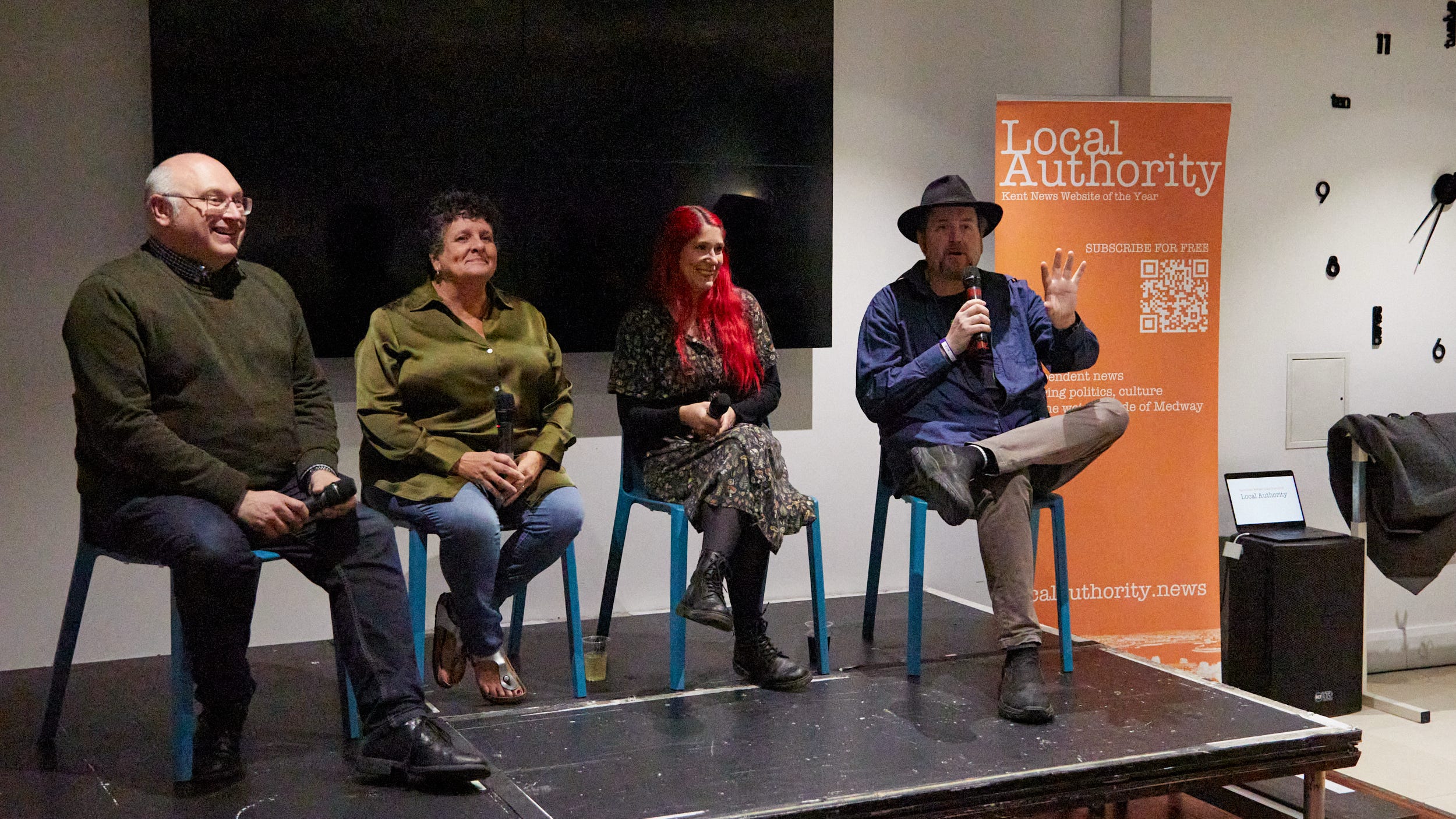
The Local Democracy Café is an open forum designed not just for discussion but for action. Each café brings together local leaders, experts and residents to talk openly about what matters to Medway and how we can turn ideas into tangible outcomes. Our first edition took place on 23 October with the deceptively simple question: Can Medway make you happy?
After introductions, we start by asking David if being happy is important. “We know being happy is important because it makes us feel good, but also it makes us healthier.” He goes on to highlight that being happy means you are less stressed and you sleep better. “Generally, your life’s better if you’re happy. It’s essential, really, to our wellbeing”. Teresa highlights a worry that “sometimes we recognise happiness but then can feel guilty if you don’t feel happy all of the time.”
“I came to the event tonight because I feel that I’m an ambassador for Medway in what there is on offer for people because I’m fed up with people saying there’s nothing going on in the Medway Towns when there is so much going on and there is so much that can actually change people’s viewpoint, change people’s lives, actually make people happy and make a difference.” - Jodie Elwin
For Teresa, the reasons we don’t feel happy are multiple and that we need to be aware that what happiness looks like can be “out of reach and actually be quite toxic and might actually not be any good for us.” Daniel Kahneman, a Nobel Prize-winning psychologist (not on the panel), said we shouldn’t be focusing on making sure that people are happy, but we should be making sure that people aren’t sad.
Teresa agreed that that is an important way of looking at it. “We are investing in things that ought to make people happier,” highlighting work done by the council to provide better temporary accommodation for homeless people, “because I’m afraid homelessness continues to rise in Medway.” The council has also borrowed £40m to build a new care home, “because there isn’t another solution to not being able to find residential beds for people who need them.” They have also borrowed money to refurbish the Brook Theatre when levelling up funding under the last government was not enough. “We’ve taken some risks on our own happiness, when you look at the balance sheet, in order to do things that I think will make our community happier.”
“The reason I came here tonight is because I’m really interested about people’s views on what makes them happy, where they live and what they dislike about where they live because that’s the only way we can make change and I think these events are so important to give people an opportunity to come and give their views. What I learned was there’s loads going on in Medway. Actually, you don’t need to be isolated, you don’t need to be on your own. There’s plenty of opportunities, whether you’re young, middle-aged or old. We are lucky to have a council that’s a unitary authority and serving the people of Medway, and we’re also lucky to have a good voluntary sector organisation, a community that really does serve.” - Jack Packman, Chief Executive of Medway Voluntary Action.
For Natasha, helping people not to feel stressed is essential. “We all have challenges, and that’s usually what makes us stronger people, to deal with those challenges.” Natasha believes it is about making sure that people aren’t trapped in situations which are making them miserable, meaning that they “can barely look after themselves, let alone contribute to their communities.”
“I came this evening as I just thought it looked really interesting, especially with so much divide in the world at the moment, to actually go to a place where there’s discussions about what’s going on. It has made me reflect. I’ve lived in Medway for a lot of my life, moved away for a few years, and then came back. I started suffering from depression as a teenager because I really didn’t feel there was any hope for me. There was a lot of negativities around Medway and that kind of stayed with me for a long time. It was only really from becoming friends with Natasha and seeing her actually be really positive about the area that tilted my perspective. There is real good here if you look for it. So many amazing people live here.” - Laura
David works in a number of forums and with a wide variety of people to help residents “understand that we live in this incredible place.” Work needs to be done to ensure that people feel safe, fed, warm and educated, but “once you’ve got those, then you’re going to have a good level of happiness”.
Natasha works with the Arts and Homelessness forum. I ask her why art is important for a group that doesn’t have basic housing. She speaks about an artist called David Tovey, who had an exhibition in Rochester. “He absolutely believes that art is continually saving his life.” Natasha describes how it’s not just about art, it’s about creativity. “When people feel empowered to be creative, it gives people more confidence to experiment.” Which, for Natasha, is key as it is something that people lose as adults. “It can often be in school, when they’ve been creative, they’re told that it’s not good enough,” says Natasha. “When you’re playing, how can it not be good enough?” Natasha highlights that trauma in childhood has a huge impact, and what would really help people who are going through trauma is play. “It’s proven that it really helps”.
“It’s quite right to be sad if you’re feeling lost, if you’re feeling bereavement, if something has upset you”, added Teresa. “But being sad all the time is really corrosive and dangerous, actually. In my work, I think about the suicide rate in Kent and Medway, which is higher than the rest of the country. We’ve lost over 600 people in the last two years to suicide.” Teresa rightly doesn’t want anyone to be that sad. Drawing upon what was said by Natasha and David, “that’s about the rescue strategies and it’s about building security, it is about that reaching out.”
“I came here tonight because I love Medway and I’m really enthusiastic about everything. We’ve learnt lots of things tonight. It’s been really interesting to hear what other people were saying, and I’ve taken it all on board.” - Lorna Stevens
I ask Teresa for her thoughts on loneliness at a ward level. “In my ward, I do meet lonely people. We live in a generous community in Medway.” Teresa highlights the community cafés in churches, the groups that give their time and reach out to people who might be feeling isolated. An issue in combating isolation is good public transport. “That is a very real problem”. For Teresa, it is on all of us to watch out for somebody who is sad all the time. “Life is complicated. I have to recognise that not everybody is in a place to access those things.”
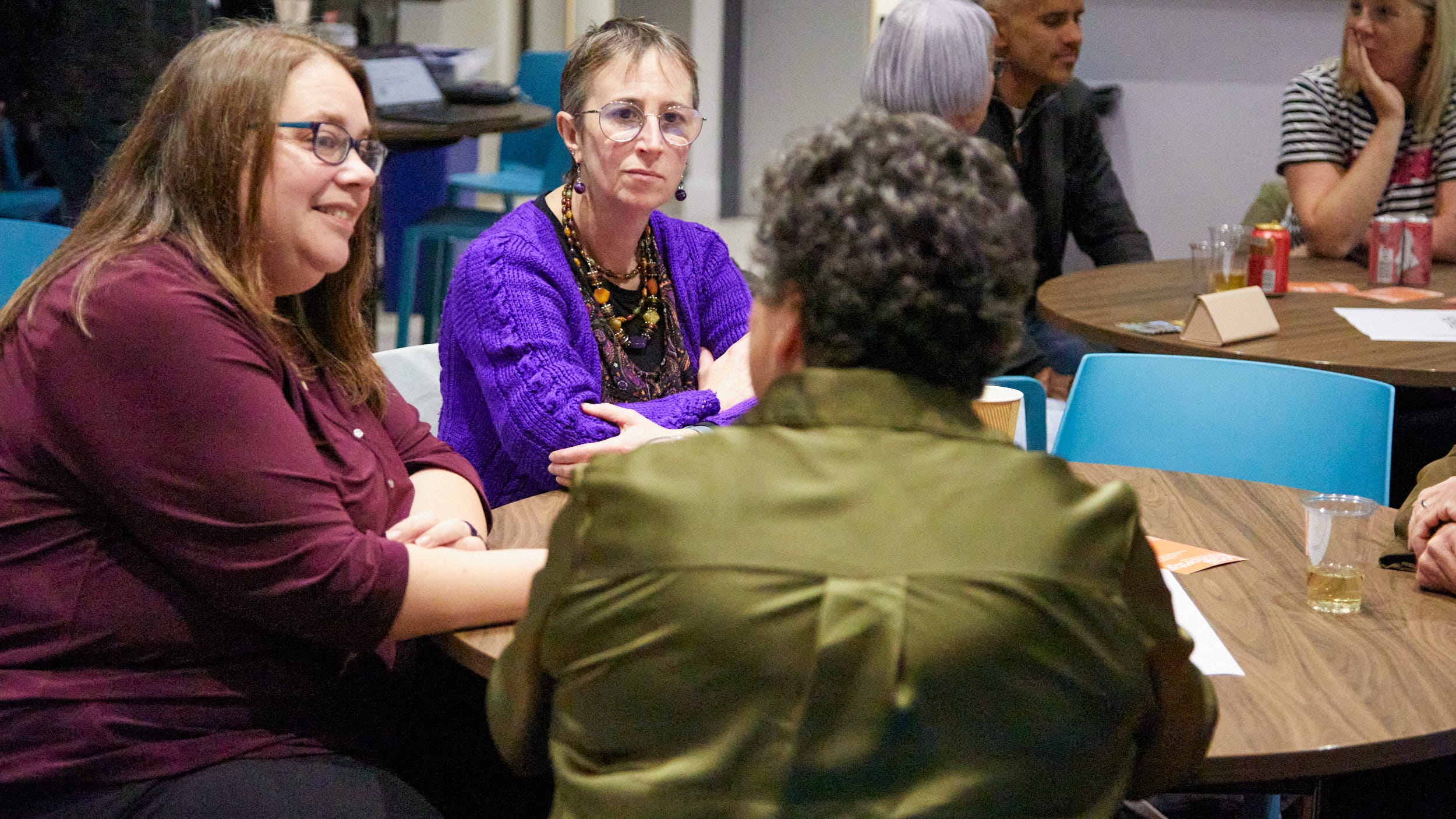
Teresa highlighted the work the council is doing regarding winter shelters, which will be opening soon. “We do that every year, so people have somewhere to go when it’s cold. We’ve tried to make those winter shelters serve more than one function.” This has included providing services, and this year, art and the ability to do different activities. “For the months that we’re looking after complex people, by the time we come into the warmer weather, I hope that they might be on a pathway where they can change things and feel confident about doing that.”
David speaks about the importance of the high street to community. “We recently had the Rest is History podcast describe our high street as the most historically important high street in the country. We’ve got community, we’ve got heritage, we’ve got culture. We just need to be proud of it. If people are proud of where they live, they’ll feel happier, I hope.”
It was highlighted in the audience that an issue about people not knowing what’s going on, both culturally and in terms of support available to them. In the audience is the new CEO of MVA, who lead on the Joy app, where any local community and group can sign up to be on there, which supports residents through social prescribing. “A way of encouraging people to do things,” explains Teresa, “giving them a prescription that doesn’t involve a medicalised solution to their problems.”
The challenge is getting that out to the community. Teresa highlights an app for children’s services, “it stores a lot of information about all the activities that are going on to help and support families, which are not as many as we would like.” For Teresa, there are two actions to come from this: “First of all, to get people to know they (the apps) are there. Then secondly, to push people on to using it regularly.” What the Joy app can do is provide you with knowledge of a wide range of support groups in Medway.
“Born and bred in Medway, moved away in my early 20s, and came back in my mid 30s. There must have been some happiness there. I can’t imagine living somewhere else. I love visiting other places and other countries when that can happen. However, Medway is where I feel at home. I like this event, it was fascinating what everybody spoke about, how they spoke, and now we’re chatting amongst ourselves, because we’ve all got something to say. Having the panel come around and chat to them, I like this format very much.” - Wendy Daws
We also spoke with Natasha about the work she does with young people. “I’ve been working on a local project in Weeds Wood, looking at health and communities in that area, working with (councillor) Esther Cook. Generally, young people are quite playful, they generally will be optimistic.” Natasha also highlighted the work done by Medway’s Youth Services. “People still don’t know it’s there and there’s literally an incredible youth service across, across Medway running lots of different after-school events”. Whilst young people need to know about them, adults also need to do more to encourage and support them taking part.
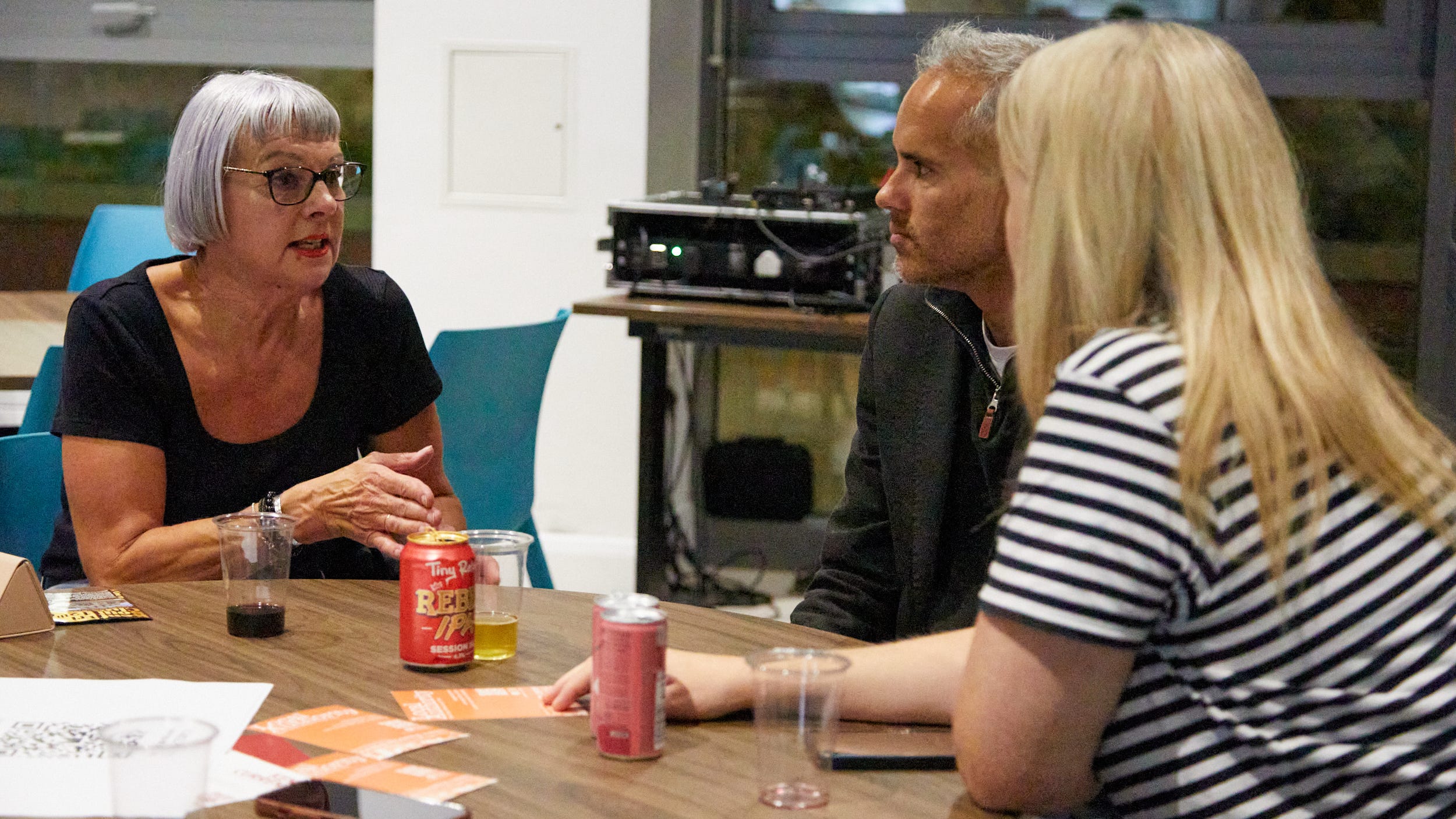
“I guess challenging young people to actually think why they feel Medway is a bad place and then you start to unpick it,” suggested Natasha, “I’ve spoken to people in the youth service a lot about that and about helping people to build empathy for their fellow community members.” Natasha set up the Nucleus Arts youth programme years ago. I ask David how that is going. “It has grown in the years, as you would expect. We have activities for all ages. If you’ve just had a baby, you’re really isolated and especially if you want to do something messy and disgusting, it’s better to go somewhere else,” says David, describing their 0-4 provision. They run a number of groups, not just at their arts centre, but across Medway and through the library service, though he highlights a challenge with keeping groups running is funding. “This is a long-term issue with any charity, that you get funding and it’s at most three years’ worth and then it disappears.”
Another challenge is that despite improvements from Chatham’s new community wardens, families often do not feel comfortable with younger people in Chatham when it is dark. “When we start reaching these months, we see fewer teens coming to our after-school activities, which is a real shame.” David also highlighted the great work being done through youth sports clubs and the Medway Youth Council.
Teresa highlights the need to stop presenting a modern narrative that will depress young people, “by saying, you’re never going to get a house, AI is going to take your job. The way that adults portray the future to young people is, in my view, really unforgivable.” Having worked in further and higher education, Teresa believes one of the highlights of the job is seeing young people flourish. “It is on us to give hope and say, it is difficult to understand the way that life goes and that actually for most people things turn out okay.”
With an effort to end the first part of the evening on an upbeat note, I ask the panel what makes them optimistic. For David, it is that “we live in an amazing place. We’ve got incredible people, and so much going on, so much to do.” Teresa says it is that “Medway’s at least as good as anywhere else, better than many. I think we just have to fight against a culture of low expectation. People do defend Medway There is local pride here, it’s not an abstract. You’re proud of it because you’re part of it.” Finally, Natasha offers that she really likes “how people in Medway, they are quite straight talking and actually most people do want to connect with each other quite deeply, and that is how stories travel between each of us. The fact that you know somebody that knows somebody, and that’s what makes really magical things happen.”
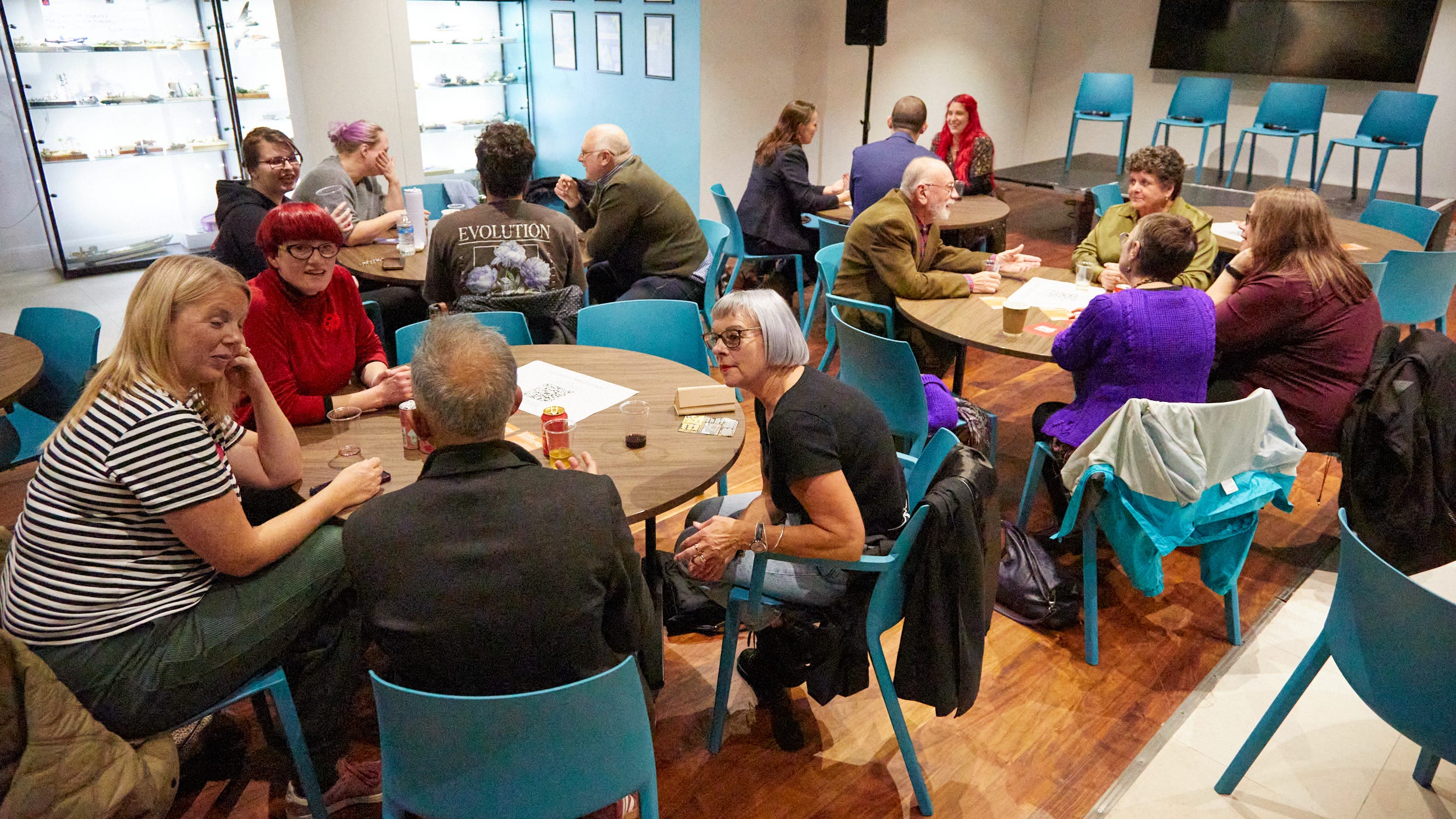
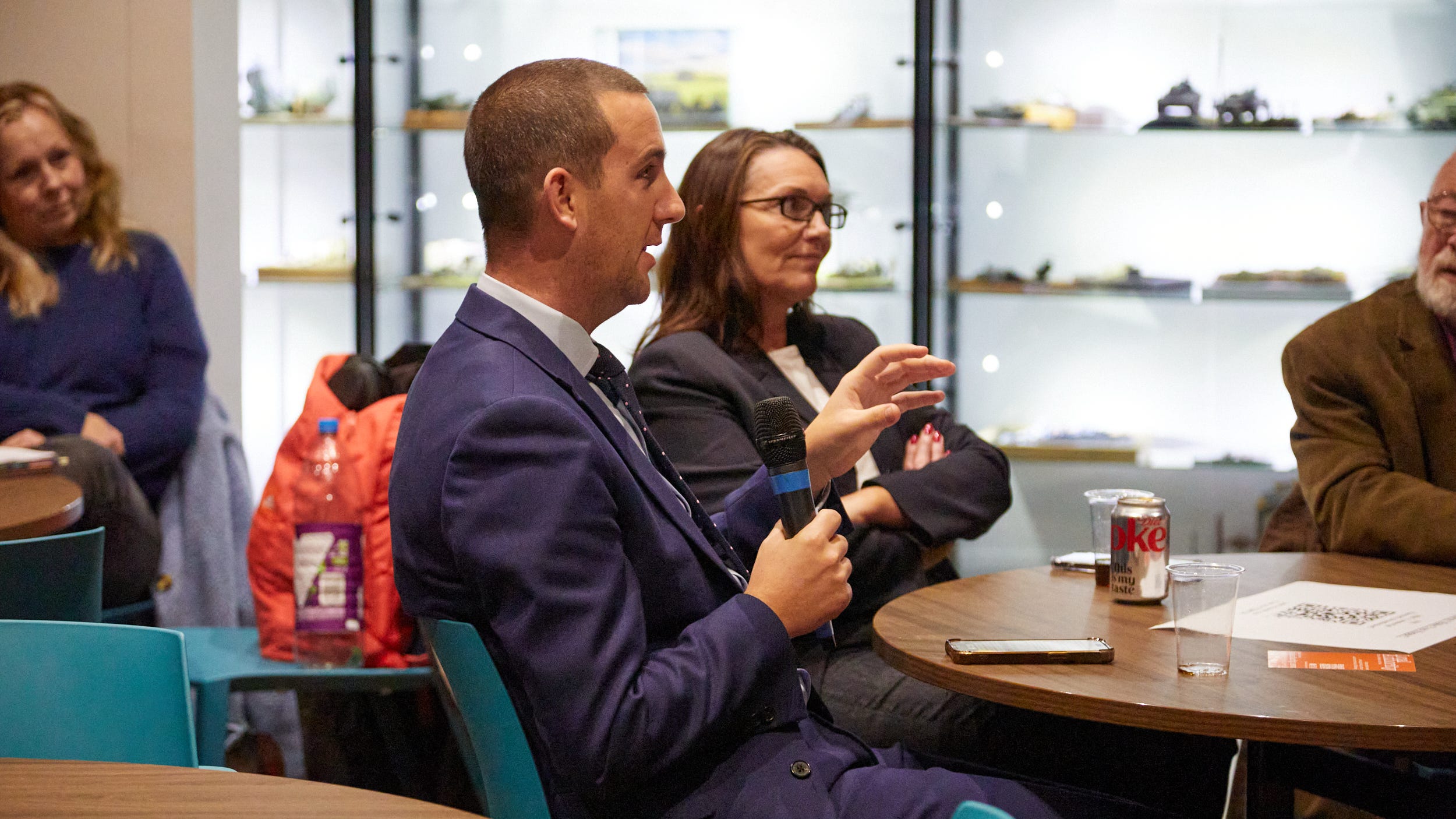
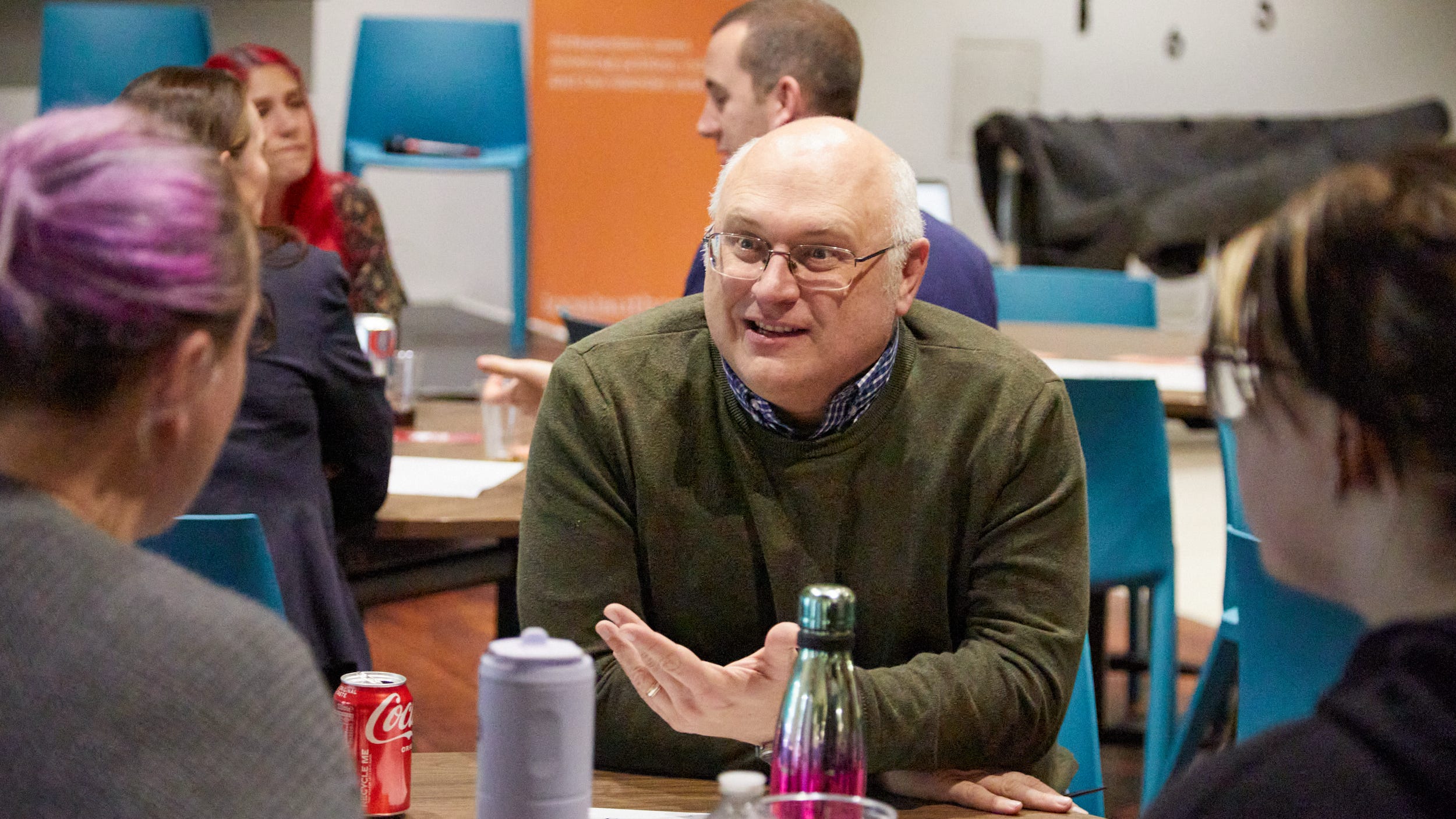
After the panel, we moved to the ‘café’ section of the evening, where discussions continued between the panellists and the audience. They had the opportunity to share further thoughts on things could make Medway happier, and we present a selection of those here for you now:
It has all the amenities I need. Just wish the transport was better so I could get to them all
It has awesome people in it.
Need to advertise events - but sometimes people see them but dont think its for them or their families. How do we encourage people to try?
What makes us happy - people get along in general. Lots of different cultures etc.
Slam poetry group for teenagers
By being more involved with my friends.
Make the Medway Fringe Happen!!
For myself, as the host of the event, a practical learning is that the panel slightly overran, and actually the café table side of the evening would benefit from equal time to shine, with the focus being about solutions and actions, more directed discussion, and more time for that discussion. This would only be beneficial, and something we’ll take into future editions.