“My main instrument is the recording studio”
What Steven asked Richard Lightman, Head of Music and Audio Technology at the University of Kent.
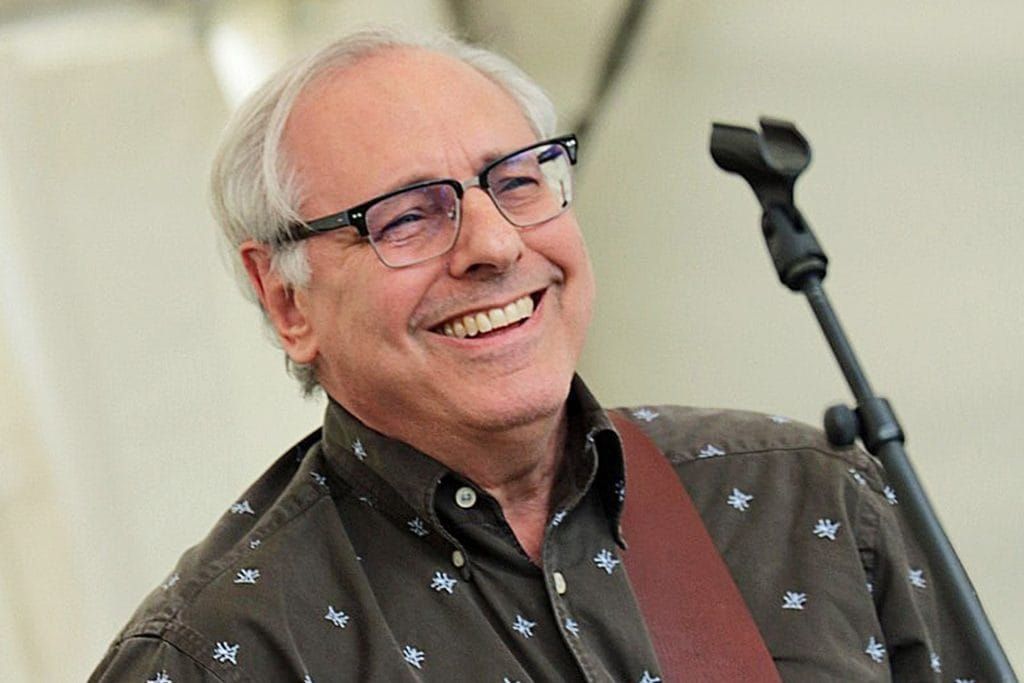
Richard Lightman is currently the Head of Music at the University of Kent, a department that is set to close soon. Steven met him via Zoom, where they discussed why the department is closing, Bangra, and creating flying sounds for Christopher Reeve's Superman.
What is your official occupation?
I am Head of Music and Audio Technology at the University of Kent.
Do you have any additional roles, paid or unpaid?
I have many roles, paid or unpaid.
First of all, I'd like to add that the University of Kent are closing their School of Music, and I will be made redundant at the end of July. So, I will be exploring other avenues and have already embarked on numerous projects. Nonetheless, I have in the past been the Chief Executive Officer of the Music Producers Guild of Great Britain. I sit on the Policy and Public Affairs Committee of UK Music, which represents music throughout the UK and music industry. I am a music producer, and a music composer for film and television. I am a guitarist as well, and I play in a band that is very popular in west London, not in this area, but in the famous area of Twickenham.
What's the name of the band?
The Deputies. The reason it's called The Deputies is because when you're in a band, and you deputise for somebody, it means that you can replace that person. We have many guests, and we do play a lot of covers, but the covers are often of songs that have the people that come and play with us on the original records, from the 60s, 70s, 80s and 90s. It's that kind of a band.
And why are you specifically popular in West London?
Well, west London is the home of the kind of blues in the UK, and there's the Eel Pie Club, which is quite famous for different original artists from that era. I come from that. I used to live in that area as well. I moved to Medway 12 years ago to facilitate my position at the University of Kent.
One of the key areas that they are cutting back on is the arts, and I am a victim of that
Why is the University closing the music department down?
One of the key areas that they are cutting back on is the arts, and I am a victim of that, I'm afraid. It is endemic throughout the UK. It's not just the University of Kent.
The other thing the University of Kent are doing is creating what is called the new super university, a collaboration with Greenwich University.
There's no opportunity for Greenwich to take over the music department?
They already have a music department in Greenwich.
The other things I do, I'm on the executive committee of the Musicians Union nationally, and I'm head of the Education Department of the Musicians Union. I'm no longer Chair. I'm involved in the Education Committee of the Musicians Union and involved in something called Music HE nationally for higher education because it needs bolstering and needs support from people who are hopefully in the know, and maybe I'm in the know.
During this last period, I, along with Electric Medway, applied for funding from the Paul Hamlyn Trust. We set up an initiative called Men in Tech. I didn't necessarily want to call it Men in Tech. I was advised that if I didn't put 'men' into the title, we wouldn't attract any funding. From my perspective, or generally, the initiative was aimed at anyone who could not facilitate technology, mainly, in my case, music technology and production, and wanted to engage with that in a non-formal atmosphere. We ran 24 weeks of events, and I trained up a load of men. It's not necessarily for employment. It's for social wellbeing and engagement. This is an idea I've had for some time, and I've been developing and I do actually want to roll it out nationally. The new name for it at the moment, the working title, is Sonic Seniors. I want to run these events as very structured events to teach people how to use music technology throughout the UK in different conurbations. But it has to be run by professionals, not volunteers or just teachers. I do have access to all the professional producers, having been the Music Producer Guild chairman as well in the past. That's the aim and target. Whether it's achievable or not, I'm not entirely sure because, of course, it requires funding.
You must have very busy days.
I do have very busy days, yes, because I also have a recording studio myself and I am in the midst of recording and finishing one album, starting another album because I produce music for film and television, what's known as library music, that film editors can draw upon. I want music for people walking down a garden path, so I might do an album of gardening music or an album of football music et cetera, et cetera.
That's not music that's been made for a specific film.
It's a catalogue of pieces that people can utilise as they see fit. I will take on commissions as well, where I will work on specific films and what have you and I have credits for some films and sound effects for Hollywood films which I've been involved with.
Music is intrinsic to culture in this country
Why is higher education cancelling music courses such a bad thing?
Music is intrinsic to culture in this country. It is part of the DNA of this country. It leads the world, certainly in popular music. It is the second biggest producer of popular music in the world. Now it's downgrading slightly because we don't have the involvement that we used to have and the enthusiasm. I could go into a long explanation of why people are now not taking music courses. That relates mainly to the economic model around streaming services, where basically no one makes any money except for the record companies on streaming. There are maybe 75 artists in the world actually making money out of streaming. A lot of people now, in order to make a living out of music, need to be performing. They can't just perform in pubs because pubs don't pay very much because they don't have much, because the whole entertainment industry, leisure industry is suffering throughout the UK, and has been dramatically since it started going downhill in 2009, 2010, and by covid it really got hammered, as it were. You can make a living by performing, but you need an audience of a thousand people, something like that, in order to make good money. A lot of people go into teaching, and there aren't actually enough teachers to facilitate. The other thing is that the government dropped music from the curriculum for children. So the applications for GCSE in this country is 50% of what it was in 2010. They're now talking about reinstating it as a prime focus.
Music is so important to wellbeing, community, to interaction. People create interaction through music. They might follow a band or whatever, and that becomes the focus for their social activity. Or they, if you play an instrument, get lost in the instrument while playing it, and it becomes very much a therapeutic exercise, and we're losing a lot of that at the moment.
What was your involvement in the music on Flash Gordon?
I wasn't involved with the music because that was Queen. Flash Gordon, I did the sound effects. All the sound of the space vehicles and all sorts of different sounds of that particular film.
The film that was interesting from my point of view was American Werewolf in London. It had cartilage moving and the howl of the wolf and all of that. I've done a whole presentation, in fact I did one in Ashford at the cinema there when they showed the film, on how I made the sound effects for that. It was all good fun.
And you did Foley work on the Superman films?
Yes, all the flying noises, anything that is completely out of the ordinary, I created all of those.