"Movement can tell you a thousand things without even a word being said"
What Steven asked Paul Kasey, creature movement director and star of Doctor Who, Star Wars and Blade II
Steven met creature movement director Paul Kasey via Zoom, where they discussed his journey from West End dancer to appearing on BBC TV as a slew of creatures in Doctor Who. Steven asked him about being in makeup for over four hours and dancing with Keira Knightley, but first, we had to get to the bottom of what Paul's official occupation actually is...
What is your official occupation?
Oh, my. I've never been asked that question before. I started off as a professional dancer, singer, actor, and I could do gymnastics and contortion. Then I moved into being a creature performer, suit performer. Actually, going back to the dancing, I was also a choreographer, and I used to lecture as well. Then I moved into the creature world. Creature performer, suit performer, there's quite a few different titles for it.
How would you describe it today?
That's also quite a difficult question, because there's part of me that would want to say I’m an actor. Quite often, it's physical performance, or it's both physical and verbal. To actually pick one would be quite difficult, because some roles you are a creature performer or you're a suit performer. The higher up you go, your class is a movement actor, physical actor, character actor. There's so many different names for it. I then moved into movement choreographer, movement director. Quite often at the beginning of every job, I get asked, what credit would I like? You'd need to use quite a lot of different words to sum up the actual role is. It's choreography.
What is a creature performer?
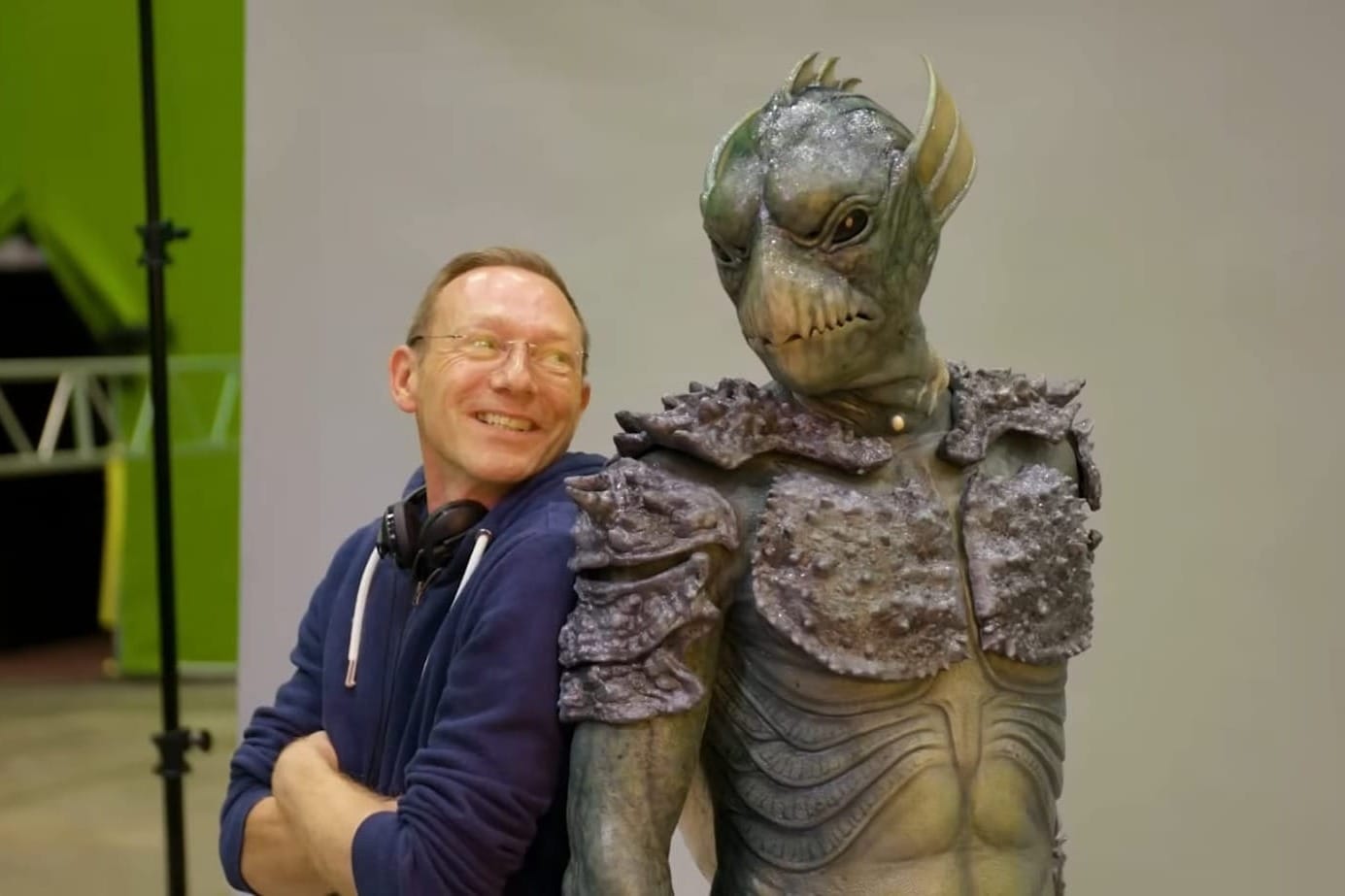
Anything that's deemed to be in the creature realm. Anything not human, as it were, which I suppose covers aliens, lots of different things.
Are all your roles masked?
I was in Pride and Prejudice with Keira Knightley. I was one of the lower-class dancers, so they made me look a little bit rougher than I look today. She needed a rehearsal partner to do all the upper-class routines because the lead actor wasn't available to rehearse. My face can be seen there. In the world of Doctor Who, as well, I did an episode with Jodie [Whittaker], I played Harold Green, with makeup on. 28 Days Later and 28 Weeks Later, it's in makeup. To be honest with you, I forget everything I've done.
How is movement choreography different to choreography?
There isn't really much difference. Its movement and choreography is more associated, I believe, with dance, but obviously any type of movement is to be choreographed because of how something moves, how a creature moves. You're going to the animal kingdom. I pull from all of that because the human eye is a very clever thing. You're wanting some association that we're aware of. I suppose choreography is a collection of movements, no matter what it is, but separating movement from dance, basically. You're creating a type of movement that a species would make, their mannerisms, their characteristics, which dips into the character role, but it's still movement.
It was a world that I wasn't personally aware of
Was it a conscious decision to move into playing creatures and monsters, or was it one role that led to another? How did that all start?
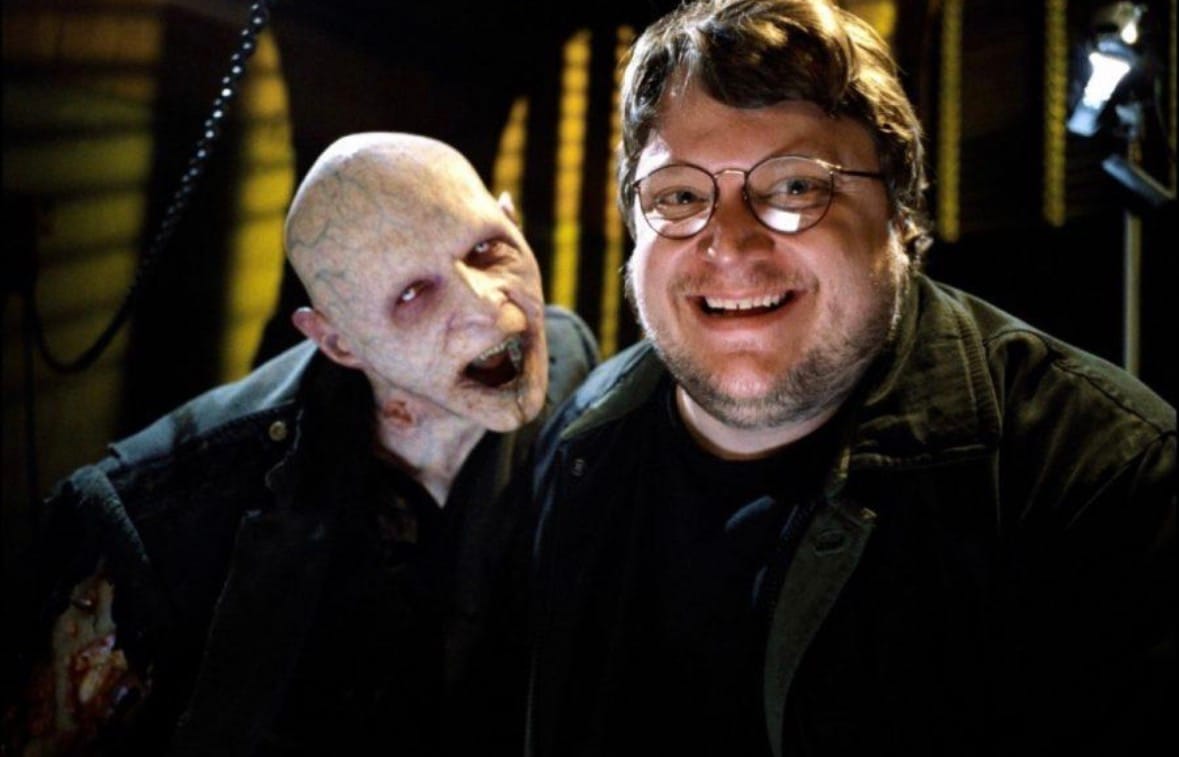
It just sort of happened because I was in a West End show called Fosse, which was the Bob Fosse tribute show. I got a call from an agent to audition for a film. They didn't say what it was. The first round was a physical movement round. There was a choreographer explaining how I was to move. Then I would just create that movement. The recall was on a Saturday, and I had two shows. I literally ended up running through Leicester Square to Pineapple Dance Studios to do the recall, in front of Guillermo del Toro for Blade II. I didn't hear anything, I didn't think I got it. They had done a lot of auditions, not only in the UK, but in Europe. I remember walking down Regent Street, and my phone rang. It was my agent, “They'd like to offer you the role as the guard reaper.” That was my first introduction, really, to four hours in the makeup chair, contact lenses, teeth, on movie sets. We filmed out in Prague. It was amazing. It was a world that I wasn't personally aware of. It truly opened my eyes. I remember one day, I'd gone through makeup, and my costume was on, and I was waiting to go on set. I was sat in the trailer, and I just thought to myself, I wonder if there's a lot more of this work. I truly enjoy it. I love that whole transformation, and then I also remember thinking to myself, what is my role looking like this? The way you look in the mirror, and you see the prosthetics. The bottom line is, it's to bring them to life the best way you can without any doubt or question. I loved it. It just so happened that before I finished the movie, another agent called me and said, Danny Boyle had taken some auditions for a film, and I couldn't make it because I was out in Prague. My agent got me a meeting with Danny Boyle, and at the end of the meeting with him, he said, “Welcome on board, we'll get you some work,” and that was it.
I was still dancing, choreographing, and lecturing. A year or so later, I get a phone call from a different agent, and they just said, “There's an audition. They're looking for people who have got experience in prosthetics and animatronics and that whole world.” They wouldn't say what the series was, it was all very hush-hush. I can't remember how long it was, but a few weeks down the line, there was a recall, which ended up being a three-and-a-half-hour workshop. After the workshop, I was meeting a friend because it was her birthday, my phone rang, and it was my agent. “Congratulations, they're offering you Doctor Who.” That was 22 years ago. Obviously, once I started Doctor Who, I didn't know how successful it was going to be and the explosion of Doctor Who back onto the screen.