“I had no compass with which to navigate my life after my family members died”
What Steven asked Nikki Price, PhD student, creative tutor and photographer
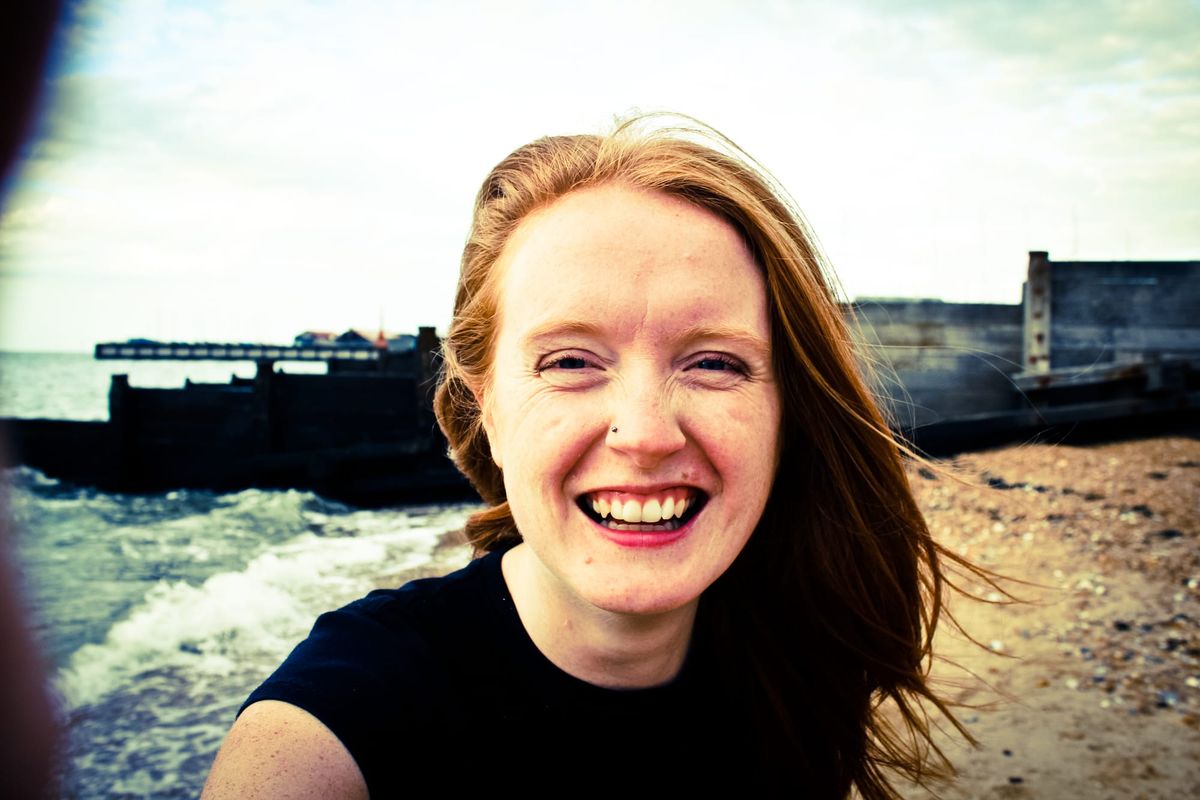
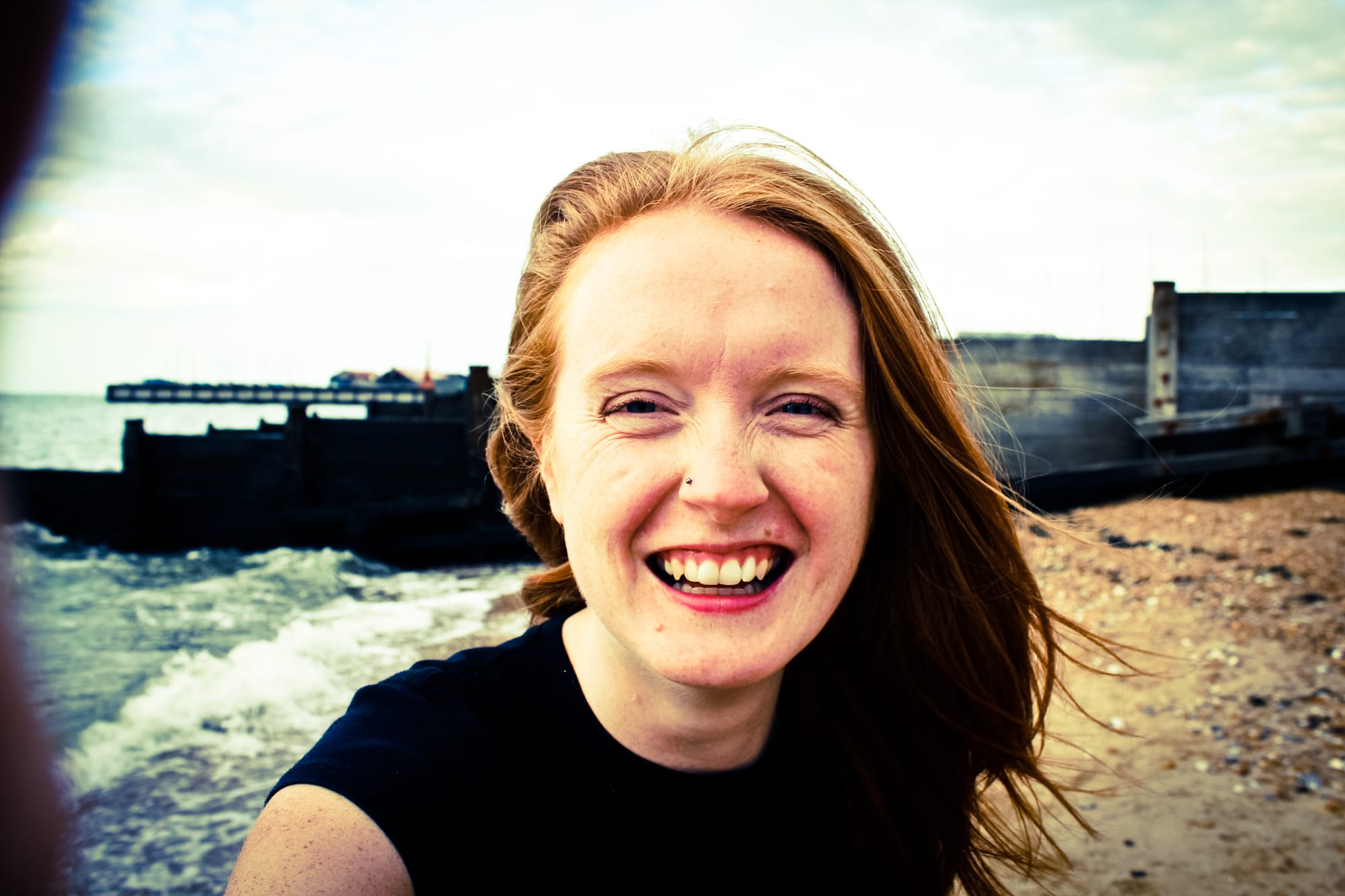
Steven met with Nikki Price at a local pub as part of our infrequent series that talks to people about their PhD studies. Nikki is studying self-directed creativity after a death, so we spoke about that as well as her photography and what was in a mysterious Weetabix tin.
What is your official occupation?
My official occupation is a researcher. I'm also a creative tutor. I do a bit of sessional work in the local area, and I am a photographer based in Medway.
What are you researching?
At the moment, a variety of things.
What is the creative work that you do?
I work with young people aged between 11 and 25 to give them tasters in creative practices, covering photography, collage and wellbeing. I think that's slipped out of the curriculum a bit. Arts funding is sparse, and going out as part of my creative tutor role is good because it keeps me in with the group of people I really want to support creatively as a photographer, and as part of my research.
Where do you do that?
All over Kent really. Mainly based in Medway and Canterbury. It's with schools and youth groups.
How would you describe your photography?
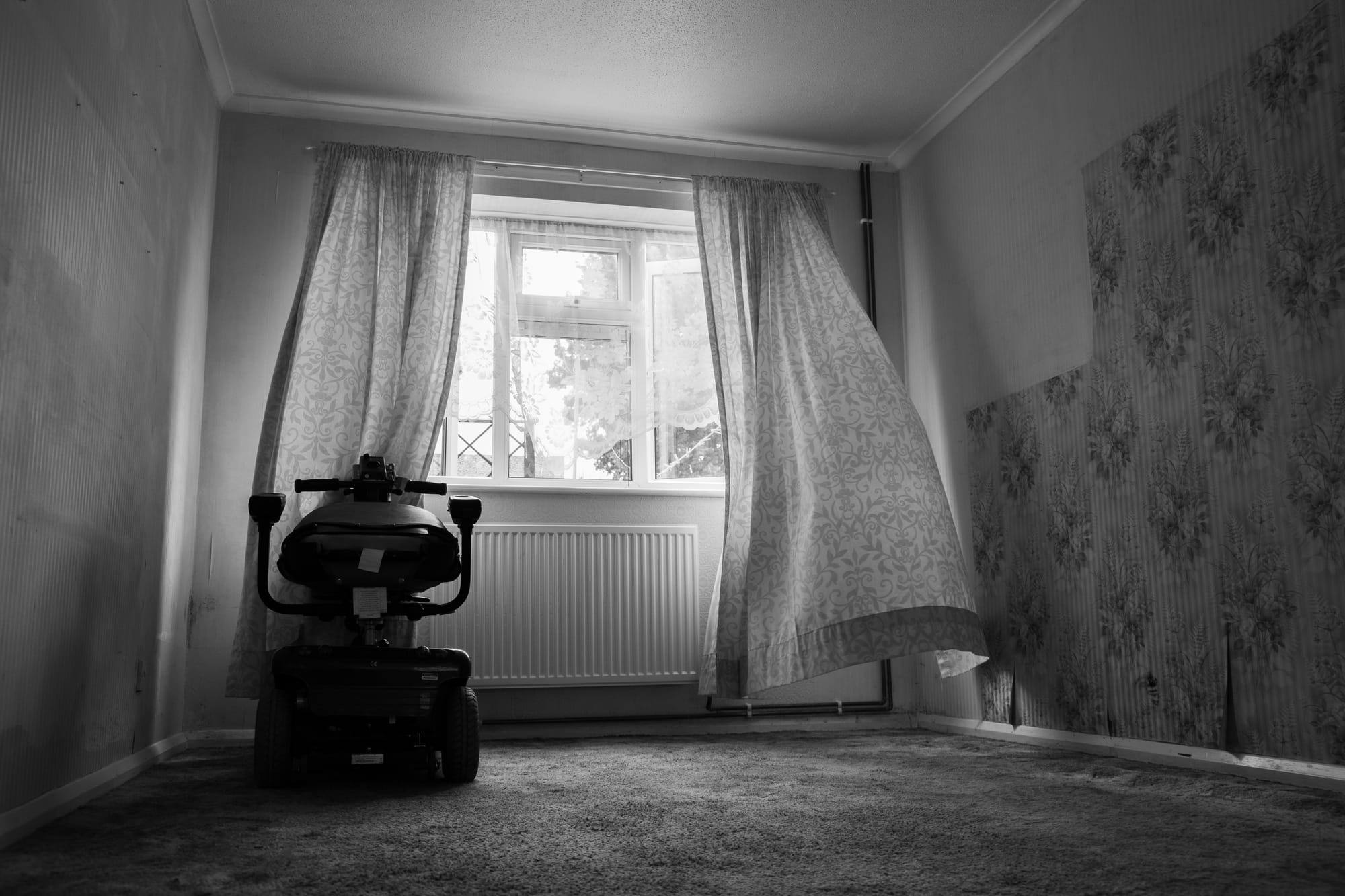
I think at the moment my photography is related to the research I do. I use it as a research tool. I use something called photo elicitation a lot. Which basically means using photography to elicit responses from people and to evoke memories and connections.
What is the focus of your PhD?
In a nutshell, looking at self-directed creativity after a death.
Why specifically after a death?
I had the experiences of the deaths of my nan, my grandad and my dad, all within this space of three years. I wanted to see what other people were doing, creatively, after a death. Obviously, my work was focused primarily on photography, but it wasn't just that. I connected to sketching, I volunteered at a memorial garden, I did a whole host of other things after a death, and I wondered ‘Is this something that other people are doing?’
I had no compass with which to navigate my life after my family members died. That was part of the reason for me doing my PhD research.
Did you find that death changed people's creativity?
In some ways, yes. I had 13 participants with me on this journey, which was great. If anyone knows, for a PhD that's a pretty fair number of people to work alongside for 18 months. Yes, it changed.
Some people connected to creativity for the first time after a long time, after the death of their person. It could have been 40 years. It could be four years. Some people completely changed the way that they approached creativity. They diverged in their practice.
They connected to something new, connected to something different, or they approached it for the first time.
Did their creativity improve because of death?
Oh, that's a great question. It’s something I didn't look at specifically, but the participants were saying, ‘I trusted in myself to do this’. It didn't matter if it was a Van Gogh painting or anything like that, but actually the process of doing it was very impactful for them.
I think that I lost my way a bit throughout it and lost my connection to my own creativity because I was so absorbed in everybody else’s stories
Is your creativity different now having done the PhD?
Again, another good question. I write about this a lot in my thesis. I think that I lost my way a bit throughout it and lost my connection to my own creativity because I was so absorbed in everybody else's stories. I was a bit like, 'Nikki, you've forgotten yourself in it'. I've obviously got a bit more time because my PhD thesis is submitted. I'm not completed, but it's submitted. I’m booking myself onto workshops and courses, using some wonderful artists we've got in the local area in Medway and having a bit more 'me time', making sure I'm making time to be creative.
Are you looking forward to being Dr Nikki Price?
Yes, definitely. We haven't spoken about this, so I might need you to cut this, but we [Nikki and her partner, Roy Smith] had our civil partnership whilst doing our PhDs.
And one of the questions was, are you going to be Mrs Smith? I'm like, “No, that's my mother-in-law.”
Sorry I've gone off at a tangent. I look forward to being a doctor. At senior school, when I failed my A-level in Art, I was actually devastated, and I thought, ‘What am I going to be doing?’
That was my everything. I wanted to study Art at university, and now I'm looking to get a doctorate in Media and Cultural Studies. That's completely cool.
When I’m tutoring, I explain that just because it isn't a particular straight path to get where you want to get, you might need to take some different routes either side of it, but you will get there if you've got the passion and the support.
I'm really happy to get the doctorate. I'm nearly there.
Will you be taking part in Medway Open Studios this year?
I won't be, no. I missed the deadline, and I was in my writing up stage. I only submitted my PhD for examination at the end of May, so I thought that was a bit of a tight squeeze, but I will be going and seeing all the lovely open studios in people's homes and in galleries. I do miss it. I'll probably get back to that at some point.
How have you found that experience of having people come into your studio in the past?
I open my front room. Some people might get a bit strange about that, thinking, ‘You can't invite people into your house,’ but I love it. Especially the last two years when I was involved in Open Studios, it was very much related to my PhD. I was testing out some photographs and inviting people who came into my house to talk about their own experiences as well as my photographs, in that spirit of photo elicitation. I think it's important to have different spaces to talk about after a death experiences and death, because I think there's still perhaps a bit of a taboo about talking about it.
For Nikki, the research is not only about what creativity can do after a death, but also about what it means to make private experiences public. Continue reading as she talks about estrangement, the stories contained in a Weetabix tin, and why photography can sometimes express what words cannot.