“Work-based learning for me was everything”
What Steven asked Lucy Mason, Work-Based Learning Manager at Medway Maritime Hospital and MidKent College Special Stakeholder
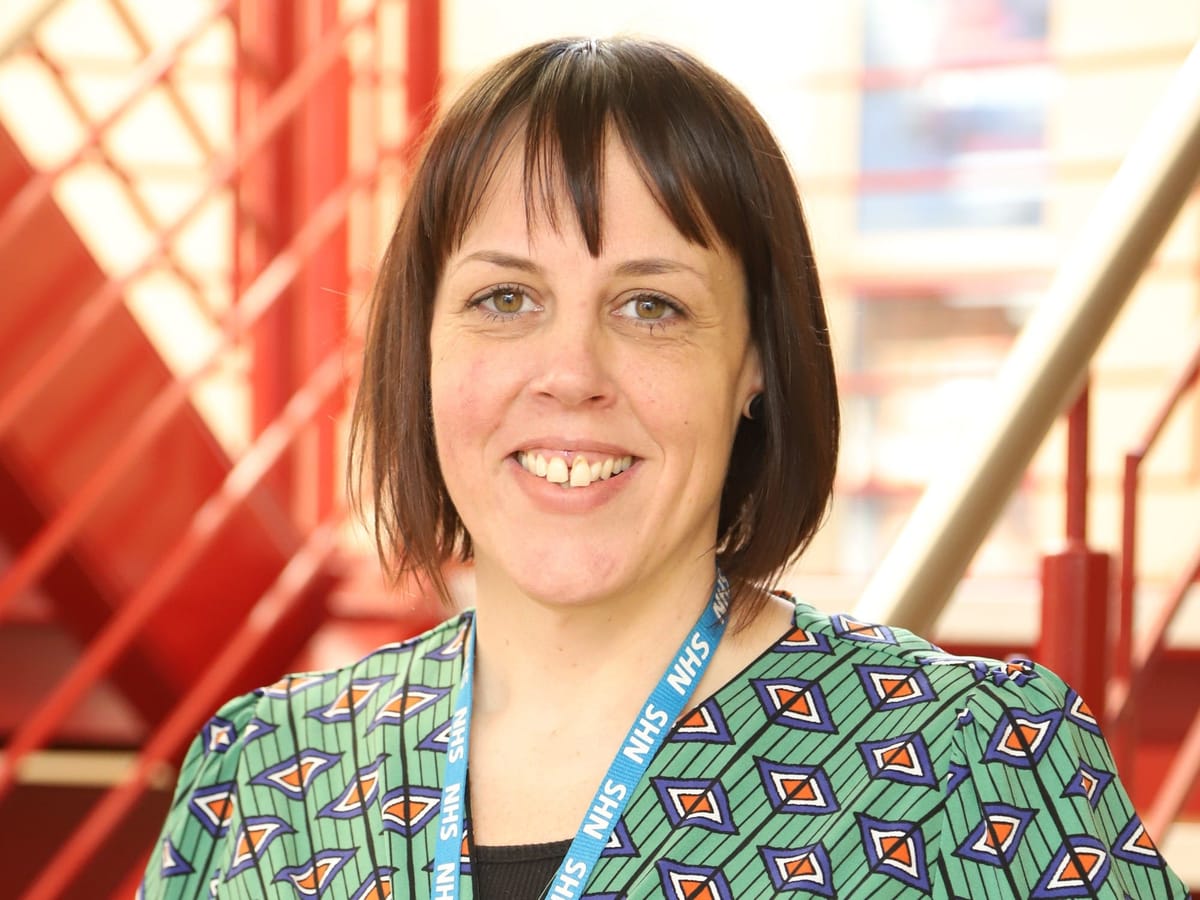
Lucy Mason is a MidKent College alumna who was recently awarded a Special Stakeholder Award by the organisation. She is now responsible for apprenticeships at Medway Maritime Hospital, where Steven met her to talk about her journey from hairdressing student to hairdressing lecturer, her work with supported internships, and why if you can get paid for learning, would you do it any other way?
What is your official occupation?
I am a Work-Based Learning Manager, and I manage the apprenticeships and widening participation projects at the hospital. Bit of a mouthful.
Do you have a medical background?
No, I don’t. I have an education background.
How did you come to work at the hospital?
I’ve been at the hospital five years. I saw an advert for looking for someone to look after apprenticeships and supported internships. They’re two things that don’t necessarily go hand in hand. I knew the advert was calling me. There are not many people that can do both. I saw it and took the opportunity to come to the hospital and start a new career, start something different.
What does your average day entail?
I’ve got a hybrid role, so I can work from home or in the hospital. I get to work mainly from my laptop, and then equally, I go to different education establishments and talk to young people. I help to organise careers events. I also give one-to-one careers advice to staff. I’ve even signed up to do an apprenticeship myself. I’m doing Careers Guidance, so I’ll be doing a lot more of that every day, so I can gain my evidence for my apprenticeship, which starts in October. I speak to people about what an apprenticeship is, the different programmes available, and sign people up to apprenticeships. You’ve actually caught me at a really busy time at the moment because September is our largest intake. It’s heavily paperwork driven, but I wouldn’t change it for the world.
What is a supported internship?
A supported internship is for students aged 16 to 25 who have learning difficulties or disabilities and have an educational healthcare plan in place. A training provider provides the employability skills, English and maths and the wraparound skills required to get work, and then they find an employer, which is where we come in. We help support them in work to put those skills into practice for up to 12 months, and then hopefully find employment at the end, whether it’s with us or with someone else.
There’ll be many readers who are only aware of A-levels. Could you explain what a T-level is?
So, a T-level, which is based at a college or a sixth form, is an academic qualification which is equivalent to three A-levels in, for example, health or science and digital. They’re the three we’re working with at the moment. Then, as part of that full-time course at college, they come to us for a work placement for 315 hours. We currently host health, science, and digital skills placements for students, and some students have recently started their eight-week placement with us.
How many students are you able to support in an academic year?
We currently have 20 students on placement with us, the largest number we have ever had.
What makes someone a Special Stakeholder?
Well, me apparently. It was a bit of a shock to get the award, but I think being a Special Stakeholder is about working with partners to create opportunities for young people in our community. We’re a big organisation, we’ve got a lot of people that we need to talk to about what a T-level is, what work experience is, what internships are. I’m there to be the buffer, to spread the love and to motivate the teams at the hospital to consider providing young people with a placement and helping them to gain employment later down the line, whether that’s with the hospital or somewhere else.
What is that stakeholder aspect? What does that mean?
What it means is, we come to the table with MidKent College as a prime stakeholder in gaining opportunities, whether it’s work experience or employment, at the hospital. It’s just opening those doors and going above and beyond to get those young people in and to hopefully help build our workforce for the future.
And due to the nature of the students or the T-levels, is MidKent College the only educational place you work with?
We work with lots of different schools locally. Obviously, MidKent is our local college. We do use our T-level students from them. However, we have worked with other colleges before, and we work with local Medway and Kent schools for work experience placements. Your traditional work experience placements as well, that’s another thing that we do.
Do you work with people at university level or post-grad level?
My role is to work with school and college students or young people with educational healthcare plans up to the age of 25. We do work with university students, but a different department looks after that aspect.
If someone wanted to do their placement with the hospital, do they apply to you, or do they go to the college or the school?
Candidates can apply directly to us for their placement. With T-level students, because of our relationship with MidKent, we take applications from their students, but we also have an advert on our website, and we would consider any school, sixth form or other colleges who want their T-level students to do their placement with us.
Let’s go back to the beginning. Where were you born?
I was born in Chatham.
What brought your parents to Medway?
I’m not even going to try to be funny. My mum is from Rochester, and my dad is from Maidstone, and he moved over to Rochester because my mum was so fantastic, and then they had me.
What jobs did they do when you were growing up?
My mum was a housewife, and she looked after three children. That was enough. And my dad was an electrician. He did an apprenticeship, actually, just get that in there. I think they all did back then.
Is there any difference to apprenticeships now to how people would have understood apprenticeships 30 years ago?
Yes, even ten years ago. It’s constantly evolving and moving. Back in the day, an apprenticeship was five years long. Today, it’s very different. Equally, now anyone can be an apprentice, whether you are 16 or 60, any age really. It’s about you gaining the funding through that route and then learning those new skills on the job. In fact, 95% of our apprentices are upskilled from current staff.
Did you enjoy school?
Yes and no… I enjoyed the break times and talking to friends. I disliked lessons and being told what to do.
Did you stay on for sixth form?
No.
What did you do instead?
I went to college because that was the better environment for me, and did hairdressing.
Was it just hairdressing?
Well, back in the day, it was hairdressing, beauty and wig making. Now I really am showing my age. I did hairdressing full-time at City Way campus.
Any advice on anyone looking to make a wig?
You know what, I had those skills, and I never really implemented them apart from through some competition work. I’ve definitely lost that skill because I no longer do hairdressing, but back then, it was something I really enjoyed.
Was college a better environment for you?
Much better for me, yeah. I identified that I had a learning difficulty while I was at college, then everything made sense. It’s also when my education blossomed, to be fair.
How long did you stay at college for?
Well, technically, I stayed there for 17 years. From the educational point of view, it was probably two years, then I left to work as a hairdresser, and then I went back as a hairdressing apprentice. I did my Level 3 as an adult when I was 21.
Have you ever gone to university for any additional courses?
Once I left MidKent College, I went back part-time as an assessor, and they put me through all of my teaching qualifications. I can’t even think of what it’s called now. All learning on the job, which is the best thing for me. That’s why I do this job.
How did you find teaching young people, who, potentially like you, were coming out of school not knowing what they do next?
That’s exactly why I did it. My first job was teaching 12 students that were disengaged in school. None of them were going to school. They came to me to do hairdressing every Friday, to help get them back into school. And they did go back to school. I was 21 myself at the time, but I think that gave me the edge with those young people to try and mould them into making the right decisions in their education.
Then you moved to teaching in a different department?
Yeah, after teaching hairdressing and coaching new staff, I then decided to look for a role within supported learning. Foundation education, looking after vulnerable adults, NEETs (Not in Education, Employment, or Training), again getting them engaged with and into education and supporting them with their learning disabilities.
Have any of those experiences helped you in the role you now have?
Oh, most definitely. Equally, those connections that you make. Those connections I made at 21 at the college have continued to grow and develop. It is about those connections, and it’s about all of those referral places and systems that can then help our staff, as well as young people, to direct them to the right places and get that experience.
How did you find that experience of actually teaching people how to do hair?
I went in wanting to teach hairdressing because that was what I loved to do. I wanted to share that passion with those people. Then I quickly realised that it wasn’t necessarily that. The hairdressing was getting them in, but it was the wrap-around support and care of those individuals that you were working with. For example, we’ve got staff working at the hospital now who were my hairdressing students. It’s bizarre because what we’re doing is preparing them for life and providing them with transferable skills. It isn’t necessarily about them being a hairdresser. Hairdressing is what got them through the door. As soon as I realised that, that’s when I took that step over to foundation education to help build those skills, to build that foundation so they can move on.
Do you remember making the transition from being a hairdressing student to working in a hairdressing salon?
Definitely. But I was still constantly learning. I was learning in the salon to implement my skills and adapt them. It was a journey, and one I enjoyed. It did me well. I loved it. I had a good time. Even now, I’m still learning. Every day is a school day. You’re like a sponge, aren’t you, for everything that you do. People come to me with questions about apprenticeships, and I’m like, “Let me find out,” because I don’t know everything.
What was your first full-time job?
I worked in a Co-op behind the till. Loved every minute of it, working evenings, chatting to the customers. I’d go back tomorrow. Absolutely loved it. Working and talking to the public.
Who is the most famous person you are one degree of separation from?
I’m going to say Jonathan Shaw. He is great. He’s created a lot of opportunities for me through his Medway leadership program. He’s got me to come and talk, and that really helps my confidence, because I know I come across as confident, but inside I’m rocking. But he’s been creating some opportunities to go and talk to other leaders and share the practices of what we’re doing, which is great because it’s really impacting locally.
What do you do to unwind and relax?
Gardening, spending time with my dog, going on holidays, but I’ve not had any recently, which is horrible, and watching rubbish TV that my husband will come in, shake his head at, grunt and moan and then walk away from. Stuff I haven’t got to think about basically.
Where do you like to go for dinner in Medway?
The Turkish restaurant on the top road called Galata.
What advice would you have for any parents who’ve got young adults in their household who are disengaged in terms of helping them to find a way forward?
My advice would be to support them along that journey, whatever that journey may look like, and to be there for them. There are places, training providers and provisions that can help you. I would start at your local college for course information and then reach out to employers, like Medway Maritime Hospital, that offer work experience programmes and opportunities. This year, we’re working with seven young people from Brighter Futures who don’t know what they want to do career wise. And actually, if we can help them decide where they want to go or where they definitely don’t want to go, that’s one less thing on their list to worry about.
What are the main risks of someone potentially failing a T-level or a supported internship?
I don’t think it’s a case of failing from an employment point of view. We work with the supported interns throughout the programme to develop those work experience skills at their own pace. It doesn’t mean you’ve failed if you don’t get a job at the end of it, because it’s about developing those skills as you go and getting them ready for the next step. With T-level students, we run the 315-hour placement, which goes towards their academic qualification. We’re part of the curriculum and the development, we’re like that rubber stamp at the end to say, ‘let’s implement what you’ve learned into the workplace and give you that experience’, and that’s what we do. It’s also our job to try and find employment for them. This year, we’ve found three jobs for T-level students, all permanent positions within the hospital. That’s our largest year yet, so onwards and upwards.
If you can do work-based learning and get paid, why learn any other way?
Exactly! That’s a good strap line. I might steal that, Steven. I think it’s important that there are options for everyone and that you follow the pathway for your learning that’s right for you.
Work-based learning for me was everything. That’s how I learned. Some people would prefer academic classroom-based learning, and that’s great for them. It’s about doing the right thing for you and your own learning.
What advice would you have for a young person about to start an apprenticeship?
The advice would be that if you get any problems or you’re not sure, then to reach out and ask questions. It’s important to ask questions, to be honest and to nip any concerns in the bud.
Footnotes
This interview has been lightly edited for length and clarity.
You can read our previous interviews here.
If you want to suggest ideas or send tips for people to interview, email Steven.
Steven Keevil still manages to watch hundreds of films a year. He recommends Thief. He listened to no music whilst writing this, but recommends reading Prisoners of Geography by Tim Marshall.