Winter is here
Stuart Bourne on the sights that can still be found in our gardens this time of year
Editor's note: You'd usually be receiving our big Sunday interview today, but our schedule has been disrupted by Steven's unexpected hospital stay. Selfishly, he ended up there before he'd filed this week's interview. We'll be back to our normal schedule as soon as we can, but for today, I'm happy to say that our resident gardening expert, Stuart Bourne, has stepped in with his latest quarterly column on what grows in our gardens this time of year, some of his favourite festive choices, and he recommends a lovely park to visit this time of year.
Winter has arrived, and for most people, this means we get the urge to retreat indoors and take a break from gardening. However, as I will show in the coming sections, there are still plenty of reasons to explore your garden and parks as well as do a few vital jobs.
Favourite Festive Plants
For my first article of the year after my Christmas break, I thought it would be fun to talk about those special festive plants that always end up decorating our homes during the Christmas period. Whether they are made into wreaths for our front doors, woven into table decorations, or simply brought into our homes over the holidays. There are several plants I know that, if I didn’t see them, then it wouldn’t be Christmas. So, let's dive into my favourites and the traditions behind them.
Mistletoe
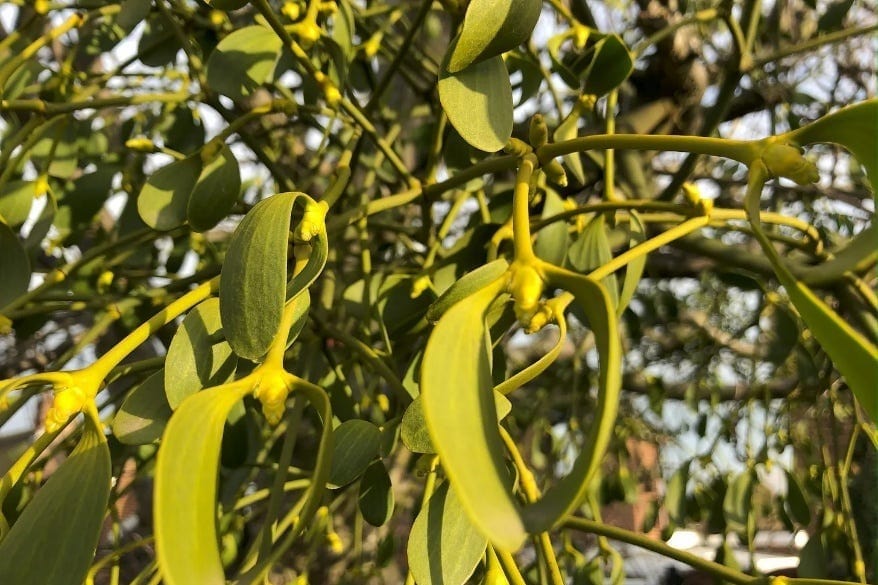
There are 1,500 species of mistletoe worldwide, but the Viscum album variety is found in the UK. Used to decorate our homes, it also has the tradition of being used to steal a kiss from our loved ones. Mistletoe was seen as a symbol of good luck by druids, and in Viking mythology, it is associated with love. The story goes that the white berries are the tears of the Viking Goddess of Love, who cried when her son died from mistletoe. It is this association with love and caring for those we love where the tradition of kissing under the mistletoe comes from.
It is a parasitic plant that grows on trees such as Poplar, Hawthorn, Rowan, and most apple trees. Though it draws nutrients and water from its host tree, the plant obtains all its energy from its own leaves. It has male and female plants, with only the female plant producing the berries we decorate our homes with. It can survive regular pruning if you are careful with how much you cut off, and can be propagated by smearing berries into nooks of established trees, avoiding young trees so you don’t weaken them.
Holly
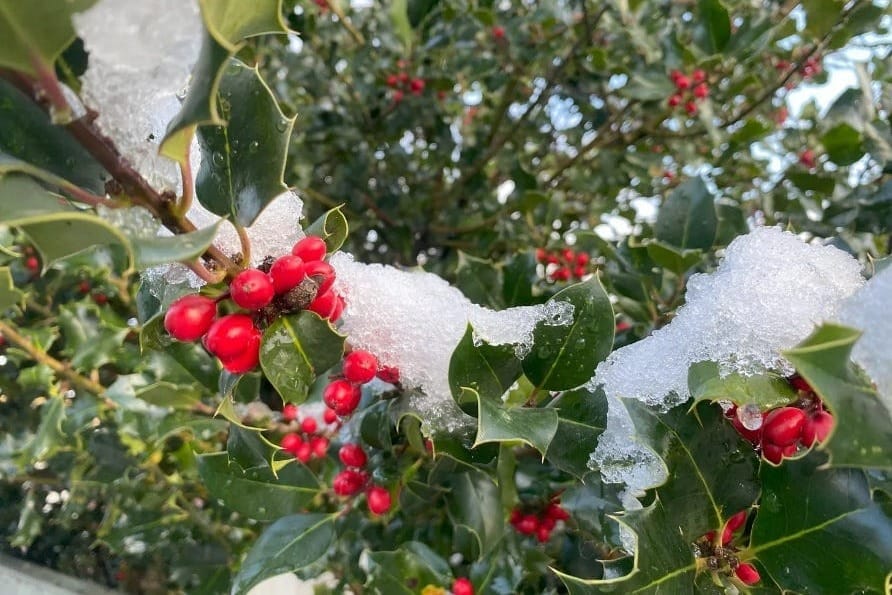
There are 570 species of holly around the world, and it can be a tree, shrub or climber. Traditionally, it has been used to make wreaths and table decorations over Christmas for hundreds of years. It was first brought into homes by the druids during the winter, because its evergreen leaves were a symbol of everlasting life and renewal. Later on, it was adopted by Christianity, as the leaves were like the crown of thorns, the red berries Jesus’ blood, and the evergreen leaves symbolised his rebirth.
Just like mistletoe, it has male and female plants, with the berries again only found on the female plant. If you are buying a holly for your garden, always do so in autumn so you can tell whether it will have berries or not. Interestingly, the leaves of holly trees get less spiky the higher up the tree they are, and it is believed that this is because there is less risk of leaves being eaten by animals.
Poinsettia
Originally from Mexico, this shrub turned houseplant’s popularity has spread widely over the last hundred years, and even crossed over to the UK over the last few decades. There are roughly 8 million poinsettias sold each year in the UK, with nearly half of them grown by producers here.
Their association with Christmas is based on a story of a little poor Mexican girl from the 17th Century, who gave a handful of weeds as a gift to Jesus at the local nativity scene. The next morning, these had miraculously turned to bright red flowers. Its popularity became more widespread in the 19th century when a US official to Mexico, and keen botanist, Joel Poinsett, started making cuttings and sending them as Christmas gifts to his friends back in America. It is from Joel Poinsett that we get their Latin name, Poinsettia.
The bright red flowers that we all enjoy are not in fact flowers but modified leaves, or bracts. The plant’s actual flowers are small and white, found at the centre of the display, and are often overlooked. For the bracts to turn their classic red, the plant needs at least 12 hours of complete darkness for 7-8 weeks in a row. Even home and street lights are enough to break the cycle. This means growers have to take special care to ensure they are ready for the Christmas market.
Pruning overgrown shrubs
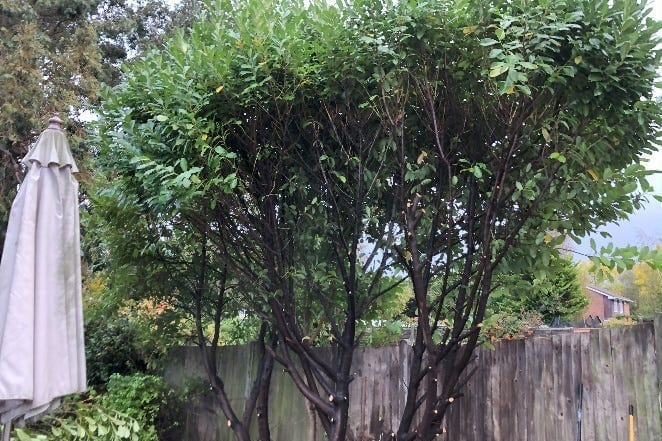
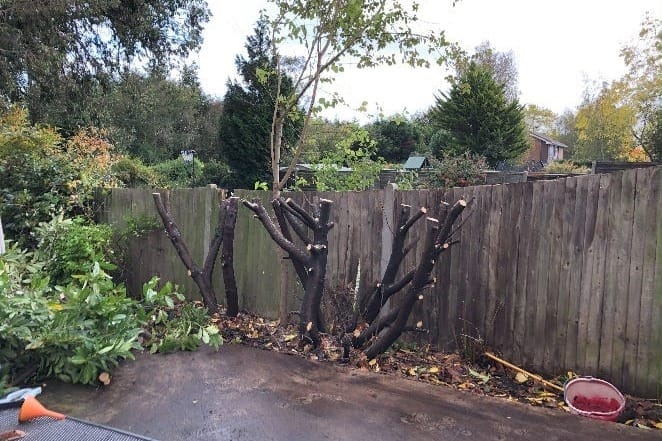
There is a time when you look at a large shrub and think… Nah, it doesn’t look right. It could be too old, too big, or too damaged. You might be tempted to remove it, thinking it's your only option. However, for some shrubs, you can press their reset button with a hard prune.
This hard prune consists of removing the vast majority of branches, almost reducing the shrub to a few main stems near the base of the plant. The idea is that the shrub produces new buds along these stems, creating new foliage over the next few seasons. If it all goes well, you will have what looks like a dense new shrub in 3-4 years. In fact, you might even have to remove some new branches in the first few years to ensure they are not too congested in the centre.
Not only is this a good way to reduce a large shrub that’s taken over a bed, but it also removes any tired and diseased branches that have stopped flowering. This process can also trick the plant into thinking it’s a juvenile again, making it become much more vigorous than it might have been before.
The best time to do this is now, during the deep winter. All the shrubs are dormant, and you have plenty of time before the spring and the next growing season. However, I have done this to evergreen shrubs in the summer, and they have put on a decent number of new leaves before winter.
Colourful winter stems
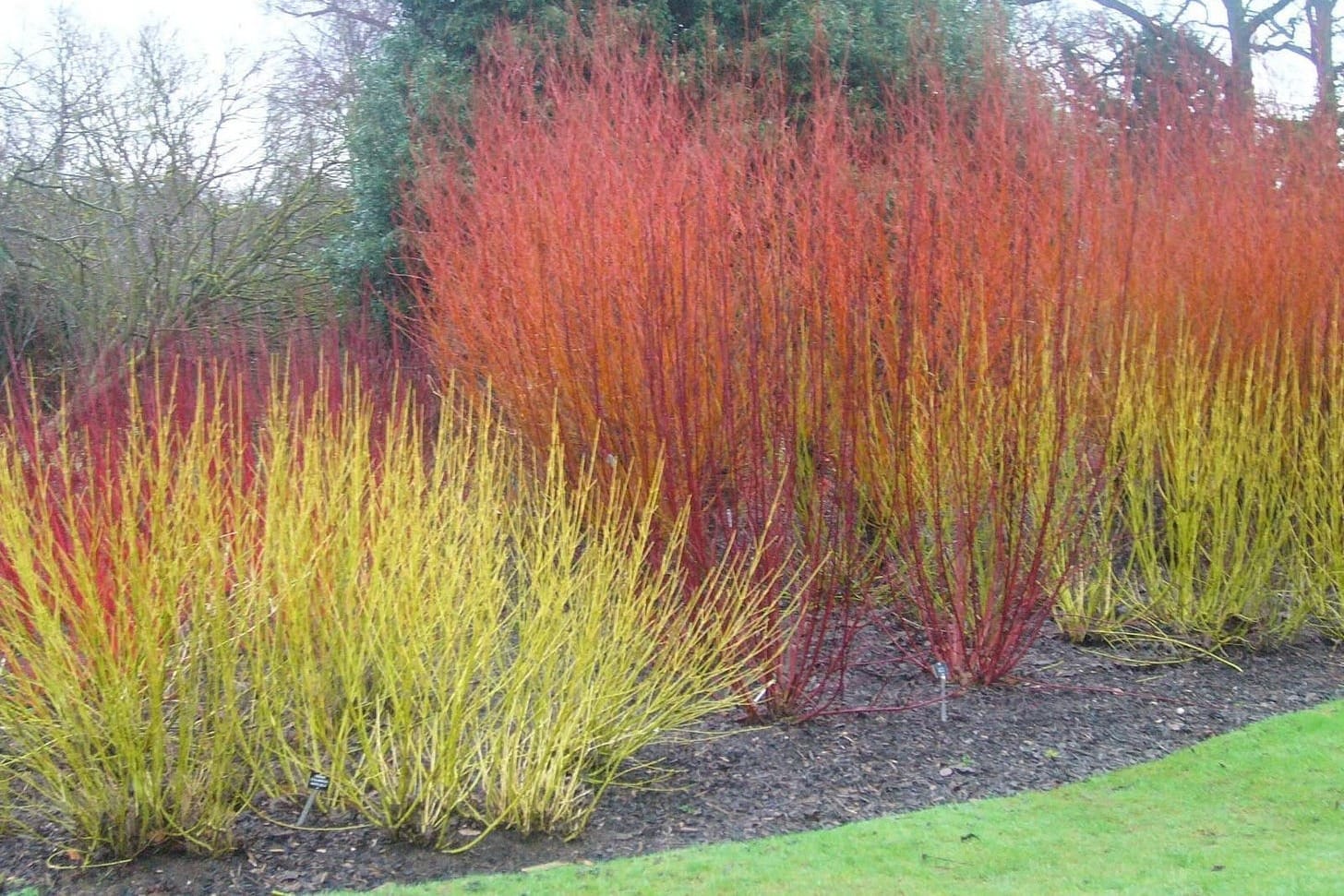
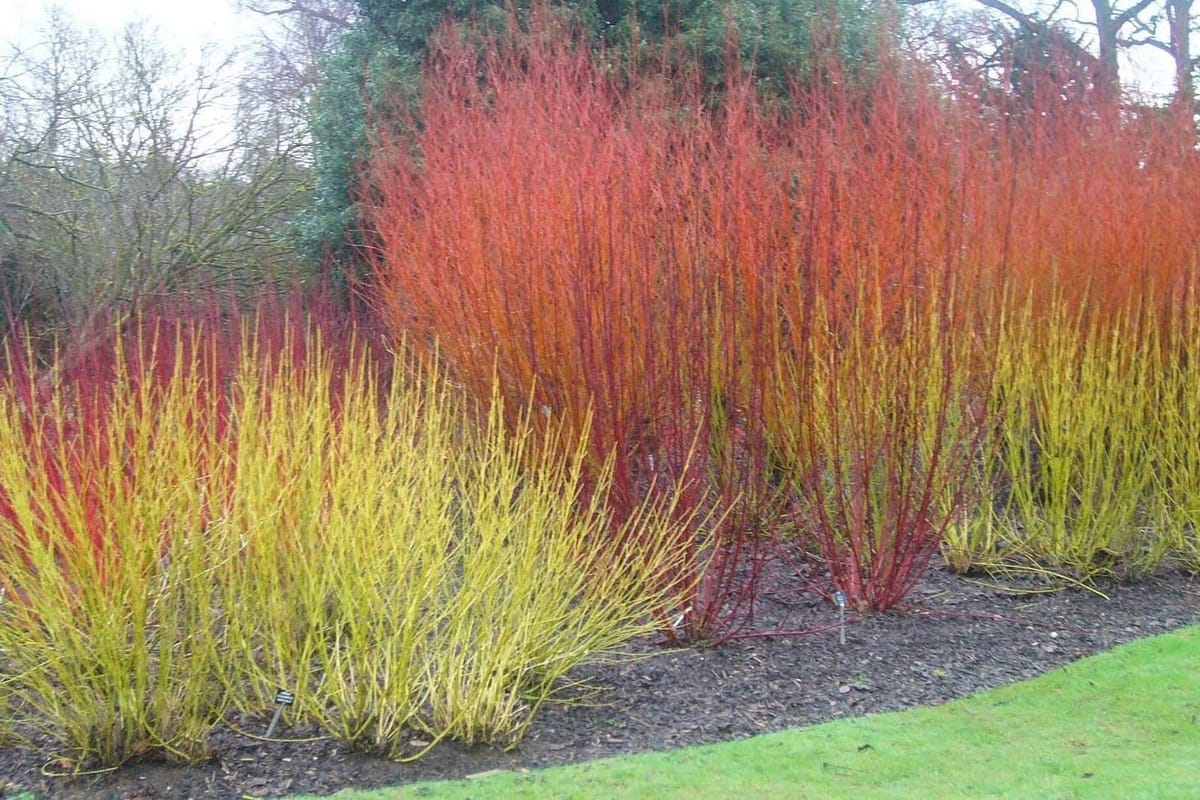
As we sit inside on these cold winter days, it is hard to imagine that there is anything bright and colourful to enjoy in our garden. Even the interesting seedheads covered in frost are just a mixture of dull browns and greys. Yet there is one plant that can brighten up a garden with a vivid display of bright reds, yellows and greens. A plant that has quietly gone on unnoticed all summer, hidden behind its nondescript leaves. Yet now autumn has been, and its leaves have dropped, it reveals the most amazing display of coloured stems. I’m of course talking about the fabulous varieties of dogwoods and willows.
Cornus, commonly called dogwoods, are a set of species of deciduous shrubs and small trees that come from across the world. Some can be grown for their big display of flower bracts in the summer. There are several species and varieties that are grown for their very unique coloured young stems. Similar there are also some species of willows that also produce colourful new stems. When planted together in groups, these plants can produce an almost firework-like display in mid-winter.
The main thing to remember when growing dogwoods and willows is that it is the young stems that have all the colour. As they age, they lose their vibrancy and impact. This means you have to prune them back hard each year. Luckily, both plants respond well to coppicing, sending up even more stems each time they are cut.
The pruning takes place in late winter or early spring. If you prune them too early, then you don’t get to enjoy the colour all winter, whilst leaving it too late will mean the plant is already starting to grow. In the UK, I’ve normally pruned my in mid to late February. However, as we get milder winters, this is beginning to be pushed forward each year.
Pruning is a simple matter of coppicing the plants right down to the base, creating a large base or ‘stool’ that sends all the new stems. This can get larger each year. If you have a large bed and want to add some height at the back, you can also try leaving a single stem, say about 0.5m from the ground, on which the new stems can grow. You then pollard this trunk in the following years. This technique works well with willows, which have traditionally responded well to pollarding.