When the only road closes
A village cut off, a tree felled in Hoo, and new rail usage figures for Medway

Today's Local Authority leads with an unusual and tightly managed road closure that will cut the Isle of Grain off from the rest of Medway for more than a day, raising questions about planning, consultation, and what happens when a community has only one way in and out. We also report on the felling of a mature ash tree in Hoo despite assurances it would be retained as part of a housing development, and look at the latest rail usage figures showing passenger numbers continuing to rise at every Medway station.
Grain has one way in and out. This is what happens when it closes
A Medway village of 1,730 people will be cut off from the road network for more than a day next month, after Network Rail confirmed it will fully close the only road in and out of the Isle of Grain to carry out urgent level crossing works.
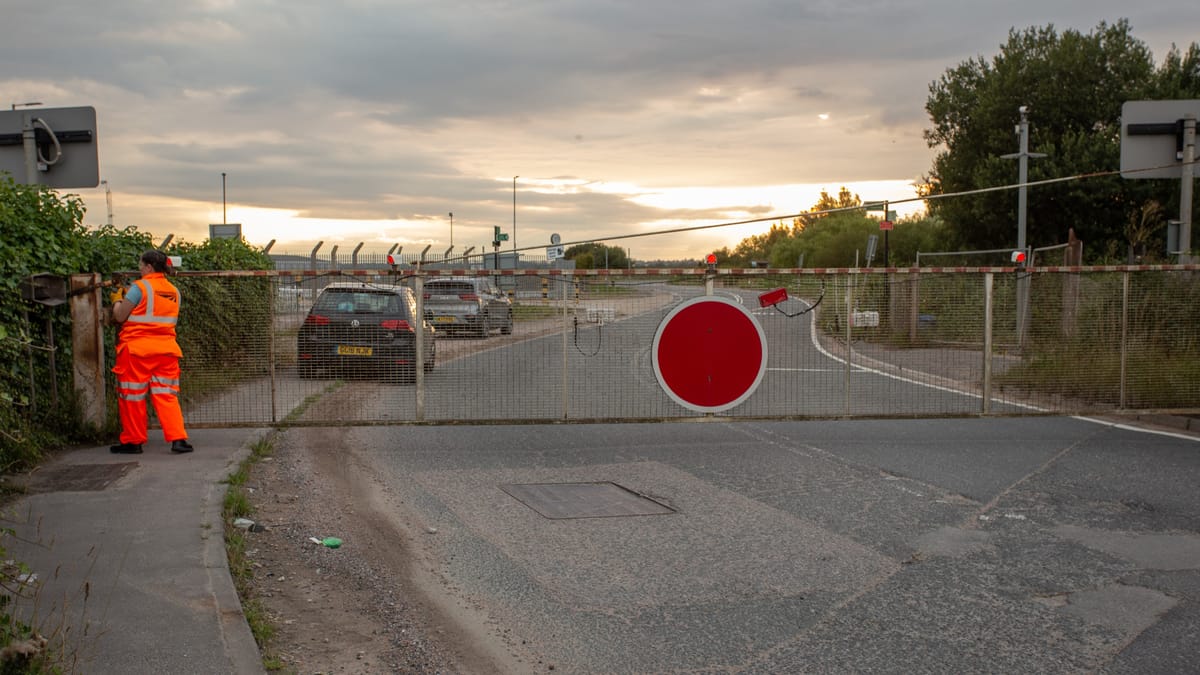
Grain level crossing on the A228 will close from just after midnight on Sunday 15 February until 5am on Monday 16 February, a total of 29 hours. During that time, there will be no normal vehicle access to or from the village, leaving residents reliant on escorted crossings, limited parking outside the village and emergency-only access routes.
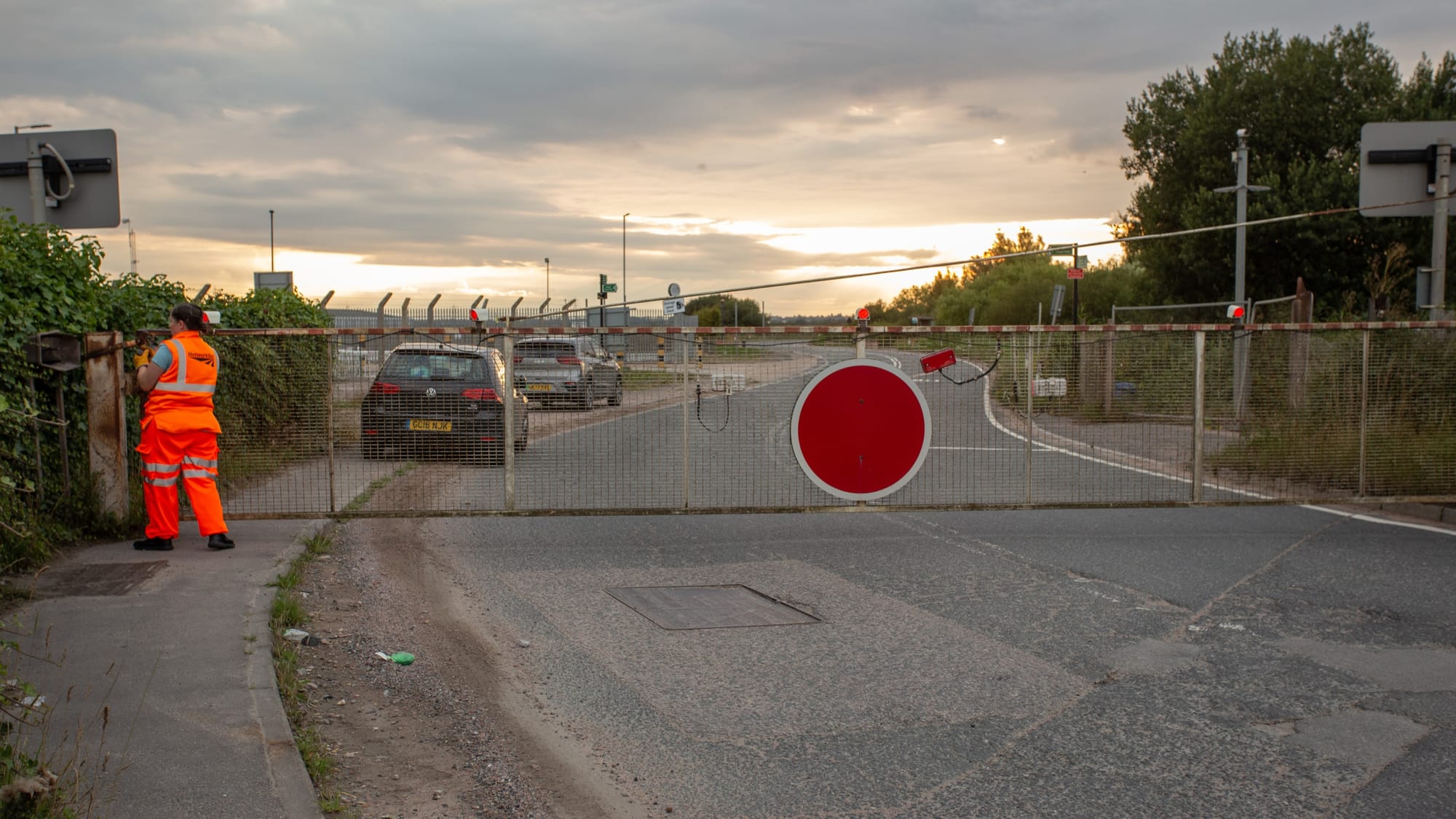
Network Rail says the closure is necessary because the crossing and underlying track have reached the end of their serviceable life and are showing significant deterioration, posing risks to road users and rail freight operations.
But as the closure approaches, questions remain about how the works were planned, who was consulted, and why an isolated community has once again found itself facing a total road closure with limited notice.
The works will involve a full rebuild of the level crossing, including replacing the rails and installing a more modern system designed to withstand heavy traffic. Underground ducts will also be installed to support a future upgrade to the signalling and barriers.
To carry out the work, the A228 Grain Road will be closed at the crossing with no ordinary vehicle access. Emergency services, including police, ambulance and fire crews, along with NHS on-call workers such as carers and dialysis staff, will be escorted through the BP oil terminal if required.
For everyone else, Network Rail says mitigation measures will be in place. These include accessible minibuses running between the village and the crossing, where residents will be escorted on foot to connect with the Arriva bus service. A limited number of parking spaces will be available on Network Rail land on the far side of the crossing, with residents asked to pre-register and park there on Saturday evening ahead of the closure.
Information shared with residents at a consultation event indicated that around 190 parking spaces would be available and that three minibuses would run continuously on a loop between the village and the crossing.
St James Parish Council, which covers the village, says it was not consulted by Network Rail on either the decision to carry out the work or its timing, nor on the road closure or its impact.
Speaking to Local Authority, the parish clerk said the council had no opportunity to discuss the proposals and had no more information than that made available to the general public. “We are disappointed with the very short notice of this work, particularly as it will have such a profound effect on this village.”
Independent ward councillor Chris Spalding has been sharply critical of how the closure has been handled. “Chaotic thoughtlessness best describes things thus far,” he said.
Network Rail has attended meetings with Medway Council and emergency services to share details of the closure and discuss potential mitigation measures. Responsibility for delivering those measures sits with Network Rail. Council teams will be present in Grain village and at the level crossing during the closure to assist if issues arise.
Spalding says council records show that a Temporary Traffic Regulation Order relating to works at the Grain level crossing was uploaded in September 2025, indicating that highways officers were aware of the works several months earlier.
He says he was first contacted by the council’s emergency planning manager on 22 December and was briefed on site the following day. At that point, he says, Network Rail was proposing a full 72-hour road closure.
“Network Rail appeared to be unaware there is only one road connecting the village,” Spalding said.
Grain is also home to several major industrial sites covered by the Control of Major Accident Hazards regulations. Spalding says the implications for those sites and for emergency response were not initially fully considered.
Network Rail later reduced the closure period, but Spalding says communication remained poor. Letters to residents were delayed, some households had not received them by the time of a January drop-in session, and the session itself was sparsely staffed with no visual displays.
Emergency access routes have since been tested. “Using the route through the BP site only adds around a minute and forty seconds to emergency response times,” Spalding said. “That has been tried and tested.”
He also highlighted knock-on effects for village life, including a postponed local football match, likely disruption to pub trade, altered deliveries to the village Co-op, and a customs clearance business having to make alternative arrangements for dozens of HGVs.
Spalding says this is not the first time Network Rail has attempted to close the only access route to Grain without adequate consultation. In November 2023, residents alerted him to traffic notices indicating an upcoming closure of the level crossing. After he raised concerns that the crossing was the only way in and out of the village and that no mitigation measures were in place, the planned works were cancelled.
Network Rail has published material explaining why the works are required and what mitigation measures it intends to put in place. It says the crossing has reached the end of its serviceable life and that delaying renewal could lead to unplanned emergency closures.
In the statement released through its media centre, infrastructure director Bob Coulson said the company was liaising with Medway Council, had explored alternative access routes, including a relief road and the BP terminal, and concluded they were unsuitable for general traffic. Network Rail says residents are being asked to plan journeys on alternative days if possible and thanked the community for its patience.
Local Authority asked Network Rail when the deterioration was first identified, how long the crossing had been beyond its serviceable life, what emergency resilience assessments had been carried out, what contingency plans exist if the works overrun, and why local councils were not consulted earlier.
Network Rail did not respond to those questions.
For Grain residents, the immediate concern is preparing for a weekend when their village will have no normal road access, with journeys carefully planned around escorts, minibuses and limited parking.
This is an unusual and tightly managed event rather than a routine occurrence. Emergency access routes have been tested, major employers have put arrangements in place, and the closure period has been shortened from earlier proposals.
But it also highlights a more fundamental issue that sits beyond this specific set of works. A village of around 1,700 people, bordered by nationally significant industrial sites and energy infrastructure, has only a single public road connecting it to the rest of Medway. When that route is closed, even temporarily, the consequences are immediate and far-reaching.
That is not a problem Network Rail can solve alone. It is a question of long-term planning, resilience and how communities like Grain fit into wider transport and infrastructure decisions.
The crossing will reopen on Monday morning. The bigger question, raised quietly but clearly by this episode, is whether a village in this position should still be relying on just one way in and out.
Hoo ash tree was felled despite assurances it would stay
A mature English ash tree on Stoke Road in Hoo was felled earlier this month, months after councillors and residents were told it would be retained as part of a housing development on the site.
The tree stood on the frontage of land where Jones Homes is building up to 100 homes next to Yew Tree Lodge. While the scheme already had outline planning permission, the detailed reserved matters application became contentious last year over its impact on boundaries, drainage and existing greenery.
In June 2025, the developer’s planning agent wrote to Medway Council confirming changes to the scheme following discussions with officers and consultees. Among them was a clear assurance that “the existing mature tree on the site frontage on Stoke Road has been retained,” alongside additional hedgerow planting and an increase in new trees elsewhere on the site.
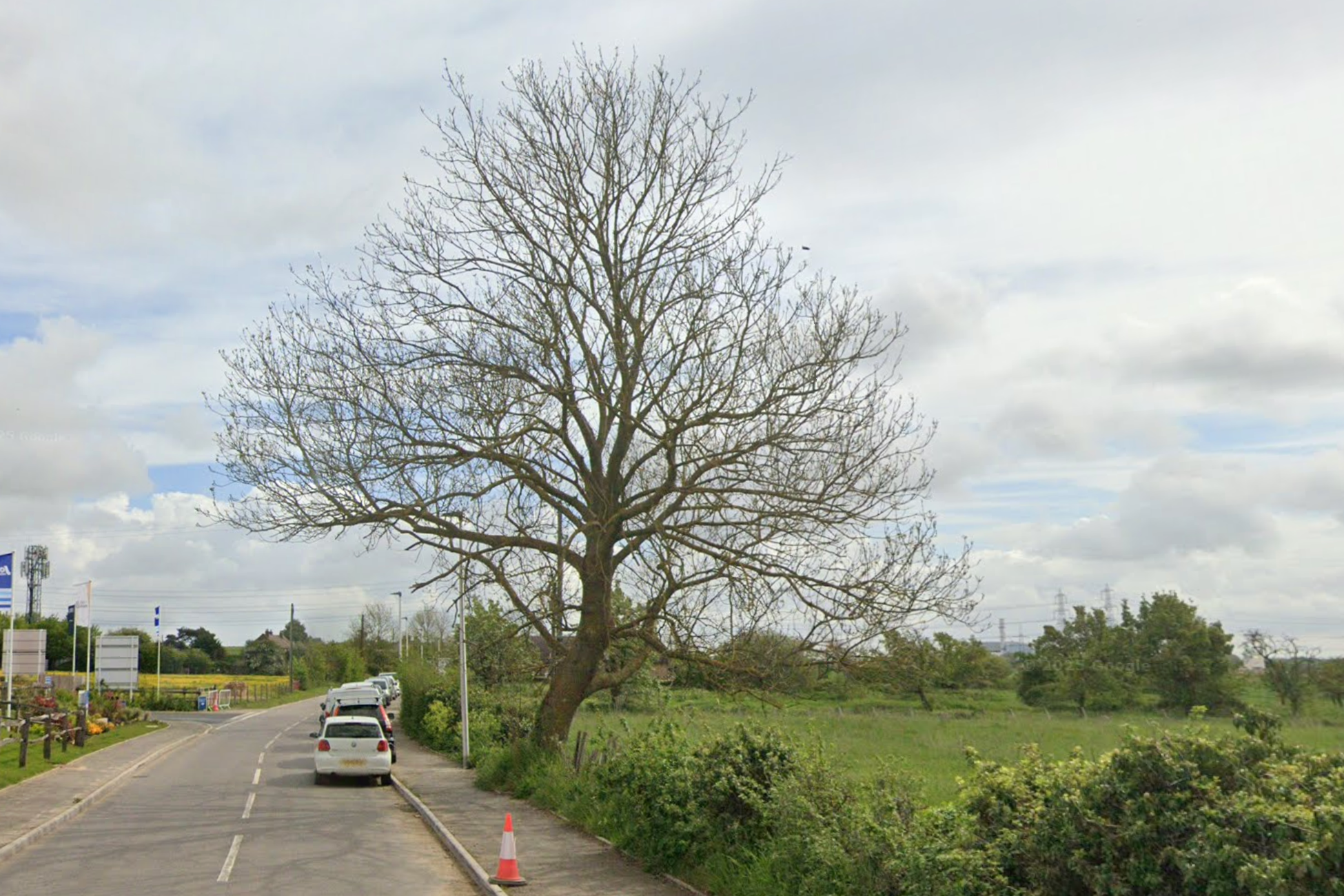
Ward councillor Michael Pearce later shared that update publicly, telling residents the plans had been improved following representations and that the ash tree would be kept.
The tree was felled on 14 January.
Medway Council said the original intention had been to retain the tree, but that other technical documents submitted as part of the application continued to show it being removed. The council said arboricultural assessments identified the tree as diseased, and that further discussion concluded it could not be retained safely once drainage works and internal roads were taken into account.
According to the council, the final approved plans allowed the tree to be removed in line with those technical assessments, with additional tree planting required elsewhere on the site as compensation.
Pearce posted on social media that he had since been told the council knew the tree was going to be felled, but that ward councillors were not consulted on what he described as a change from what had previously been agreed in writing. He said the explanations offered by the council and the developer were inconsistent, with Jones Homes publicly citing the tree’s health while the council pointed to drainage and road layouts.
He said he felt “seriously misled and disappointed,” adding that residents had contacted him angry about the loss of the tree and seeking clarity over how the decision had been taken.
Local Authority approached Jones Homes for comment but they did not respond.
The episode raises questions about how changes within complex planning applications are communicated, and how assurances given during the process can later be overtaken by technical assessments without clear public explanation.
More passengers using Medway stations
It’s an exciting time for rail stats nerds, as the Office of Rail and Road has published its latest annual station usage figures. Bigger outlets will be busy ranking the busiest and quietest stations in the country, but this being Local Authority, we’re only really interested in one thing: What’s going on at Medway’s stations?
The short answer is that everything is moving in the same direction as last year. Passenger numbers are up at every Medway station, the order remains intact, and nothing here suggests any sudden or dramatic shift in how people are using the network.
- Gillingham – 2,542,112 (6,965 per day) – up 9%
- Chatham – 2,397,976 (6,570 per day) – up 10%
- Rochester – 2,059,228 (5,642 per day) – up 8%
- Rainham – 1,702,048 (4,663 per day) – up 11%
- Strood – 1,167,638 (3,199 per day) – up 11%
- Halling – 109,218 (299 per day) – up 26%
- Cuxton – 60,952 (167 per day) – up 9%
As ever, Halling remains the outlier. It is still tiny in absolute terms, but its 26% jump dwarfs the growth elsewhere, continuing a pattern that likely says more about nearby housing development than any sudden surge in rail enthusiasm. At the other end of the scale, Gillingham continues to quietly rack up the biggest numbers, even if it's only the 223rd busiest station in the country.
The destination data is unchanged from last year. Gillingham, Chatham, Rochester and Rainham passengers are still most likely to be heading to London Victoria, Strood and Halling continue to point towards St Pancras, and Cuxton once again bucks the entire trend by mostly sending people just one stop up the line to Strood.
Footnotes
Follow us on social media! We’re on Facebook, Instagram, BlueSky, and Threads, but not that other one.