Two approvals show Medway’s growth dilemma
Big developments in High Halstow and Gillingham get the green light, plus the Hoo by-election result, news in brief, and lots more

Medway’s planning committee approved two major housing schemes this week, one a large village expansion at High Halstow and the other a major brownfield redevelopment by the Strand in Gillingham. We look at what the decisions show about the trade-offs Medway faces on growth, then round up the Hoo parish by-election result, council business, planning, news in brief, and lots more.
Two big housing approvals show there is no painless way for Medway to grow
Medway Council’s planning committee approved two major housing schemes this week, and taken together they offered a fairly neat summary of the area’s development problem.
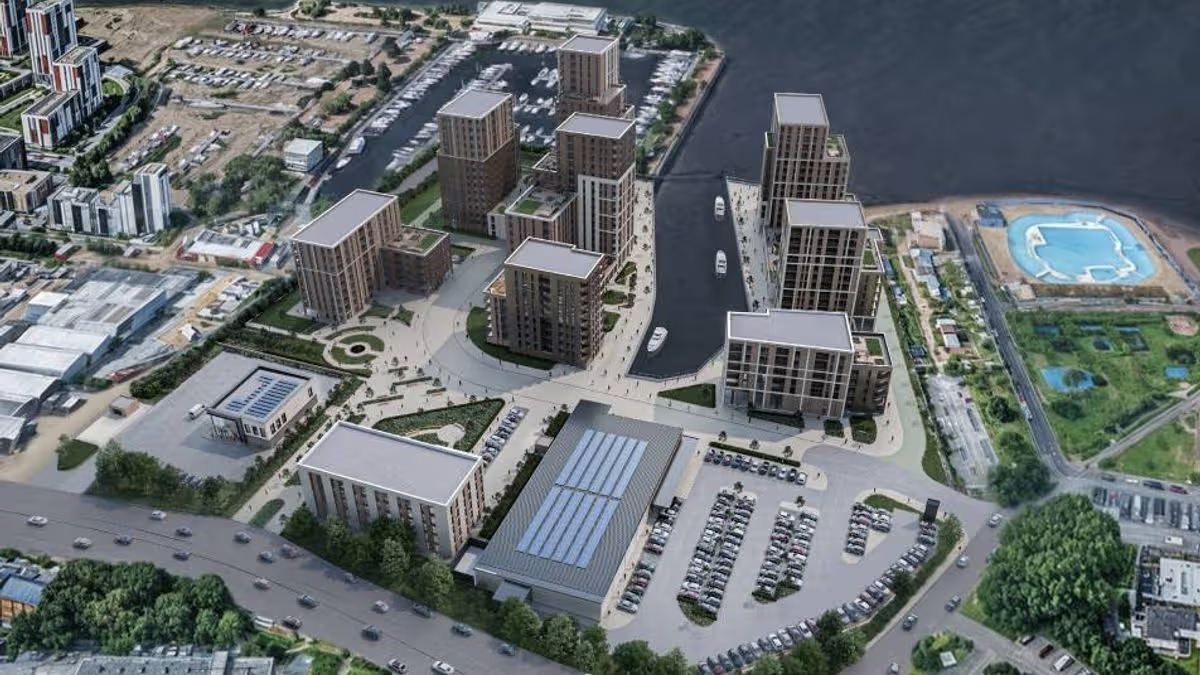
On one side was High Halstow, where councillors signed off on a 760 home expansion that will significantly reshape one of the Hoo Peninsula’s villages and left plenty of residents furious. On the other was the former gasworks by the Strand in Gillingham, where councillors unanimously backed up to 500 homes on a contaminated brownfield site, but only with limited developer contributions and no affordable housing delivered through the planning deal.
Different places with different politics and different arguments. But the same broad conclusion hung over both decisions. Medway needs more homes. Building them on greenfield land comes with obvious backlash. Building them on brownfield land comes with obvious compromises. There is no painless version of this.
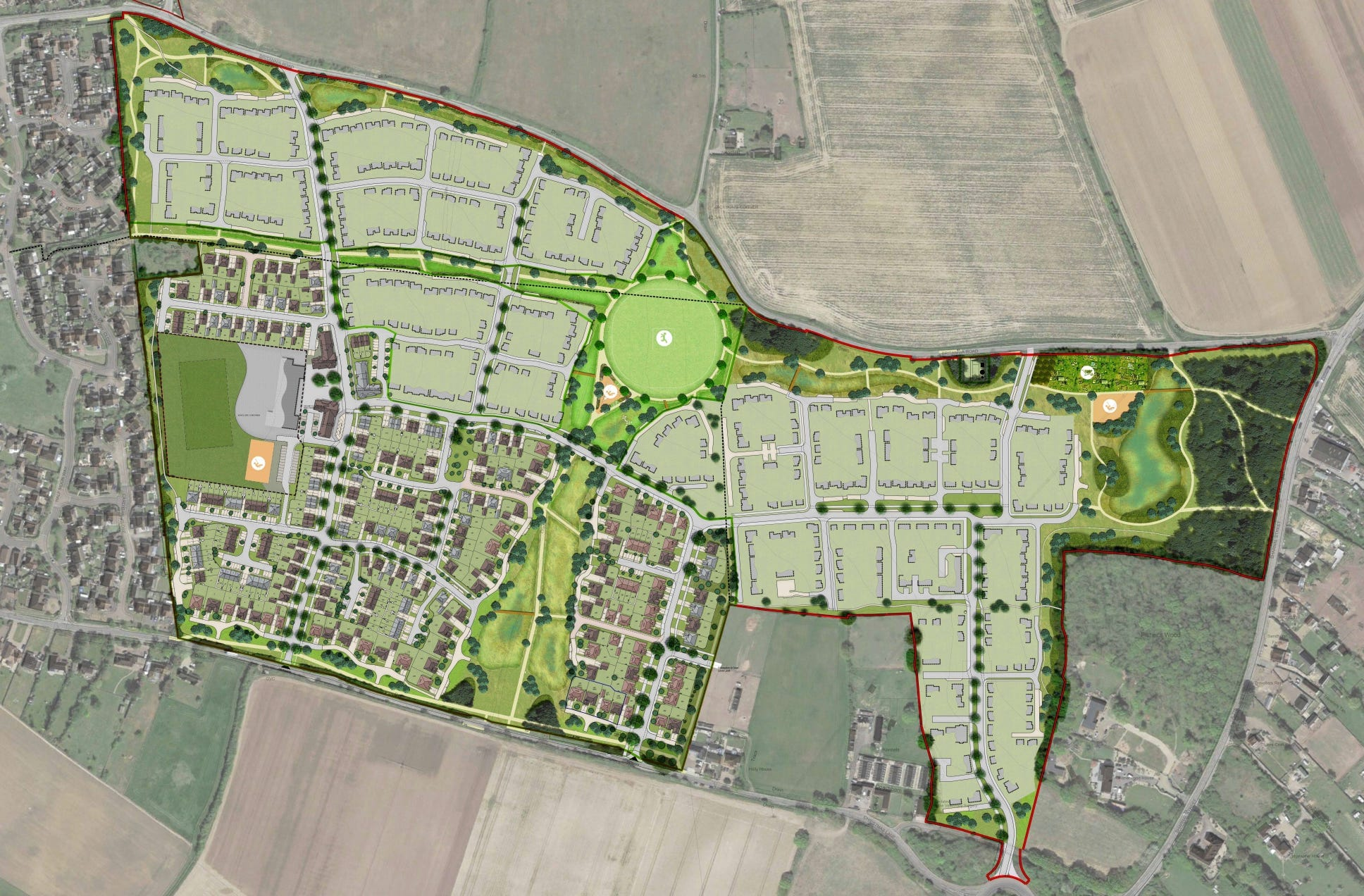
The more dramatic of the two was always going to be High Halstow. The public gallery was packed, ward councillors lined up to oppose the scheme, and the mood in the room made it obvious this was not being treated as just another planning application. Councillors eventually approved Redrow’s hybrid proposal by eight votes to six, allowing 270 homes in detail and a further 490 in outline, along with a new primary school, local centre, open space and associated infrastructure.
The objections were not subtle. Independent Group councillor Michael Pearce described the recommendation from officers as asking councillors to “approve now and sort out all the problems later”. Cllr Ron Sands, also of the Independent Group, said the scheme would “destroy” the village. There were repeated arguments that the application was being pushed through before enough had been resolved on ecology, active travel and infrastructure, and plenty of frustration that a development of this scale was being decided before Medway’s emerging Local Plan had been fully tested.
Those arguments were not frivolous. A scheme of 760 homes on the edge of High Halstow is not a minor top-up. It is the kind of development that changes how a place feels and functions. Even supporters did not pretend otherwise. Officers themselves were open that it would have a significant impact and change the character of the village.
But supporters of the scheme, and ultimately the majority of the committee, were making a different argument. Their view was that, however uncomfortable the decision looked locally, Medway is in no position to keep batting away large housing applications and hoping for the best. The council is short on housing land supply, under pressure to deliver more homes, and is already staring down the risk of speculative development elsewhere. Refusing a major allocated site without robust planning grounds would not stop growth. It would more likely push decisions out of the council’s hands and into appeals it may well lose.
That point was put most bluntly by Conservative councillor Adrian Gulvin, who broke from some of the scepticism elsewhere around the committee and addressed the bigger reality head on. Britain, he argued, has not built enough homes for decades. Medway has to meet housing need, and if it is serious about doing that, some difficult decisions will have to be made. It was not a popular line in the room, but it was probably the clearest expression of the bind facing the committee.
That does not make High Halstow an easy decision, or necessarily a good one. It does make it understandable. Councillors were not weighing up a perfect scheme against a pristine status quo. They were weighing up a contentious village-edge expansion against the likelihood that refusal would cost money, achieve little and weaken the council’s hand elsewhere.
The gasworks site by the Strand was much less theatrical, but in its own way just as revealing.
This was the easier vote politically. A derelict former industrial site in urban Gillingham is exactly the kind of place people usually say should be built on first. Councillors duly approved the Blueberry scheme unanimously. The proposals include up to 500 homes, later living accommodation or a care home, commercial space, a supermarket (which logic suggests is an Aldi), gas facilities and arrangements to retain riverside access.
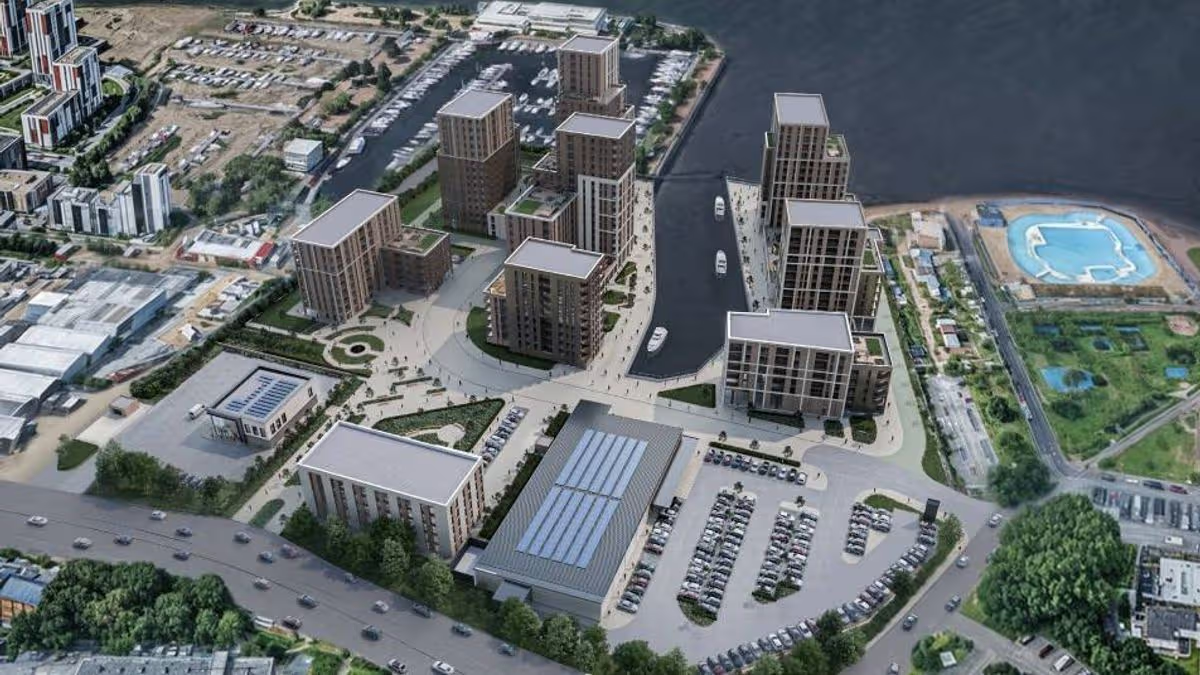
Councillors broadly treated it as a classic brownfield redevelopment. The site is ugly, constrained, contaminated and expensive to bring back into use, but it sits in an urban location near existing roads, bus routes and the Strand. In other words, if Medway cannot make a site like this work, it is hard to complain too loudly about building elsewhere.
But brownfield does not mean consequence-free. In this case, the consequences were financial. Officers were clear that the scheme's viability had been undermined by contamination and the cost of repairing the seawall. The result is a development with no affordable housing through the planning agreement and only a fairly thin immediate package of contributions compared with the scale of what is being built.
That is awkward because it exposes the catch in all the easy 'brownfield first' rhetoric. Yes, councils should prioritise urban former industrial land where they can. But the more difficult and toxic the site, the more the abnormal costs start stripping away the things councils say they want from development, whether that is affordable housing, more generous infrastructure contributions or both.
So while High Halstow shows the political pain of building on green fields, the gasworks scheme shows the economic pain of doing things the supposedly right way. If you want homes on brownfield sites, you often have to accept weaker returns because the land is harder to unlock. If you want stronger returns and more policy-compliant schemes, you are more likely to end up looking at easier greenfield land and all the rows that come with it.
The planning committee’s other notable decision that night helped underline the point. Councillors refused a controversial 11-bed HMO in Upnor, arguing that it was in an unsustainable location with too little public transport and too little around it to support such accommodation. So this was not a meeting where councillors simply waved everything through. They were willing to say no where they felt they could justify it.
That matters because it shows the distinction they are increasingly making. Smaller or more obviously unsuitable applications can still be stopped. But on major housing schemes, especially ones officers believe stack up in planning terms, councillors seem to feel their room for manoeuvre is getting narrower.
That may not be a very satisfying conclusion for people who turned up hoping High Halstow would be thrown out. But it is probably the honest one. This week’s decisions did not show a council in love with development. They showed a council trying to manage housing growth through a set of trade-offs nobody really likes.
Build at the edge of a village, people quite reasonably ask what happens to the place they know. Build on a contaminated brownfield site, and you discover that doing the sensible thing still comes with a bill. Medway approved both this week because, in different ways, both were judged preferable to the alternatives.
Hoo parish by-election ends in emphatic result
Graham Grice won Thursday’s Hoo and Chattenden parish council by-election comfortably, taking 823 votes to Peter Davis’ 182.
Turnout was 14%, so this was not exactly a mass uprising. But among those who did vote, the verdict was clear enough. Grice took 82% of the vote in a contest that had already looked more political than the average parish race.
When Steven caught up with him after the result, Grice said it was the first time he had stood for election. He also said he had previously been a member of both the Conservatives and Reform, but had stood here as an independent.
Asked why he thought he had won so heavily, Grice said, “I like to get out and about around the village. I take a lot of photographs, and I post them on social media. So quite a few people know me because of that. I’m often seen out and about walking my dogs, et cetera. I think that’s helped. People know who I am.”
That is probably the most parish council answer imaginable, but it is also likely true. In this kind of election, people knowing who you are can matter a lot more than whatever is going on in the background politically.
Grice also said one of the parish council’s jobs was to make sure “Medway Council are held accountable for their responsibilities to us,” which is at least a sensible place to start.
Cllr Michael Pearce, who had publicly campaigned with Grice during the by-election, described the result as a “tremendous endorsement” and said he looked forward to working with him on the parish council.
We covered the politics around this contest earlier in the week. The result now makes one thing pretty clear. Whatever support and attention sat around the Davis campaign, it did not get close to landing.
 Local Authority
Council matters
Meetings next week:
- Thursday: Audit Committee meets, where the committee will, perhaps unsurprisingly, look at auditing.
New planning applications:
- The great tsunami of HMO applications may finally be easing, with only one submitted this week, for Waterloo Road in Gillingham.
- Conversion of two offices to flats on Balmoral Road in Gillingham.
In brief
🚏 Real time bus information screen, the kind of thing that has existed in places like London for decades, will be rolled out to 34 bus stops in Medway. The £770,000 will allow passengers at roughly 2.5% of Medway's bus stops to receive accurate information on whether their bus will actually turn up.
🛒 Strood's unrelenting march towards having every supermarket in existence operating in its town centre will continue with The Food Warehouse opening in June inside the former Hobbycraft unit at Strood Retail Park. The store is a bigger version of Iceland, which also has a shop on the High Street.
🏆 Medway designer Esther Johnson, who works under her Designed by Esther brand, won the Creative Business Award and was runner-up for Young Businesswoman of the Year at the Kent Women in Business Awards.
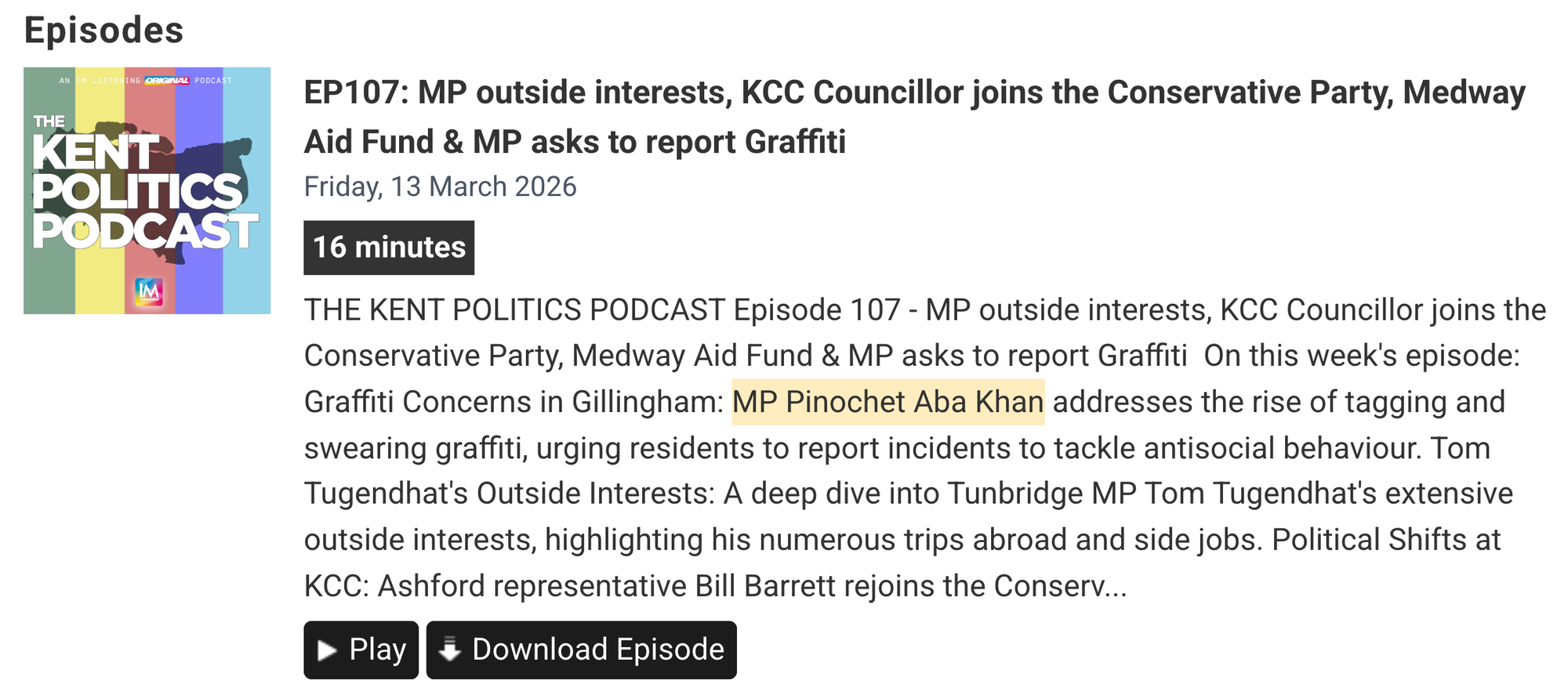
🎙️ Gillingham and Rainham MP Naushabah Khan is on the Kent Politics Podcast this week, or at least was supposed to. The podcast itself said they had MP Pinochet Aba Khan instead, which raises a couple of questions about how much AI is being used to write content at the KM Group and what their subeditors are up to.
Property of the week
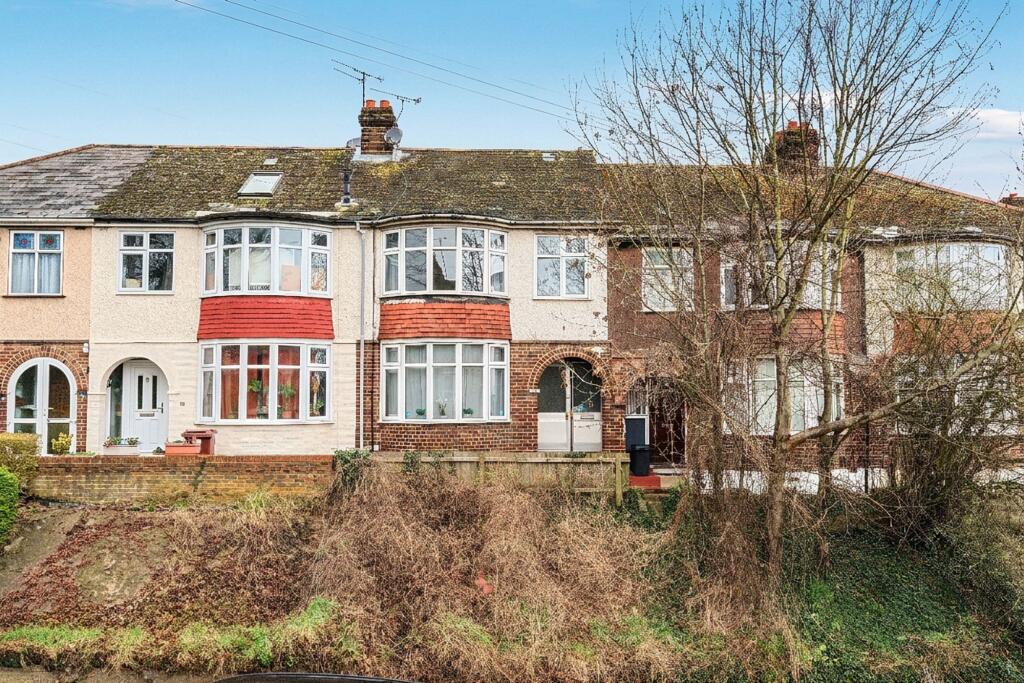
This three-bedroom terrace on Maidstone Road in Rochester is on the market for £345,000 and is doing the classic ME1 pitch of being walkable to the High Street and station, with good schools nearby, and enough period charm to make it feel like a 'proper house.' It sits elevated from the road, with bay windows at the front and an extended kitchen at the back that opens onto a long rear garden. The bathroom is upstairs, as nature intended in a Victorian terrace, and the third bedroom is the flexible one. It is not a flashy listing. It is selling light, location and a garden you can actually use, which, for Rochester, is a pretty good combo.

Events this week
🛍️ Sat 14 Mar - Art Flea Fair // Seasonal market with a focus on art, craft, handmade work and vintage finds. Sun Pier House, Chatham. Free.
🥕 Sun 15 Mar - Rochester Farmers’ Market // Wide range of traders selling food and gifts. Blue Boar Lane car park, Rochester. Free.
Sport this weekend
⚽ Chatham Town vs Canvey Island // Sat 14 Mar, Isthmian League Premier Division, Bauvill Stadium. Bottom of the table Canvey Island visit the Chats.
🏒 Invicta Mustangs vs Lee Valley Lions // Sat 14 Mar, NIHL Division 2 South, Planet Ice. Final home match of the season for the Mustangs.
⚽ Chatham Town Women vs Actonians LFC // Sun 15 Mar, Women’s National League Division One South East, Bauvill Stadium. Sunday afternoon football in Medway, with Chatham welcoming fellow midtablers Actionians.
🏒 Invicta Dynamos vs Romford Buccaneers // Sun 15 Mar, NIHL South Division 1, Planet Ice. The Dynamos play their last match of the season.
Playing away: Gillingham FC visit Cambridge United (Sat 134 Mar), Invicta Dynamos visit Romford Buccaneers (NIHL South Division 1) on Saturday before the home game on Sunday.
Footnotes
Follow us on social media! We’re on Facebook, BlueSky, and Instagram for now.