The March Culture Review
Hip hop theatre, hidden histories, Rochester ribs, new Billy Childish, and more

Once a month, we bring together reviews of Medway’s cultural highlights in a single round-up, produced specifically for our paid supporters. This month, our team of intrepid cultural reviewers present music, theatre, and food from across our towns...
The Wigmore Lectures: The History of the Royal Variety Performance
Wigmore Library, Rainham, 18 Mar
The Wigmore Lectures are a Medway institution, unfailingly bringing local history and heritage to life in an engaging and accessible fashion. Scheduled by Medway Libraries between October and March, this season’s eclectic topics have included Gillingham-based inventor Louis Brennan, responsible for the world’s first stairlift; Kent-born clipper ship captain, William Harrison, and his maritime adventures; and the bloody reality of Matthias Hawkeslade, Captain of Horse in the King’s army during the English Civil War, with speaker Philip Barham delivering his talk in full authentic battle gear.
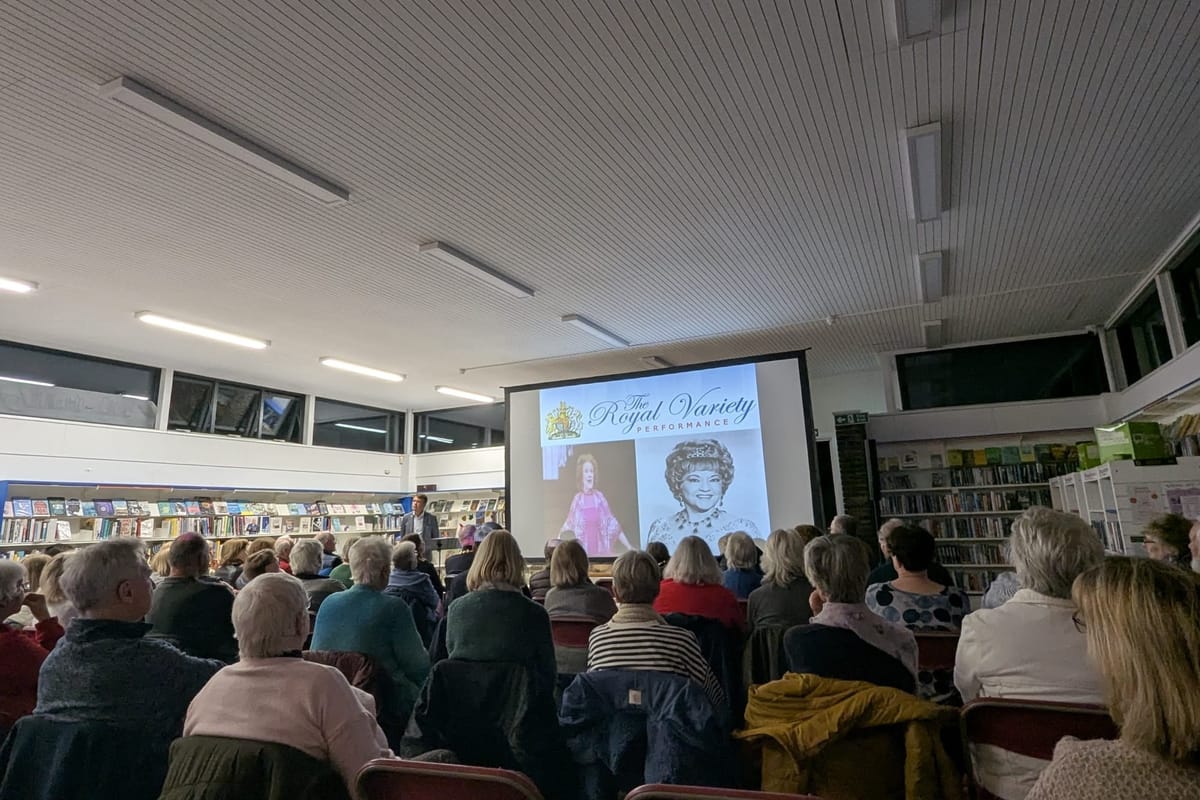
I was lucky enough to attend the last lecture in this run, introduced by the Mayor of Medway, Cllr Trevor Clarke, who quite rightly reminded the audience of the importance of supporting libraries, especially during this National Year of Reading, where “It’s time for the nation to go all in.”
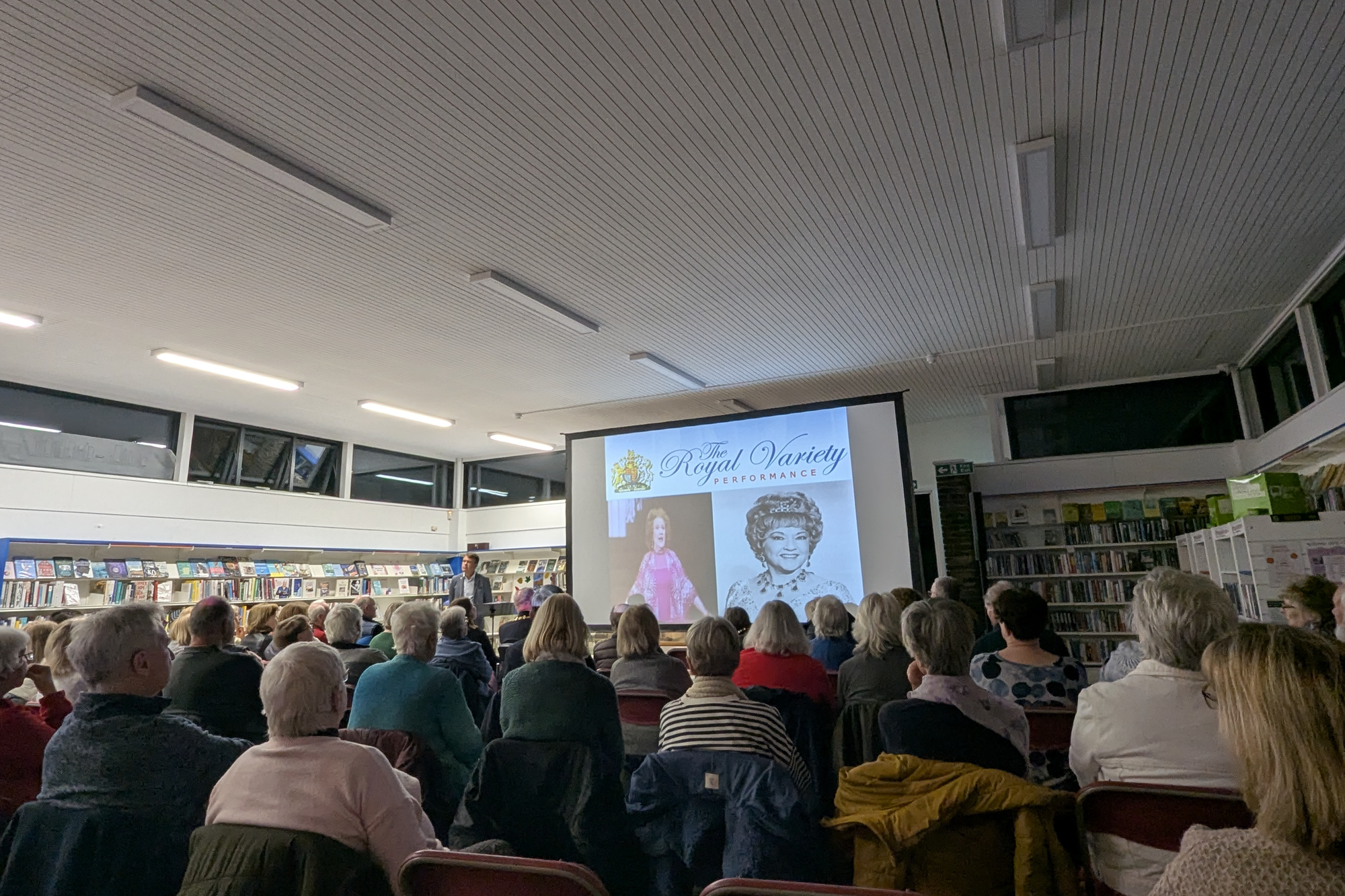
Our knowledgeable speaker, Dean Caston, provided a fascinating glimpse behind the curtain of The Royal Variety Performance, a favourite fixture in the entertainment industry’s calendar. Stretching back to 1912, when music hall was at the height of its popularity, the show was initially staged at the Palace Theatre in support of the Entertainment Artistes’ Benevolent Fund (now the Royal Variety Charity). Attended by King George V and Queen Mary, the evening had strict instructions to finish no later than 11pm so the police escort was not paid overtime on the way back to the palace.
We learned that performers were not supposed to acknowledge the royal box. Nonetheless, protocol has been pushed aside as the years progressed, from Maurice Chevalier charming the Queen Mother, to the Crazy Gang joking that the royal car was illegally parked, right up to Catherine Tate ‘Is one bovvered?’ in 2005. But it was common practice to provide acts with helpful reminders for the post-show line-up, such as pronouncing ‘Ma’am’ so that it rhymed with jam.
Although many of us have grown up watching it on television (first broadcast in 1960), hearing the behind‑the‑scenes stories brought the show’s pizzazz to life, as well as shining a light on the less than glamorous reality. Backstage facilities were notoriously cramped, accounting for rather cosy conditions with up to 50 different acts scheduled. Only a handful of performers have refused to share – Dame Shirley Bassey, Bette Midler and Pavarotti – with J-Lo allegedly insisting on an all-white dressing room when appearing in 2001.
There were some lovely blasts from the past in terms of household names, such as Jimmy Tarbuck, a teenage Julie Andrews, Bruce Forsyth, Cilla Black and Bob Monkhouse, to name a few. Some popular stars, however, were purposely excluded – iconic music hall star Marie Lloyd was deemed too risqué for the royals, so perfectly reasonably, she staged a sell-out rival show at a nearby theatre
The Wigmore audience did not need to be asked twice to participate during the musical clips, with shoulders swaying, toes tapping and heads bobbing along to well-known songs, and Sweet Caroline remaining a particular crowd pleaser.
After such an enjoyably nostalgic walk down memory lane, it came as no surprise to learn that the Royal Variety Performance, still attracting over 152 million TV viewers worldwide, remains the longest-running entertainment show in the world. - Anne-Marie Jordan
Pied Piper - A Hip Hop Musical
Glassbox Theatre, Gillingham, 6 Mar
This touring family show opened with a new experience for me and my apprentice co-reviewer: a brief beatboxing workshop for the entire audience. We were instructed in how to make the kick drum, snare and hi-hat sounds that would be used to punctuate a later scene with, it’s fair to say, mixed results. A minimal, industrial feel was created on stage with a set composed of scaffolding and a skyline of boxes, as the main action was set in a pie factory in the town of Hamelin.