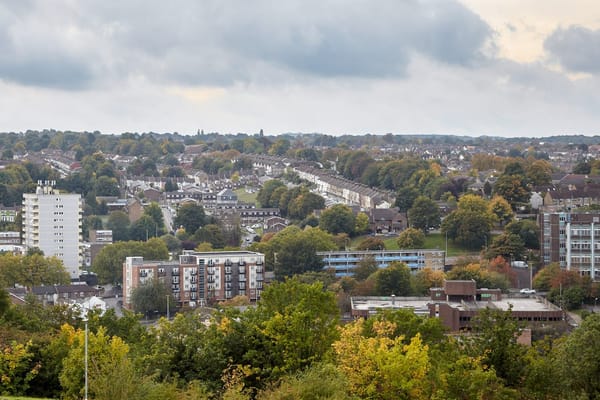
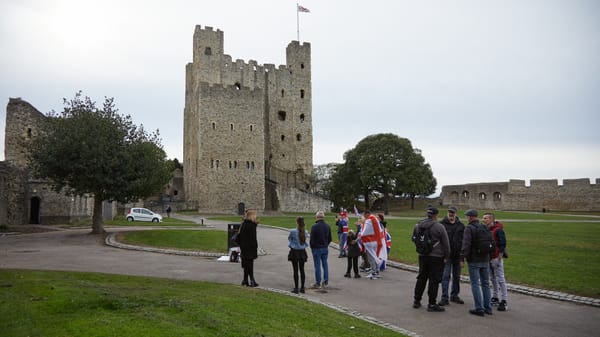
River strategy floats relocation of industry and summer transport
What Medway’s new river plan signals about waterfront priorities and future trade-offs

Today's Local Authority examines Medway Council’s newly approved River Medway Strategy and what it reveals about the future shape of the river, from proposals to concentrate heavier industry further toward the estuary to the idea of seasonal river transport along the urban stretch. We also explain how Medway’s next Mayor has already been decided through the council’s points system, and what that means for the civic year ahead...
River strategy floats relocation of industry and summer transport
Medway Council's Cabinet has signed off on a new River Medway Strategy that appears to be trying to do something unfamiliar. It tries to decide what the river is actually for.
On paper, it is the usual mix of access, ecology, regeneration and 'better connections.' That is the language you use when you want a document to be broadly agreeable. But read it for what it is doing underneath, and it is much clearer. It is trying to rationalise the river into two futures.
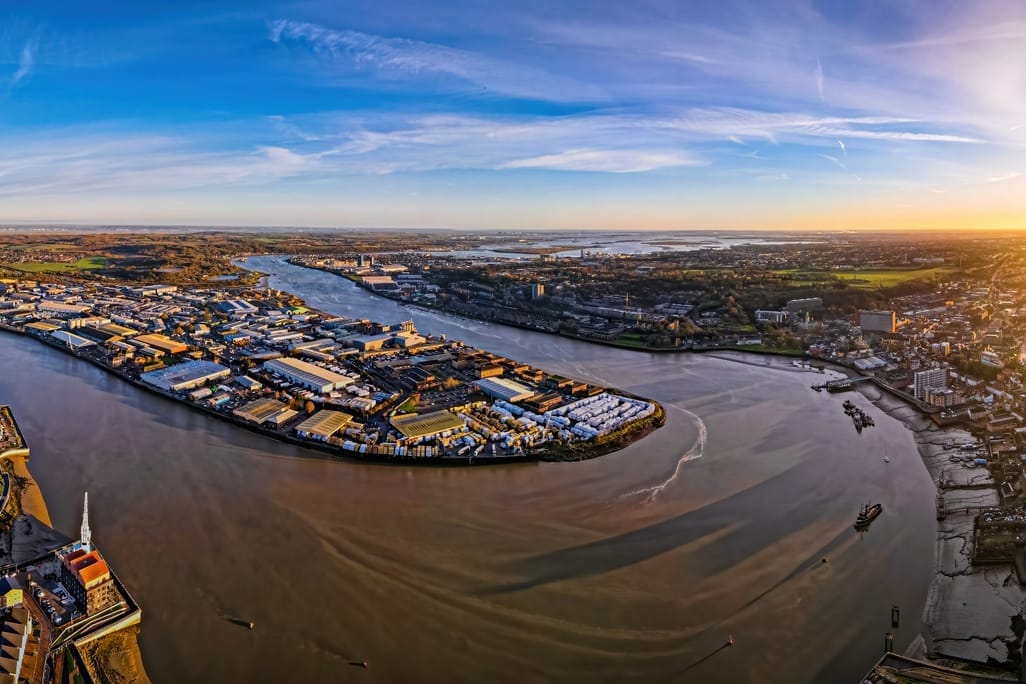
One is the urban stretch, the bit where Medway wants people walking, cycling, lingering, spending money, and generally treating the river as a place rather than a boundary. The other is the working river, the heavier industrial and employment uses that are meant to remain, but in locations where they are not permanently at odds with riverside housing and public realm plans.
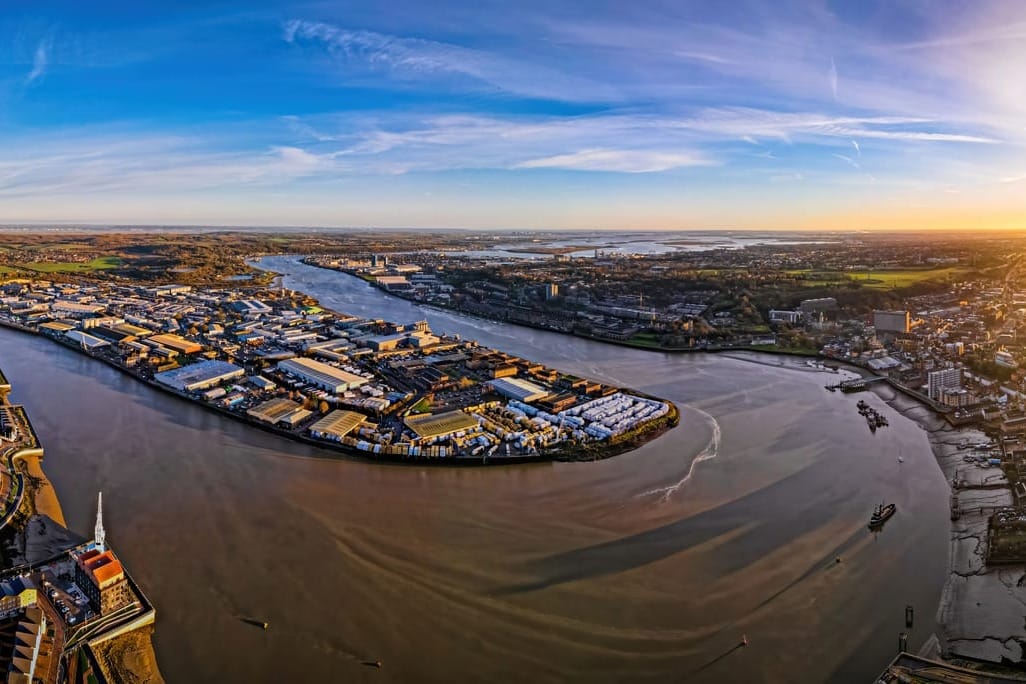
The strategy’s answer to that sorting problem is not subtle. It points towards Kingsnorth and Grain as the places where the heavier river-based uses fit best, and it signals a preference for moving that kind of activity away from the most visible, most visible frontage around Chatham and the Medway City Estate.
It does this in the way strategies always do. It does not say that there is a plan to relocate from one place to the other. Instead, it lays out a logic that makes relocation feel like the reasonable option, then starts sketching out the work needed to make it possible.
The document talks about relocating certain river-based businesses away from Chatham Docks due to Peel Ports' decision to redevelop the site. It also raises the prospect of major occupiers like Veetee and Scotline moving out of the Medway City Estate over time. It then suggests that policy should avoid future industrial river-based operations taking up key frontage sites in the urban stretch.
That is not a neutral statement. It is a choice about what Medway wants for its most valuable waterfront.
If you are a reader who has watched this area’s regeneration play out, you can probably see why the council wants that choice on the table. The river has been a gift to development. Put riverside in the brochure, and the prices do the rest. But the river is also infrastructure, habitat, and a working corridor. For years, Medway has tried to pretend all of those things can sit on the same stretch of bank without anyone making a trade-off. The result is what you would expect. Bits of attractive new development. Bits of inaccessible river edge. Bits of working river that look increasingly out of place next to new housing.
The strategy is basically saying that it isn't a sustainable plan in the long term. We cannot keep piling everything into the same places and hoping it magically becomes coherent.
The most headline-friendly expression of that is the idea of a new 'Medway Dock' facility in the “right location,” explicitly linked to Kingsnorth or Grain. There is no timeline for this to happen, but it is a statement of intent. If Medway wants a working river for the long haul, the strategy is to ensure it has a proper home downriver, rather than being squeezed into the centre of our towns.
This is where it gets awkward, because 'relocation' is a lovely word when it is sitting in a PDF. In real life, it means someone has to move, change how they operate, or accept that the place they have been for a long time is now being discussed as 'not the right location.' That can mean negotiations, land deals, planning pressure, and the sort of slow grind that never makes for a clean announcement but can still reshape a place.
The strategy does not resolve those arguments. It is doing the earlier step, the one councils often avoid because it creates enemies. It is putting in writing that Medway wants heavier river employment uses concentrated downriver, and it wants the urban frontage to behave more like a usable waterfront.
That takes us neatly to the other strand that is worth paying attention to, because it is one of the few bits of the strategy you can picture without having to translate it into normal human language: river transport.
If Local Authority is useful to you, please consider backing it. We’re reader-funded, which means we can focus on what matters in Medway without chasing attention. An annual subscription costs £1.15 a week and helps keep this work sustainable.
Medway has a river running through it that, in day to day practical terms, often behaves like a scenic divider. River crossings are limited and clogged, and walking and cycling routes break in annoying places. The river is right there, but for most daily movement, it is something you go around, not something you use.
The strategy floats the idea of assessing a regular river-based transport service during the main visitor season, roughly April to September. It suggests potential pick-up and drop-off points along the urban stretch, including Chatham Maritime, Strood riverside, and Gillingham Pier or Marina.
A seasonal service is definitely not a miracle cure. It could be a nice thing for visitors that does not really change how residents move. But it is still a meaningful signal, because it treats the river as a corridor that can do work, not just a view you walk past.
If you can get from one side of Medway to another along the river, even in a limited season, it changes the mental geography of our towns. The river stops being the edge of things and starts being the line that connects them. That sounds soft until you remember how many Medway frustrations come down to the same simple reality. Places that are close on a map can feel far because the connections are weak and the road network gets in the way. A journey from Chatham Dockyard to Medway City Estate can take a few minutes in a car but two hours to walk, despite being directly opposite each other.
So when you put the transport idea next to the industrial relocation logic, the strategy’s overall shape becomes clearer.
Toward the estuary is where the working river is to be concentrated and supported. The urban stretch is where public access and a coherent waterfront are meant to win. The river itself is meant to be treated as a route, not just a backdrop.
None of this happens because Cabinet approved a document. A relocation study does not relocate anyone. But strategies still matter because they do set the direction of travel.
The test now is whether this strategy becomes a thing Medway uses to make difficult choices, or whether it joins the long tradition of Medway documents that sound confident and then quietly wait for someone else to do the hard part.
Medway's next Mayor is already decided
Medway is about to do the annual civic reshuffle, and the outcome is already set.
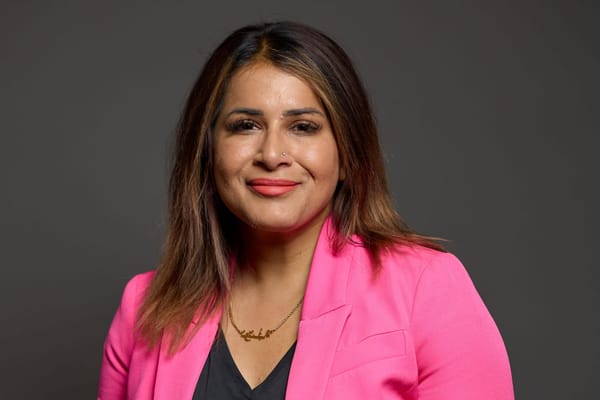
At tomorrow’s budget-setting full council meeting, Labour will put forward Douglas Hamandishe as its nominee for Mayor, alongside Sharon Jackson for Deputy Mayor. The formal election takes place at the Annual Council meeting in May, but the direction of travel is clear because it is no longer decided by behind-the-scenes negotiation or a last-minute stitched-together agreement. It is decided by a points table.
Since 2024, Medway has returned to allocating the mayoralty using a points-based system that mirrors the council's political makeup. Each political group is allocated points each year equal to its number of councillors. The group with the highest total is invited to nominate the Mayor, and the same group nominates the Deputy Mayor. For 2026/27, Labour sits at the top of that allocation, so it is their year to choose both roles. In practice, that means the votes are still taken, but nobody needs to pretend tomorrow is a contest.
The Mayor in Medway is not the political leader of the council, and does not run the administration. The Mayor is elected annually and chairs full council, promotes public involvement in council business, and carries out civic and ceremonial duties. The work is mostly public-facing. It is the school visits, the charity events, the commemorations, the civic openings, and the visits to the never-ending sequence of community organisations that want the council to notice they exist. It is also the slightly odd constitutional role of being the person who keeps full council ticking over, even when the mood in the room is trying to do the opposite.
On that basis, the nominations make sense in different ways.
Hamandishe is already familiar with the civic side of the job, having served as Deputy Mayor for 2024/25. When we spoke to him last summer, he described the role as being out in the community, supporting local organisations, and using the platform to connect charities and voluntary groups that often work alongside each other without ever meeting. He talked about the mayoralty as a connector role more than a status role, and was noticeably more interested in the organisations you meet than the council mechanics that get you there.
 Steven Keevil
Jackson was elected as a Strood West councillor in May 2023 and has not held a significant council position. But the deputy mayoralty is a visibility job. It is turning up, being comfortable in rooms, and being able to represent Medway without sounding like you are reading from an internal briefing note. That is where her other life matters. Jackson is a visible part of Medway’s comedy scene. She has spent plenty of time working rooms and holding the attention of strangers. It is not politics, but it is public-facing in a way that council life rarely is. If the job involves spending a year being the council’s representative in community spaces, having someone who is already used to a microphone, a stage, and a mixed crowd is not a bad place to start.
This also marks a handover from the current Conservative mayoral team. The Mayor is currently Trevor Clarke, with Wayne Spring as Deputy Mayor. That does not change who runs the council or any policy positions. What it changes is the face Medway puts forward for the civic year ahead, and the pair who will be doing the rounds of local events while the actual politics continues elsewhere.
Footnotes
Follow us on social media! We’re on Facebook, Instagram, and BlueSky, but not that other one. We've even figured out how to use Instagram again!