“People are always searching for something”
What Steven asked the Philip Hesketh, Dean of Rochester
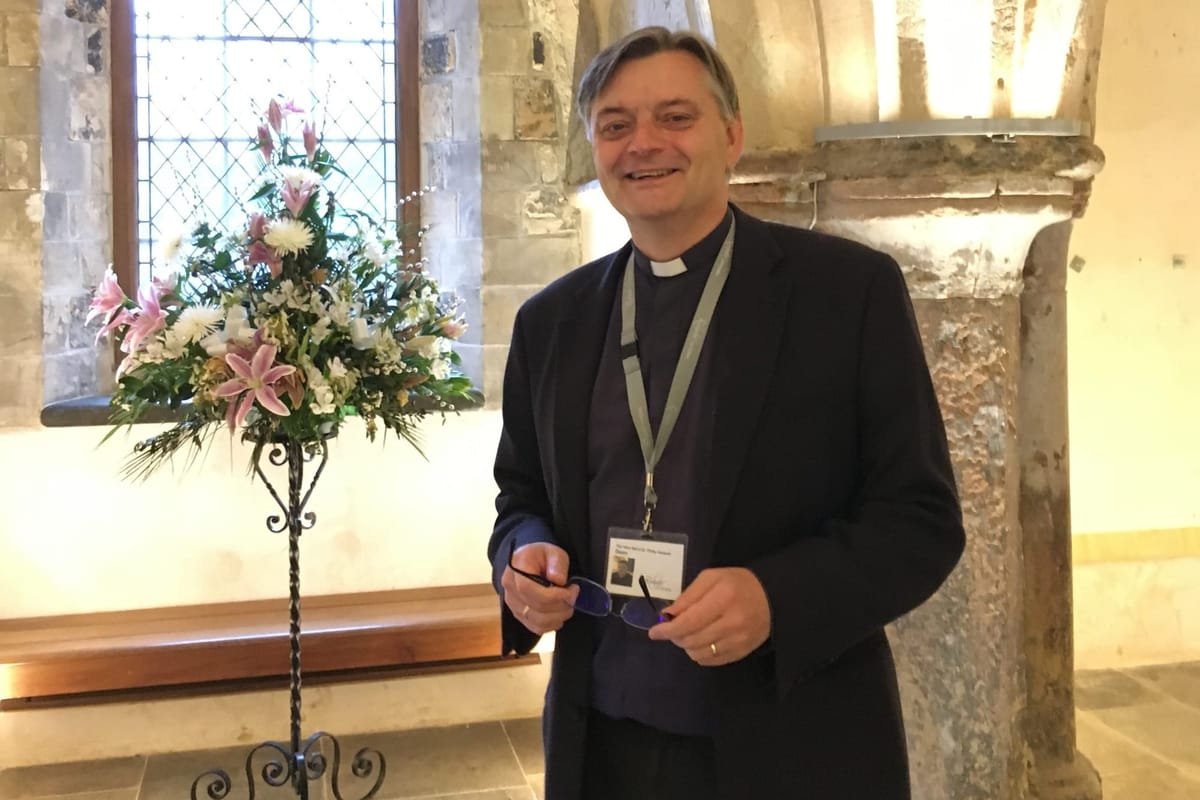
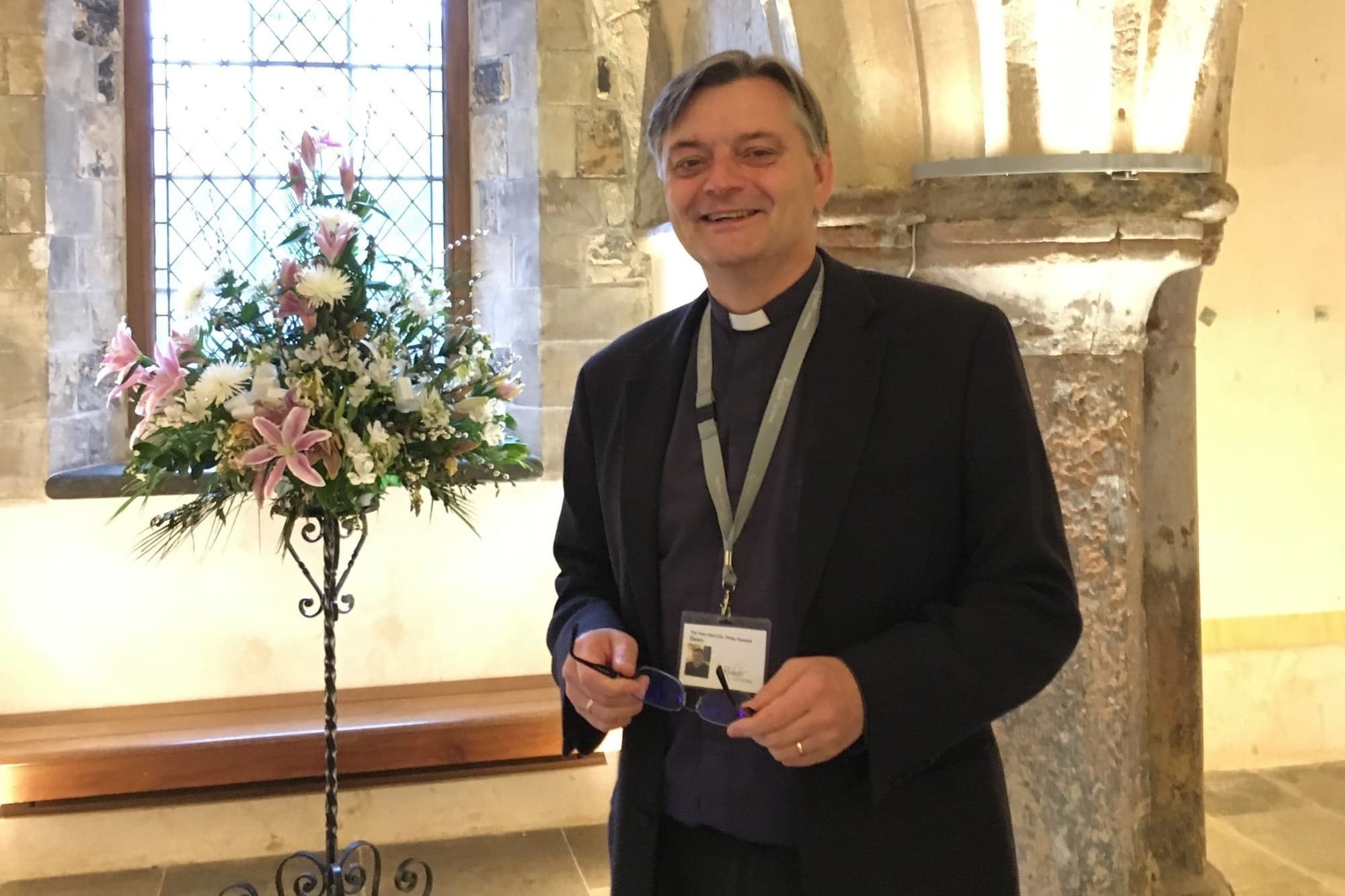
Steven met Philip Hesketh, the Dean of Rochester, at the Rochester Cathedral offices in Garth House. They discussed the cost of keeping the cathedral running, the difference between Anglicans and Methodists, selecting the next Archbishop of Canterbury, and lots more...
What is your official title?
I'm the Dean of Rochester, which is a strange thing really, because people will say you're the Dean of the Cathedral. I am the Dean of the Cathedral, that's absolutely right. They say, you're the Dean of Rochester Cathedral. But actually, historically, there's no such thing as the Dean of Rochester Cathedral. You're the Dean of the town or the city. I'm the Dean of Rochester, which I'm pleased and proud to be.
Is that your official occupation?
Effectively, at some point in my life journey, I decided to become ordained in the Church of England, although I took a route through the Methodist Church. Candidated for the ministry, was accepted, trained as a priest, and I have been a priest in Kent even though I was living in London at that time. My roots are back in Lancashire and the Isle of Man. I then did my years as a priest in southeast England, in the Canterbury Diocese and then the Rochester Diocese. Eventually, I was encouraged to apply for a job here at the cathedral, which I did as one of the canons. That's one of the support team priests.
I did that in 2005, came here, and then was acting Dean when the Dean moved on. I was encouraged quite strongly by a large number of people in Kent, which was kind and generous of them, to apply for the job, which I did. Then, in 2016, I became the Dean here. I carry all the responsibilities that any priest would or priestly ministry, but effectively I'm running a very historic and large organisation with big responsibilities, most of which I never trained at all to do, and either have to learn or, in my case, I brought in expertise and commitment.
To clarify, are priests part of the Catholic Church and vicars part of the Church of England?
It's interchangeable. People within the Church of England would still call themselves priests, and they're still regarded as priests. Some might call them vicars, because they're a vicar of a parish. Reformation, there was a separation between the Church of Rome and the Church in England, mostly through Henry VIII, who didn't see why somebody in Rome should tell him what he could do with his own church here. That was the initial separation. That's more or less existed, although the Church of England has changed its shape and what it does considerably in 500 years.
And again, just to clarify that separation, with what people might have in their mind as they understand being a priest, because you are married?
Yes, at the Reformation, it was decided that there was no good reason why priests couldn't be married because Jesus' original followers were Jewish, and they all had families, they were all married. In fact, most Jewish rabbis, teachers, were married. At the Reformation across the country, they said, there's no reason why priests can't be married, or ministers can't be married. Some of the first priests, way back at the beginning of the church were also married. It was something that came within 1,000 years of the history of the church.
You mentioned being Methodist. Within the Church of England, sometimes you get Methodist or Anglican members. What do those names mean?
Anglican is basically the Church of England, or the church that expresses its life or finds its life in the church building. Because, of course, when Britain became a big empire and was sending people out all over the world and to explore the world, they took the Church of England with them. They took the Christian faith with them. They established churches all over the world. They collectively are called Anglicans now. Those who find their origin in the Church of England, which is what happened when Britain had a huge empire.
And Methodist?
Methodist is a movement that happened in the 17th and 18th century in England. Within the Anglican Church was a movement of revival. John Wesley and Charles Wesley were both Anglican priests, but they had this revival movement, and there was a great conversion at that time. They formed what was called the Methodist movement, which was seen as a derogatory term actually at that time. But eventually, both the Church of England and the Methodist Church parted ways. The Church is always disagreeing amongst and within itself about what to believe, how to believe, who to accept. They drifted apart, and you ended up with the Methodist Church, which was separate. The Church of England and the Methodist Church was part of a really big brawl, particularly in this country, of non-conformists. They were not members of the Church, but they were practising Christians. They were Baptists or Methodists. And those numbers have dwindled over the last 20, 30 years. They're not as strong, the Methodists and Baptist Churches, as they were. Of course, the whole of the Church has struggled with attenders since the Second World War.
There is data showing that young people are coming back…
There are. I think there's always been a searching. People are always searching for something and looking for meaning. I think there's been a failure in the church historically sometimes to be able to respond to that. There's a big tradition in the church over 2,000 years of people in prayer, meditating, or finding stillness and quietness. But then it lost its nerve a little bit, and it didn't really talk about that part of its tradition. I think that's why a lot of people then found a great attraction in other religions which had meditative aspects like Buddhism or aspects of Hinduism, and that great movement in the 60s with the Beatles and everything else to go to the ashrams and to find yourself. I think it's also there in mindfulness. There is a great resurgence, and people wanting this sense of stillness and calmness. It's there within the Christian church. It's always been there, but we've not always been very good at telling people about that and helping them to access it. There are signs of certainly young people, whether it's something coming out of covid, I don't know, or younger people who are searching and have come to the churches as well as other places, probably to try and find some sense of meaning, and hopefully the churches will respond in a helpful way.
Going to a Church of England primary school, we received the Good News Bible. There are many different versions of the Bible. Do you have a preferred version?
No, but there are different versions for different times and different ages because it helps you access the stories. I think some people would say the best in terms of poetry and language was the original King James version. But that language is quite archaic now. And actually some of the meanings have changed from what we would do. Although it's lovely to hear that sometimes, I think you need a translation of the scriptures that make sense. There are many, many different ones. The Good News Bible, when they were translating that, they worked on the basis that the language that they were trying to find to translate the Greek and the Hebrew into English should be no more complicated than somebody would be able to access if they were doing O-level. That was the basis. They were saying, we should use words which anyone would have in their vocabulary at that level and not choose words which might be a bit more accurate to the Greek, but actually are not very helpful because you don't know what that word means. It makes sense that that's the version they would give out in schools as well. There are Cockney versions, rhyme versions. There are all kinds of translations of the Bible that people have made. It does raise the question of how accurate it is from the Greek, but I think you need to find one that's helpful.
What version do you use?
Oh, I use a number of different versions, but the one we use in the Church of England has an official standard one that's used in liturgy, or it's supposed to be, but you may go to an Anglican church where they use it completely different. But it's supposed to be the New Revised Standard Version. Which is basically an updated version of what you probably remember from school as the RSV, the Revised Standard Version, and now this is the sort of updated to that. But yeah, translation is a fascinating subject, because you're not actually reading the original text. You're reading a translation of the original text. In order to do that, you've got to make an interpretation of what you think it's saying.
You get that interesting split between the intent of the Old Testament and the intent of the New Testament.
Sometimes Jesus himself actually said, you're taking the letter of the law, but what about the spirit of the law? What does the spirit of the law say rather than just the letter of the law? And of course, Christians have found themselves disagreeing about that very subject for 2,000 years.
And will continue to.
Well, one anticipates that, or one expects that it is part of human nature. I think for me, what we need to learn is to live with difference, because someone has a different point of view, we need to learn, how do we learn to live with that? Rather than try and change them because we think that they're wrong and we're right. I don't think we will ever get to the point where everyone's going to agree with Philip Hesketh. No one's going to agree on everything. How do we live, how do we learn to live in peace with difference? Where are the commonalities rather than the differences? We can see the effects of not living with difference all over the world.
The paywall is coming. Unfortunately, you'll soon reach the paywall for this interview. To read the whole thing and support our work, please consider becoming a paid supporter. Right now, you can get 25% off a full year's subscription to Local Authority, which gives you access to every story, interview, and feature we publish, as well as help us deliver the kind of local journalism Medway needs in the year ahead.
What is the difference between being a Reverend and a Very Reverend?
Well, some would say, and I would probably agree, that at one part of its life over 2,000 years, it began to model itself on the state. When Christianity became the official religion of the Roman Empire, it began to reflect itself in the structure. It became quite hierarchical. It had different jobs and persons regarded as important, and they'll have different titles that went along with that. It's a historic thing. If you are the Very Reverend, that indicates that you are a Dean. If you are the Right Reverend, then that indicates that you're a Bishop. They're historic titles that got added to indicate the job that you do. But at heart, you're all still ordained as priests. Although some of us try and live without hierarchy, we accept that we're in positions of senior leadership, but actually don't think that was the kind of model that Jesus demonstrated.
What is the hierarchy within the world of the Church of England in Medway?
Within Medway, in terms of the Church of England, there's a Bishop who is the senior priest over a wide area, which would include Medway. Within that area, there'll be a cathedral, and my responsibility reflects that cathedral. Although we relate to the diocese because we're seen as the mother church of the diocese, but we have an independent structure, an independent governance scene, and my job is to oversee the cathedral.
There is a bishop, and then the next, there might be an assistant bishop. We do have an assistant bishop, and then the most senior priest in the diocese is the Dean.
And then above the Bishop of Rochester?
Above the bishops, in terms of oversight, in terms of responsibility, is an Archbishop. But an Archbishop can't tell a bishop what to do in his diocese. It's a figurehead. It's the same with the Pope, seen to be the first among equals.
It's the same idea in the Anglican Church that all bishops are equal, but an Archbishop has oversight over what happens in the church, but can't necessarily tell people what to do.
Are you effectively three promotions from the Archbishop of Canterbury?
Ah, well, if you wanted to be, that's the first thing, and the answer is I wouldn't want to be. You can be appointed a bishop, sure, if you've been a Dean, because that's a senior position, but you can be appointed a bishop from being an archdeacon or a vicar, really. That's not impossible if you’ve got the right skills and abilities. And the Archbishop, in the same way, is chosen from a number of bishops. But the last one, it could have been somebody from outside the Church of England. It could have been from one of the other Anglican churches in the Commonwealth. But they've chosen the first woman Archbishop.