

How do we make Medway culture matter?
The results of our Local Democracy Café exploration on arts and culture in our towns

Last Thursday, we hosted our second Local Democracy Café to discuss Medway arts and culture. Panellists Cllr Nina Gurung, Cabinet Portfolio Holder for Culture, poet Barry Fentiman-Hall of Wordsmithery and Medway River Lit, and Tracy Brunt, director of Ideas Test, a creative project based in Medway and Swale, joined us at MidKent College to ponder the question of whether Medway culture matters…
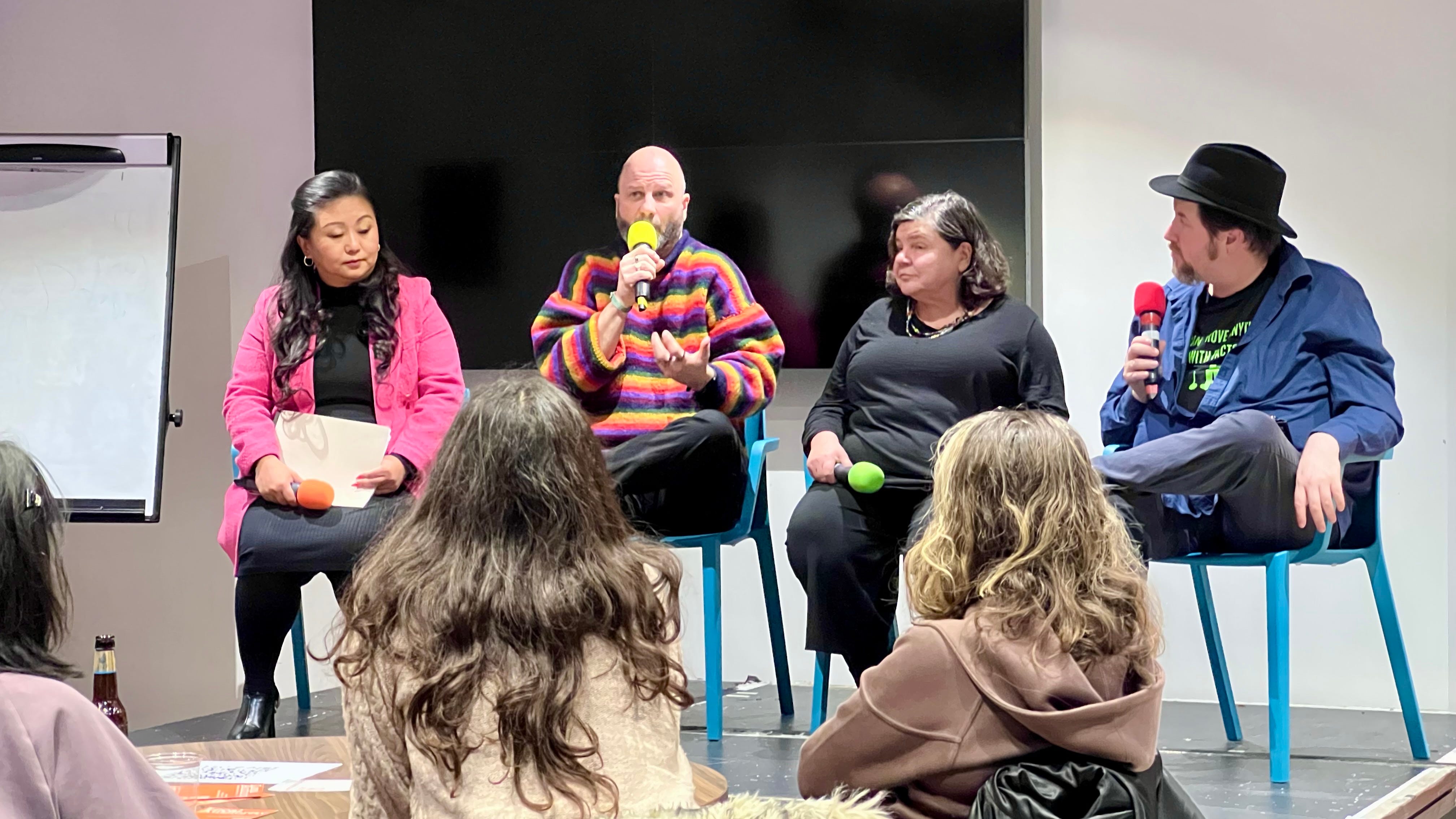
The Local Democracy Café is an open forum designed not just for discussion but for action. Each café brings together local leaders, experts and residents to talk openly about what matters to Medway and how we can turn ideas into tangible outcomes. Our second edition took place on 20 November with the simple question:
Does Medway culture matter?
A summary of the café is below, alongside quotes from those who attended.
You can listen to the entire Local Democracy Café conversation here. Rob Flood recorded the audio, and Suze Cooper did the post-production. Thanks to both for their efforts.
After introductions, we started by asking Nina, who had also previously served as Medway's Mayor, to elaborate on her portfolio. “Medway, I think it can’t be described in just a word or a phrase, because it’s so multi-dimensional. There’s many layers to our culture here, it is also very unique and very exciting.” Nina described how the more you know about Medway culture, “the more you feel passionate about sharing and elevating what’s happening in Medway.”
For Nina, there are many factors in identifying the culture in Medway, from the historical to what is happening and evolving now. “I feel passionate about sharing the stories of the rich cultural activity, the creative activity, the heritage activity that’s happening.” Nina believes the cultural community in Medway are good at supporting each other. “It’s more about how do we come together, how do we elevate each other. That is the USP of the Medway cultural scene.”
Nina’s cabinet portfolio is essentially to make sure that our cultural strategy here in Medway is ambitious, forward-looking, and bold, to not only celebrate what’s going on here but bring it to the national attention. It is about utilising the cultural community to promote a positive narrative about Medway. With the financial situation of the council, it has been a mission for Nina to “make sure that we continue to deliver despite all the odds,” working with national partners, including Arts Council England, National Heritage Lottery Fund, Historic England, and the Department for Culture, Media, and Sport. “All the good that’s happening, you can’t just keep calm and carry on. I need to sing praises about all that’s happening. I think that’s part of my role as well.”
“Medway Little Theatre has a long-established place in the culture of Rochester and the Medway Towns, and it frequently seems to get overlooked. Medway culture is incredibly important, and bringing the spoken word into Medway is hugely valuable. That’s something that we try to do at the theatre with a varied programme. Some might be challenging for the audience, and some might just be fun.” - Cazz Wrate
Barry was on the panel whilst also being halfway through this year’s Medway River Lit festival, which has grown out of the work of Wordsmithery, and an earlier request by Medway Council to put on a Dickens-related festival in the castle grounds. “We have a magazine called Confluence. All rivers are one river. We’re a confluence of rivers.” Through their endeavours, they have worked “as best we can” to provide a platform for writers locally.
With the festival, they asked, “Can we afford a Booker Prize winner? Yes, we can. Let’s bring him to Rochester Library, see if anyone turns up.” Eventually, people did. The festival has had recurring visits from Ben Aaronovitch, who “has started putting situations for his books here because he enjoys coming here. The bad guys in ‘False Value’ all got their ideas in the IT department in Gillingham Library. And I love that that’s happening.”
“On a broader culture basis,” says Barry, “if we’re talking about music, I hear all the time about when David Bowie came to the Central Theatre in 1973. Well, when did that stop? At what point did people who were that famous and did these great things stop coming to Medway?” For Barry, Medway should be a place where people come. “I can’t do anything about the music side of things, but I know enough people within the literary scene in the country to bring people to Medway.”
Cue the obligatory interjection by Oral History Medway’s Rob Flood, our audio production support for the evening. “Big acts don’t come here because we don’t have a big enough theatre for them to perform in. The Central Theatre removed 40 seats in about 1982, which then meant it was less than 1,000 capacity. That was a threshold for lots of acts that would come and tour. That’s essentially why they don’t.” In response, Nina enigmatically added, “Well, that’s going to change. Come 2027.”
“I work in the creative sector in Medway and it’s important if you’re working in this sector to not just be at your desk but break the bubble and eyeball each other and say hello and get to know all the people that are working creatively in the area and doing so much good. There is history and community here, that is not recognised more widely, both by people locally who don’t engage, but also regionally and on a national level. I’ve been really getting to know this place and I’m finding it special.” - Niamh Barnard
Tracy’s work at Ideas Test is about engaging with areas that have low cultural uptake. Using Office for National Statistics data, and the Arts Council’s Creative People and Places Programme, their strategy is evaluated every three years. Ideas Test was one of the original organisations doing this. Using demographic data and audience segmentation, they have target postcodes for funding purposes that “we have to report back. That’s the boring bit,” says Tracey. “Low cultural participation tends to intersect with economic deprivation or rural isolation or low attainment.” Lots of people Ideas Test work with think “that’s not for me. And it’s not because they’re not interested, but they also think they’re not worthy in some way, because they haven’t had the opportunity to start taking part.”
Working very locally, they ask, “What’s your main concern in this area? What can we do together creatively? What can you do to improve a situation, make yourself feel better about yourself and where you live?” Ideas Test is not tied to any particular art form. They have worked with world-renowned beatboxers doing litter picks, internationally known dancers, singers, performers and writers. They are taking work to the places where people are. “It removes that barrier of not knowing how to act in a theatre or gallery.”
“I’m a senior engagement manager with the National Lottery Heritage Fund. I came here to listen to people. We want to be a good partner to Medway Council and the best way to do that is to listen to people. I think culture matters. The Heritage Fund puts that back in the communities and it matters to every community. Heritage is everywhere.” - David Drahos
Nina follows up on what Tracy was saying about making arts and culture accessible. “As a council, we’re passionate about inclusivity and making our events as accessible as possible.” Nina highlights that there are a number of community events that occur across Medway that the council are unable to deliver them all by themselve. “We co-create,” giving examples like “Medway Pride, which is absolutely phenomenal. The Chinese New Year Festival, that we celebrate here in Chatham,” as well as events, like Thomas Aveling’s 200th. “We commemorate historic events and also make sure that we are able to make it as inclusive as possible.”
“I came here with a friend because we’ve got an idea for an event that we want to put on and we just want to get feelers out there for how we can spread the word and find venues and meet people. The idea was inspired by the flag situation recently. Something to bring communities together, that was more meaningful and a way to counteract some of the difficult feelings that have been around. That was the impetus. It is really good to hear about all the different things going on, I’ve been living in Medway a few years, but I still feel quite new.” - Megan
Nina laments the closure of the University of the Creative Arts, and highlights the work being done by the Medway School of Art, and whilst we wait the reopening of the Brook Theatre and the development of the Docking Station, we take a moment to shout out for the organisations doing good work in Medway, including:
Local Authority’s own events listing page
(with apologies to anybody not mentioned)
“I wanted to listen really. I thought, don’t say anything Sophie, because I have got a lot of ideas. I’m very opinionated and I work in the field of culture and art. I’m doing something in a couple of weeks, I’m doing lot of research to find out what was going on culturally and so I brought my notebook, and I’ve been writing loads and it’s been very interesting.” - Sophie Jungman
We end the panel part of the discussion by my asking Barry a question about the importance of the audience. “If there’s a poetry night and no audience turns up, does the poet still make a sound?” “I’ve done it,” responds Barry, “because I was contracted to do so when I was on the poster.” Barry tells us how he recited poetry for half an hour to an empty garden in Maidstone. “Completely empty. So therefore, yes, I did make a sound. No one heard it.”
“We are very lucky in the fact that,” says Barry before correcting himself. “We’re not lucky, no. We put people on that people are going to come and see, and we make an effort to make sure that we will find an audience for them.” Barry says they are prepared to be niche and “we’re prepared to be as populist as we want to go.” They are not against being crowd pleasing, highlighting one of this year’s star attractions, an evening of poetry and chat with comedian and broadcaster Robin Ince. “We’ll also put stuff on that we just like,” giving the example of Samatar Elmi. “He’s not a star in poetry yet, but he will be.”
“I’m from Portugal and the investment you see in comparison between England and Portugal is massive, even with the cuts. I’m quite interested in culture in general, that’s why I moved to the UK. In Medway I feel there are quite a few projects, I was curious to see what else is out there, what’s being done. I knew about the closure of the college and there’s no art shop on the High Street in Rochester now and it’s really sad. I wanted to hear what other paths are happening. It was actually inspiring to hear.” - Luisa Brito
Nina finishes by highlighting something special about the culture of Medway. “This is something that has been tried and tested and well-evidenced: How closely and how respectfully the interfaith community here in Medway support each other, through good times and challenging times. That is something that I’ve heard over and over again. I think that is truly something that we need to celebrate, because I think that is putting aside any misconceptions and being willing to understand and to respectfully have discussions.”
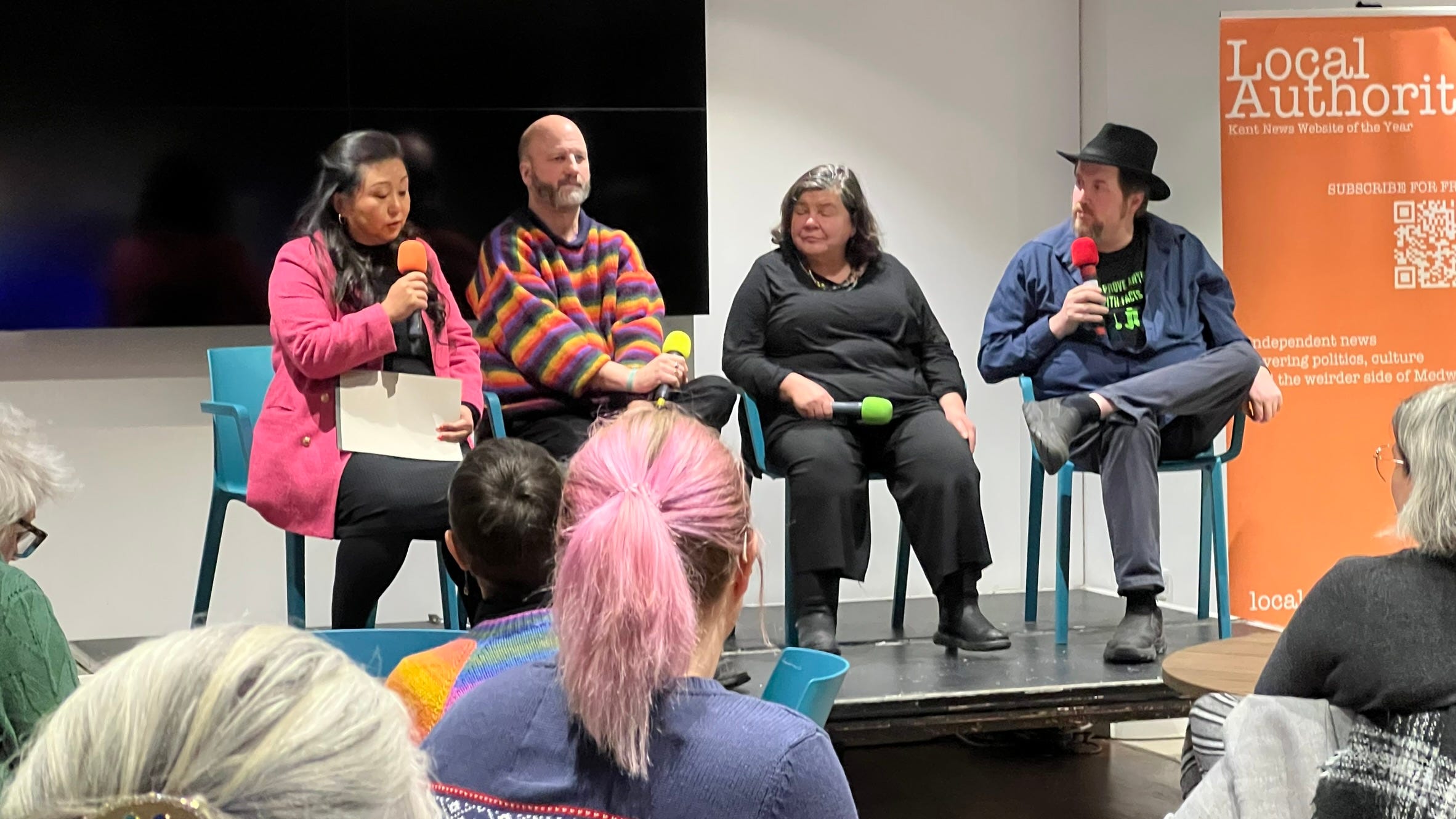
After the panel, we moved to the ‘café’ section of the evening, where discussions continued between the panellists and the audience. They had the opportunity to share further thoughts on how to make Medway Culture matter, and we present a selection of those here for you now:
Invest in our young people – arts and culture are being cut from education.
We need as a community to let our children know how important our local culture is.
Bring the communities closer to nature.
Art made from natural materials.
Does poverty lower expectations or give us more creativity?
Films could be a huge tourist attraction here.
Artist colonies generate culture. As the high street declines for shopping, bring in the artists. High streets for culture.
Social media is failing. Is there a place for the old-fashioned poster?
Where cultural sites are, they are unlikely to attract passing trade.
There are a lot of cultural initiatives, but no central venue or gallery.
A well-resourced shared studio space that you can rent by the day.
Direct advertising to young people.
Youth accessibility for gigs.
Dream big! Universal basic income for artists – the Ireland model.
Another city of culture bid.
For myself, as the host of the events, I was happy that we learnt from the first café, kept the panel to time and allowed more time for table discussions. The cafés can continue to develop by focusing more on solutions and actions. Continuing to build on the cafés is achievable. The majority of the audience was different to the first café, which shows that the subject-specific nature brings out unique audiences, some of whom didn’t even know about Local Authority!
In the new year, we will be announcing the third Local Democracy Café, with a new question and panellists.