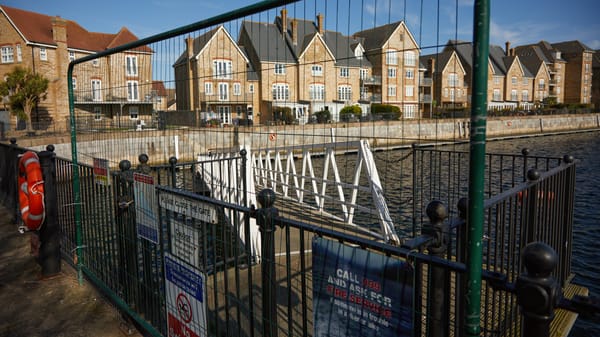
Medway’s Local Plan is starting to wobble
First response from inspectors suggests Medway’s examination will be anything but straightforward

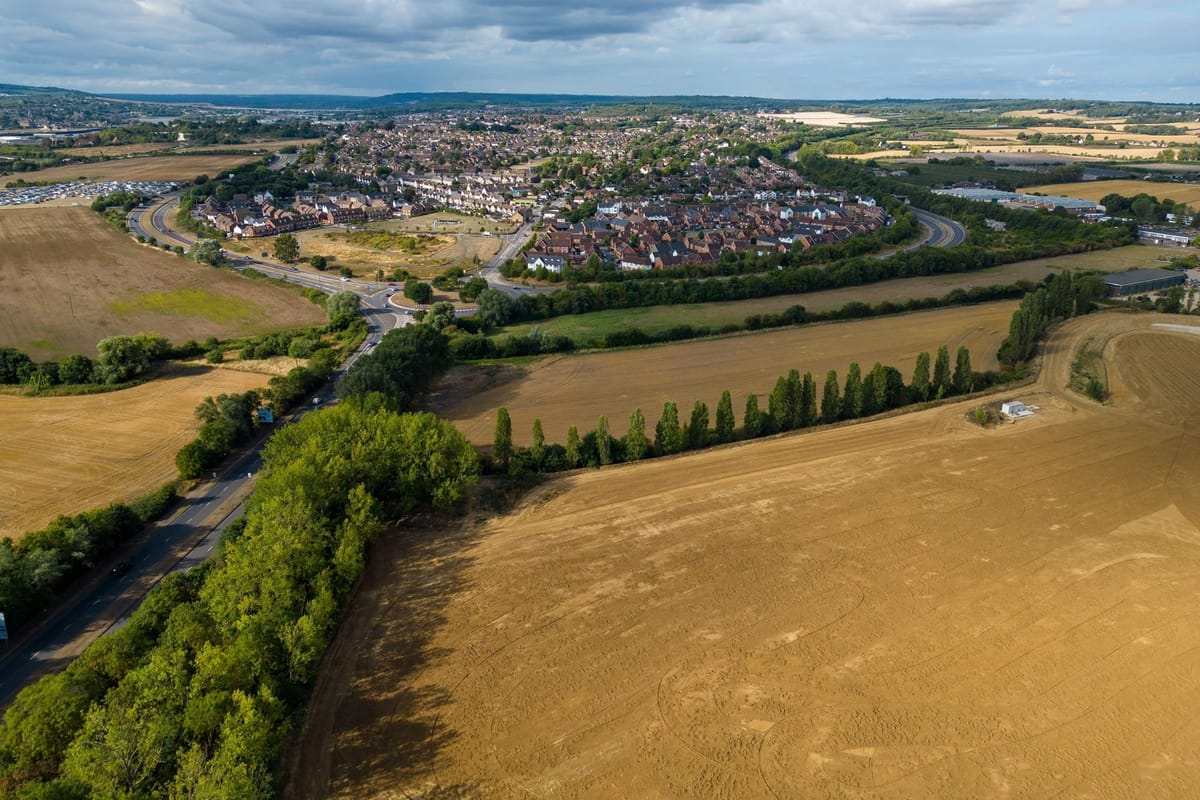
Medway’s Local Plan has reached the examination stage, but the inspectors’ first letter suggests the difficult part may only just be beginning. Concerns have been raised across legal compliance, Green Belt release, traveller provision, housing delivery, consultation gaps and environmental mitigation, leaving the council facing a much broader challenge than simply defending where development should go...
Medway’s Local Plan is starting to wobble
When Medway Council finally submitted its Local Plan at the end of last year, the obvious temptation was to treat that as the milestone. After years of delays, revisions and consultations, the thing was at last in the hands of the Planning Inspectorate. The long slog was over. The rest would just be a straightforward process.
The inspectors’ first letter to Chief Planning Officer Dave Harris suggests otherwise.
This is not a polite note asking for a few loose ends to be tied up. Before any hearings have even started, the inspectors say they have identified “some areas of particular concern” and want answers across a remarkably wide stretch of the plan.
Among the inspectors' concerns are:
- Legal compliance
- Housing delivery
- Green Belt release
- Traveller provision
- Evidence gaps
- Environmental mitigation
- Whether key documents arrived too late for proper public scrutiny
- Whether the plan period itself still works
Phew.
That does not kill the plan, but strips away any idea that this examination is starting from a position of comfort.
Medway now has until 27 April to send back an initial response and a timetable for the further work the inspectors are already expecting. The letter makes it clear that this is unlikely to be dealt with in a single tidy exchange. The inspectors even flag the possibility of further consultation before hearings can even begin.
For a council that has spent years trying to get an up-to-date Local Plan over the line, this is already an awkward place to be. The larger problem is timing.
The plan was plainly being advanced on the basis that it would be adopted by the end of 2026 or in the early part of 2027. If it slips much beyond that, it starts running into Medway’s May 2027 elections and the wider local government reorganisation process that will see Medway disappear in its current form. A document meant to shape the area to 2041 becomes much harder to present as settled policy if the authority trying to adopt it is heading into its final electoral cycle before abolition.
Some of the things now troubling the inspectors were visible well before submission. Local Authority reported in January that the plan had gone forward despite formal objections from within the ruling Labour group, including warnings that parts of it were unsound and not legally compliant. At the time, those looked politically awkward. The inspectors’ letter does not amount to a wholesale endorsement of them, but it does show that some of the same ground is now being fought over in the examination.
 Ed Jennings
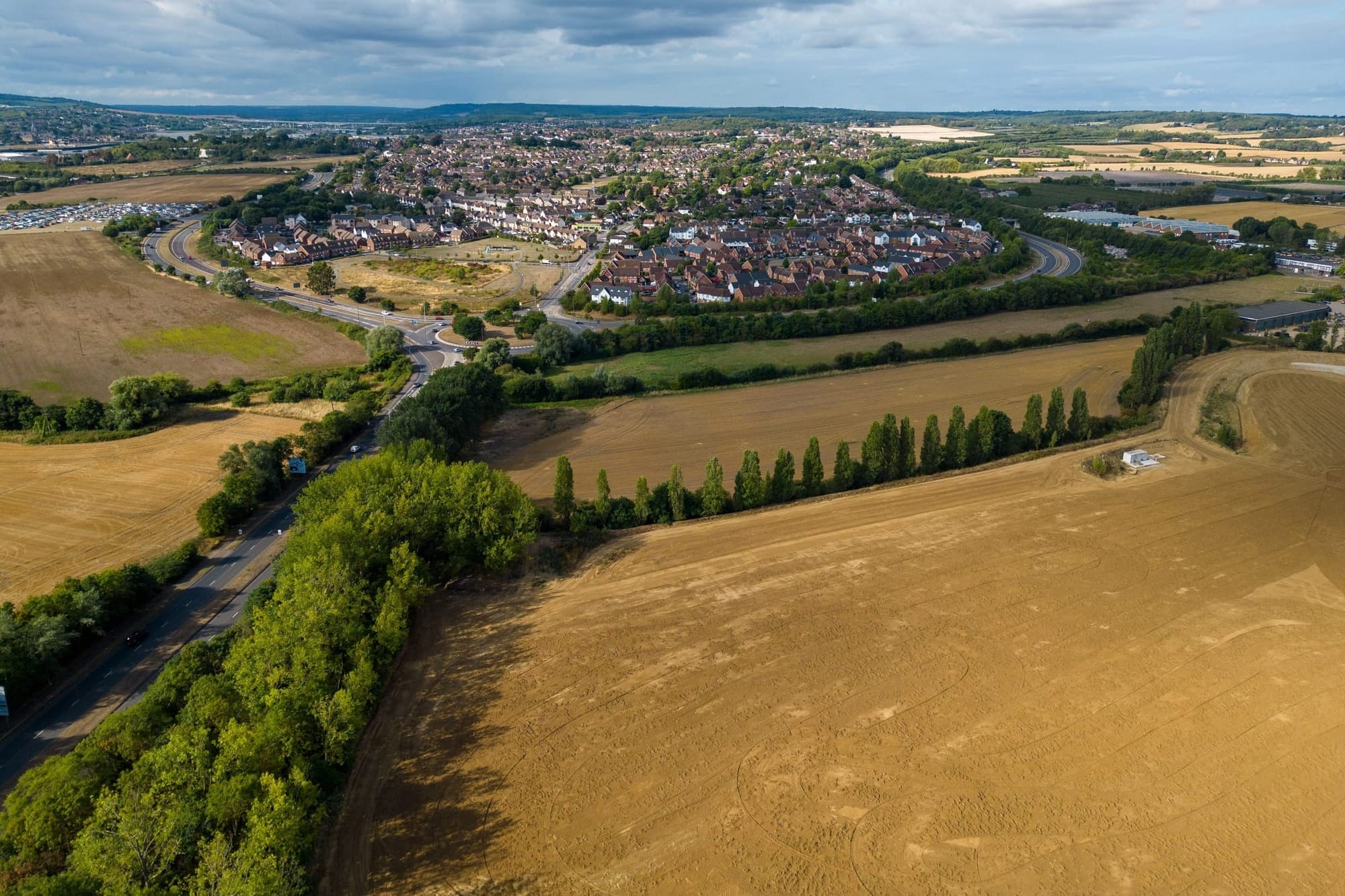
One of the most contentious parts of the Local Plan is the release of Green Belt land to the west of Strood for development. That was always going to be politically difficult. It became harder when it arrived late enough in the process to look less like a long-settled strategy and more like a significant change of direction. Cllr Stephen Hubbard, Labour councillor for Strood North and Frindsbury, said in his formal representation that the residential-led allocation on Strood’s Green Belt was “the flaw in the plan.” He argued that the housing numbers were wrong, pointed to the omission of the Commissioners Road quarry development, and attacked the late-stage Green Belt case that underpinned the switch.
The inspectors are now asking Medway to explain what consultation actually took place on that Green Belt release before submission, what documents were available at the time, how the methodology was applied, how parcels were defined and in some cases merged, why some land was taken forward and not other land, and how far the whole thing depends on the adjoining position in Gravesham. One of the sharpest political rows in the plan is now at the heart of the formal examination.
Traveller provision is under the same kind of pressure.
At the time, we also reported on Cllr Satinder Shokar’s objection to the council’s approach to Gypsy, Traveller and Travelling Showpeople accommodation. He argued that the plan failed to allocate the required sites, did not properly reflect the council’s own evidence, and risked failing a protected community. The plan instead relies on a criteria-based policy and the intensification or expansion of existing sites.
The inspectors say plainly that they have concerns about the soundness of that approach. They point to discrepancies between the need figures in the accommodation evidence and the lower figures quoted in the plan. They ask the council to explain why it believes a criteria-based policy is enough where there is an identified need. They also question why the plan is relying on intensification and expansion rather than making allocations.
Hoo presents a different problem. The row there is not just about the scale of growth or the sensitivity of the surrounding environment, but about the shape of the process itself.
In March, Richard Buxton Solicitors wrote to the inspectors on behalf of Cllr Michael Pearce and the Save the Hoo Peninsula campaign. Their complaint was straightforward. A substantial body of supporting evidence, including habitats work, flood risk material, transport documents, infrastructure planning and topic papers, was published when the plan was submitted in December rather than during the Regulation 19 consultation stage, effectively the final pre-submission consultation. Their argument is that these were not minor extras. They were material additions and changes to the evidential basis of the plan, and people should have had the chance to comment on them properly before submission.
The inspectors have clearly taken that point seriously. In their own letter, they ask the council to clarify which submission documents were unavailable during Regulation 19 and how the council proposes to address this. They refer directly to the issues raised in the Save the Hoo Peninsula submission.
That leaves the council facing something more uncomfortable than the usual fight over where homes should go. The argument is no longer only about policy choices. It is also about whether people were ever really consulted on the final evidential basis of the plan.
The Regulation 19 draft itself helps explain how the council ended up here. Read now, it contains some of the loose threads the inspectors are pulling at.
The first is the plan period. This is a Local Plan to 2041. The housing requirement is projected on that basis. The whole document is framed around that end date. That works much better if adoption happens quickly. Once delays start creeping in, the obvious question follows. If the plan is not adopted during 2026, how does a document ending in 2041 still satisfy the usual requirement that a Local Plan cover at least 15 years from the date it is adopted? The inspectors have asked exactly that.f
The second is the policy structure. The plan says its policies are grouped as strategic, thematic and development management. The inspectors are now asking a question the document leaves hanging: Are the thematic policies strategic or non-strategic? It sounds dry, but it is basic plan architecture.
The third is the habitats work. The Regulation 19 draft states that the Habitats Regulations Assessment supporting the plan is interim and will be updated before submission, once the air quality work is complete. In hindsight, that line carries a lot more weight than it might have done at the time. It helps explain why Hoo campaigners are so exercised about post-consultation ecological material, and why the inspectors are now asking how the submission HRA, mitigation arrangements and policy wording fit together.
The fourth is housing delivery. The plan sets out overall housing supply through pipeline sites, allocations and windfalls. What it does not appear to do, in any clear way, is include the housing trajectory that inspectors would usually expect to see, setting out the likely rate of delivery over time. The inspectors now want that too.
Taken one by one, some of these problems may be fixable. The inspectors even say as much in places, noting that some points could be addressed through formal changes made during examination. The accumulation is the issue. This is not one awkward query buried in the margins. It is a stack of questions about whether the plan is complete, clear, legally robust and backed by the right evidence in the right form.
The clock makes that harder.
If Medway can answer the inspectors quickly, keep any further consultation under control, get to the hearings without too much drift, and steer through the modifications at pace, the administration can still hope to claim that it delivered the Local Plan before the ground shifted beneath it. It would not be pretty, but it would still be theirs.
If not, the calculation changes.
A Local Plan still unresolved by the time Medway heads into the May 2027 elections stops being a difficult planning document and becomes campaign material. The Strood Green Belt, Hoo growth, infrastructure promises, and environmental mitigation all become available to anyone who wants to turn a planning dispute into an electoral one, which is to say most people involved in local politics.
After that comes the stranger question of ownership. Medway is not moving into an ordinary next term. It is moving towards local government reorganisation and the end of the authority in its current form. Formally, that does not mean the Local Plan simply collapses if it reaches 2027. Politically, the whole thing becomes much less neat. A document designed to shape Medway to 2041 looks rather less anchored if the council trying to adopt it is itself heading for the exit.
The council can still recover this. The inspectors have not killed the plan. But the easy version of the story has gone. Submission was not the end of the hard part. On this evidence, it may have been the point where a different kind of trouble began.
If that trouble lasts too long, Medway may find itself trying to adopt its most important planning document just as the council that wrote it is heading into an election, and then into history.
Footnotes
Follow us on social media! We’re on Facebook, Instagram, and BlueSky, but not that other one.