Medway’s budget holds the line for another year
What a balanced budget does - and doesn’t - say about Medway’s finances

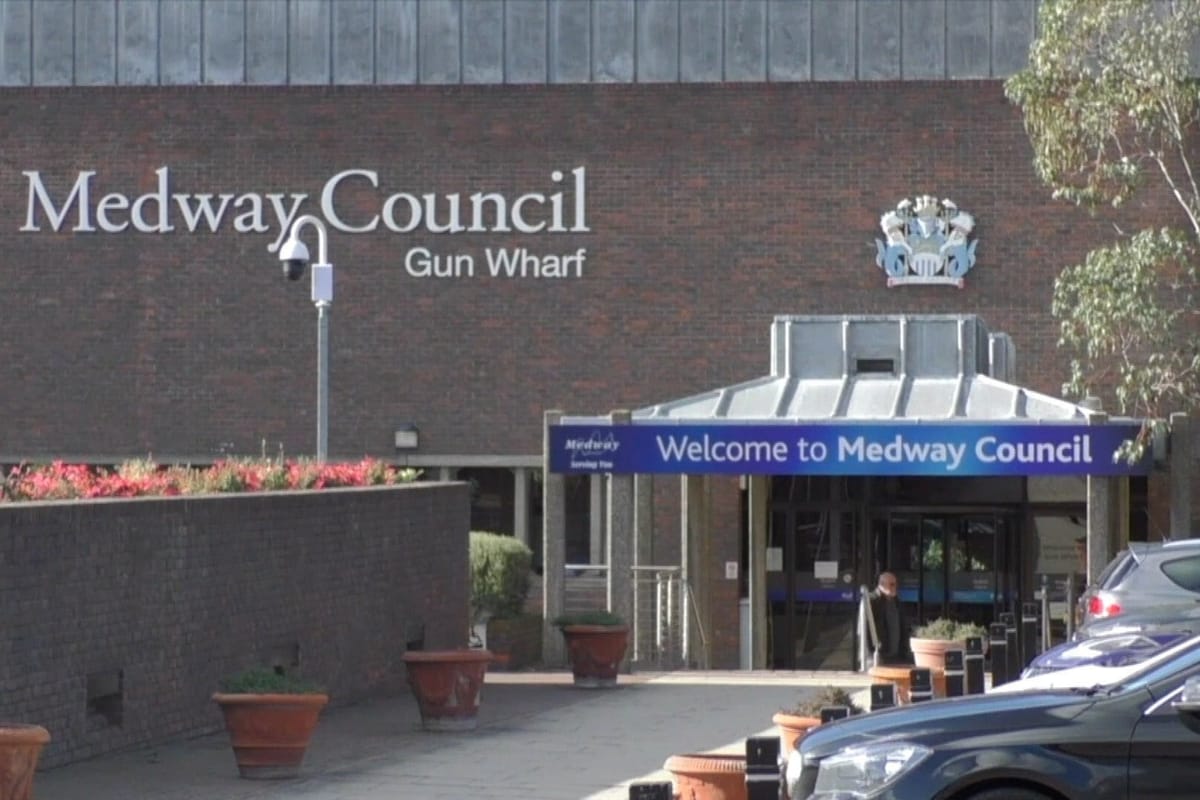
Medway Council will set a legally balanced budget for 2026/27, but achieving this will require tight constraints and continued reliance on government support. In this edition, we examine what the budget does and does not represent, how spending pressures in adult social care, children’s services and housing shape the choices available, why Exceptional Financial Support remains central to the numbers, and what the figures suggest about Medway’s financial resilience in the years ahead...
Medway balances the books again, with little room to spare
Medway Council will set a balanced budget later this month. That fact will be emphasised repeatedly over the coming weeks, and in a narrow, legal sense, it is an achievement. Councils are required to balance their books, and many are struggling to do so. But it is worth being clear about what this budget actually represents, and what it does not.
This budget does not resolve Medway’s financial problems. It is a budget that stabilises them for one more year.
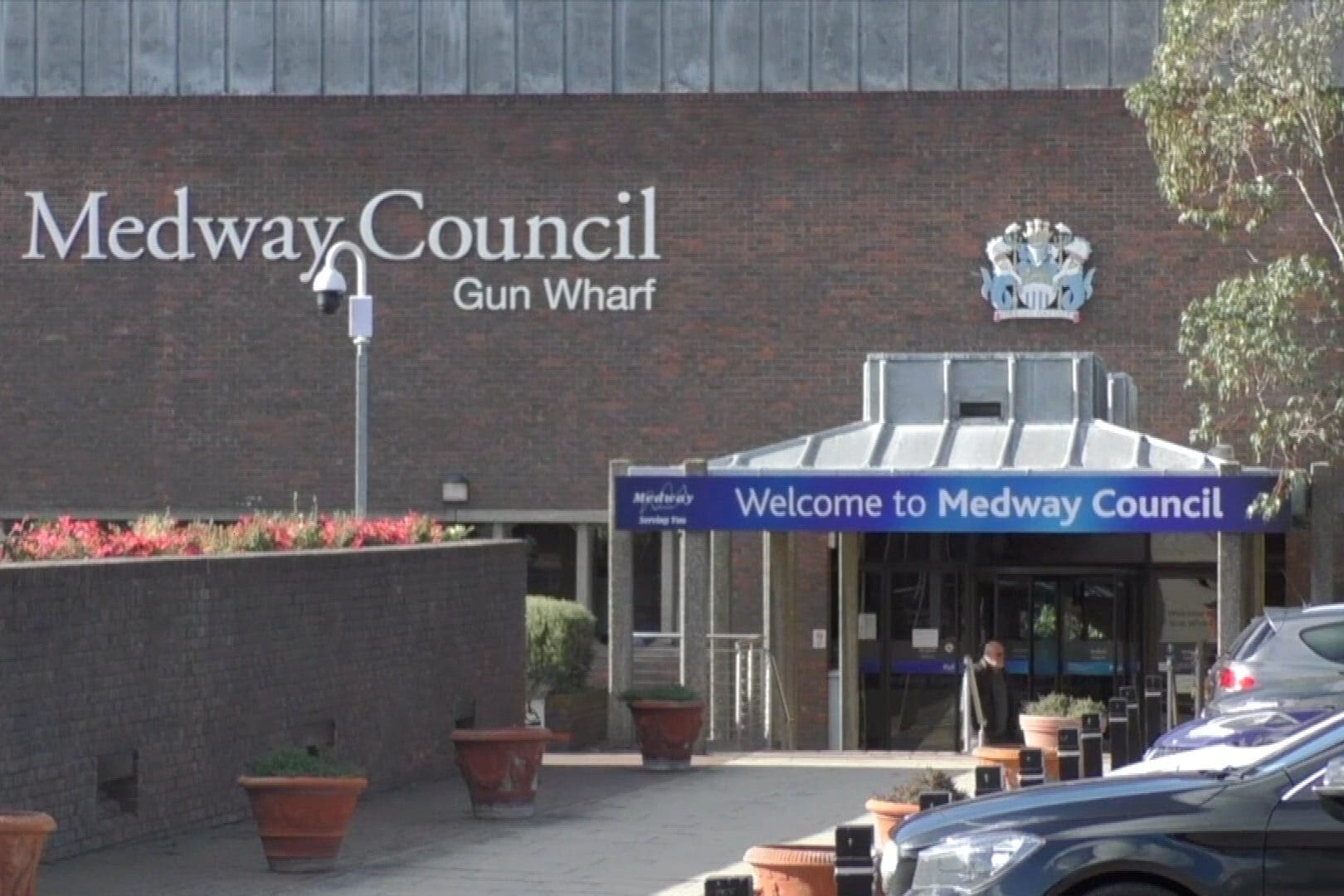
That distinction matters because this will be the third consecutive year in which Medway relies on Exceptional Financial Support from central government to make the numbers work. In 2026/27, that support totals £10.1m. It is lower than in previous years, and the council leadership is keen to stress that reliance on EFS was always anticipated as a three-year programme. Both of those things are true. Neither changes the underlying reality that, without that support, the budget would not balance.
The most accurate way to describe this year’s budget is as a holding position. It buys time. It creates breathing space. It does not, by itself, put the council on a sustainable footing for the years that follow.
To understand why, it helps to start with where the money goes before any political decisions are made. From the moment budget-setting begins, around £1.3m is already committed each day. That spending goes on adult social care, children’s services, housing and temporary accommodation. These are statutory services. They are not discretionary. They cannot be quietly reduced without serious legal consequences, and in many cases, serious human ones too.
Adult social care alone accounts for £184m of spending in 2026/27. Children’s services account for £221m. Housing, including the cost of temporary accommodation, adds around £90m more. By the time the council starts to debate parks, libraries, leisure centres, highways, culture or town centres, the vast majority of the budget has already been allocated.
Council leader Vince Maple does not shy away from that reality. “On day one of setting a budget, we know that £1.3 million every single day will go on to those statutory services,” he told Local Authority. “Of course, they’re not the only statutory services we deliver, and we know across the country there are lots of challenges for councils of all persuasions when it comes to adult social care, children’s social care, SEND, and also temporary accommodation.”
That starting point explains much of what follows, including why so many arguments about council budgets can feel disconnected from residents’ day-to-day experience. There is comparatively little room for manoeuvre before the conversation even begins.
Demand in adult social care continues to rise, driven by an ageing population, increasingly complex needs and sharp increases in mental health related costs. Around one in every 74 adults in Medway now receives some form of council support. Safeguarding concerns have risen dramatically since 2020. Residential nursing costs have increased significantly. More residents who initially fund their own care are exhausting their savings and falling back on the council.
Children’s services face similar pressures, particularly around special educational needs and disabilities, where demand has surged nationally. Housing services are dealing with rising homelessness, driven by Section 21 evictions, family breakdown and domestic abuse. None of this is unique to Medway, but Medway’s status as a unitary authority means it carries all of these responsibilities at once, without the ability to pass costs elsewhere.
If there is one area where the strain is most visible, it is temporary accommodation. Around 600 households are currently placed in temporary accommodation on any given night, including close to 1,000 children. Roughly 500 of those households are in privately procured nightly accommodation, at an average cost of around £58 per night. Families are spending an average of 18 months in temporary accommodation before being settled, with waits for larger homes stretching even longer.
That approach is expensive, inefficient and often deeply unsuitable for the people involved. It also exposes the council to a volatile market with limited supply and inconsistent quality. The council’s response has been to embark on a £42m capital programme to acquire its own temporary accommodation stock. By the end of this financial year, Medway expects to own over 180 units, which it estimates will save between £2m and £3m a year compared with continued reliance on the private market.
Maple is explicit about why that matters. “People say what keeps me up at night. The fact that I’ve got a thousand children going to bed tonight in temporary accommodation isn’t acceptable. That’s why it’s been right to take some innovative approaches, buying close to 200 temporary accommodation homes and flats, because those are expensive properties that are currently being used and we’re not always clear on the quality we’re receiving for that money.”
This is one of the clearest examples in the budget of an invest-to-save approach that withstands scrutiny. It is also an acknowledgement that the market, left to its own devices, is not delivering acceptable outcomes, either financially or socially.
Against that backdrop, the council’s continued reliance on Exceptional Financial Support becomes easier to understand, even if it remains politically uncomfortable. Maple is clear that the use of EFS was planned as a three-year programme from the outset, and he argues that the council is now in a stronger position than in previous years.
When asked whether he was confident this would be the final year Medway would need EFS, Maple was unequivocal. “I’m very confident,” he told us. “I was disappointed when it became clear that we weren’t going to be able to finish a year early.”
There is substance behind that confidence. The council has delivered 81% of the savings targeted in its Financial Improvement and Transformation plan and generated £23.4m in additional income. Overspending has been reduced significantly compared with the previous year. The EFS figure itself is smaller than before. Internally, there is a strong emphasis on permanent recruitment rather than agency staff, closer working between directorates and earlier planning cycles.
But confidence is not the same as certainty, and this is where the political arguments sharpen.
Help us keep this going. Local Authority only exists because some of our readers choose to pay for it. If you value what we do here, please consider joining them. An annual subscription costs £1.15 a week and helps us keep reporting on the things that shape life in our towns, without the noise or the nonsense.
The opposition has been far more critical of the budget’s reliance on borrowing and government support. Conservative group leader George Perfect argues that the draft budget shows the council increasingly reliant on debt to operate day-to-day.
“The draft budget for the next financial year show only two things: higher charges and more borrowing,” Perfect said. “In addition to the £18m already borrowed for this financial year, the council is now seeking to borrow another £10m on top just to pay day-to-day spending up until the end of March. Then the Council will borrow another £10m to fund next year’s budget. This is all unsustainable and will all have to be paid back by the residents of North Kent following local government reorganisation.”
Perfect also places responsibility higher up the chain, blaming the outcome of the government’s fairer funding review and rising interest rates for Medway’s position, and arguing that the council received significantly less new funding than officers had expected when the draft budget was first prepared.
It is a stark framing that will resonate with residents facing higher council tax and rising charges. It is also a simplified version of a more complex picture.
Borrowing costs are rising sharply, and cash flow pressure is real. The council is now borrowing externally, not just for capital projects but to manage day-to-day liquidity, as internal cash reserves have been exhausted. That is an uncomfortable position and one that carries risk if interest rates rise further or financial conditions tighten.
At the same time, the council is actively selling assets. More than £13m has already been raised from property disposals, with further receipts expected this year and next. Those capital receipts are being used to fund transformation programmes that government rules allow to be treated as capital expenditure, and to reduce longer-term borrowing requirements.
Those mechanisms are finite, and they carry risks of their own, particularly in the context of local government reorganisation, where future authorities will inherit both assets and liabilities. That is where the opposition’s warning lands, even if the detail is less clear-cut than the rhetoric suggests.
The Conservatives say they will present an alternative budget later this month. That will be the point at which questions about what would be cut, changed or funded differently can be tested against the same underlying pressures facing the administration.
For residents, the budget's immediate effects are more tangible. Council tax will rise by just under 5%. Car parking charges will increase across most tariffs, with short stays becoming cheaper and longer stays more expensive. Country park parking will rise sharply, from £2.50 to £3.50 per day, with annual passes also increasing. Leisure fees edge up, particularly for casual users rather than those on monthly direct debits.
At the same time, some things do not change. Weekly bin collections remain. Libraries receive additional staffing to maintain safe operation. Parks continue to open. These are not service expansions. They are defences against erosion.
Maple is candid about that trade-off. “It’s about defending what we have,” he said. “There are councils across the country that have cut bin collections. That hasn’t happened here, and I’m proud of that.”
Less visible but increasingly important is the role that prevention and technology play in holding the system together. Across adult social care and housing, there is a deliberate focus on intervening earlier, supporting people before they reach crisis, and managing demand rather than simply reacting to it. Preventing a fall, avoiding a hospital admission, or stopping a family from becoming homeless all save money later, but they require upfront investment and do not deliver instant results.
Technology is being used in that context rather than as a replacement for services. Planning services have been digitised at scale. Adult social care teams are using AI tools to generate structured summaries and reduce administrative burden. SEND teams are using similar tools to assist with education, health and care plans. AI-enabled cameras are being deployed to monitor road conditions. A wellbeing AI assistant is in place for staff.
The council is careful to stress that these tools are not replacing professional judgement. They are being used to free up staff time in services that are already under intense pressure. This is not technology as a silver bullet. It is technology as damage control.
If there is one reason this budget should not be mistaken for a turning point, it lies in the medium-term financial projections. After 2026/27, Exceptional Financial Support disappears from the council’s assumptions. In its place are new budget gaps of £8.6m in 2027/28, £12.7m in 2028/29, £18.9m in 2029/30 and £24.7m by 2030/31.
At the same time, adult social care spending continues to rise sharply. Interest costs keep climbing. Pay pressures compound year on year. Council tax increases steadily and still fails to keep pace with demand. There are no planned contributions to reserves and no meaningful buffer for shocks. Everything depends on transformation delivering, demand being moderated, and government funding improving.
The administration says it is confident this will be the final year Medway needs Exceptional Financial Support. The opposition argues that the budget shows the council remains too reliant on borrowing and one-off fixes. Both positions are understandable, and both sit within a set of numbers that leave little room for easy answers.
Footnotes
Follow us on social media! We’re on Facebook, Instagram, BlueSky, and Threads, but not that other one.