"Medway is the most amazing and the most frustrating place"
What Steven asked Simon Cook, Chair of Medway Place Board.

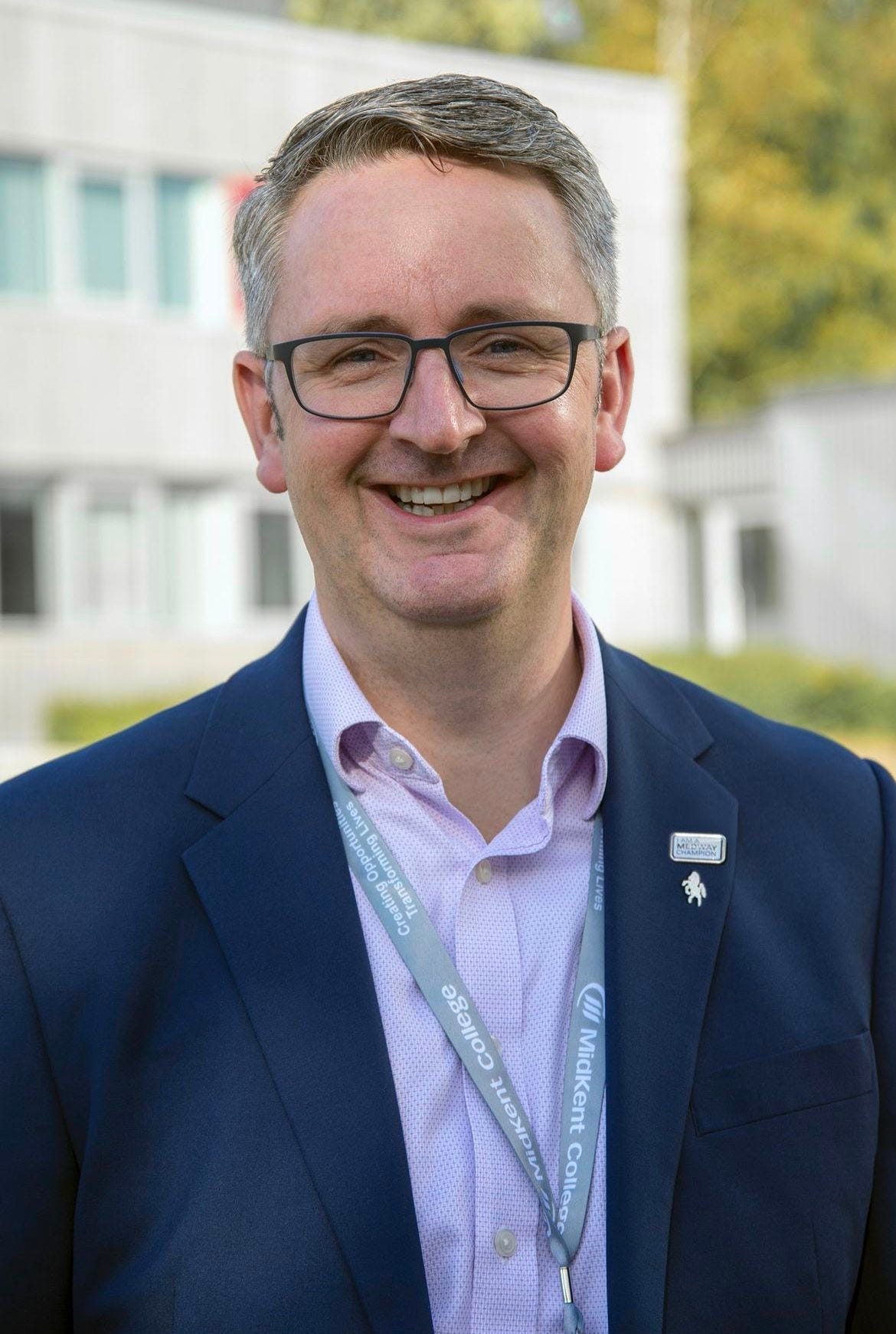
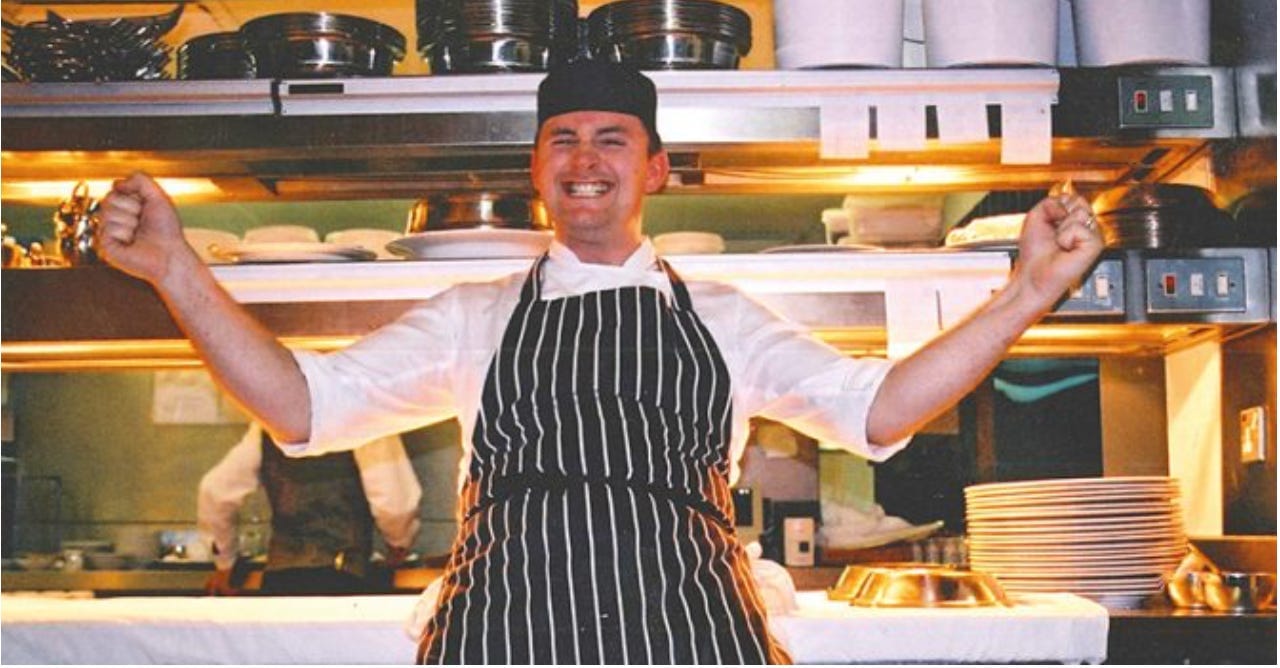
For the second in our new weekly Sunday interview feature, Steven sat down with Simon Cook, Chair of the Medway Place Board. Simon is a former Michelin Star chef who worked in restaurants in Germany and South Africa before retraining as a teacher, quickly entering leadership roles in further education, and rising to the role of principal. Steven met with Simon in his office, where they discussed the challenging dualities of Medway and what needs to be done to help young people and Medway as a place move forward.
Where were you born?
I was born in Ipswich in Suffolk, not a million miles away from where we are in Medway as far as the crow flies.
What jobs did your parents do growing up?
My father started off his career as an apprentice compositor, working for newspapers, so he would be the person that would compose the pages that we would see in our newspapers and the print together before went off. My mum did various different jobs. Her full-time profession was obviously a housewife, looking after us, but also worked part-time just to bring in extra money. She worked as a school cook, she worked in a factory that made hams and sausages and pies and things like that. Then my dad had to retrain later. He was subject to all of the technological advances in print media which meant that they no longer needed people to put the pages together. So he retrained as a journalist. As a teenager growing up with a dad who was a journalist and a learning journalist, it was a nightmare because everything was about ‘What are you doing?’, ‘Where were you?’, ‘What's going on?’ So that wasn't too much fun, to be honest.
How did you find school and university?
I hated school with a passion. I talk about this a lot to staff because I say that it's ironic with the job I have as Principal Chief Executive of a further education college. But if I hadn't disliked school, I wouldn't know why I do the job that I do now. One of the reasons I didn't like school was I just didn't know why I was there really. Yes, you know you have to go to school but it's this classic thing that every young person wants to know is why. ‘Why do I have to go to school?’ ‘Well, you do’ was the answer I would always get.
I remember maths lessons. I remember sitting in the lesson, we've gone through countless repetitions of trigonometry and Pythagoras’ theory and I just said to her ‘Why am I doing this?’ and the only answer I would get would be ‘You’ve got to do it for your GCSE exams.’ If you told me how to write a cheque or open a bank account, I know why I'm going to use that, but why am I going to use Pythagoras’ theory and she would only say could you got to understand it for a GCSE exam. So because I never got the answer to why I just didn't like school.
I knew by default I had to leave school at 16, the minute I was able to no longer be at school. As a result of that, the only thing at school I was interested in was cooking. I always enjoyed cooking and so it was the only thing I really like doing at school so by default that was my careers advice. Not the online questionnaire of careers advice which told me I needed to be a deep sea diver, but because I only enjoyed cooking I thought I'd do a career in cooking afterwards so I was supposed to go to college full time as a student studying catering. But in the summer a friend of a friend of somebody my dad worked with, who knew a hotel manager about 10 miles away from where I grew up said they've got a job going. I started a three-year apprenticeship then, so that was my starting point really before I even experienced university later on in life.
What was your first full-time job?
It was my apprenticeship really, my first ever full-time job and I loved it. I remember my first pay packet. This gives my age away, but in the brown envelope that you had to go to a particular office to collect every week was the slip of paper that had all the deductions and everything on it and my pay £55 a week. I was loaded, minted on 55 quid a week. My first full-time job and the cash was stuffed in the envelope until I think it was probably about six months later then things got into bank accounts and transfers and I had to open up my first ever bank account to put that cash into. It was great because it felt like independence or, more importantly from my experience at the school, felt like I could do something that made a difference and was enjoyable. So I did that for three years finished my apprenticeship and then was lucky enough to be able to get a job in London working in five star luxury hotels.
What makes somebody a great chef?
Oh! (pauses) Energy, passion, enthusiasm, a willingness to know that you have to keep pushing really hard and working really hard with very little reward. One day that reward might only be small but it will make everything else worth it. Something I've realised later on in life is that you should never give up on pursuing perfection, but perfection doesn't exist. There's always somebody that's doing something better than you so you can learn from everybody.
How accurate was the film Ratatouille in depicting a working kitchen?
I’ve never watched it. I should because it’s a cartoon, and that would be right down my street, but I’ve never watched it, so I can’t comment. I’m going to have to watch Ratatouille now.
What brought you to the Medway towns?
A little bit of luck and fortune, but also some determination. So prior to arriving in Medway, my career had taken me to working in Cornwall. I mentioned earlier my first full-time job was cooking. I had at a later point decided that as a result of meeting my now wife, who didn't want to have the sort of lifestyle that was the case in the hospitality industry which is super unsociable hours, I looked at the opportunity of retraining and becoming a teacher because that sounded good. That was only in 2002. I started as a full-time teacher, loved it and was lucky enough to develop my career as a teacher into a manager.
My job before the Medway towns was as a fairly senior manager in the Cornwall College group, which was a bit weird because I'd ended up in the south west as far as you could before you ended up in the Atlantic or in America, so there was nowhere further to go. Cornwall was, at the time, the 4th largest College in the country. It was very big and diverse and I wanted to try out and see what working in large colleges was like. Whilst it was great and I loved it, it was just too far away from the rest of the world. So I wanted to secure the next job in my career which was going to be a Vice Principle type job and knew that I didn't want to go into a big city. Also, the choice was about my wife being able to live somewhere that she was comfortable with. So it definitely wasn't a big city and it definitely wasn't anywhere north of Birmingham. That was the criteria. There were a number of different jobs that came up. One of them was here, I came and I really loved it and it felt really good. I was interviewed and I got offered the job and so that was it really.
What is a tougher experience, working towards a Michelin Star or an Ofsted inspection?
They're both the same actually. They're both very similar. However, there are a set of published criteria that are supposed to help you understand what criteria Ofsted may use in forming a judgement. Whereas there are no published criteria that tell you how and what criteria would be judged against to get a Michelin Star. So, a Michelin Star is more mysterious. Perhaps that is the difference between the two.
How did you come to be the Chair of the Medway Place Board?
The simple answer to that is that I really, really, care about what's going on in Medway. There is a huge opportunity in Medway and I think through my day job, seeing young people who grow up thinking because of their postcode and what their family, if they do have families, experiences are, that their belief is this as good as it's going to get. So often as adults, we look at things through our lens and forget that sometimes suppresses the aspirations that our young people might have.
So, Chair of the Place Board is not just being Pollyanna about this wonderful stuff, but recognising actually we've got some really brilliant things in the grit as well as some of the great stuff that's taking place. Medway is the most amazing and the most frustrating place and that is very unique about Medway. One thing I've come to learn, Medway is the sort of place that doesn't want anybody to lead it, but actually wants leadership at the same time. ‘I’m not going to do it because you’ve told me, but I'll do it for myself.’ That's really good if we can harness that.
What additional roles - paid or unpaid - do you currently do?
My day job is obviously Principle Chief Executive of the college. Outside of that, I do a number of different voluntary roles. I’m the trustee of schools. I'm Chair of the Place Board for Medway that we established in 2018. I also am Vice Chair of the South East Local Enterprise Partnership. Also a trustee of a charity that supports the Royal Engineers in their retraining. So lots of different things that all help people in some way, shape, or form.
What is a Medway Champion?
A Medway Champion is simply somebody who cares about Medway. Not Medway as a whole geography. Medway is a composition of lots of different communities and it's not just the towns of Gillingham, Strood, Rochester, the peninsula that everybody forgets about, Rainham, Chatham. It's not just those towns. Even within those towns, you've got sub-towns and sub-communities and communities within those. You can walk down a road, start one end, get to the other end, and it’s an entirely different community. It’s this beautiful constellation of stars and Medway is just the gravitational pull within it, and everybody has their own gravitational pull.
A Champion is just simply someone who's a bit interested in seeing above the street to see how they can be proud of something that they can connect with. That's as simple as it is. A Champion is somebody who is interested in that and all we do as Champions is just getting them to see beyond the things that we might know are there on our doorstep but never get to see beyond them.
We’ve got so many things in Medway that people don't know about. We don't know that most of our apples and pears that we see in supermarkets that are British come from AC Gotham on the peninsula and that's where they're storing them and producing them through the most amazing technologies in there. We've got the headquarters of Bose, all these wonderful things that not everybody knows. There's great stuff everywhere, take a sense of pride in it and then, where the challenges are, realise that we are all collectively responsible for trying to change those things.
What is the current status of the Medway School of Arts?
We are now in the due diligence phase of signing contracts. We hope that in the next few weeks, once we've signed the contract with where we're going to locate, then we can really start to launch and announce that. We’ll probably do that formally around September/October time.
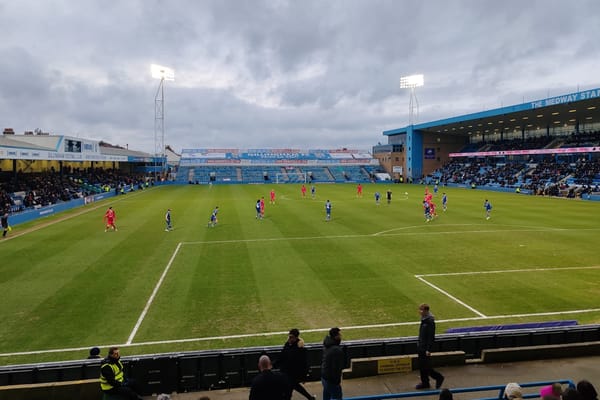
The University of Creative Arts decided they no longer wanted to be in Medway, which I know to many was a shock and surprise. I wasn't that surprised. They've done this many times before. Ironically our own college took over their campus in Maidstone when they wanted to pull out of Maidstone a long time ago. So it's not a surprise and look, I may be a bit biased on this, but as Chair of the Place Board with what I've just said to you about Champions, if you're not interested in Medway, go somewhere else and do your business. If you're interested in Medway, let's work together and do something. So that showed me a particular disinterest for whatever reason.
The creative arts are super important for us. What I've seen and come to learn, as a person who has personally struggled to understand what creative arts and the creative sector are all about, is that creative subjects, whether that's music, performance, media, gaming, whatever it happens to be, is for so many young people, a way of them finding out who they are. Expressing how they feel about stuff without having to necessarily use words and then realising what talents they've got. To be able to do something that makes them feel passionate and a sense of self-worth. That, more than anything else, is so important at the moment. So alongside that, with our ambition when we launched the bid for City of Culture status, what that showed us was that there is a huge, diverse range of really small super creative individuals, businesses, and organisations dotted all over Medway and it bought them all out. The creative scene in Medway is amazing, truly amazing, and it connects with young people.
It meant that Medway School of Arts is a no-brainer for us. We've launched it as quickly as we could to show there was some continuity, so we didn't feel that we would lose something when UCA stop this July. We want to have something in September for those students on foundation programmes particularly, because they're the ones that would lose out. That’s what starts in September and we hope that working with all of those creative sectors and businesses we can create something that is quite special in Medway again. The future is reinvented, if you like.
What was the last improvement for Further or Higher Education, made by an Education Minister?
(pause) Okay, next question. (pause) Okay, I will answer that question. There would be plenty for higher education. Further education, I've only ever experienced a time of turmoil, turbulence, and constant change in my time as a leader in further education.
What are your thoughts on votes for 16-year-olds?
I had this debate a lot and it's interesting actually. I don't know whether we’ve had enough of a debate in our country to understand whether or not it's the right thing, so I wish we had a debate about it, because I don't know whether it is the right thing. All I will tell you is that there have been times where I've seen, our teenagers, our 17-year-olds, take an interest in something, but see it as something that they never got a choice in. The most clear example I ever had of that, was how it felt on the Friday here, after the Brexit vote and so many young people, the mood was so subdued amongst our young people because their futures had been decided by people who in their view, weren’t going to be here when they were adults. Rightly or wrongly, I think it first bought that debate to its head because, I think they felt like, that was something they could never have a choice in partly because it was a simple yes/no choice. It wasn't so common. It was the first time I saw large numbers of young people engaging in politics, so I think we need to have more of a debate of it in our country. I can tell you, you learn more from talking to a 16-year-old than you do a 60-year-old sometimes. The naivete of youth sometimes makes you think differently, and actually, I would always argue as a person, yes I want to do what is right for me as a person, as a professional my job is to make sure we do what's right for the next generation.
Has your name ever appeared on an election ballot?
No, never. Have I? I’m now trying to think. I'm thinking political elections, other forms of election, have I stood? I've never stood for someone like class rep, never stood for a prefect role because that was no chance. Never a representative of an employer or employee. Oh yes. Actually yes, I think it was about 12 months ago, I stood for election to represent the further education sector in the Association of School and College Leaders trade union. There's one vacancy and what I didn't realise was that was actually an election, so that's why I probably didn't think about it just now. I said ‘Yeah, I'd love to do that’ and put my name in and then was told, ‘Oh yeah, you got to go through an election’. So it has to go out to a ballot so that went out to the membership and then I was more gutted when I saw that somebody else wanted to do it.
How did you do?
I won it. I am the representative. Think I was voted by 10 people, but I didn’t have to campaign for that or anything.
Could you perceive a time in the future where you would stand for election?
No chance. Couldn’t do politics. Not a chance. I would actually like to, but the sacrifice that comes with that is something that I probably wouldn't be prepared to tolerate in this stage of my life and career.
Where in Medway do you like to go and eat?
Oh yes! The thing is food is a personal thing, so what I like somebody else might think ‘That’s rubbish and he's a Michelin Star chef’, so everybody's different. My go-to was The Fire Station Brasserie. But they don't open regularly, unfortunately, which is pretty sad, so it's not it's not that reliable. If you ever want a great relaxed environment, Avenue Tennis is great and if you go on a nice sunny day when they've got the veranda open and you want a really good value, good quality breakfast sandwich, lunch, dinner, brilliant. If you want something really posh and want to splash out then The Pumproom at the distillery is great as well but that's a bit pricey for some people. Fish at 55 in Rochester High Street is great as well. I love fish. Living in Cornwall, being a chef, fish is my fave. Those are my tips normally for that level, but I often get the privilege of going out to different places of people as well. I'm just getting to try different places and see where they are.
What are your current aspirations for Medway as a place?
There are lots of tangible things we can say. Medway is about the people. My vision is, and this is why I guess with the Place Board and also with the college, it’s all about people. All about helping people to realise not what we can do for them, but how we can help them to feel better to impact the change that they want.
I think I'd be fair in saying this and some people might take this as criticism. The 25 years of Medway have all been about regeneration and most of that has been about buildings and physical things that you can see, and whilst that might have been great, and has been great for a period of time, what it hasn't necessarily done is connected into the people who are part of Medway already and who are what Medway is. It's that grit that is something quite unique that we can be proud of and ashamed of at exactly the same time. You know that's the dichotomy of Medway, isn't it, which is just brilliant. It's so unique. So helping people to realise that it has to be about more people and helping our people to create their own aspiration for Medway. Not just through buildings and assets.
For me that starts with where they live, taking some pride in where they live and how we might be able to help if we can. That's lots of people's jobs, that's not just one so we have to convene people to help with that, whether that's the police, whether that's health, or that's the council. There are people in our neighbourhoods who are just super passionate about their street, their neighbourhood and the more we find out who they are, the more we help them or we can put wind in their sails, they can do the job. Sometimes that's just simply about connecting with the right people. Their problem can be solved by someone over there and it's just connecting those dots. That's our job.
Footnotes
This interview has been lightly edited for length and clarity.
You can read our previous interviews here.
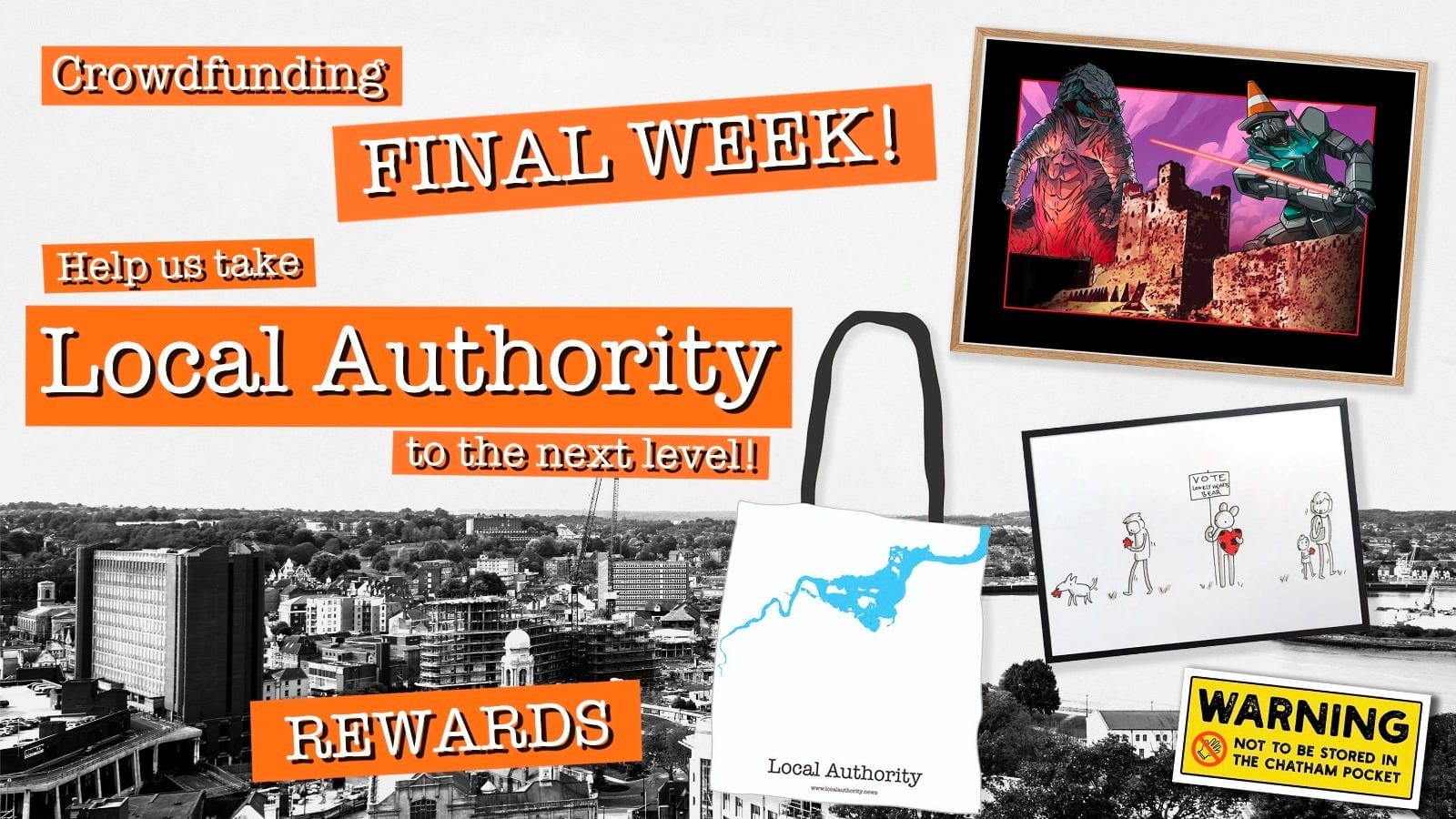
It’s the last few days of our crowdfunding! We hit our initial goal but would love to do more, so if you like what we do and would like to support us in exchange for some awesome rewards, take a look here.
If you want to suggest ideas or send tips for people to interview, email Steven.
Steven Keevil is excited about the upcoming Spiderman: Across the Spider-verse. He co-founded The Political Medway and still manages to watch hundreds of films a year. Steven listened to no music whilst writing this, but recommends reading Getting Better by Michael Rosen.