“It was essential for the transformation of Chatham”
What Steven asked Luke Bacon, Minister at St Johns Church in Chatham
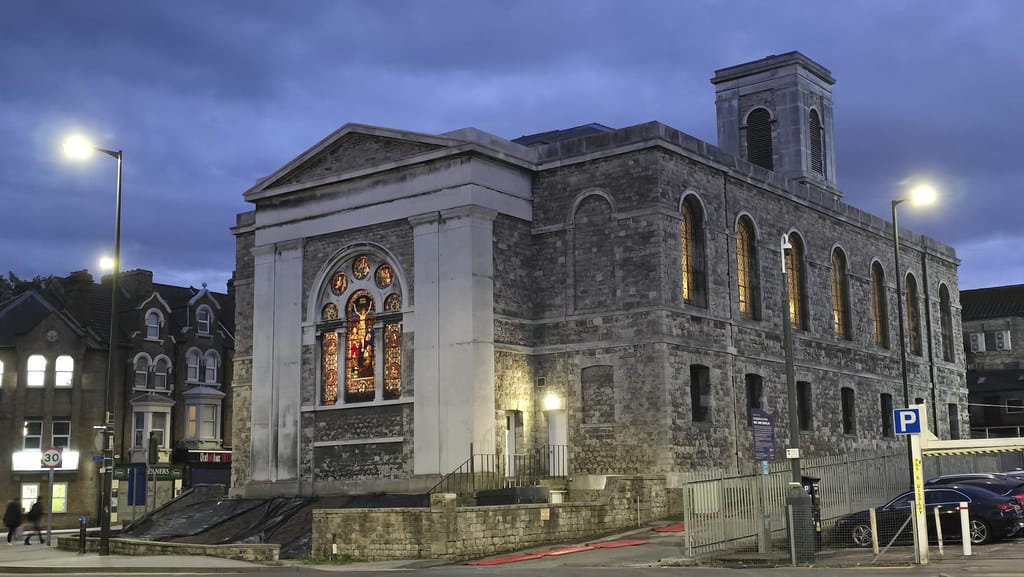
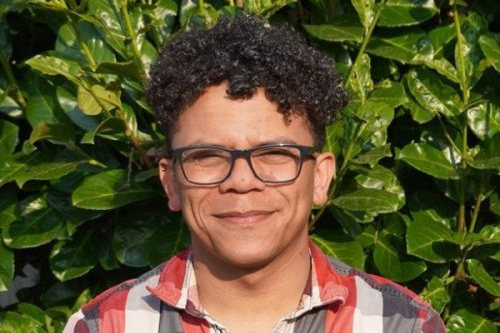
Reverend Luke Bacon is part of the team responsible for the revitalisation and reopening of St John's Church in Chatham. Steven met him there to discuss how he came to be involved at St John's, what their plans are for 2026, and if £4 million is money well spent...
What is your official occupation?
I am a Minister of Religion. That's what I put on forms and documents. I'm ordained in the Church of England as a priest.
Is there a difference between being a priest and being a reverend?
There are a few nuances, but it's possible to be both. It's also possible to be a reverend, but not a priest. That would be typically for those in the Church of England. Other denominations do things slightly differently, but in the Church of England, you are ordained. And when you're first ordained, you're ordained as what's called a deacon, which just comes from the Greek word diakonos, which means servant. Typically, you'll serve as a deacon for a year and then with the bishop's approval and having done the things during that diaconate year that are required of you, you'll then be ordained as a priest. Which doesn't stop you from being a servant, you continue to be a servant, but you also then at that point are able to do some of the things that are associated with priestly ministry, so pronouncing blessings or presiding at communion or offering absolution, declaring God's forgiveness for sins. At the point of becoming a deacon, you become a reverend, that's when you're ordained deacon, so you can be a deacon, can be a reverend, but not a priest, or priests would be reverends, but some might not choose to use that title.
Are you Reverend Bacon or are you Father Bacon?
It's a good question. I walk down the street when I'm wearing my clerical collar and people of a more Catholic tradition will say, “Good morning father,” sometimes with an Irish accent. I don't ignore them, I smile and respond. I guess from my tradition, which is a fairly low church tradition, I would be called reverend or pastor, or lots of people just call me Luke, and I'm very happy with that.
What is your role at St John's Church?
My family and I were asked to consider moving to Chatham to be involved in the reopening of St. John's. We were asked that question five years ago, probably almost to the day in the middle of a pandemic.
My previous role was coming to an end. I was working at the church in Beckenham doing something called a curacy, which is part of training to be a minister in the Church of England. That season was coming to an end and the former Bishop of Rochester asked if we'd consider coming to Chatham. Chatham was beyond my frame of reference at that time. I think my wife had been here to the dockyard for a school trip. I don't think I'd ever been. We drove down here one day when the girls were at school on a Friday. Everything was shut because it was covid. We managed to find a takeaway coffee at Cafenetics on the Intra. They were lovely, and we still love them down there. We had a look around, and this sense of, 'Did this feel like a right fit for us and for our family?' It did. That's why we're here.
In terms of the role itself, that's evolved a little bit over time. I was invited to come and work as part of a team reopening the church building with another ordained minister, who'd been in the area for a while serving at a different church. I guess the way that the role has evolved over the last four and a half years or so is that I primarily take responsibility for the growth of the church community, what you might call a pastor. Seeing the church community growing and supported, and then being involved in our wider community in the ways that feel most helpful. It's funny that all of these people seem to have left now. The former Archdeacon of Rochester, Andy Wooding Jones, he's someone that we know, I knew from other roles elsewhere, and I think he'd seen some of our passion and skill set and personality and I think he'd said, ‘Well, maybe they might be a good fit.’ I think him connecting the dots, and I'd like to think that there was some providence or providential guiding in that as well, because we really do feel like it's a good fit in terms of the things that we’re interested in. We'd found ourselves in I guess what you might describe as quite middle-class enclaves. I moved to Tunbridge Wells as a 14-year-old and finished school there, actually commuted to university from there, met my wife there. Going to church there, and Tunbridge Wells, as much as it does have its challenges, as everywhere does, it's known for being Royal Tunbridge Wells. Then we moved from there to Cambridge, where I studied at theological college and then we moved from there to Beckenham, which is the final outpost of Kent before you get to South London. In all of these places, we'd felt we'd like to go somewhere that we can just get our hands dirty a little bit more, somewhere where the need is perhaps a little bit more acute, and there's less of the hiding and masking of some of those needs that all humans face with a lot of money and resources. We found that in abundance on Chatham High Street, so here we are.
Do you have any other additional roles, paid or unpaid?
I have the privilege of receiving what's called a stipend, which means that the Church of England, instead of a salary, pays me an amount of money every month, which effectively releases me from needing to find work. Historically, what the church has done is stipend ministers, so that they're free to serve the church and the community. As HR rules and employment laws rightly get more detailed to keep people safe, the Church of England starts to end up with slightly more complicated ways of effectively employing ministers, without calling it employment. I don't, by God's grace, have to find another job because there's plenty of stuff to be getting on with here.
I don’t, by God’s grace, have to find another job because there’s plenty of stuff to be getting on with here
Do you have any unpaid roles?
Yeah, lots of things really. I’m involved in a number of charities. Where do I start? One of the greatest honours is to be a trustee of a charity called Home for Good, which has merged with another charity called Safe Families. I originally got involved when it was Home for Good, and that's an adoption and fostering charity, helping, but not exclusively helping, the church across the UK to recognise its role within supporting the care system. Encouraging people to consider fostering and adopting and supporting them in it. Home for Good also has done and continues to do great political work in terms of raising the profile of the racial disparity in adoption and fostering, and issues where we've been lobbying the government, et cetera. I have a privilege of serving on that board, merged with a like-minded charity called Safe Families just over a year ago, and they particularly help, mostly through local authority contracts, parents and families who are, I guess, in need support in parenting, and they encourage that through a mentoring system where someone will get alongside those families and support them.
I’m involved in another charity that looks to support Christians and see the church positively established and strengthened in another part of the world that has a UK base to raise funds and raise supporters and workers for that. I'm involved in ecumenical work as well. Churches Together in Medway is a charity that seeks to draw together representatives from various strands and parts of the church across Medway, and I recently became the chair of that charity as well
To have this building shut and in a state of decay actually was such a negative psychological and architectural impact for the city.
St John's took two years and £4 million. Why was that time and money well spent restoring this church?
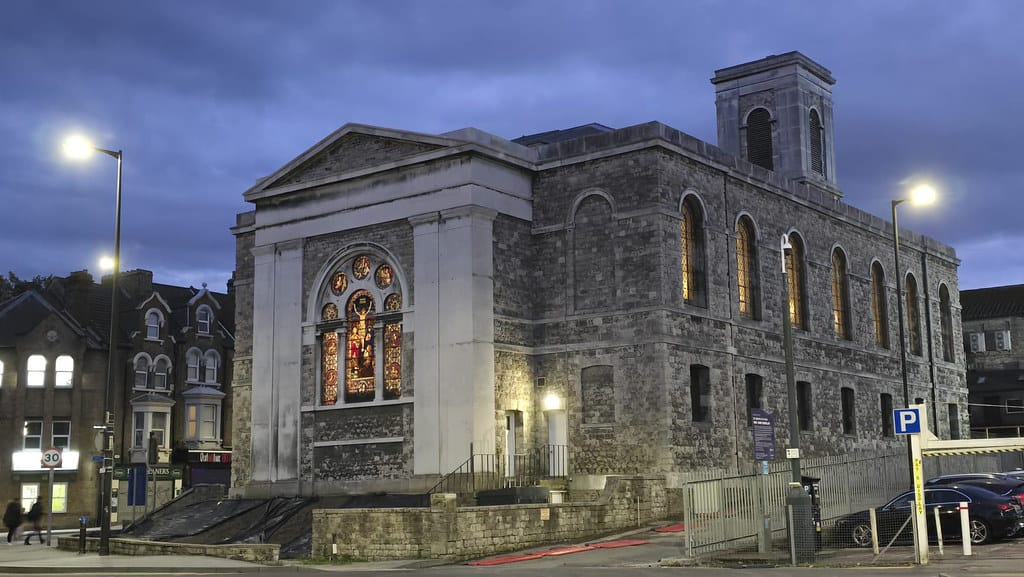
The building itself has been described as a gateway building. This is something that's been identified by the council and by others. It's really difficult to get into the centre of Chatham, which I think is probably also the centre of Medway, without passing this building. To have this building shut and in a state of decay actually was such a negative psychological and architectural impact for the city. To see it restored, I think, was essential if there's ever any hope of seeing the heart of Chatham restored, and life brought back into its heart. That's not coming from me. People identified that need almost ten years ago, and that's why the St John's Chatham building was included in the Future High Street bid, which thankfully was at least in part successful, which in itself brought just around about a million pounds towards that four million pound price tag for restoring this building.
Obviously, the National Lottery Heritage Fund identified the significance of this building and its history, not just as a museum. This isn't a sense of it's just standing here to speak of history, but that it's an active participant in helping people realise where they've come from, but also where they could go. The National Lottery Heritage Fund contributions again are a significant chunk of that four million, really important. If I try and list all of the generous charities and grant-giving bodies that have contributed towards the work, I'll end up forgetting some. But the Rochester Bridge Trust, for example, identifying that they, through some of the historic connections that this church building has with those that have been part of Rochester Bridge Trust over the years, very generously supporting and leading to not least some of the high-tech cleaning of the windows. Everyone walks into the building and says, 'Wow are those windows new?'
In terms of 'Was it worth it,' I think it was worth it because it was essential for the transformation of Chatham and the regeneration of Chatham, which we're just a small part of. I think there is a huge argument in terms of social impact as well. Just the people that we interact with every day, the families and parents that come into our toddler group or the people that come here to worship or the people that just walk in because the door is open and they comment on the beauty.
I think one of the things that I look at scarily is actually that four million pounds in this day and age isn't a huge amount of money. Look at the price tag of other major building regeneration and renovation, and it far exceeds that four million pound mark. One of the things that's been really impressive about this project, and this has nothing to do with me, so I can't at all take the credit, but is the very astute management of budget. Even though some things were discovered along the way that couldn’t have been known before the physical work had been embarked on, that budget was managed really tightly. We all know the stories of those projects that even in our own community, that the price just keeps going up and up and up, and it's unmanageable. Whereas I think this has been managed so well. The finish of the building itself speaks for itself and the fact that the building is now in a state where being a community resource actually there's no reason why it shouldn't be here and serving the community for the next 200 years. I think of those things put together value for money speaks for itself.