"I tend to ignore negativity, it doesn't really bother me"
What Steven asked Emily Brown, Namaste practitioner and Hospital Hero at Medway Maritime Hospital
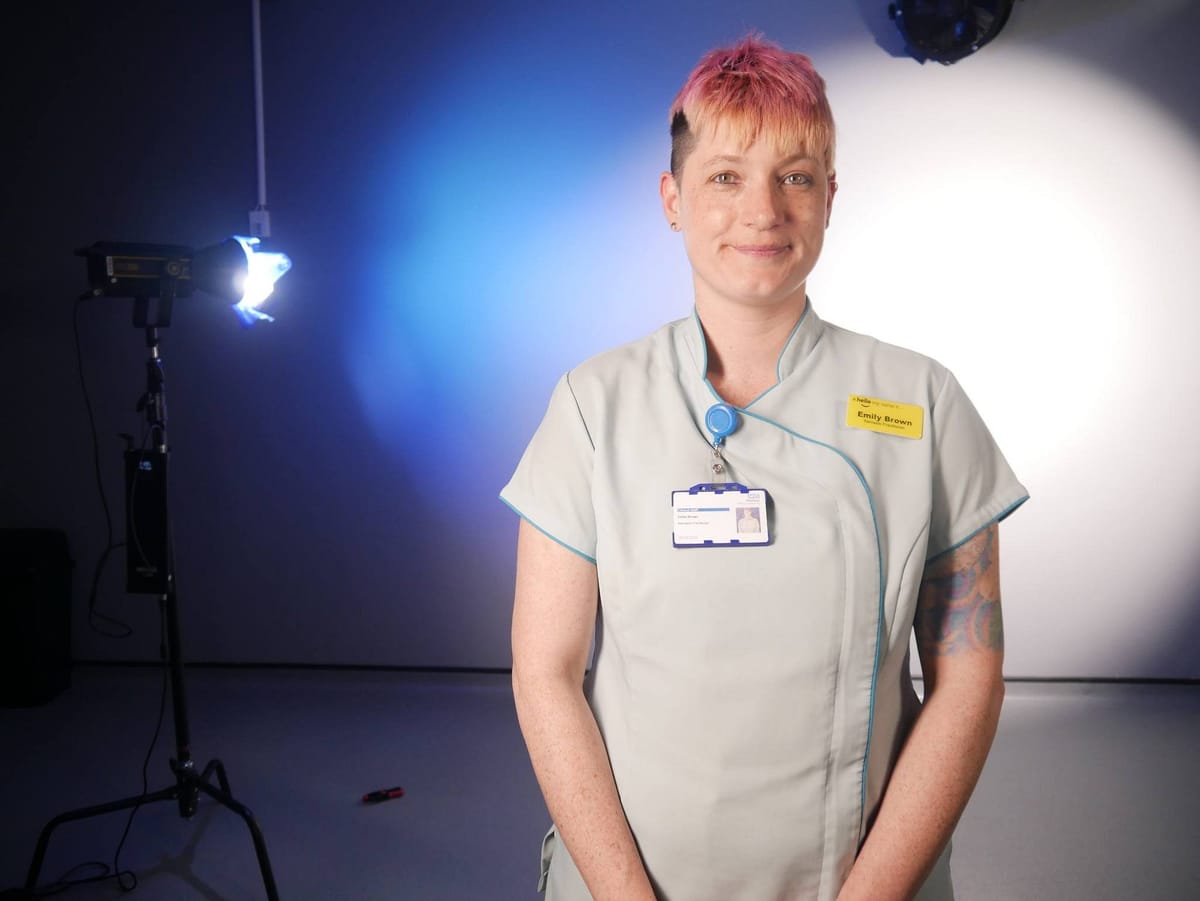
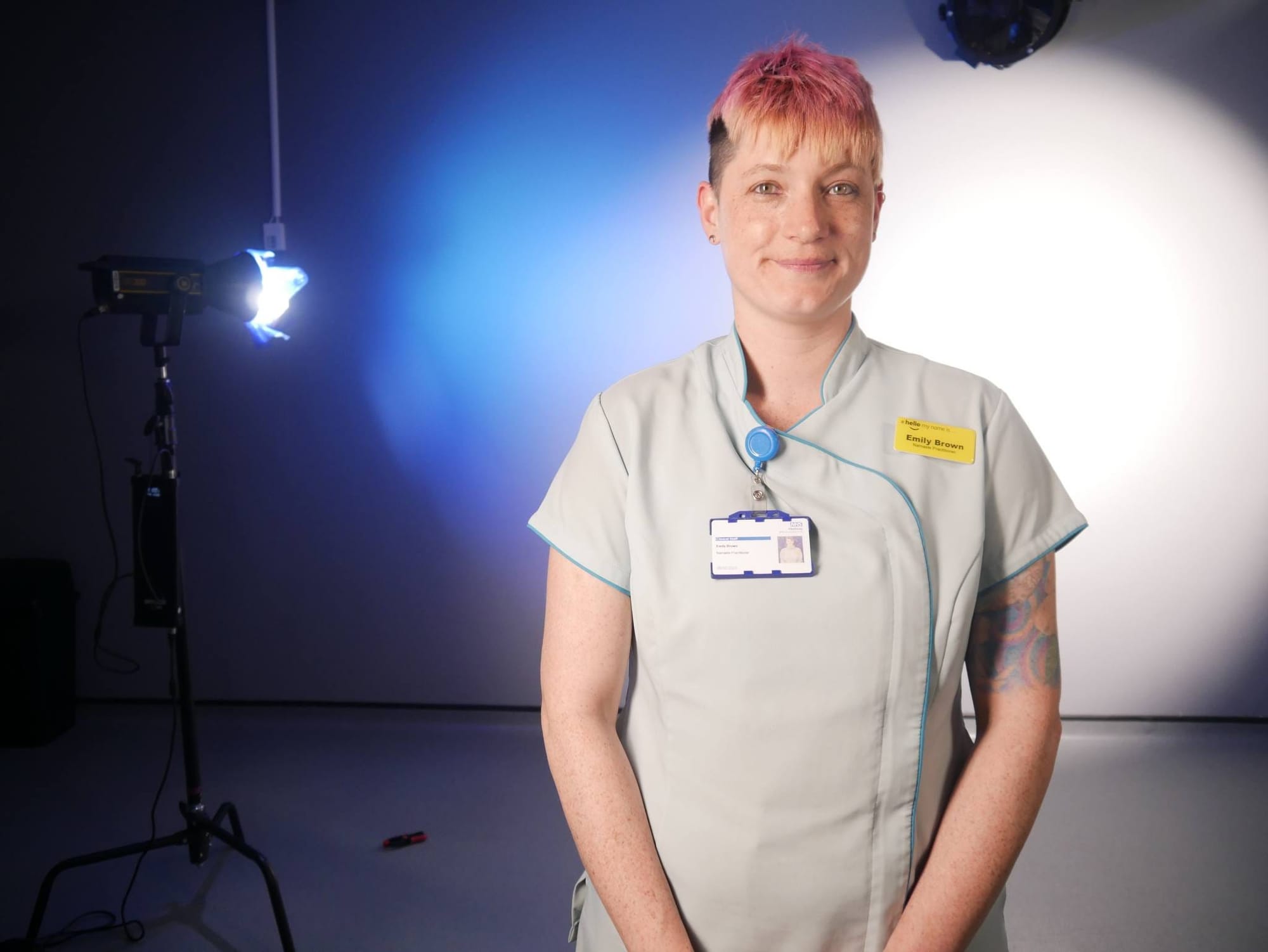
Emily Brown is the world’s first Namaste practitioner in a hospital environment and the recent winner of the Hospital Hero award for her work. Steven met Emily at Medway Maritime Hospital, accompanied by a member of the hospital’s comms team and a surprise guest. They discussed how practicing Namaste works, how Emily came to be doing it at the hospital, and what the future holds for Namaste care.
Where were you born?
Gillingham.
Were your parents from the area?
My mum is from Canterbury. My dad is Gillingham born and bred.
What jobs did your parents do growing up?
My dad was and still is a lagger, and my mum was a sister at Sunderland Daycare, Medway for 35 years until she retired.
What's a lagger?
It is a guy or a woman that puts special piping around pipes to protect them in big buildings.
How did you find school?
All my reports said, ‘Emily's a lovely student, but she talks too much.’ I liked certain subjects, but I didn't really find my passion until I was 18. School was just school.
Did you stay on for sixth form?
No. I went to… So ever since I was little, I wanted to be an elephant zookeeper.
Of course.
I went to Hadlow College in Tonbridge and got all my qualifications. Got a job as a vet nurse's assistant and hated it. Had a breakdown. I said, ‘Mum, what am I going to do with my life?’ And she said, ‘Why don't you become a carer?’ I was like, ‘Oh, I don't know if I could do that,’ but I gave it a go. My first customer was an elderly woman with dementia, and the rest was history. I fell in love with it. Then I've worked in care homes. I've been a live-in carer.
What was your first full time job?
My first full-time job was working in a bag shop down the Dockside.
What is your official occupation now?
I am a Namaste practitioner.
What is Namaste?
Namaste care is an alternative holistic treatment that was created for people living with dementia and those actively dying. But because of where I work, I've expanded it to palliative oncology, learning…
Before we bring it into the hospital, what is it?
It as a wider alternative holistic treatment. It's about treating the individual just as that. Just because they've got dementia doesn't mean they are dementia. Just because they're end-of-life doesn't mean they haven't had a life. It's about stimulating their senses. I don't know if you've ever eaten something and it triggers a memory. With Namaste care, we stimulate sound, taste, smell, and touch. I'll play them some of their favourite music, which can help them feel calm, spray some favourite perfume or aftershave, promote fluids using their favourite drink, and eating and things like that. But anything that that particular person enjoys. Namaste care is just personal pamper.
What does the word Namaste mean?
It's actually a greeting. Joyce Simard, who created it, chose the word Namaste because it means honouring the spirit within.
How did Joyce Simard come across this?
She was a social worker in America in the eighties and did a lot of care homes. She saw that the dementia patients were fed, bathed, and watered but were in a chair all in a circle. As the dementia progressed, she noticed that they couldn't participate in bingo or the standard things. So, she thought, what can I do for them? She started with hand massages, and they would respond really well. Gentle touch, combing of the hair, a hot towel shave. She saw how well it worked and ran with it and has been very successful at it. It's worldwide now.
And how did you come upon it?
I worked in a care home up the road called Parkview, and my manager paid to go on a training course at Priestfield Stadium. Unfortunately, she couldn't attend because she had to assess a new resident. But where she paid a lot of money, she went, ‘Emily, will you go for me?’ I was like, ‘No.’ She's like, ‘There's food’. I was like, ‘Okay’.
So, I went to Priestfield Stadium. I didn't know really what it was about. I get in, and there's all these women in suits and they're in their forties. And I'm 22 with bright hair and a funky dress. I felt very uncomfortable. Sat down at this table. I'm like, ‘Hi.’ They're like, ‘I'm the manager of this home.’ I was like, ‘I don't manage a home.’ Graham, our end-of-life nurse here (Medway Maritime Hospital), came out and was talking to her. Then Joyce Simard came out and spoke about Namaste care and it just blew my mind. We stayed in contact. She trained me. From there, I worked in various other homes and as a live-in carer and brought it here when I started as a CSW. (Clinical Support Worker).
When you say she trained you, what did that entail?
It was a day training course, and then we stayed in contact. She put me in contact with Namaste Care International just to keep me updated with how things were. If I had any questions, I could go to her.
When you started practicing, it was at the care home you were at?
As soon as the training ended, I ran back to the care home and said to the manager, ‘I need a Namaste room. This is amazing. Blah blah blah blah blah.’ She then made me an activities coordinator, so every day, I would take any patients that wanted it to the Namaste room. They would have a body massage, promote the fluids, do a hot towel shave, and it just it worked wonderfully.
Did you have any resistance?
Yes. But I tend to ignore negativity, it doesn't really bother me. As long as the big boss is saying yes, I don't really care what other people say.
How long ago was that?
That was 2013. God, long time.
What brought you to Medway Hospital?
I was working in a care home for adults with learning disabilities. The hours weren't really suitable with childcare. I saw a job was going at the hospital as a CSW on Harvey Ward when it was a stroke ward. I applied, and I got the job. I was very excited. One day, I was on shift, and one of my colleagues said, ‘Oh, that's the end-of-life team.’ I went up to him. I was like, ‘Hi, my name's Emily and have you guys heard of Namaste care?’ And Graham was like, ‘Yeah, I organised a training course in 2013.’ I was like, ‘I was on that training course.’ Then we all got together, and they helped me to do a trial. And Tennyson (ward) were very kind enough to have me for six months.
How did you make the step between kind of being a CSW and becoming a Namaste practitioner?
We did a six month pilot on Tennyson. I worked every Thursday, and I would assess the patients before the session and assess them after. They were calmer, more relaxed, more susceptible to the nurses doing observations. I collected all that evidence and gave it to the wonderful end-of-life team. They did all the technical stuff, and then we presented it to the board members, and it took about three years. That's how it happened. They saw the benefit. It's such low cost but such high benefit that they couldn't really say no.
What does the average day entail?
I come into work. I have the same referral system as the palliative team and the end-of-life team. I log on to that, check and see if I've got any new referrals. If I have, check the notes to make sure they're appropriate and put them on my list. But on that list, I'll also have my regular patients. Sometimes we have dementia patients that could stay in here a long time or our palliative patients that are staying with us for a long time. I always see them as well in the day, as well as the new ones.
I always prioritise the end-of-life patients first because, without being too morbid, they might not be here in the afternoon. Then I'll see the palliative and then the dementia closer to lunchtime and then after lunch. Then if I get any new referrals throughout the day, I see them too.
In an average day, how many patients might you see?
It depends. All sessions are different. Between three and eight. Sometimes, one of my patients might need me for a good few hours. Or sometimes I'll see end-of-life patients, but the family really needs the support.
Do you have a limit to how many patients you can see?
I work closely with the end-of-life team, and I'll always ask them if they feel that that patient is appropriate. Sometimes it's not. Sometimes, the family can be really tense. Sometimes, the patient is already really calm and settled, and the family are really hands on, so I don't need to participate. But it's just sort of prioritising as and when I get them.
Have you found it's changed sort your life outside of work in any way?
I have a bit more patience, and seeing the patients that I see sometimes is quite sad. So a bit more gratitude for what I have.
You have mentioned before about making Namaste care standard practice.
That's what I'd love.
What would that mean?
Expanding my team here, and then once I'm happy with how it's going here, I'd like to go to other hospitals, NHS hospitals, and train and monitor and look after. We have dietitians as standard practice. I want Namaste care as just as standard.
Candy: Hello!
(Steven’s partner Candy, who works at the hospital, enters the space.)
Candy: You never told me you were here.
I did.
Come and sit down. How are you doing, lovely? You okay?
Candy: I'm really good.
So, I'd… Yeah, I'd want it just as a standard practice. Just a team of four…
Sorry, Candy, Will. Will, Candy.
Will: I'm from the communications team at the hospital.
Candy: I'm a Medocc CSW and a student nurse up on Kingfisher.
Oh, and she does the Brown Bread Collective.
Candy: Oh, yes. I've got a Facebook group trying to open up conversations about death and dying in Medway. Sorry.
It’s fine.
Candy: I've run some death cafes with Natasha Boardman Steer.
(whispers) She’s amazing.
Candy: I’m going to go eat lunch, I’m hungry.
Bye, honey. Where were we?
Standard practice.
Yes. A team, just three of four Namaste practioners in the hospital.
How many of you are there currently?
Just me. There's lots of room for growth.
Have you had conversations about there being two?
Yes, just waiting for that ball to start properly.
And do you have a time scale?
I'd love it within 12 months, but realistically, maybe a couple of years just because of funding and things like that. But it's going to happen. I'm determined.
Is managing a team in your wheelhouse?
Yes.
And securing a budget?
Yeah. I think my manager would be able to teach me a lot, but also, just how I am as a person. I think I could manage a small team. No issues.
Is money the biggest obstacle? Or there are other obstacles?
Yeah, money is an obstacle. Finding the right people, because when you do a session with any type of patient with Namaste care, you have to fully dedicate yourself to that patient. It's all about them. Because they feel safe and secure after a certain amount of sessions, especially our palliative patients, they can really open up and share, and it can be quite heart-wrenching. So the person needs to be able to communicate their emotions well and debriefs and things like that.
What are the first steps when you receive a new patient? Do you need to get family approval?
No, not necessarily. For example, if I get a new referral for a dementia patient, I'll look at the notes, see what sort of person they are, because sometimes they can be quite aggressive, sometimes they can be pleasantly confused. I'll go onto the ward, and I find if I greet a dementia patient like you already know them, they're more susceptible. So, say we've got ‘Joan’. I'll go down, see if there are any issues with Joan. They'll fill me in, and then I'll go and greet Joan. ‘Oh, hello, Joan. How are you?’ She goes, ‘Oh, where have you been?’ Then we sort of build that rapport. Sometimes, we have dementia patients that are nonverbal. We have a great form called ‘This is me’, which tells you all the information about that patient. Sometimes, they don't have them, so I'll call the next of kin to find out all the information, and they tend to find comfort in knowing that their mum's having a pamper, listening to Frank Sinatra.
No issues with getting families on board?
No. Some families can be a bit, ‘Oh, what's this?’ Tthen I'll explain it. I can say I can just play dad some of his favourite music. We'll give him a hot towel shave. Or if you guys have it under control, it's no issue. I can go and they're like, ‘Oh, maybe he might like a hand massage.’ Then, as I start doing the hand massage, they'll see dad relax. Then they'll feel more relaxed. It's just got a lovely knock-on effect.
Did you ever get any sort of resistance from work colleagues in terms of ‘Shouldn’t you be doing a real job?’
When I first tried to bring it in and first mentioned it, I did get a bit of ‘That's already what we do. It's the gold standard’, and I was like, ‘Well, it’s not.’ But the majority have been wonderful and supportive. Obviously, not everyone. If you don't understand something, people tend to push it away. But I'm too loud, so just kept running with it.
Between doing it one day a week and full-time, did you ever have any nerves?
No, I’m great at what I do, and to have it full-time would just be so beneficial to the patients. I used to do Tuesday, Wednesday, Sunday, because part time, because of the babies. But as they've got older, I then requested to go full time. I'm now here Monday to Friday.
(Candy returns with lunch and sits down)
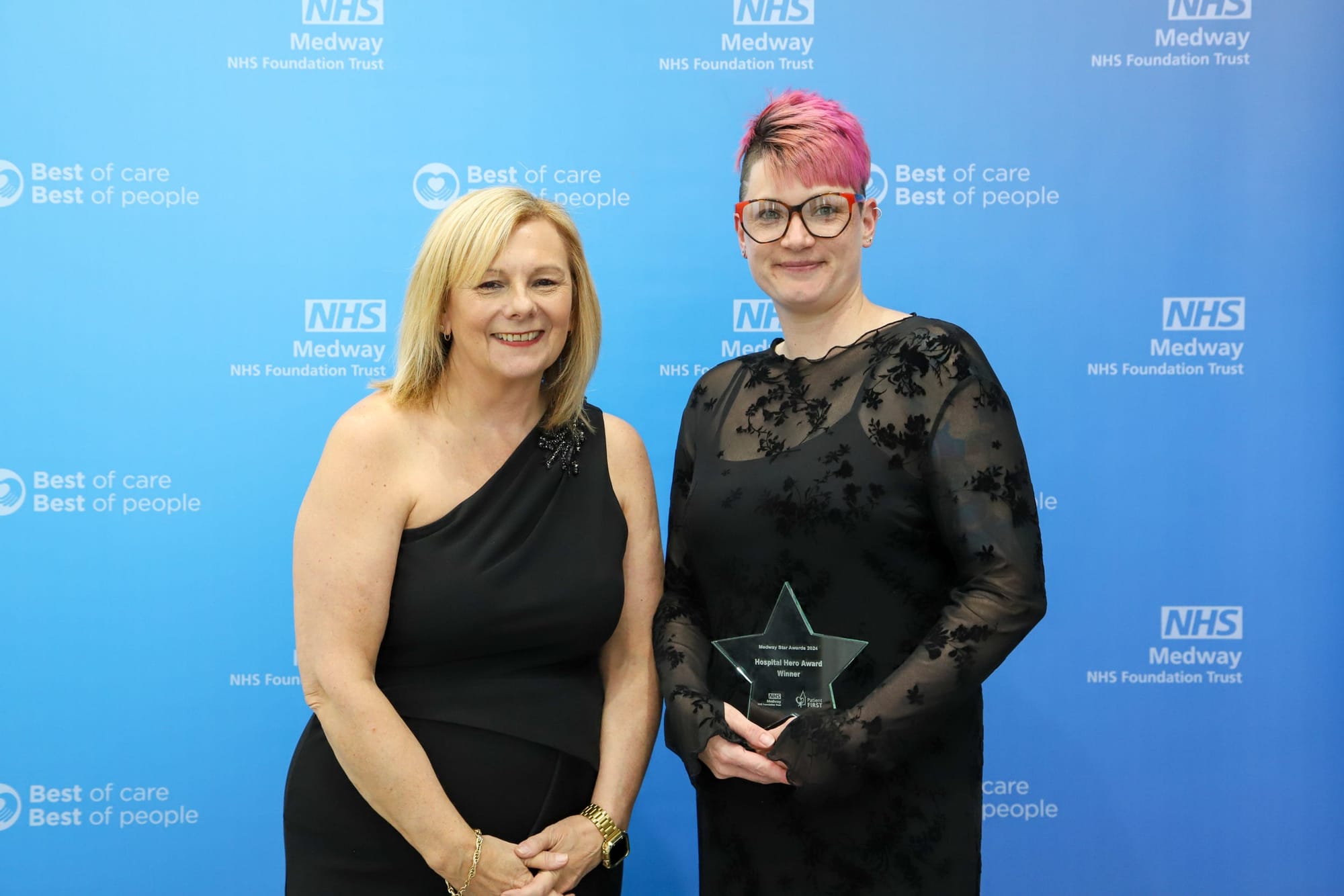
What was the Hospital Hero Award?
The Kent Messenger organised it, and people could write in to nominate a member of staff at Medway Hospital for the Hospital Hero award. I had two nominations, and I was nominated with four other wonderful ladies and won. I was on there with a surgeon, a gynaecological surgeon who saved someone's life…
Will: And she delivered my baby.
And delivered his baby. Yeah, it's lovely. I thought she was going to win. And there's ICU nurses and nurses that look after little 23-week-old bubbies.
Will: Just to give some further context, these are annual staff awards. It's the award that is seen as arguably the most prestigious one. People write in, the public nominate for this award. It's a really important award that she won.
Candy: It's important because I now openly discuss you in lectures and stuff. Across our nursing studies, we now know of you.
That's mad. All for something I'm passionate about.
If someone was reading this and thinking that they would be interested in getting into Namaste, what advice would you give?
Do your research. Namaste Care International is a great website, and you can contact them for training. Feel free to contact me. Just contact, ask questions, read, watch, just absorb it all, really.
And are there ways that wider Medway outside of care or the hospital could benefit from Namaste?
Yeah. The hospice has started their version of Namaste care. With my palliative patients that get discharged, they often go, ‘Will you come and see us at home?’ A Nemaste day care practitioner in the community would be really well welcomed. I think it could benefit everyone in every aspect.
This is the first time this occurred in the NHS?
I'm the first practitioner in a hospital in the world. It's been successfully implemented in care homes and hospices across the world, which you can see on Namaste Care International, but we're the first hospital to have it.
Is it something that could be beneficial in a school's environment?
Yes! I had the paediatric palliative team. We had a discussion. They very rarely have children pass away here, but their children can come in for symptom management, and we had a discussion about Namaste working for them. It would do wonders. I just can't meet that need at the minute when it's just me.
And thinking about what you were saying, outside of the end of life care, Medway has a student body with high Special Educational Needs, is there parts of the practice that could be used in that regard?
Yes. I've adapted Namaste care to meet individual’s needs. I have a lot of learning disability patients. Some of them don't like to be touched. Therefore, I can't give them a hand massage, but they'll enjoy other ways of stimulating the senses. And it's the same outside of the hospital. It would benefit them as well.
And are you concerned about moving it forward in terms of your team that it will take you away from practically practising?
No. I wouldn't allow that. I would go around the hospital to train, but also do, because you can talk about Namaste care until you're blue in the face, but until you see it, you don't see the true effects of it. While I'm teaching and training, I'll be doing, so they can visually see the improvements. I will always, always see patients.
Footnotes
This interview has been lightly edited for length and clarity.
You can read our previous interviews here, including with motivational speaker John Haynes.
If you have lived or worked in Medway and are planning an event or launch in 2024 or celebrating a significant anniversary and would be happy to talk about it here, or if you want to suggest ideas or send tips for people to interview, please email Steven.
Steven Keevil listened to no music whilst writing this but recommends reading Black Swan Green by David Mitchell.