“I don't feel my soul is validated unless I'm doing something that that means something to me.”
What Steven asked BAFTA Breakthrough and MidKent College alumni Mdhamiri Á Nkemi
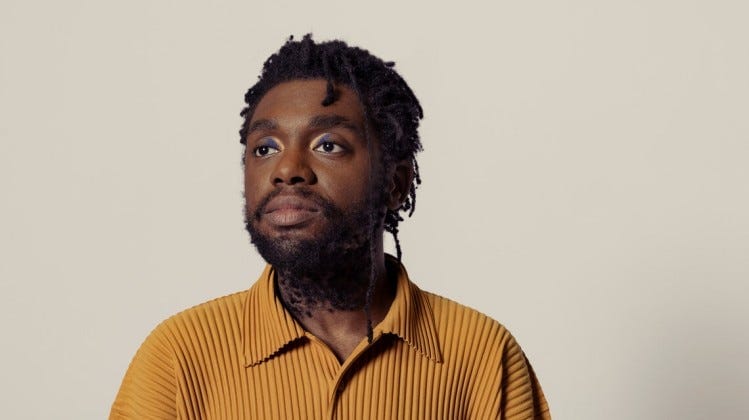
For today’s Sunday interview, Steven went back to MidKent College in a figurative sense to speak to one of his former students. In reality, he met, Mdhamiri Á Nkemi, who now lives and works in Los Angeles, on Zoom. Mdhamiri is now a successful film editor and BAFTA Breakthrough winner who has worked on films like Blue Story, The Last Tree, and Life In A Day 2020. They discuss what originally brought him to Medway, whether film editing is an art form and the short film which gained him awards recognition.

Where were you born?
I was born in London, in Hammersmith Queen Elizabeth Hospital.
What jobs did your parents do growing up?
I grew up just with my mother, who worked kind of freelance as a book editor, but was mostly unemployed. She was studying up until the point where she had my younger sister, and then she couldn't work anymore after that.
What brought you to the Medway towns?
My mother’s studies. She was studying agriculture, a PhD, and then came to Medway to study. I’m forgetting, but there's a whole university there, right?
How did you find school and university?
So, I was home schooled up until I was 16, so I was studying at home, and my mother was my teacher. I think there's a lot of pros and cons. It's very freeing, compared to my peers who went to school at that time. I could focus exclusively on what I wanted to focus on and then I could spend a lot of time doing what I wanted to do and getting excited about the stuff I wanted to get excited about. I guess the flipside, it’s quite isolating. You're not working with others within a group of people and getting that sort of collaborative experience as well.
So, what did you focus on in homeschooling?
At a super young age, I really loved reading. I was like a giant book nerd. I definitely remember going to a book club, and my mother had a huge selection of books at home and I read everything. Stuff I definitely should not have been reading when I was that young, but I read it anyway. So, I thought I was gonna be a novelist and then I discovered filmmaking, and the idea of telling stories through moving pictures, and then became super obsessed with that and then that's basically all I focused on.
So, you were home schooled up to 16 and legend has it you started an MA at 20! How does someone without any qualifications get onto an MA at 20?
A huge amount of luck, and having basically said yes to every project that was offered to me, so I had such a giant portfolio they just couldn't say no. After 16, I went to MidKent College. I spent two years there, and then whilst I was there did the BFI Film Academy, which had a regional programme for 16-19 year-olds. Then out of the people who did the regional courses they picked, I think, 54 in the first year to do this national course, which was at the National Film and Television School, where you spend two weeks getting to make a film with a group of people. Then from that I then went to university. I did an undergrad at Ravensbourne.
Was that a two-year undergrad?
Well actually it was three years, I did it in two (laughs) because after the first year I realised that because I'd been home schooled and was ahead of where everyone else was, I just felt like I would get more experience working, and they offered a two year fast track course where you could work alongside studying. So after the first year, I switched to doing that. I did my second year studying, but then also working as an Assistant Editor at a commercials house in London. Pete, one of the tutors at MidKent, put me in touch with that commercials house because the editor that I was assisting for used to be the assistant for Pete.
So, at Ravensbourne you specialised in editing?
Yes, in post-production.
What was the focus of your MA?
Also editing, so I became very focused. I think that's again the advantage of being home schooled. I'm hyper-focused when I decide I want to do one thing. I think that was the big tool for me, being able to go to a school where I can spend two years just learning to become a better editor and making films with really talented people. Before I decided to apply, when I was working at the commercials house, I was trying to work out whether I did want to continue studying or whether I was to continue working. This whole decision was made when I realised that I wanted to do film rather than commercials. I was learning so much in commercials, but my heart was in telling stories, so the advice I got was that either I start again as a runner but in short film and TV and work my way up that way, or go to film school and hopefully use those connections to springboard myself into the industry. I picked the latter because I'm impatient.
What was your first full-time job?
I guess technically I was working full-time at that commercials place as an Assistant Editor before I went to do my Master’s, and then after my Master’s, I got on a job as an Editor on a feature called Rattlesnakes. The guy who used to run the school, Nik Powell, I remember getting a call from him a week after graduating, ‘Would you like to cut this feature, this independent feature, that I'm producing?’
For anybody here for a casual Medway-based newsletter, they probably won’t appreciate just what a film presence Nik Powell was. So, to get a call from him isn’t something to pass up.
(laughs) Yeah, you don’t say no to this call, there's only one answer.
What would you say at that early stage was the key difference between editing for a commercial and editing for a feature?
I guess the difference is what you are trying to do with it. I think that's the thing that I realised when I was editing commercials. They were super fun and exciting projects and commercials normally have a lot more money than independent film. That was great too and working with cool directors but then ultimately all of this work and craft and skill was going into selling a cake. That was a really demoralising bit of it. We got an ASDA commercial that did super well and then my boss told me ‘ASDA have had to pull the commercial because they've sold out of these cakes.’ It is just all leading up to that. The end goal is trying to make people buy something.
From that grand question of art versus commerciality, is it better to work on a commercial that gets pulled because you sold too many cakes or to work on a feature film that not many people have seen?
I think it depends on you as a person. I know lots of people who work in commercials and they love it and they really love the excitement of it, the speed of it. It's a lot less time commitment. You get to play and work with different kinds of people, but I feel for me, I don't feel my soul is validated unless I'm doing something that that means something to me.
What is your official occupation?
I am a freelance film editor.
Where is your current permanent residence?
Los Angeles.
What does the average day entail?
I am I feel like editing is one of those jobs that changes a lot day-to-day depending on the part of the process you're in. At the moment, I'm going to work, I'm working at a studio in Burbank. I’m working on animation, which means aside from sitting at an editing desk, I'm also having a lot of meetings about story. A lot of story discussions about the shape of the story, and the direction we're going in and discussions with the director. Then I usually have to sit down at my editing desk actually work on a few of those scenes. But it changes depending on where we are in the process.
Is film editing an art form?
100%. I don't think many people give it enough credit. How much creative power you have to change a story, to transform a story, the power of putting one shot next to another. Giving the audience an emotion, an idea. There's huge power in that.
Do you prefer a fade or a cutaway?
I actually hate fades, more than is fair to. I remembered recently one of the very first films I did, I felt that cuts were too hard or too jarring and so I put a fade on every single cut of this film. Every transition from one shot to another had an effect. I think I was1 6, I didn't know what I was doing. But I think that traumatised me, and I think now I just flinch every time I see it fade. Obviously, there are some really amazing transitions.
What additional roles, paid or unpaid do you do?
I am trying to have a career in directing as well, in writing and directing. That's all unpaid at the moment and at the beginning of that journey.
How did you go about getting your agent?
I was super lucky. Through the BFI Film Academy, I met this really experienced editor Kristina Hetherington. We met through a masterclass and then I kept in touch, and she very kindly met up with me and gave me advice and stuff on my career. After I graduated from film school, I worked on a feature called The Last Tree. Kristina saw it and liked it, and put me in touch with and also recommended me to her agent, a lady called Rosa. She had also seen the film and also they represented the costume designer who had worked on the film. We had a meeting, she liked me and offered me representation, which was amazing because it was slightly before I was actually looking for it which is the best possible scenario.
How did you get into the BFI Film Academy?
The first thing was, and I'll give you full credit for this Steve, I didn't want to apply originally. I had done what I thought were a couple of similar courses, with the BBC and with another organisation and it was great, but I was like ‘I've done that now’. I remember talking to you about it, and you were like, ‘No, you definitely have to, why are you even thinking about not applying, you're insane.’
What advice would you have for somebody applying to study at the National Film and Television School?
(pauses) It definitely helped me that I had a whole portfolio of stuff to apply with. I think they are looking for people who know what they wanted to get out of their careers. I think it's not a course to apply to or not a school to apply to if you're still at the beginning stage and kind of figuring out. Once you've decided that, then NFTS is a really good place to study because then they'll take that motivation that you have, and give you a whole bunch of actual real skills and put you in with a team of people. Between you, you'll grow together and make projects that then will hopefully launch you once you graduate.
What was your involvement in the Life in a Day project?
I co-edited Life in a Day 2020 with two other amazing editors. We cut it in 2020 and it was directed by Kevin McDonald, which was an amazing experience. My live-action narrative projects had fallen through because of the pandemic. I was sitting at home trying to work out what the next thing was going to be, and then I got a call from the producer who asked me if I'd be interested in doing this. I was like obviously yes, this sounds like an amazing experience. I'd seen the first Life in a Day. Wait, did you show us the first Life in a Day? Is that how I saw it? Amazing. Yes. So, I’d seen it and was a fan, and so getting to work on that project again, with a lot of the pre-existing cast was such a wonderful experience. I felt like 2020 was where I got to basically travel the world. There was one day where I sat in a room and watched sunrises from, it felt like, every country in the world. I think I walked out of that room very jet lagged.
What has being recognised by BAFTA Breakthrough done to your career?
I think a couple of things they do that is amazing is that they will connect you. You give them a list of people that you want to connect you to, and they will try their best to do that. So, as a result of that, I got to speak to a bunch of really amazing filmmakers, which is inspiring and motivating and validating, and I felt that that really expanded my network. Getting recognised on that platform means that I have a stamp of approval. If you trust BAFTA, then you can trust me. It’s super validating.
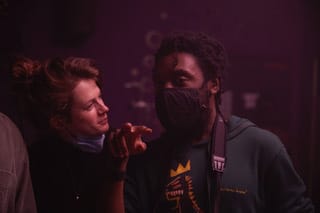
What about the “multiplicity of identity” inspired your short film Original Skin?
I had ideas running around in my head for a while. This idea in my head about exploring this world where what if when you had sex with someone you swapped bodies? In this world bodies are constantly moving around and fluid, and using this as a metaphor to talk about society and people and the way we interact with each other, and the way we judge each other based on physical appearances, and what would change in the world when you could choose who you look like.
Is there any money to be made in short films?
Not in the slightest. I don’t know anyone who has made money. I met a friend who made a short film that had branded content and that blew my mind. I was like ‘Oh wait, there is a way to make money from short films if you're happy to put a couple of bottles of alcohol’. That's the way to do it. She was saying she put a couple of bottles in the corner of the shot and that was 20 grand or something. That's how you make money from shorts. Get those Asda cakes back in front of the cameras.
You’ve been nominated twice for a Young Directors Award. What for?
For Original Skin. Firstly for best short film, which is amazing, and then also for creative use of sound, which covers you know all the sound design that had in the film and the music.
(Since this interview, Original Skin went on to be a winner for sound design)
In our modern online world, why has mdhamiri.co.uk expired?
I just realised that. To be honest, I wasn't really using it for many years. When I was at university the whole big advice is you need websites, you need to market yourself. As I'm sort of moved into film myself, I realised that actually no one is marketing themselves the higher up you go in the industry. Martin Scorsese doesn’t have a website. there is no scorsese.com, or if there is, he definitely doesn’t run it.
(Since this interview took place, Mdhamiri’s website is now back online.)
You’ve been noted for your achievements at such a young age. You are almost 30 and have yet to direct a feature film. Why have you started slacking?
(laughs) Ouch, you came for me. I mean, it’s very true. Why haven’t I done it yet? I've been developing a couple of features for the last couple of years. At least one of them, I think we are going to get the ball rolling. We had it in development with the BFI, but you know the sad thing is, it takes a very long time to develop a feature. They are both kind of sci-fi. I’ve realised that’s what I'm interested in. Using that wrapper of sci-fi, but actually exploring humans and the human experience but in that bubble of heightened realities. One of them is the feature version of the short I just made, Original Skin.
Footnotes
This interview has been lightly edited for length and clarity.
You can read our previous interviews here.
If you want to suggest ideas or send tips for people to interview, email Steven.

Steven Keevil co-founded The Political Medway and still manages to watch hundreds of films a year. He recommends Asteroid City. Steven listened to no music whilst writing this, but recommends reading The God Desire by David Baddiel.