“He was so original that people wouldn't back him”
What Steven asked eight people who knew The Singing Loins' Chris Broderick

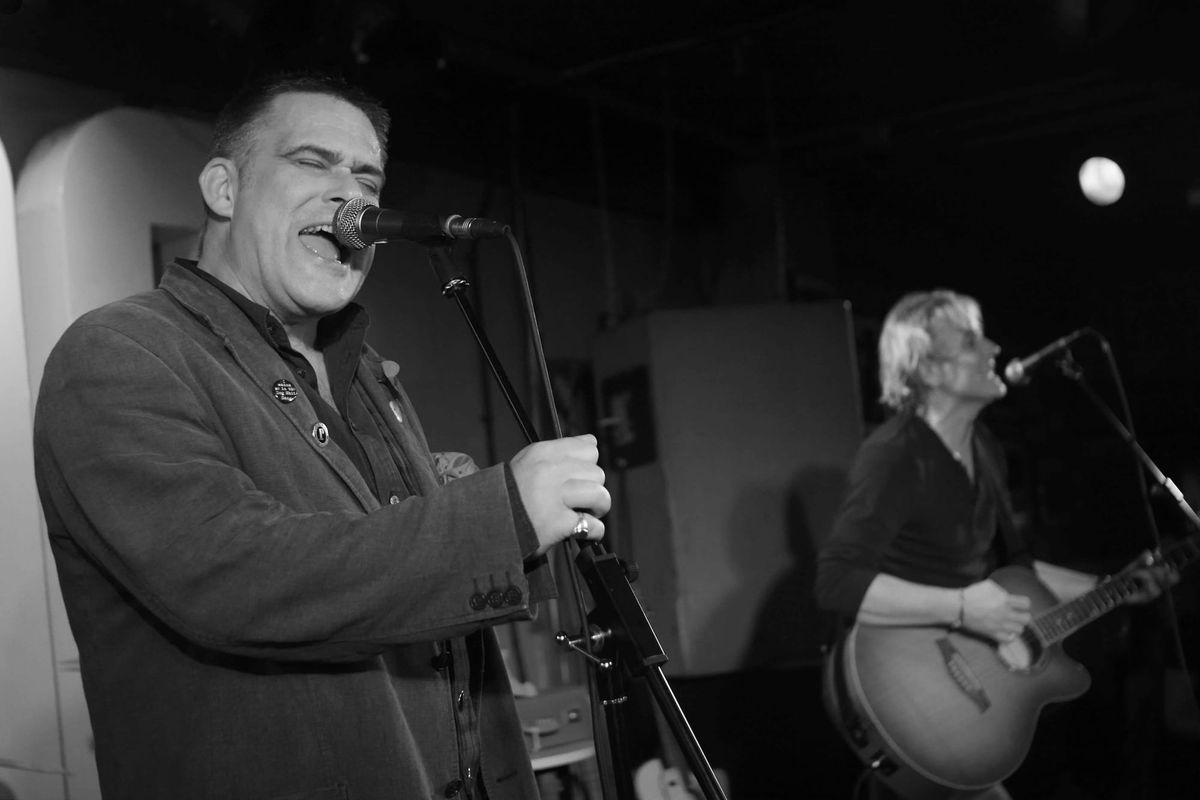
Chris Broderick died in 2022, which makes him a rather unusual subject for our Sunday interview. But with the recent publication of a book of his lyrics, Inside Out, and Steven's recent conversation with his bandmate and writing partner Rob Shepherd about the play Franz & Marie, there seemed a good reason to find out more about the co-founder, singer and lyricist of The Singing Loins.
So Steven spoke to Broderick's former wife Amanda Randall, former bandmate Glenn Barnes, fellow Singing Loins musicians Chris 'Arthur' Allen and Rob Shepard, Love Music Hate Racism festival organiser Vince Maple, music publisher Shaun Henry, One Red Mitten writing partner Stuart Turner, and of course, Billy Childish.
Between them, they paint a picture of a complicated man, adopted and brought up in Medway, who wasn't always easy to live or work with, but whose songwriting and performances left a lasting impression on those around him.
How did you know Chris?
Amanda: I was Chris's wife, and I am mum of Katie, our lovely daughter.
Rob: Certainly, initially we were friends. Well, first, I was the new boyfriend that he used to give evil stares at, because he used to go out with my wife.
He was involved with Glenn (Barnes), who's my wife's brother. I knew about the band. I was a fan of [80s Medway band] Dumbfounded. Then I was in The Singing Loins, and we had some bust-ups during that, and so became more distant.
Billy: It's always a bit tough for Broderick because he was fame hungry, and he was quite open about that.
Chris could be quite honest about some of this stuff. Like he told me when he was a young man, he thought that he was the spitting image of James Dean. He volunteered that information!
The first thing I remember about Chris was him doing the market stall at Rochester Market. He had a little stall with Rob's wife, and he used to put a slightly stern face on.
The problem with me, you see, these are the only things that are interesting, the things that are stupid and the funny.
Arthur: I heard him on a cassette before I met him. It was him and Glenn doing demos at someone's house. I was messing about, playing guitar, and I heard the voice, and I thought, 'Fuck man, that's the best sounding voice I'd ever heard on one of those old cassette machines.'
I started playing in a band with Glenn, and we used to drink in the Coopers, and we saw someone with a blue hairdo come in, because he'd been on a photo shoot for fucking EMI or something like that.
Me and Glenn were playing, and he says, “My mate Chris has turned up and wants to do a song.” I said, “Alright.”
We were using reel-to-reel tapes at the time, and it took us so long to set the sound up, he fucking stormed off across the Paddock.
Basically, that should have taught me everything I need to know.
I joined Dumbfounded as an emergency bass player, and after that all folded, he turned up at my house in the evening and had this idea for this stripped-back folky duo. He knew that I had Irish roots and I was into folky bands at the time, and that's how it started.
How did you meet Chris?
Glenn: I met Chris in December 1979 through a friend of mine, a drummer who'd been in Chris's band for maybe a month. It turned out they needed a new bass player, so my friend invited me along for an audition.
It just clicked, really. I could tell straight away that they were pretty serious about music. I'd been in several outfits before, but there were always people who would come and go, and it was obviously only a half-interest and a hobby to them. I twigged straight away that Chris and Graham were quite serious about it, which was great.
We rehearsed for about a year and a half, but we never gigged. We were insular, and we were drinking and didn't get out to gig.
Then Chris moved to London.
After a few months, I sensed that he wasn't happy there. Things weren't really working out how I think he envisaged them, so we decided to ask Chris if he wanted to come back to the band.
I went from bass to rhythm guitar. Graham and I had written a fair number of songs. We decided to strip all the lyrics away from the songs we'd written and asked Chris if he had some lyrics to match the music. Miraculously, he did, from a lot of poems he'd been writing.
Then we had a set pretty quickly. That band was called Wildlife.
Shaun: I would go to see music in London, and I'd never even heard or knew that a band called The Singing Loins existed.
While up in London, this girl I was dating went to study at film school, and she would tell me that there's this guy there whose mate is Billy Childish.
Then, many years later, my best mate was hosting a music night in London, which I went on to co-curate a few years down the line. I didn't really frequent it that often, but I happened to go this one night, and The Singing Loins started playing.
I bought a CD, The Complete and Utter. Thankfully, it had quite a few sleeve notes, which explained their history up until that point, and that's when I pieced it all together, that Broderick was on the film writing course at the National School of Film and Television.
The Singing Loins, in an instant, became my favourite band.
Stuart: I first met Chris at the Command House for the recording of a live album called Live at the Smoking Dog Club, which my friend Dave Wise was organising with Wolf Howard.
They had an idea for an alternative nightclub environment where people could turn up, play chess, and listen to old things on a gramophone.
They decided they were going to make a live recording of various people and put it out as a CD. Dave Wise was hanging around with Billy Childish, who was roped in to do some a cappella business. Pete Molinari was also involved, and Dave had convinced The Singing Loins to play at this thing.
I think it was Rob Shepherd's first proper gig with the Loins.
That was my first meeting with Chris, and we were on nodding terms after that. I can't remember what I'd said or done, but I'd done something, and he gave me a hard stare that particular evening.
That was the first time I'd heard them, and it really impressed me.
Vince: There's not a pre- and post-Broderick introduction moment. It almost certainly was in and around the Love Music Hate Racism process and starting that up. They played a number of times.
From the perspective of great Medway-based music, one of the greatest, there's no doubt about that.
Billy: Chris initially came to me because he was writing poetry and wanted to have his poetry published. I went through the stuff with him and gave him some advice on how to do it, and offered to publish it for him.
You liked his poetry?
Billy: It was alright. I published a lot of people's stuff in early Hangman.
I'm quite known for being very disparaging about things, but also, if anybody is asking me for help, I usually help them. I don't think that's necessarily an endorsement.
Amanda: In the early 1990s, shortly after I graduated with a degree in fine art from Maidstone College of Art, I got a part-time job teaching sculpture at the Adult Education Centre in Rochester.
I was living in Strood at the time, and this young man turned up to my class. He was working as a builder at the time. That was Chris.
He wanted to learn how to make sculptures, and I think he took a bit of a shine to me. He brought me an apple every week for the teacher, and things went from there.
I remember going to meet him at a pub once, which was a bit nerve-racking for me. That is the pub that was featured in his song The Pub on the Corner, except I think he renamed it in the song. But yeah, that was the pub he was thinking about.
What happened after you met?
Amanda: We were together for a long time. Katie was born in 1998, but sadly Chris and I separated and then divorced when she was three.
I think he was a super creative person. I've always remained a massive fan of his music and the band. I'm not sure he was really cut out for family life.
What happened to Wildlife?
Glenn: Over six months, we recorded 25 songs. Then I broke away. I decided I didn't like the ups and downs.
Chris then found another writing partner called Malcolm Page, and he wrote with him for a couple of years. They managed to get a publishing deal, and they got an advance. I think they went to Paris for four days and blew the whole lot.
When did you form a new band with Chris?
Glenn: That was Dumbfounded. I'll get to that in a second.
I was in a few covers bands, and we auditioned for a rhythm guitarist, and that's when I met Arthur. I liked the way he played. I liked his free-flowing style. He became the rhythm player in the covers band.
The covers band split, but I liked Arf and his attitude.
Dumbfounded was one of many times that I've got back with Chris. I was still seeing him socially, but again, it didn't happen quickly. It didn't happen enough, and I think sometimes if things need to happen, maybe in the first couple of years, if you're intense about it.
I went and busked across Europe.
That was when Chris approached Arf about forming The Singing Loins.
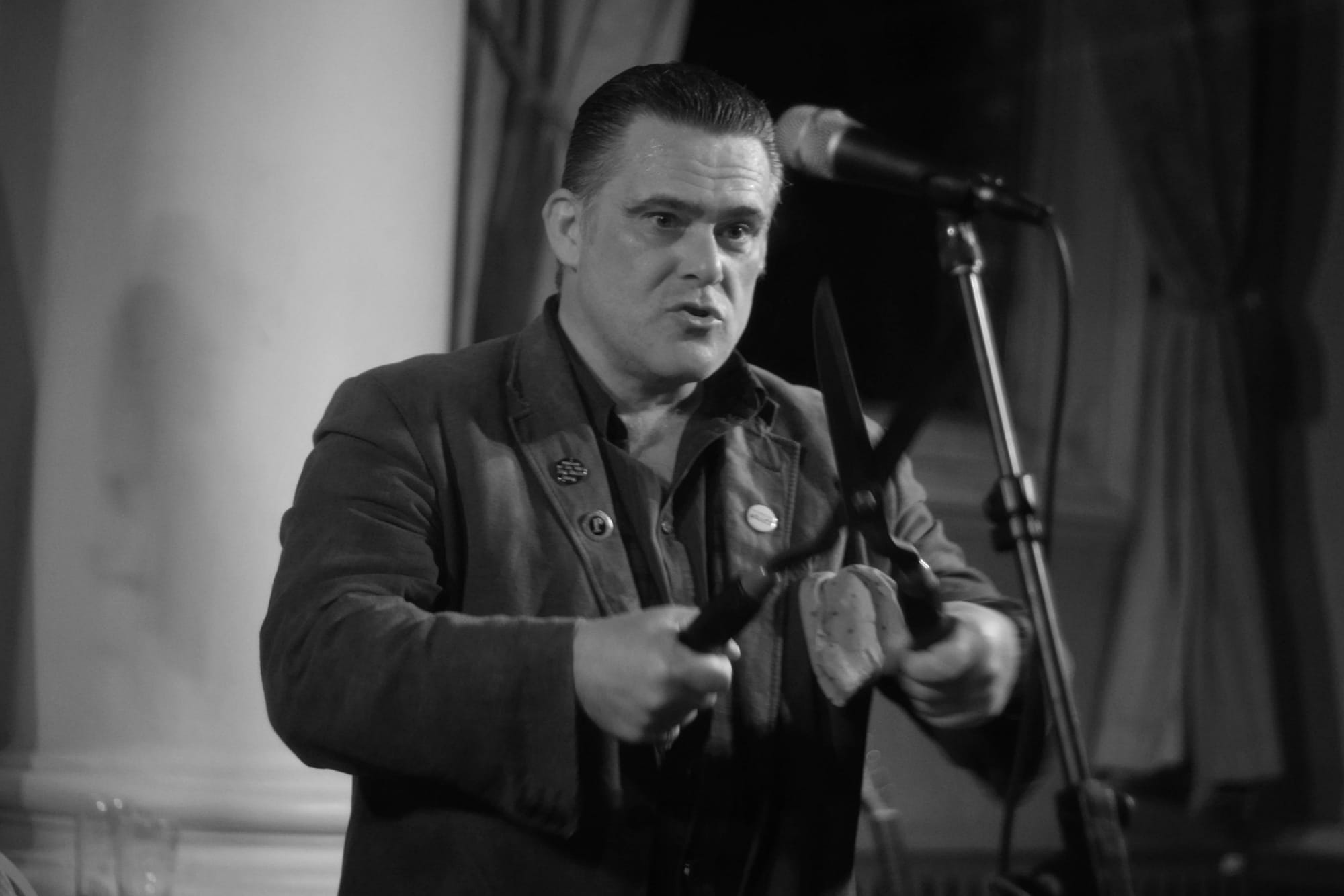
What was your involvement with Broderick?
Shaun: They had Damaged Goods putting out their records. They didn't need a record label.
My career was in music publishing, and they were unpublished. They didn't have anybody representing them. I put the feelers out there because I soon found that Broderick was somebody who definitely does not suffer fools gladly.
What did you do for them in publishing?
Shaun: When the songs are played on the radio, it's about ensuring you collect the money, but also trying to find other outlets for the music, the obvious ones being film, TV, and then these days you have to include games.
We had one success fairly early. It was a series, I think it was called Banana or Cucumber, with Russell T Davies. It was a Channel 4 programme, but then they had an E4 programme. It basically involved somebody having to knock on the door of their parents, and the song got used multiple times.
What song was it?
Shaun: When you think of all their great songs, like Angel of the Medway, there are some real classics.
The scene was set at Christmas, so it was… Ding Dong Merrily on High.
But it pulled in a bit of money.