Gillingham’s conservation areas are anything but conserved
Why two protected parts of Gillingham are officially in ‘very bad’ condition, plus Chatham’s new supermarket where anyone can buy discounted food

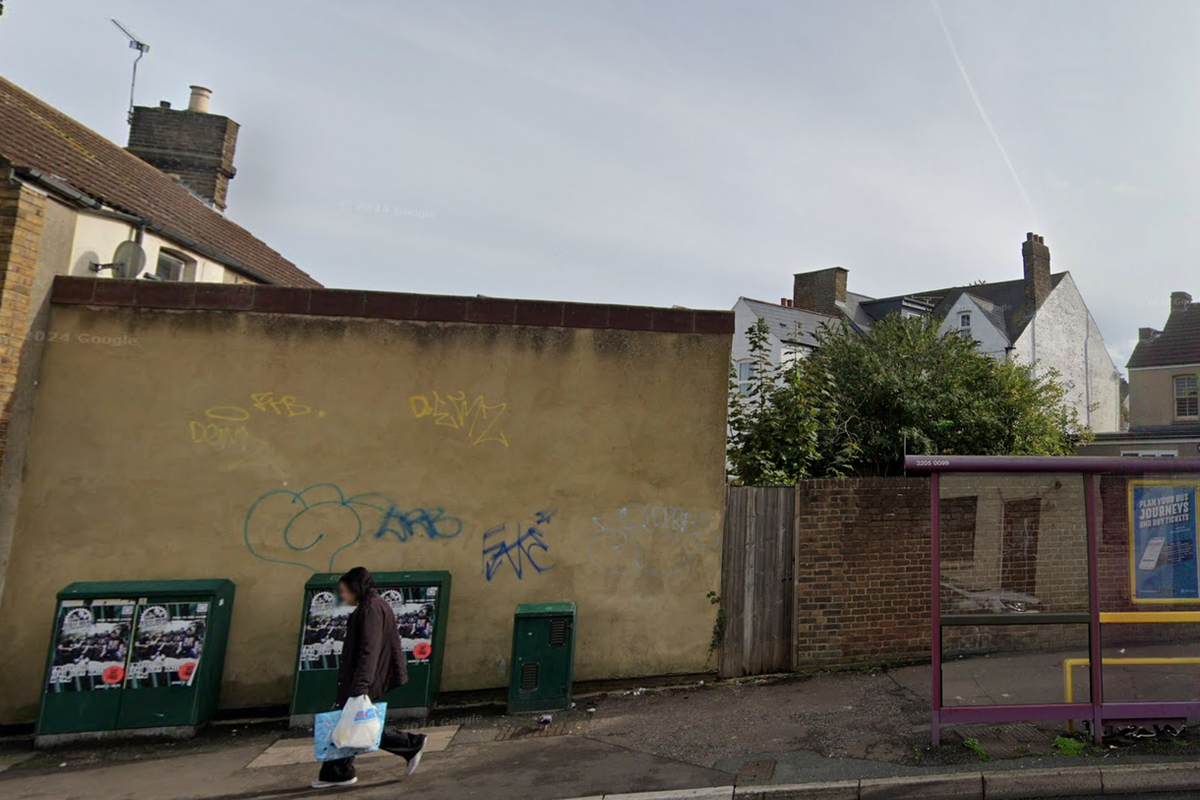
Two of Gillingham's conservation areas are officially in 'very bad' condition, with no agreed strategy to improve either. With Medway's protected areas appearing on the national at risk register at more than three times the nationwide rate, what exactly does conservation status achieve?
Gillingham’s conservation areas are anything but conserved
Two conservation areas in Gillingham are officially in 'very bad' condition, making them the worst-rated protected historic areas in Medway.
Railway Street and Gillingham Green are both on Historic England’s Heritage at Risk register. Both are considered to be in very bad condition, highly vulnerable and showing no signs of improvement.
Historic England also gives both its highest priority rating because no action or strategy has been identified or agreed to address them.
This is particularly noticeable on Railway Street, which runs directly away from Gillingham railway station towards the High Street. For anyone arriving in the town by train, it is one of their first impressions of Gillingham.
It is also, somewhat remarkably, a conservation area.
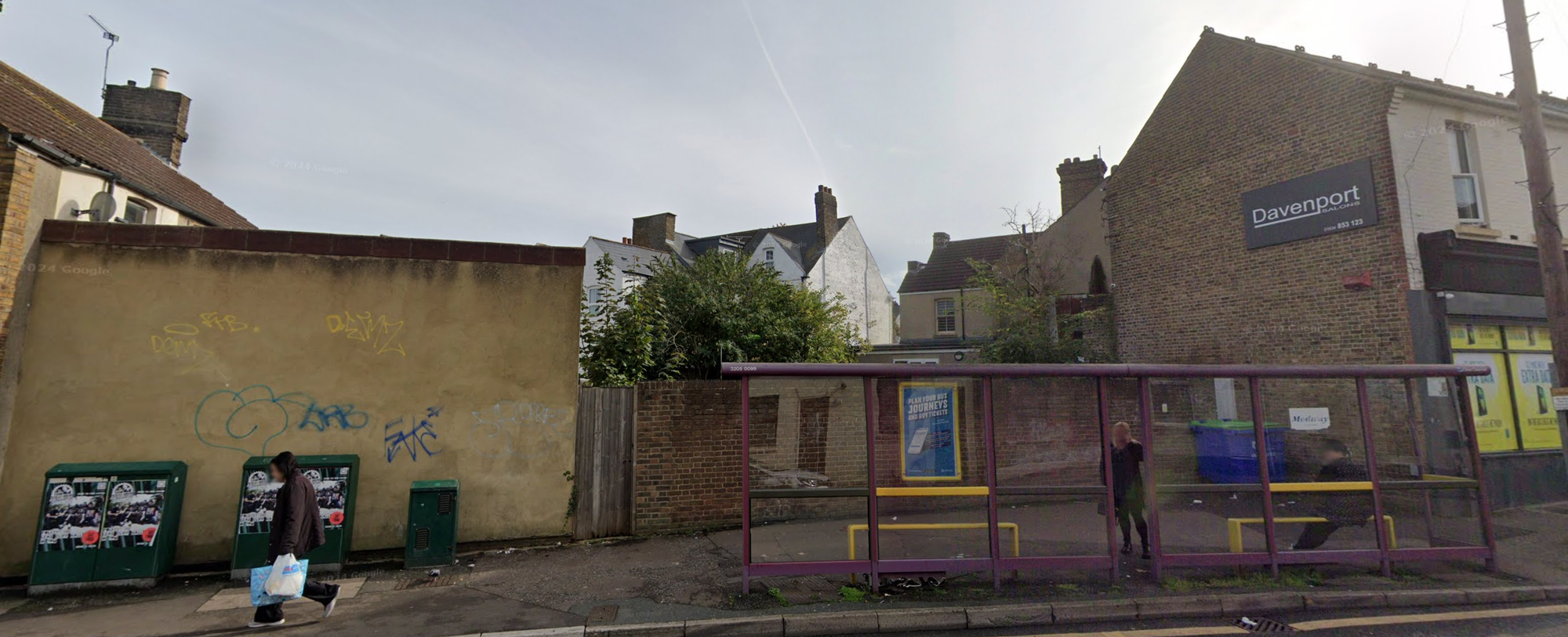
Conservation areas are supposed to protect places considered to have special architectural or historic interest. They come with additional planning controls intended to preserve or improve the area's character, covering everything from demolition and alterations to trees and new development.
In Railway Street’s case, that character is apparently important enough to protect, even though the area itself has still reached the worst condition category Historic England uses.
The situation is no better at Gillingham Green, centred around the green and St Mary Magdalene Church. It has the same assessment, rated as very bad condition, high vulnerability, no significant change, and no agreed strategy to get it out of that state.
This creates a slightly awkward contradiction at the heart of the whole conservation area system.
Residents and businesses inside conservation areas can face extra restrictions on what they can do to buildings because maintaining the area's historic character is deemed important.
Yet designation itself does not appear to guarantee that the wider area will actually be particularly well conserved.
Historic England says conservation areas can decline because of poor quality development, neglect, deliberate damage, traffic, vacant buildings and wider economic changes. Once decline sets in, it can also reduce confidence and investment and become part of a wider downward cycle.
That seems particularly relevant in Gillingham, where the condition of both areas is now considered bad enough to warrant national attention.
It is not solely a Gillingham problem either. Medway has 24 conservation areas, covering places as varied as Historic Rochester, Brompton Lines, Lower Twydall, Rainham, and Chatham Historic Dockyard.
Four of them are currently on Historic England’s Heritage at Risk register.
Alongside Gillingham’s two very bad areas, Rainham is rated 'poor', highly vulnerable and deteriorating. Historic England again says no action or strategy has been identified or agreed.
Halling is also rated poor and highly vulnerable, although its condition is currently showing no significant change. It too carries the highest priority classification.
That means around one in six of Medway’s conservation areas is officially at risk.
Across England, the proportion is much lower. Historic England says 469 conservation areas were on the Heritage at Risk register in 2025, out of close to 10,000 across the country. That works out at around 5%.
Medway’s figure, four out of 24, is around 17%.
This is not a perfect league table of which councils are best at looking after old buildings. Historic England’s assessments involve professional judgement and take account of condition, vulnerability and whether an area appears to be improving or deteriorating.
Still, having more than three times the national proportion of conservation areas on the at risk register is not especially encouraging.
There is also a more basic problem with how some of Medway’s conservation areas have been managed.
A Medway Council heritage review from 2017 looked at whether each area had a formal conservation area appraisal. These documents identify what makes an area special and are meant to guide decisions about how to protect its character.
At the time, appraisals for Railway Street, Gillingham Green, Rainham and Halling had all 'not started.'
Nine years later, none of those four appears among the council’s current published conservation area appraisals.
Medway’s emerging Local Plan says the council intends to eventually produce one for each of its 24 conservation areas. It describes the appraisals as a way of examining the key features that give each area its special historic or architectural interest.
This would seem useful to establish at some point.
There has been some movement elsewhere. An appraisal and management plan for Star Hill to Sun Pier was finally adopted in 2024, after work through the High Street Heritage Action Zone programme. Council papers at the time acknowledged that only six of Medway’s 24 conservation areas had adopted appraisals before that process began.
Historic England argues that active management is the important bit. Simply drawing a boundary around somewhere does not repair buildings, improve shopfronts, deal with empty properties or stop years of gradual decline.
There are plenty of examples nationally where intervention has worked. In 2025, nine conservation areas were removed from the national at risk register for positive reasons, while only three were added. Historic England points to places where investment, repairs and redevelopment have turned declining areas around.
There are at least ambitions to improve Railway Street.
Medway Council’s Gillingham Open Lines proposals include improvements along Railway Street as part of a wider scheme connecting the town centre with the waterfront, alongside changes to Gillingham High Street and the creation of a new walking and cycling route.
Whether and when all of that will translate into visible improvement is another matter.
For now, the official position remains difficult to dress up. Two parts of Gillingham have been specifically designated because their character is considered important enough to protect. Both are now judged to be in very bad condition, both are highly vulnerable, and neither has an agreed strategy capable of getting it off the national at risk register.
Which rather raises the question of what exactly we think we are conserving.
We’re hiring
Local Authority and the Kent Current have reached the stage where it would be useful to bring in people who know considerably more than we do about two very specific things.
We are hiring two paid freelancers to work with us until March. One will help more people discover and subscribe to our journalism. The other will help us strengthen our sponsorship and advertising relationships, while bringing a little more order to the commercial side of the operation.
If either role sounds like you, or you know someone suitable, you can find the full details here.
Applications close at 5pm on Wednesday 14 October.
Chatham’s new supermarket sits somewhere between Tesco and a food bank
A new supermarket has opened in Chatham where anyone living in Medway can buy discounted food without first having to prove they need it.
The SEK Community Food Shop opened on the first floor of the Pentagon on Monday, selling groceries, household essentials and fresh produce at reduced prices. There is no referral system, no membership and no requirement to demonstrate that you are on a low income before being allowed through the door.
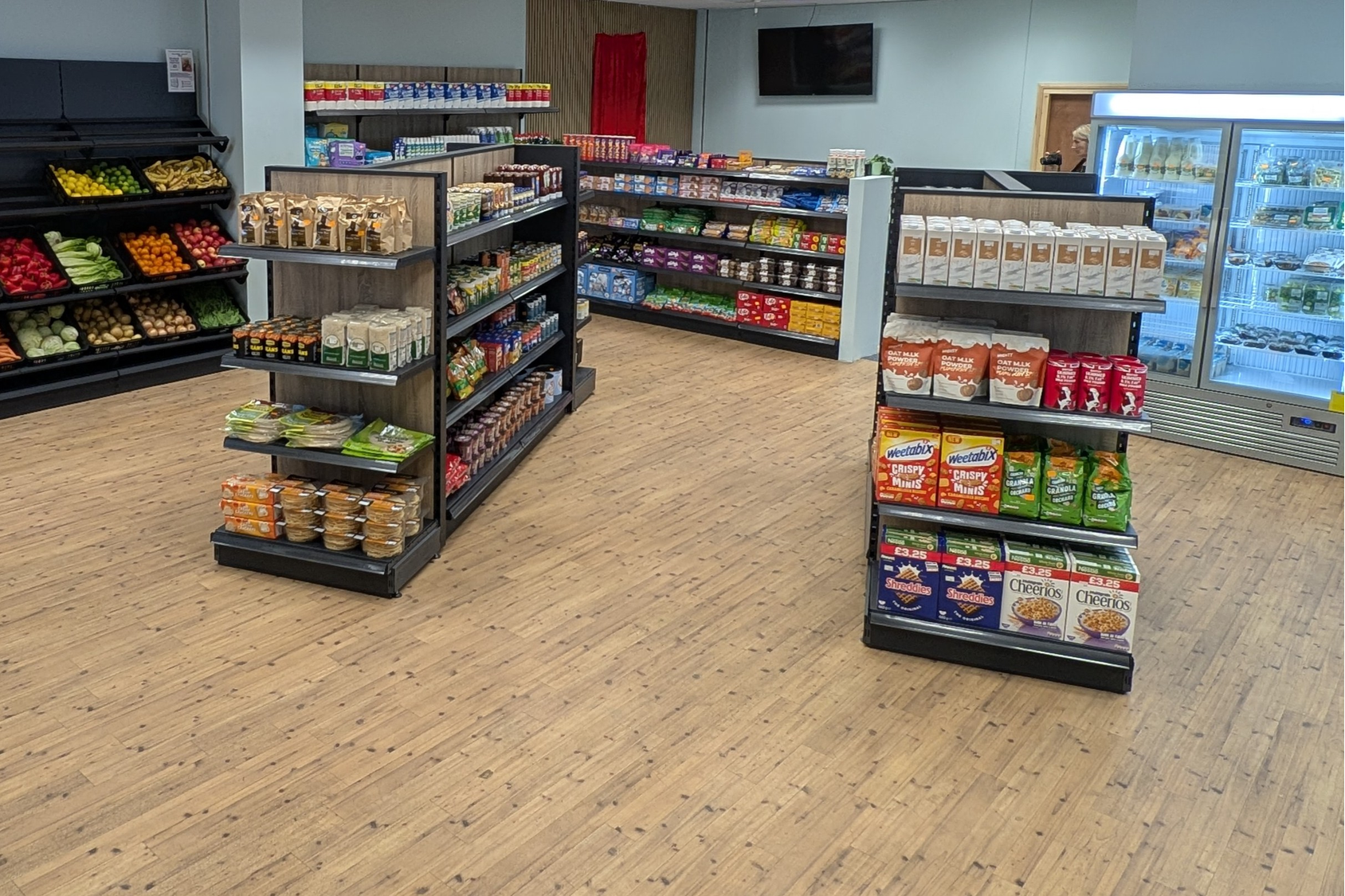
Opening offers included bags of fruit and vegetables for £1. Early customers also managed to pick up 20 samosas for £1.50 and a large bag of chicken for £6. The shop is open Monday to Saturday from 10am until 6pm.
Social Enterprise Kent runs it, with Medway Council funding the initial costs through its Crisis and Resilience Fund. Some of what appears on the shelves is surplus food that might otherwise have gone to waste, alongside more conventional groceries, chilled and frozen products and household items.
The model sits somewhere between an ordinary supermarket and more traditional food support.
“For us, this is about choice and dignity,” said Social Enterprise Kent chief executive Rebecca Smith at the opening. “Everyone should be able to access affordable food.”
That distinction is relevant, because food banks are useful, but they also come with some obvious drawbacks. People generally cannot choose exactly what goes into a food parcel, provision depends heavily on donations, and actually having to ask for emergency food can carry a stigma that researchers have repeatedly found puts some people off seeking help.
Community supermarkets are designed to make the whole thing feel more like normal shopping. You walk around, decide what you want and pay for it, albeit at reduced prices.
Research into UK social supermarkets has found that this sense of normality matters. One study found that more than 90% of users considered being able to choose their own food important, rather than simply being handed whatever was available.
The Chatham shop goes slightly further by being open to everyone. Many schemes elsewhere are restricted to people on certain incomes or require membership. In the Pentagon, the theory is that somebody wanting cheap vegetables or surplus food can simply go and buy them.
It also means there does not have to be an obvious dividing line between people shopping there because they are struggling and people shopping there because 20 samosas for £1.50 is quite a good deal.
SEK already runs similar shops elsewhere in Kent. It says its Ramsgate and Ashford stores recorded 55,500 transactions in the last year and diverted 170 tonnes of usable food from waste.
Demand for this kind of provision is not especially difficult to explain. The Food Foundation reported this summer that around one in eight UK households were experiencing food insecurity, rising to one in six among households with children.
Social supermarkets are no longer especially niche either. The Food Standards Agency found that around 5% of people had used one in the previous year, rising sharply among lower-income households and people experiencing very low food security.
The model has limits though.
Much of the cheap stock depends on surplus food from elsewhere in the supply chain, meaning availability can be unpredictable.
There is also a more fundamental problem. However dignified community supermarkets may be compared with emergency food parcels, they do not solve the underlying reason people need them in the first place: not having enough money to buy food at normal prices.
Researchers have warned that increasingly sophisticated systems for redistributing surplus risk creating a permanent parallel food system for people priced out of the mainstream one.
The Chatham shop at least acknowledges some of that wider problem. A soundproofed advice pod at the back will let people seek help with employment, budgeting, benefits, energy bills, and other services, rather than merely sending them home with cheaper groceries. Social Enterprise Kent says the aim is for the shop to operate as a wider community hub, as well as a place to buy food.
None of this fixes the fact that more and more people cannot comfortably afford to shop in ordinary supermarkets. A shop selling £1 bags of vegetables and heavily discounted surplus food is a response to that problem, not a solution.
But it is at least a fairly practical response. And for anyone who simply wants cheaper food without having to explain their financial circumstances first, it is now open six days a week upstairs in the Pentagon.
Footnotes
Follow us elsewhere: Facebook, Instagram, BlueSky, and now WhatsApp for new story alerts.